AC-24057 - l-dipalmitoyl-phosphatidylcholine-98 | 63-89-8
Lamentamos, não foi encontrado nenhum produto com a referência AC-24057, mas por favor, verifique os seguintes produtos semelhantes:
Phosphatidylcholine
CAS:Lecithins and other phosphoaminolipids, nesoiFórmula:C8H18NO6P(R)(RCor e Forma:White Off-White PowderPeso molecular:770.12Phosphatidylcholine (Soy)
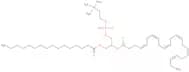
CAS:Lecithins and other phosphoaminolipids, nesoiFórmula:C42H80NO8PCor e Forma:Light Yellow Beige GranularPeso molecular:757.56216Palmitoyldocosahexaenoyl phosphatidylcholine
CAS:Palmitoyldocosahexaenoyl phosphatidylcholine is a polyunsaturated fatty acid that mimics special cell membrane structural domain lipids.Fórmula:C46H80NO8PPureza:98%Cor e Forma:SolidPeso molecular:806.1Hydrogenated Soya Phosphatidylcholine
CAS:Produto ControladoFórmula:C44H88NO8PCor e Forma:NeatPeso molecular:790.1Palmitoyldocosahexaenoyl phosphatidylcholine
CAS:Palmitoyldocosahexaenoyl phosphatidylcholine (PC-S) is a fatty acid with six double bonds. It has been shown to induce osteogenic genes in human macrophages and can be used as a potential therapeutic agent for the treatment of bone diseases. PC-S also has anti-inflammatory properties, which is due to its ability to inhibit secretory phospholipase A2 (sPLA2). PC-S is structurally similar to the polyunsaturated fatty acid linoleic acid and has been found to have reactive properties. PC-S may be used as an adjuvant therapy for cancer and other diseases, such as Alzheimer's disease. Clinical studies are currently being conducted.Fórmula:C46H80NO8PPureza:Min. 95%Cor e Forma:PowderPeso molecular:806.1 g/molL-α-Dilauroyl Phosphatidylcholine
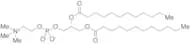
CAS:Produto ControladoFórmula:C32H64NO8PCor e Forma:NeatPeso molecular:621.826Palmitoyleicosapentaenoyl phosphatidylcholine
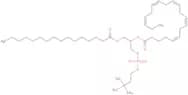
CAS:Palmitoyleicosapentaenoic acid (PAPA) is a long-chain polyunsaturated fatty acid that can be found in the cell membranes of cells. Palmitoyleicosapentaenoyl phosphatidylcholine (PAPPC) is a derivative of PAPA that can be used in biomedical research and as a dietary supplement. PAPPC was synthesized by esterification of palmitoyl-CoA with phosphatidylcholine. It has been shown to have potential as an anti-cancer agent, an inhibitor of HIV infection, and for the treatment of neurological disorders such as Alzheimer's disease. The experimental result showed that PAPPC had a higher degree of fluidity than other types of phospholipids. This could be due to its high degree of unsaturation, which may make it more susceptible to radiation or reactive oxygen species (ROS).Fórmula:C44H78NO8PPureza:(%) Min. 95%Cor e Forma:Yellow PowderPeso molecular:780.07 g/mol1-Oleoyl-2-docosahexaenoyl phosphatidylcholine
CAS:1-Oleoyl-2-docosahexaenoyl phosphatidylcholine is a fatty acid derived from the biogenesis of phosphatidylcholine, which is an important component of all cell membranes.Fórmula:C48H82NO8PPureza:Min. 95%Peso molecular:832.14 g/mol1,2-bis(10,12-tricosadiynoyl)phosphatidylcholine
CAS:Fórmula:C54H92NO8PPureza:90%Peso molecular:914.2839L-α-phosphatidylcholine (Soy)
CAS:Fórmula:C43H82NO7PPureza:95%Cor e Forma:SolidPeso molecular:756.0874L-α-phosphatidylcholine, hydrogenated (Egg, Chicken)
CAS:Fórmula:C42H86NO7PPureza:99%Cor e Forma:SolidPeso molecular:748.1085L-α-Phosphatidylcholine
CAS:L-α-PhosphatidylcholineFórmula:C42H80NO8PPureza:≥95%Cor e Forma: white to gray to yellow to brown solidPeso molecular:758.06g/mol