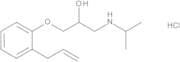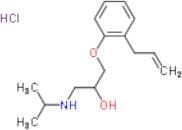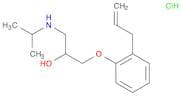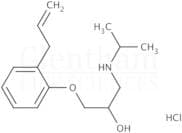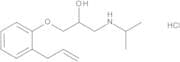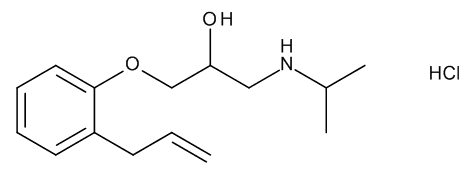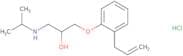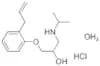
CAS 13707-88-5
:Alprenolol hydrochloride
- 1-(o-Allylphenoxy)-3-(isopropylamino)-2-propanol hydrochloride
- 2-Propanol, 1-[(1-methylethyl)amino]-3-[2-(2-propen-1-yl)phenoxy]-, hydrochloride (1:1)
- 2-Propanol, 1-[(1-methylethyl)amino]-3-[2-(2-propenyl)phenoxy]-, hydrochloride
- Alprenolol hydrochloride
- 2-Propanol, 1-(o-allylphenoxy)-3-(isopropylamino)-, hydrochloride
ALPRENOLOL HYDROCHLORIDE CRS
CAS:ALPRENOLOL HYDROCHLORIDE CRSFormula:C15H24ClNO2Color and Shape:White. Whitish. Crystalline Powder. Colourless Crystals. Powder.Molecular weight:285.8096Alprenolol (hydrochloride)
CAS:Formula:C15H24ClNO2Purity:99%Color and Shape:SolidMolecular weight:285.8096Alprenolol hydrochloride
CAS:Formula:C15H24ClNO2Purity:≥ 95.0%Color and Shape:White to off-white powderMolecular weight:285.81Alprenolol hydrochloride
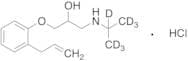
CAS:Alprenolol hydrochloride is a non-selective blocker of beta, and also is a antagonist of5-HT1A receptor.Formula:C15H24ClNO2Purity:99.79%Color and Shape:SolidMolecular weight:285.81Alprenolol Hydrochloride-d7
CAS:Controlled ProductFormula:C15D7H16NO2·HClColor and Shape:NeatMolecular weight:292.853Alprenolol Hydrochloride
CAS:Controlled ProductFormula:C15H23NO2·ClHColor and Shape:Off-WhiteMolecular weight:285.81Alprenolol hydrochloride
CAS:Controlled ProductAlprenolol hydrochloride is a beta-adrenergic receptor blocker that is used to treat high blood pressure, angina pectoris, and myocardial infarcts. It binds to the β1-adrenergic receptor in the myocardium and blocks the stimulation of adenylate cyclase. This prevents cAMP production, which leads to decreased calcium influx into the myocardium and an inhibition of contractility. Alprenolol hydrochloride has been shown to be effective in treating congestive heart failure (CHF). Alprenolol is metabolized by esterases in the liver and gut wall. The drug has been shown to have a low potency because it is rapidly metabolized by esterases in humans. It also has potential for drug interactions with other drugs that are metabolized by these enzymes. Alprenolol hydrochloride has structural similarity to guanine nucleotide-binding proteins, which may
Formula:C15H23NO2·HClPurity:Min. 98 Area-%Color and Shape:PowderMolecular weight:285.81 g/mol