CAS 229625-50-7
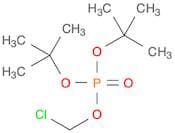
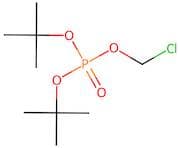
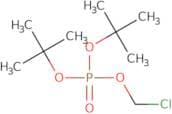
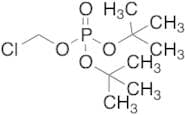
:Phosphoric acid, chloromethyl bis(1,1-dimethylethyl) ester
Description:
Phosphoric acid, chloromethyl bis(1,1-dimethylethyl) ester, with the CAS number 229625-50-7, is an organophosphorus compound characterized by the presence of a phosphoric acid moiety esterified with chloromethyl and bis(1,1-dimethylethyl) groups. This compound typically exhibits properties associated with phosphoric acid esters, such as being a colorless to pale yellow liquid with a characteristic odor. It is likely to be soluble in organic solvents while having limited solubility in water due to its hydrophobic alkyl groups. The chloromethyl group may impart reactivity, making it useful in various chemical synthesis applications, including as an intermediate in the production of other chemical compounds. Additionally, the presence of the bulky tert-butyl groups can influence its steric properties and reactivity. Safety considerations should be taken into account, as organophosphorus compounds can exhibit toxicity, and appropriate handling procedures should be followed. Overall, this compound's unique structure and properties make it of interest in both industrial and research contexts.
Formula:C9H20ClO4P
Sort by
Purity (%)
0
100
|
0
|
50
|
90
|
95
|
100
Found 6 products.
Phosphoric acid, chloromethyl bis(1,1-dimethylethyl) ester
CAS:Formula:C9H20ClO4PPurity:96%Color and Shape:LiquidMolecular weight:258.6795Di-tert-butyl chloromethyl phosphate
CAS:Di-tert-butyl chloromethyl phosphateFormula:C9H20ClO4PPurity:97%Color and Shape: colourless to light yellow liquidMolecular weight:258.67946g/molDi-tert-butyl chloromethyl phosphate
CAS:Di-tert-butyl chloromethyl phosphate (DBCMP) is a phosphite that has been shown to be an effective additive for the prevention of fluorescence in cell-based assays, such as Covid-19. DBCMP is made by reacting potassium phosphate with trifluoroacetic acid and calcium carbonate. It has been used extensively in metabolic studies of cinnarizine, a drug that inhibits the activity of phosphodiesterase enzymes. DBCMP is stable in acidic conditions and can be stored at room temperature with minimal degradation. The reaction between DBCMP and nucleophiles leads to the formation of a linker, which can be cleaved by base hydrolysis or nucleophilic attack.Formula:C9H20ClO4PPurity:Min. 95%Color and Shape:Colorless Clear LiquidMolecular weight:258.68 g/molDi-tert-butyl (chloromethyl) phosphate (stabilised over Potassium Carbonate)
CAS:Formula:C9H20ClO4PPurity:97%Color and Shape:Liquid, ViscousMolecular weight:258.68Di-tert-butyl ChloromethylPhosphate (stabilized with K2CO3)
CAS:Controlled ProductStability Moisture Sensitive
Applications Di-tert-butyl chloromethyl phosphate (cas# 229625-50-7) is a useful research chemical.Formula:C9H20ClO4PColor and Shape:NeatMolecular weight:258.6795