

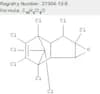
CAS 27304-13-8
:Oxychlordane
Description:
Oxychlordane is an organochlorine compound that is a derivative of chlordane, primarily known for its use as a pesticide. It is characterized by its chemical structure, which includes multiple chlorine atoms attached to a cyclodiene framework. Oxychlordane is typically a colorless to pale yellow solid with a faint odor. It is relatively stable and lipophilic, leading to bioaccumulation in the environment and living organisms. The compound is known for its persistence in soil and sediment, which raises concerns regarding its ecological impact and potential health risks to humans and wildlife. Oxychlordane has been associated with endocrine disruption and neurotoxic effects, prompting regulatory scrutiny and restrictions on its use in many countries. Its detection in environmental samples often indicates historical pesticide application, as it is no longer widely used. Overall, while oxychlordane has been effective in pest control, its environmental and health implications necessitate careful management and monitoring.
Formula:C10H4Cl8O
InChI:InChI=1/C10H4Cl8O/c11-3-1-2(6-9(3,16)19-6)8(15)5(13)4(12)7(1,14)10(8,17)18/h1-3,6H/t1-,2+,3+,6-,7+,8-,9+/s2
InChI key:InChIKey=VWGNQYSIWFHEQU-QOAYMTHINA-N
SMILES:Cl[C@]12[C@@]3([C@]([C@](Cl)(C1(Cl)Cl)C(Cl)=C2Cl)([C@@H](Cl)[C@]4(Cl)[C@]3(O4)[H])[H])[H]
Synonyms:- (.+-.)-Oxychlordane
- 2,5-Methano-2H-indeno[1,2-b]oxirene, 2,3,4,5,6,6a,7,7-octachloro-1a,1b,5,5a,6,6a-hexahydro-, (1aα,1bβ,2α,5α,5aβ,6β,6aα)-
- 4,7-Methanoindan, 1,2,4,5,6,7,8,8-octachloro-2,3-epoxy-3a,4,7,7a-tetrahydro-, exo,endo-
- Octachlor epoxide
- Oxychlordan
- rel-(1aR,1bS,2R,5S,5aR,6S,6aS)-2,3,4,5,6,6a,7,7-Octachloro-1a,1b,5,5a,6,6a-hexahydro-2,5-methano-2H-indeno[1,2-b]oxirene
- 2,5-Methano-2H-indeno[1,2-b]oxirene, 2,3,4,5,6,6a,7,7-octachloro-1a,1b,5,5a,6,6a-hexahydro-, (1aR,1bS,2R,5S,5aR,6S,6aS)-rel-
Sort by
Purity (%)
0
100
|
0
|
50
|
90
|
95
|
100


