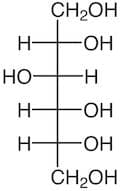
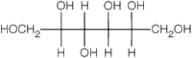
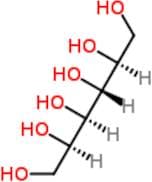
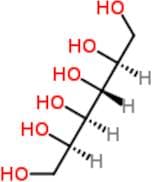
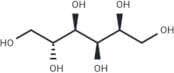
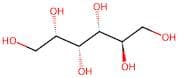
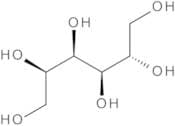
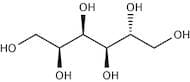
CAS 50-70-4
:Sorbitol
- 7B5697N
- C*Sorbidex
- Cholaxine
- Clucitol
- Cystosol
- D-Glucitol
- D-Sorbit
- D-Sorbitol
- D-Sorbol
- Diakarmon
- Esasorb
- Glucarine
- Glucitol
- Gulitol
- Karion
- L-gulitol
- Multitol
- Neosorb
- Nivitin
- Plastilys
- Resulax
- Sionit
- Sionite
- Sionon
- Siosan
- Sorbierite
- Sorbilande
- Sorbilax
- Sorbit
- Sorbite
- Sorbitol-Syrup
- Sorbitur
- Sorbo
- Sorbol
- Sorbostyl
- Sorpart
- Glucitol, D-
- See more synonyms
D-Sorbitol
CAS:Formula:C6H14O6Purity:>97.0%(GC)Color and Shape:White powder to crystalMolecular weight:182.17D-Sorbitol, 98%
CAS:D-sorbitol is added to food products as sweetener. It is also used in industrial and medical applications. Sorbitol often is applied in modern cosmetics as a humectant and thickener. This Thermo Scientific Chemicals brand product was originally part of the Alfa Aesar product portfolio. Some documentFormula:C6H14O6Purity:98%Color and Shape:White, Powder or crystalline powder or granular powderMolecular weight:182.17Sorbitol
CAS:D-glucitol (sorbitol)Formula:C6H14O6Color and Shape:White Crystalline PowderMolecular weight:182.17 g/molD-Sorbitol
CAS:D-Sorbitol: natural & synthetic sweetener, half as sweet as sucrose, used in meds, manufacturing, research, and as a laxative.Formula:C6H14O6Purity:99.48% - 99.67%Color and Shape:Needles From Water Sorbitol Is An Odorless Colorless Solid Sinks And Mixes With Water (Uscg 1999)Molecular weight:182.17D-Sorbitol, Ph. Eur., USP/NF grade
CAS:Formula:C6H14O6Purity:≤ 2.0%Color and Shape:White to almost white crystalline powderMolecular weight:182.17D-Sorbitol
CAS:D-SorbitolFormula:C6H14O6Purity:97%Color and Shape: white powderMolecular weight:182.17175g/molD-Sorbitol
CAS:Formula:C6H14O6Purity:≥ 97.0%Color and Shape:White crystalline powderMolecular weight:182.17D-Sorbit 1000 µg/mL in Methanol
CAS:Controlled ProductFormula:C6H14O6Color and Shape:Single SolutionMolecular weight:182.17D(-)-Sorbitol (Ph. Eur., USP-NF) pure
CAS:D(-)-Sorbitol (Ph. Eur., USP-NF) pureFormula:C6H12O6Purity:Pharma GradeColor and Shape:White SolidMolecular weight:180.15588g/mol(2R,3R,4R,5S)-Hexane-1,2,3,4,5,6-hexaol
CAS:Formula:C6H14O6Purity:95%Color and Shape:SolidMolecular weight:182.172D-Sorbitol
CAS:Applications D-Sorbitol is a sugar alcohol that is naturally found in Toyon berries. D-Sorbitol is used to increase stability of silver nanoparticles and is also used as a sugar substitute.
References Burt, B.: J. Am. Dent. Assoc., 137, 190 (2006); Kaviya, S., et al.: J. Nanotech., 2011, No pp. given, (2011); Liang, X., et al.: Tetrahedron, 64, 1309 (2008); Strain, H.: J. Am. Chem. Soc., 56, 1756 (1934)Formula:C6H14O6Color and Shape:ColourlessMolecular weight:182.17D-Sorbitol
CAS:Sorbitol, also known as glucitol, occurs widely in plants, such as, the fruits of the Sorbus and Crataegus spp. Commercially it is produced by the catalytic hydrogenation of glucose (Collins, 2006). Sorbitol is approved as a sugar substitute with the E number 420 and has âgenerally recognized as safeâ status (GRAS) from the US Food and Drug Administration. It is about 60% as sweet as sucrose and is a mild laxative. Sorbitol has a wide range of other functional properties, including: humectancy, plasticizing ability, non-cariogenicity, and good chemical stability in harsh conditions, such as, alkaline pH and heat. Toothpaste production is the second largest application of sorbitol, accounting for 50,000 tons a year in Western Europe alone. Other important uses of sorbitol as a humectant, include: formulation of cough syrups, multivitamin preparations, emulsions, and suspensions (OâNeil, 2013).
Formula:C6H14O6Purity:Min. 98 Area-%Color and Shape:White PowderMolecular weight:182.17 g/molD-Sorbitol Powder for tissue culture, 98%
CAS:Formula:C6H14O6Purity:min. 98%Color and Shape:White, Crystalline powder, Clear, ColourlessMolecular weight:182.18D-Sorbitol Powder for molecular biology, 98%
CAS:Formula:C6H14O6Purity:min. 98%Color and Shape:White, Crystalline powder, Clear, ColourlessMolecular weight:182.18