CAS 59080-40-9
:PBB 153
Description:
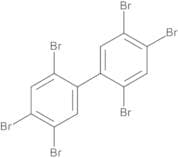
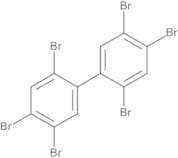
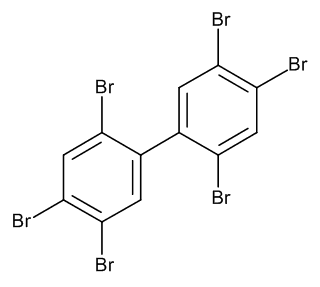
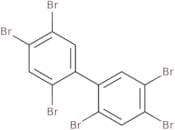
PBB 153, or polybrominated biphenyl 153, is a brominated flame retardant belonging to a class of compounds known as polybrominated biphenyls (PBBs). It is characterized by its chemical structure, which consists of two phenyl rings with multiple bromine atoms substituted at various positions. PBB 153 is primarily used in plastics and textiles to reduce flammability. It is known for its persistence in the environment and potential bioaccumulation in living organisms, raising concerns regarding its ecological and health impacts. PBB 153 has been associated with various adverse effects, including endocrine disruption and potential carcinogenicity. Due to these concerns, many countries have implemented regulations to limit or ban the use of PBBs in consumer products. Its detection in environmental samples and biological tissues has prompted ongoing research into its long-term effects and the development of safer alternatives. Overall, PBB 153 exemplifies the challenges posed by persistent organic pollutants in modern materials.
Formula:C12H4Br6
InChI:InChI=1/C12H4Br6/c13-7-3-11(17)9(15)1-5(7)6-2-10(16)12(18)4-8(6)14/h1-4H
InChI key:InChIKey=HMBBJSKXDBUNNT-UHFFFAOYSA-N
SMILES:BrC1=C(C=C(Br)C(Br)=C1)C2=C(Br)C=C(Br)C(Br)=C2
Synonyms:- 1,1'-Biphenyl, 2,2',4,4',5,5'-Hexabromo-
- 1,1′-Biphenyl, 2,2′,4,4′,5,5′-hexabromo-
- 2,2′,4,4′,5,5′-Hexabromo-1,1′-biphenyl
- 2,2′,4,4′,5,5′-Hexabromobiphenyl
- 2,4,5,2′,4′,5′-Hexabromobiphenyl
- 67774-32-7
- Bb 153
- Pbb 153
- 2,2',4,4',5,5'-Hexabromobiphenyl
- C018566
- 345-Hbb
- 2,2’,4,4’,5,5’-Hexabromobiphenyl,10mg/L,1ml
- 3,3',4,4',6,6'-Hexabromobiphenyl
- 2,2’,4,4’,5,5’-hexabromo-1’-biphenyl
- 2,2',4,4',5,5'-HEXABB (PBB-153)
- 245-Hbb
- 2,4,5,2',4',5'-hexabromobiphenyl
- PBB NO 153
- 2,2’,4,4’,5,5’-Hexabromobiphenyl,100mg/L,1ml
- See more synonyms
Sort by
Purity (%)
0
100
|
0
|
50
|
90
|
95
|
100
Found 6 products.
PBB No. 153 10 µg/mL in Cyclohexane
CAS:Controlled ProductFormula:C12H4Br6Color and Shape:Single SolutionMolecular weight:627.58PBB Mix 5 10 µg/mL in Cyclohexane
CAS:Controlled Product- 115245-07-3
- 115245-08-4
- 13029-09-9
- 13654-09-6
- 16400-50-3
- 2052-07-5
- 2113-57-7
- 53592-10-2
- 57422-77-2
- 59080-32-9
- 59080-33-0
- 59080-34-1
- 59080-35-2
- 59080-36-3
- 59080-37-4
- 59080-39-6
- 59080-40-9
- 59261-08-4
- 60044-24-8
- 60044-25-9
- 67888-96-4
- 92-66-0
- 92-86-4
Formula:C12H4Br6Color and Shape:MixtureMolecular weight:627.58PBB 153
CAS:Controlled ProductApplications PBB 153 is a related compound of PBB 37 (P215150), a brominated biphenyls that can be used as a flame retardant and often incorporated into consumer products including appliances, electronics and plastics. PBB 153 is also a persistent organic pollutant.
References Thoma, H. and Hutzinger, O. Chemosphere 16, 1353 (1987); Mwangi, J. K., et al.: Environ. Pollut. 216, 924 (2016)Formula:C12H4Br6Color and Shape:White To Off-WhiteMolecular weight:627.58PBB 153
CAS:Controlled ProductPhenylbutazone (PBB) is a non-steroidal anti-inflammatory drug (NSAID) that has potent enzyme inducers. PBB is used to treat inflammation, pain, and fever. It is not an analgesic and does not relieve pain by itself. Phenylbutazone inhibits the cyclooxygenase enzyme and can thereby reduce prostaglandin synthesis or increase the production of thromboxane A2, which is a vasoconstrictor and platelet aggregator. This drug also has been shown to have carcinogenic potential in rats and may be associated with liver lesions in humans. Phenylbutazone binds to serum proteins such as albumin, which may contribute to its long half-life. The half-life of phenylbutazone is reduced when it binds to adipose tissue or polybrominated biphenyls (PBBs). PBB 153 is a congener of phenylbutazone with lowFormula:C12H4Br6Purity:Min. 95%Molecular weight:627.6 g/mol