Fluorogenic Substrates
In this category, you will find a comprehensive selection of fluorogenic substrates designed for enzymatic catalysis. These substrates are used with various types of enzymes and are capable of producing color and fluorescence upon reaction. Fluorogenic substrates are essential tools in biochemical and molecular biology research, enabling the detection and quantification of enzyme activity with high sensitivity and specificity. They are widely used in assays for studying enzyme kinetics, screening for enzyme inhibitors, and monitoring cellular processes. At CymitQuimica, we provide high-quality fluorogenic substrates to support your research, ensuring reliable and accurate results in your enzymatic assays.
Found 284 products for "Fluorogenic Substrates".
Sort by
Purity (%)
0
100
|
0
|
50
|
90
|
95
|
100
Resorufin phosphate disodium
Resorufin phosphate disodium is a fluorogenic substrate for phosphatase exhibiting a red color after cleavage that can be measured at ~ 585nm.Formula:C12H6NNa2O6PPurity:Max. 75 Area-%Color and Shape:Brown PowderMolecular weight:337.14 g/mol6,8-Difluoro-4-methylumbelliferyl β-D-galactopyranoside
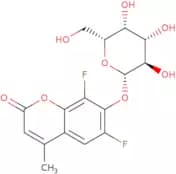
CAS:6,8-Difluoro-4-methylumbelliferyl b-D-galactopyranoside, commonly known as DiFMUG, is a fluorogenic substrate to detect beta-galactosidase. It has higher sensitivity than the common MUG (4-methylumbelliferyl beta-D-galactopyranoside) subtrate.Formula:C16H16F2O8Purity:Min. 95%Color and Shape:PowderMolecular weight:374.29 g/mol6-Hexanoylamino-4-methylumbelliferyl b-D-galactopyranoside
6-Hexanoylamino-4-methylumbelliferyl b-D-galactopyranoside is a chromogenic substrate for beta-galactosidase.Purity:Min. 95%4-Methylumbelliferyl b-D-xylobioside
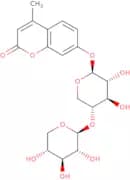
CAS:4-Methylumbelliferyl beta-D-xylobioside is a fluorogenic substrate for xylanase. After enzymatic cleaveage, free 4-methylumbelliferone (also known as hymecromone) is released, exhibiting blue fluorescence upon excitation with UV light. The strongest fluorescence of 4-methylumbelliferone requires deprotonation of the hydroxyl group (thus requires alkaline pH), with a maximal fluorescence intensity obtained with excitation at 350 to 370 nm and emission at 440 to 470 nm. The use of 4-methylumbelliferyl beta-D-xylobiosideas a substrate for measuring the xylanase activity is used for detecting bacterial infection and gut microbiome analysis.Formula:C20H24O11Purity:Min. 95 Area-%Color and Shape:White PowderMolecular weight:440.4 g/mol