Amino Acid Derivatives
Amino acid derivatives are compounds that are structurally related to amino acids but have been chemically modified to introduce new functional groups or alter their properties. These derivatives are widely used in peptide synthesis, drug development, and biochemical research. At CymitQuimica, we offer a broad range of high-quality amino acid derivatives to support your research and industrial applications, ensuring precise and effective results in your experiments and synthesis projects.
Found 3971 products of "Amino Acid Derivatives"
Sort by
Purity (%)
0
100
|
0
|
50
|
90
|
95
|
100
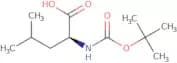
tert-Butoxycarbonyl-L-leucine
CAS:<p>Tert-Butoxycarbonyl-L-leucine (tBOC-LL) is a tetrapeptide that is used as a drug substance in the synthesis of buserelin, a synthetic peptide hormone. It has been shown to have high reactivity in organic solvents and can be used in cationic polymerization reactions. tBOC-LL has been used to synthesize helical structures with high purity and yield. As it is not an amino acid, tBOC-LL does not occur naturally and must be synthesized.<br>Tert-Butoxycarbonyl-L-leucine (tBOC-LL) is available from Sigma Aldrich Chemie GmbH & Co KG as:</p>Formula:C11H21NO4Purity:Min. 98 Area-%Color and Shape:White PowderMolecular weight:231.29 g/molL-Pyroglutamyl-L-histidyl-L-prolinamide
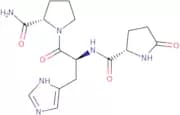
CAS:<p>L-Pyroglutamyl-L-histidyl-L-prolinamide (PGC) is a pyrrolidine that is used for the treatment of neurologic disorders. It has been shown to be effective in treating depression and a number of other neurologic disorders, including Parkinson's disease, Alzheimer's disease, and epilepsy. PGC has also been shown to have an antidepressant effect in women with depression who are pregnant or have recently given birth. In addition, it has been found to be clinically effective in the treatment of symptoms associated with Parkinson’s Disease. PGC is not absorbed into the bloodstream and must be injected directly into muscle tissue or fat cells in order to produce its therapeutic effects.</p>Formula:C16H22N6O4Purity:Min. 95%Color and Shape:White PowderMolecular weight:362.38 g/molγ-Polyglutamic acid sodium - MW > 700,000
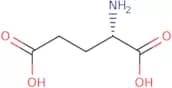
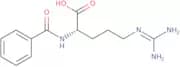
CAS:Gamma-Polyglutamic acid sodium - MW > 700,000 is a high molecular weight biopolymer, which is a salt form of polyglutamic acid. Its unique structure consists of glutamic acid units linked via γ-amide bonds, resulting in a robust and biodegradable polymer.The mode of action of gamma-Polyglutamic acid sodium involves its high water-binding capacity and viscosity, which make it exceptional in forming hydrogels. This property is pivotal in applications that require moisture retention or controlled release of active ingredients. Its biodegradability and non-toxic nature add to its versatility and safety profile.Gamma-Polyglutamic acid sodium is used across various fields, including biotechnology, pharmaceuticals, agriculture, and cosmetics. In biotechnology and pharmaceuticals, it is utilized as a drug delivery vehicle and tissue engineering scaffold due to its compatibility with human tissues. Its agricultural applications include acting as a soil conditioner and enhancing water retention. In cosmetics, it serves as a potent moisturizer and anti-aging ingredient.Formula:(C5H7NO3)n•NaxPurity:Min. 90 Area-%Color and Shape:White PowderN-a-Benzoyl-L-arginine
CAS:<p>N-a-Benzoyl-L-arginine is a fluorescent substrate for soybean trypsin. It is hydrolyzed by the enzyme to release an amide and p-nitrophenyl phosphate. The amide is then hydrolyzed by esterase to produce caproic acid, which can be detected at an excitation wavelength of 340 nm and emission wavelength of 495 nm. N-a-Benzoyl-L-arginine has been shown to have proteolytic activity in cell culture, with a pH optimum of 6.8 and temperature optimum of 37 degrees Celsius. This product has been shown to be effective in women as well as in men.</p>Formula:C13H18N4O3Purity:Min. 95%Color and Shape:White PowderMolecular weight:278.31 g/molZ-Arg-Leu-Arg-Gly-Gly-AMC acetate
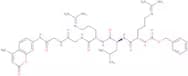
CAS:<p>Z-Arg-Leu-Arg-Gly-Gly-AMC acetate is a protease inhibitor that blocks the activity of the proteasome. It has been shown to inhibit the activity of histidine proteases and to inhibit proteolysis by the proteasome in a kinetic assay. This inhibitor also inhibits coronavirus replication, which may be due to its ability to bind to histidine residues on proteins involved in viral replication. Z-Arg-Leu-Arg-Gly-Gly-AMC acetate is expressed in transfected cells as an enzyme with a polymerase chain reaction (PCR) product and has been shown to prevent viral replication.</p>Formula:C40H56N12O9•(C2H4O2)xPurity:Min. 98 Area-%Color and Shape:PowderMolecular weight:848.95 g/molArg-Gly-Asp TFA salt
CAS:<p>Arg-Gly-Asp TFA salt is a molecule that is used as a prodrug, meaning it is inactive until it has been converted to the active form. It has been shown to be effective when injected subcutaneously or intramuscularly and is hydrophilic. Arg-Gly-Asp TFA salt has been shown to have problematic effects on polymerization when exposed to heat. The molecule has an active form that can be absorbed into the body through injection sites and then hydrolyzed by esterases or glucuronidases, oxidized by cytochrome P450 enzymes, reduced by glutathione reductase, or conjugated with glucuronic acid. Arg-Gly-Asp TFA salt also specifically binds to markers expressed at high levels in Mycobacterium tuberculosis strains (e.g., ESX-1 secretion system protein) and inhibits cell growth in culture.</p>Formula:C12H22N6O6·C2HF3O2Purity:Min. 95%Color and Shape:PowderMolecular weight:460.36 g/molFmoc-Ser(tBu)-OH
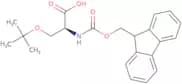
CAS:<p>Fmoc-Ser(tBu)-OH is a synthetic amino acid that is used in the synthesis of degarelix acetate, an amide ester of the vasodilator, prostaglandin F2α. Degarelix acetate binds to the fibrinogen receptor on the surface of cells and inhibits platelet aggregation. This drug has been shown to be effective in treating prostate cancer by inhibiting epidermal growth factor receptor signaling. It also has immune modulating effects by binding to monoclonal antibodies and altering antibody responses. Fmoc-Ser(tBu)-OH is synthesized from the amino acid serine and t-butyl alcohol, which are combined with trifluoroacetic acid (TFA) and hydroxyl group. The resulting product is then reacted with dansyl chloride or benzoyl chloride (BzCl), which cleaves off one carboxylic acid group from serine, forming an</p>Formula:C22H25NO5Purity:Min. 98 Area-%Color and Shape:White Off-White PowderMolecular weight:383.44 g/molD-Alanine
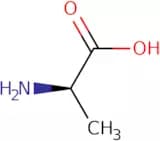
CAS:<p>D-Alanine is a small-molecule drug that inhibits the hepatitis B virus. It has been shown to decrease the levels of HBV-DNA in chronic hepatitis patients. D-Alanine may be effective for reducing hepatic steatosis and improving liver function, which may be due to its ability to reduce the expression of δ receptors. D-Alanine can inhibit viral replication by interfering with the polymerase chain reaction and inhibiting human serum albumin from binding to HBV-DNA. D-alanine also has an antioxidant effect and can scavenge anion radicals.</p>Formula:C3H7NO2Purity:Min. 98 Area-%Color and Shape:White PowderMolecular weight:89.09 g/molN-b-Boc-L-2,3-diaminopropionic acid
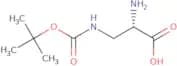
CAS:<p>N-Boc-L-2,3-diaminopropionic acid is an antimicrobial agent that has been shown to be active against Listeria monocytogenes. It inhibits the growth of bacteria by binding to cell walls and interfering with their functions. This compound has been shown to inhibit the growth of bacterial strains such as Camembert and lactobacillus at a concentration of 10mg/mL. N-Boc-L-2,3-diaminopropionic acid also has a high heat transfer coefficient, which makes it suitable for use in cooling systems for food processing plants.</p>Formula:C8H16N2O4Purity:Min. 95%Color and Shape:White PowderMolecular weight:204.22 g/mol3,5-Diiodo-L-tyrosine dihydrate
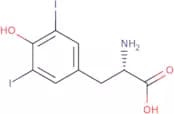
CAS:<p>There are many good reasons to eat fish and seafood, one of them is certainly the fact that they are rich in iodine salts, which are a fundamental for the endocrine activity of the thyroid gland. Iodine salts are enzymatically converted into molecular iodine, which adds to tyrosine residues in thyroglobulin forming diiodotyrosine. This is the first step towards the biosynthesis of thyroid hormones triodityronine T3 and tetraiodotyronine T4 which serve important regulatory functions in body metabolism and energy expenditure. Recently, the dietary introduction of potassium iodide and diiodotyrosine were compared in mice showing that diiodotyrosine can also be used effectively as food supplement preventing the potential damage from excessive intake of inorganic iodine salts.</p>Formula:C9H13I2NO5Purity:Min. 95.0 Area-%Molecular weight:469.02 g/mol7-Methyl-DL-tryptophan
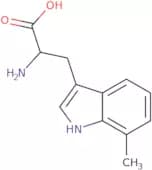
CAS:<p>7-Methyl-DL-tryptophan is a crystalline solid that is used as a protein analog. It is structurally similar to L-tryptophan and has been shown to have the same biochemical properties. 7-Methyl-DL-tryptophan can be used in the production of recombinant proteins, such as human growth hormone, and for structural analysis of proteins. This compound also has herbicide resistance, which may be due to its ability to bind with anthranilate. The solubility of 7-methyl-DL-tryptophan in water is about 0.1 mg/mL at room temperature.</p>Formula:C12H14N2O2Purity:Min. 95%Color and Shape:PowderMolecular weight:218.25 g/molAlafosfalin
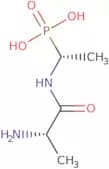
CAS:<p>Antibacterial phosphonopeptide mimic of peptidoglycan dipeptide D-Ala-D-Ala</p>Formula:C5H13N2O4PPurity:Min. 98 Area-%Color and Shape:White PowderMolecular weight:196.14 g/molFurosine hydrochloride
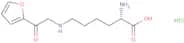
CAS:<p>Furosine hydrochloride is a white crystalline chemical with a molecular formula of C6H7N3O4S. It is soluble in water and has a melting point of about 140 degrees Celsius. Furosine hydrochloride is a useful building block for the synthesis of polymers, pharmaceuticals, organic semiconductors and other organic compounds. Furosine hydrochloride is used as an intermediate to produce fine chemicals such as polyurethanes, polyamides and amino acids. It can also be used as a reaction component in the synthesis of complex compounds such as 2-amino-5-nitrothiophene or 2,2'-dithiobis(benzothiazole). Furosine hydrochloride can be used as a scaffold for the production of various drugs such as antihypertensives or antidepressants.</p>Formula:C12H18N2O4·xHClPurity:Min. 98 Area-%Color and Shape:PowderMolecular weight:254.28 g/molL-Tyrosine - non-animal origin
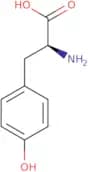
CAS:<p>Amino acid; precursor to neurotransmitters, hormones, pigments, natural phenols</p>Formula:C9H11NO3Color and Shape:White Off-White PowderMolecular weight:181.19 g/molL-Glutamic acid monopotassium salt monohydrate
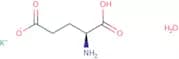
CAS:<p>Amino acid; neurotransmitter; flavor enhancer</p>Formula:C5H8KNO4·H2OColor and Shape:White PowderMolecular weight:203.23 g/molcis-4-Hydroxy-L-proline
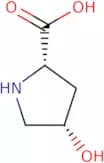
CAS:<p>Cis-4-Hydroxy-L-proline is a bound form of proline that is formed by the condensation of two molecules of glyoxylate. It is a basic structure and an intermediate in the synthesis of collagen, which is a protein found in connective tissue. Cis-4-Hydoxy-L-proline has been shown to be an active form of proline for the treatment of primary sclerosing cholangitis, as it can decrease bile acid levels. This compound has also been used as an analytical method for determining collagen content in biological samples. The polymerase chain reaction technique uses cis-4-Hydroxy-L-proline as a matrix effect to amplify DNA sequences. Cis-4-Hydroxy-L-proline has also been shown to have optimum concentrations at 3mM and 0.5mM in model systems.br></p>Formula:C5H9NO3Purity:Min. 95%Color and Shape:White PowderMolecular weight:131.13 g/molH-Lys(Boc)-AMC
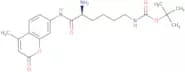
CAS:<p>H-Lys(Boc)-AMC is a useful building block for the synthesis of peptides, nucleic acids, and other complex molecules. It is a fine chemical that can be used as a reagent or speciality chemical in research laboratories. H-Lys(Boc)-AMC is also a versatile building block that can be used to synthesize complex compounds and scaffolds. This compound has been assigned CAS number 222037-62-9.</p>Formula:C21H29N3O5Purity:Min. 95%Color and Shape:PowderMolecular weight:403.47 g/molFmoc-L-tert-leucine
CAS:<p>Fmoc-L-tert-leucine is an amide that is used for the treatment of prostate cancer. Fmoc-L-tert-leucine has been shown to be effective in treating resistant prostate cancer cells in vivo, and it has been shown to inhibit the growth of prostate cancer cells in vitro. This drug also has a diagnostic effect on prostate cancer cells. The uptake of this drug by prostate cancer cells is dependent on the presence of caspase-9, which may be due to its ability to inhibit apoptosis.</p>Formula:C21H23NO4Purity:Min. 95%Color and Shape:White PowderMolecular weight:353.41 g/molTaurine
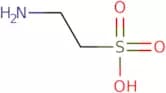
CAS:<p>Taurine is an amino acid that is found in the body and plays a number of different roles, including in biochemical composition, energy metabolism, and cell signaling. Taurine has been shown to be effective for the treatment of bowel disease and can be used as a reaction solution. It has also been shown to increase mitochondrial membrane potential and prevent cellular death in 3T3-L1 preadipocytes. Taurine inhibits growth factor-β1, which may be responsible for the inhibition of cellular proliferation and apoptosis induction. Taurine also decreases tubulointerstitial injury by increasing the synthesis of collagen type II and decreasing the production of reactive oxygen species. Taurine may play a role in reversing neuronal death through its interactions with intracellular targets such as tubulin.</p>Formula:C2H7NO3SColor and Shape:PowderMolecular weight:125.15 g/mol5-Hydroxy-L-tryptophan
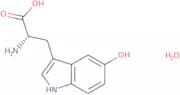
CAS:<p>5-hydroxy-L-tryptophan (5HTP) is a naturally occurring amino acid that is an intermediate in the synthesis of the neurotransmitter serotonin. 5HTP appears to be able to increase levels of serotonin in the brain and may be used to treat mood disorders, including depression and anxiety. In clinical trials, 5HTP was found to be as effective as some antidepressant drugs for treating depression. Studies have shown that 5HTP increases locomotor activity and dopamine concentrations. It also increases physiological functions such as temperature regulation, heart rate, blood pressure, and respiration rate. The mechanism by which 5HTP achieves these effects is not yet fully understood but may involve its ability to bind to specific receptors on cells in different regions of the brain.<br>5HTP has been shown to inhibit polymerase chain reactions (PCR) in vitro by binding to DNA gyrase and topoisomerase IV enzyme activities. It also inhibits fatty acid oxidation in vitro by binding</p>Formula:C11H12N2O3Purity:Min. 95%Color and Shape:PowderMolecular weight:220.22 g/mol