


Endocrinology/Hormones
Subcategories of "Endocrinology/Hormones"
- Androgen Receptor(229 products)
- Annexin A(16 products)
- Aromatase(22 products)
- Estrogen/progestogen Receptor(64 products)
- GPR(1 products)
- Glucocorticoid Receptor(165 products)
- LHRH(2 products)
- Opioid Receptor(325 products)
- Prostaglandin Receptor(122 products)
- RAAS(86 products)
- Reductase(51 products)
- Somatostatin(57 products)
- Thyroid hormone receptor(THR)(33 products)
- Vasopressin Receptor(48 products)
Found 3414 products of "Endocrinology/Hormones"
Mapracorat
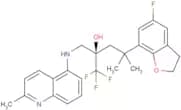
CAS:Mapracorat (ZK-245186, BOL-303242X) is a selective glucocorticoid receptor agonist,anti-inflammatory agent for atopic dermatitis and allergic conjunctivitis.Formula:C25H26F4N2O2Color and Shape:SolidMolecular weight:462.48Mouse MDA(Malondialdehyde) ELISA Kit
This assay employs the competitive inhibition enzyme immunoassay technique. The microtiter plate provided in this kit has been pre-coated with Mouse MDA protein. Standards or samples are added to the appropriate microtiter plate wells then with a biotin-conjugated antibody specific to Mouse MDA. Next, Avidin conjugated to Horseradish Peroxidase (HRP) is added to each microplate well and incubated. After TMB substrate solution is added. The enzyme-substrate reaction is terminated by the addition of sulphuric acid solution and the color change is measured spectrophotometrically at a wavelength of 450nm ± 10nm. The concentration of Mouse MDA in the samples is then determined by comparing the OD of the samples to the standard curve.
Horse IGF1(Insulin Like Growth Factor 1) ELISA Kit
The test principle applied in this kit is Sandwich enzyme immunoassay. The microtiter plate provided in this kit has been pre-coated with an antibody specific to Horse IGF1. Standards or samples are added to the appropriate microtiter plate wells then with a biotin-conjugated antibody specific to Horse IGF1. Next, Avidin conjugated to Horseradish Peroxidase (HRP) is added to each microplate well and incubated. After TMB substrate solution is added, only those wells that contain Horse IGF1, biotin-conjugated antibody and enzyme-conjugated Avidin will exhibit a change in color. The enzyme-substrate reaction is terminated by the addition of sulphuric acid solution and the color change is measured spectrophotometrically at a wavelength of 450nm ± 10nm. The concentration of Horse IGF1 in the samples is then determined by comparing the OD of the samples to the standard curve.
Rat VLDL(Very Low Density Lipoprotein) ELISA Kit
The test principle applied in this kit is Sandwich enzyme immunoassay. The microtiter plate provided in this kit has been pre-coated with an antibody specific to Rat VLDL. Standards or samples are added to the appropriate microtiter plate wells then with a biotin-conjugated antibody specific to Rat VLDL. Next, Avidin conjugated to Horseradish Peroxidase (HRP) is added to each microplate well and incubated. After TMB substrate solution is added, only those wells that contain Rat VLDL, biotin-conjugated antibody and enzyme-conjugated Avidin will exhibit a change in color. The enzyme-substrate reaction is terminated by the addition of sulphuric acid solution and the color change is measured spectrophotometrically at a wavelength of 450nm ± 10nm. The concentration of Rat VLDL in the samples is then determined by comparing the OD of the samples to the standard curve.
Relacorilant
CAS:Relacorilant is an oral glucocorticoid receptor antagonist with Ki of 7.2 nM, potential for treating Cushing's syndrome.
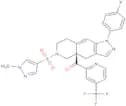
Formula:C27H22F4N6O3SPurity:98.53% - 99%Color and Shape:SolidMolecular weight:586.56PF-998425
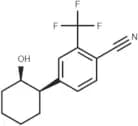
CAS:non-steroidal androgen receptor (AR) antagonistFormula:C14H14F3NOPurity:98%Color and Shape:SolidMolecular weight:269.26Omzotirome
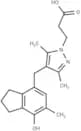
CAS:Omzotirome (TRC150094) is a functional analog of iodothyronines and holds potential for research on hyperlipidemia (WO2008149379).Formula:C19H24N2O3Color and Shape:SolidMolecular weight:328.412Phosphoramidon Disodium
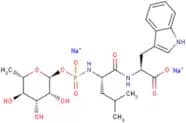
CAS:Phosphoramidon Disodium (Phosphoramidon Disodium Salt) Salt is a metalloendopeptidase inhibitor, widely used as a biochemical tool.Formula:C23H34N3Na2O10PPurity:98%Color and Shape:SolidMolecular weight:588.48GPR109 receptor agonist-2
CAS:Compound 5, a selective GPR109a agonist, exhibits a pEC50 value of 5.53 [1].Formula:C7H10N2O2Color and Shape:SolidMolecular weight:154.17L-372662
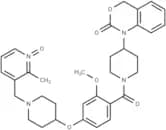
CAS:L-372662 is bioactive chemical.Formula:C33H38N4O6Color and Shape:SolidMolecular weight:586.6821-Acetoxypregna-1,4,9(11),16-tetraene-3,20-dione
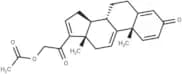
21-Acetoxypregna-1,4,9(11),16-tetraene-3,20-dione is a valuable organic compound for life sciences research [Catalog No.: T67476, CAS No.: 37413-91-5].Formula:C23H26O4Color and Shape:SolidMolecular weight:366.457ERB-196
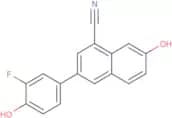
CAS:Erb-196 is an estrogen receptor-receptor agonist with non-steroidal selectivity.Formula:C17H10FNO2Purity:98%Color and Shape:SolidMolecular weight:279.27AZD9496 maleate
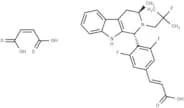
CAS:AZD9496 maleate is a highly potent and selective antagonist of the estrogen receptor alpha (ERα), exhibiting an IC50 value of 0.28 nM. This compound, AZD9496 maleate, is an orally bioavailable selective estrogen receptor degrader (SERD).Formula:C29H29F3N2O6Color and Shape:SolidMolecular weight:558.554SR17018
CAS:SR17018 is an mu-opioid-receptor (MOR) agonist, binding with GTPγS, with an EC50 of 97 nM.
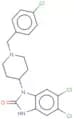
Formula:C19H18Cl3N3OPurity:99.89%Color and Shape:SolidMolecular weight:410.72Cebranopadol
CAS:Cebranopadol (GRT6005) is an analgesic NOP and opioid receptor agonist with Kis of 0.9 nM, 0.7 nM, 2.6 nM, 18 nM for human NOP, μ-opioid (MOP), κ-opioid (KOP)
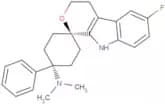
Formula:C24H27FN2OPurity:98.32% - 99.78%Color and Shape:SolidMolecular weight:378.48Pamoic acid
CAS:Pamoic acid is the orphan G protein-coupled receptor GPR35 agonist. Pamoic acid activates ERK and beta-arrestin2 and causes antinociceptive activity.
Formula:C23H16O6Purity:99.99%Color and Shape:Fine Yellow PowderMolecular weight:388.37GLP-1 (7-36) amide
CAS:This is an incretin hormone that causes glucose dependent release of insulin by pancreatic beta cells. It is the cleavage product of GLP-1 (1-36) amide peptide. This peptide, human GLP-1 (7–36), shares the same sequence with preproglucagon (78-107), amide, human.
Formula:C149H226N40O45Color and Shape:PowderMolecular weight:3,297.63 g/molANP (9-22)
ANP (9-22) is derived from the atrial natriuretic peptide (ANP) which is a cardiac hormone involved in maintaining cardio-renal homeostasis. This occurs through the activation of the guanylyl cyclase-coupled receptor, resulting in the increased concentration of cyclic guanylate monophosphate. Moreover its function in the processes of anti-proliferation and anti-angiogenesis allow it to take part in the cardiovascular remodelling process.ANP is a member of the natriuretic peptide family and it is encoded by the NPPA gene, located on chromosome 1. Once synthesized from the 151 amino acid pre-prohormone into its biologically active form, ANP is secreted by the atrial cardiomyocytes in the circulating forms: ANP (1-98) and ANP (99-126). This synthesis process involves the signal peptide being removed from the pre-prohormone resulting in proANP (1-126) which is converted into the circulating forms by the type II transmembrane serine protease Corin.
Color and Shape:PowderMolecular weight:1,373.7 g/molANP (13-26)
ANP (13-26) is derived from the atrial natriuretic peptide (ANP) which is a cardiac hormone involved in maintaining cardio-renal homeostasis. This occurs through the activation of the guanylyl cyclase-coupled receptor, resulting in the increased concentration of cyclic guanylate monophosphate. Moreover its function in the processes of anti-proliferation and anti-angiogenesis allow it to take part in the cardiovascular remodelling process.ANP is a member of the natriuretic peptide family and it is encoded by the NPPA gene, located on chromosome 1. Once synthesized from the 151 amino acid pre-prohormone into its biologically active form, ANP is secreted by the atrial cardiomyocytes in the circulating forms: ANP (1-98) and ANP (99-126). This synthesis process involves the signal peptide being removed from the pre-prohormone resulting in proANP (1-126) which is converted into the circulating forms by the type II transmembrane serine protease Corin.
Color and Shape:PowderMolecular weight:1,423.7 g/molGIP (1-42)-[C] human
Peptide derived from the Gastric inhibitory polypeptide (GIP), an inhibiting hormone of the secretin family of hormones. While GIP is a weak inhibitor of gastric acid secretion, its main role is to stimulate insulin secretion - in a glucose-dependent mechanism. Therefore, GIP is referred to as a glucose-dependent insulinotropic peptide.GIP is derived from a 153-amino acid pro-protein encoded by the GIP gene and circulates as a biologically active 42-amino acid peptide. It is synthesised by K cells, which are found in the mucosa of the duodenum and the jejunum of the gastrointestinal tract. GIP receptors are seven-transmembrane proteins found on β-cells in the pancreas. These β-cells are those that are able to simultaneously detect glucose and release insulin as a result to GIP binding.The clinical relevance of GIP is related to type 2 diabetes mellitus (T2DM)- studies have found that T2DM diabetics are unresponsive to GIP and have lower levels of GIP secretion after a meal when compared to non-diabetics. In research involving knockout mice, it was found that absence of the GIP receptors correlates with resistance to obesity.
Molecular weight:1,234.5 g/mol





![GIP (1-42)-[C] human](/_next/image/?url=https%3A%2Fstatic.cymitquimica.com%2Fproducts%2F3D%2Fthumb-webp%2FCRB1000509.webp&w=3840&q=75)