Androgen Receptor
The androgen receptor (AR) is a nuclear hormone receptor that is activated by binding to androgens, such as testosterone and dihydrotestosterone. This receptor plays a crucial role in the development and maintenance of male characteristics, as well as in the regulation of several physiological processes, including muscle growth, libido, and bone density. Androgen receptor inhibitors are widely studied in the context of prostate cancer, where AR signaling is often upregulated. At CymitQuimica, we offer a range of high-quality androgen receptor modulators to support your research in endocrinology, cancer biology, and hormone regulation.
Found 229 products of "Androgen Receptor"
Sort by
Purity (%)
0
100
|
0
|
50
|
90
|
95
|
100
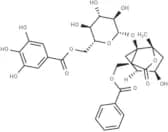
Galloylalbiflorin
CAS:Galloylalbiflorin, an AR antagonist with IC50 53.3μM, is sourced from Paeonia lactiflora roots, exhibiting anti-androgenic properties.Formula:C30H32O15Color and Shape:SolidMolecular weight:632.57MTX-23
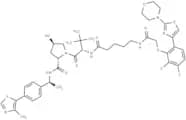
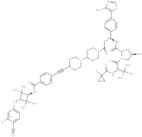
CAS:MTX-23, an AR-targeted Proteolysis Targeting Chimera (PROTAC), effectively degrades both AR-V7 and AR-FL, inhibiting the proliferation of CaP cells and inducingFormula:C43H53F2N7O7S2Color and Shape:SolidMolecular weight:882.05K2-B4-5e
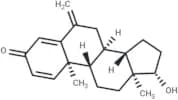
K2-B4-5e is a PROTAC compound designed to target the degradation of BRD4 and androgen receptor (AR) through a KLHDC2-based E3 ligase mechanism. It effectively induces rapid and potent degradation of BET family proteins and AR within cells.Formula:C52H49ClN8O6SMolecular weight:948.3184317β-hydroxy Exemestane
CAS:17β-hydroxy Exemestane is the primary active metabolite of exemestane .Formula:C20H26O2Color and Shape:SolidMolecular weight:298.42Gridegalutamide
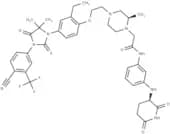
CAS:Gridegalutamide exhibits anti-androgen and anti-tumor activities.Formula:C41H45F3N8O5SColor and Shape:SolidMolecular weight:818.91PROTAC AR Degrader-4 TFA
PROTAC AR Degrader-4: IAP ligand, linker, AR binder; it's a SNIPER that degrades AR non-genetically.Formula:C45H68F3N3O11Color and Shape:SolidMolecular weight:884.03ARD-69
ARD-69, a potent PROTAC, degrades AR in prostate cancer, with low DC50 values in AR+ cell lines, and suppresses AR gene expression.Formula:C62H74ClFN8O7SColor and Shape:SolidMolecular weight:1129.83Dipropyl phthalate
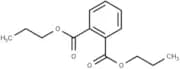
CAS:Dipropyl phthalate is a weak androgen receptor inhibitor, and can be used in biochemical experiments and drug synthesis.Formula:C14H18O4Purity:98.62%Color and Shape:SolidMolecular weight:250.29PROTAC AR Degrader-9
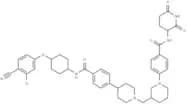
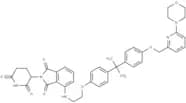
PROTAC AR Degrader-9 (Compound c6) is a PROTAC-based degrader specifically targeting the androgen receptor. It effectively degrades the androgen receptor in human dermal papilla cells (HDPC) with a DC50 of 262.38 nM. Additionally, this compound enhances the expression of paracrine factors, such as TGF-β1 and β-catenin, thereby promoting hair regeneration in mouse models. [Pink: ligand for target protein AR ligand-38; Black: linker; Blue: ligand for E3 ligase Cereblon]Formula:C43H49ClN6O5Color and Shape:SolidMolecular weight:765.339Faznolutamide
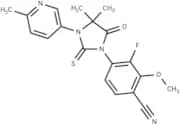
CAS:Faznolutamide is an antiandrogen agent [1] [2] .Formula:C19H17FN4O2SColor and Shape:SolidMolecular weight:384.43PROTAC AR Degrader-8
CAS:PROTAC AR Degrader-8 (Compound NP18) functions as a PROTAC degrader targeting the androgen receptor (AR) and effectively degrades AR-FL in both 22Rv1 and LNCaP cells with DC50 values of 0.018 μM and 0.14 μM, respectively. It also degrades AR-V7 in 22Rv1 cells with a DC50 of 0.026 μM. Additionally, PROTAC AR Degrader-8 inhibits the proliferation of 22Rv1 and LNCaP cancer cells, exhibiting IC50 values of 0.038 μM and 1.11 μM. It induces cell cycle arrest at the G2/M phase and triggers apoptosis in 22Rv1 cells (apoptosis). Demonstrating anticancer efficacy, PROTAC AR Degrader-8 shows activity in both mouse and zebrafish models. [Pink: ligand for target protein AR ligand-33; Black: linker; Blue: ligand for E3 ligase Cereblon]Formula:C40H41N5O7Color and Shape:SolidMolecular weight:703.7833-Cl-Pyridine-amide-acrylaldehyde-piperazine
3-Cl-Pyridine-amide-acrylaldehyde-piperazine serves as a synthetic intermediate for LO-4-25. LO-4-25 is a ligand for the androgen receptor (AR) DNA binding domain and is linked to a truncated fumaramide handle via a connector. In 22Rv1 cells, LO-4-25 demonstrates potent degradation of both AR and AR-V7.Color and Shape:Odour SolidARD-2051
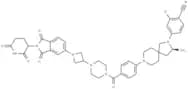
CAS:ARD-2051 is a potent, orally active proteolysis-targeting chimera degrader of the androgen receptor (AR), exhibiting DC50 values of 0.6 nM in degrading ARFormula:C43H45ClN8O5Purity:98%Color and Shape:SolidMolecular weight:789.32Lambertianic acid
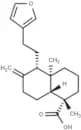
CAS:Lambertianic acid is a bioactive chemical that has anti-allergic and antibacterial effects.Formula:C20H28O3Purity:98%Color and Shape:SolidMolecular weight:316.4419,10-Dihydrophenanthrene
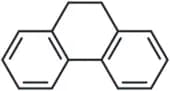
CAS:9,10-Dihydrophenanthrene has inhibitory activity against the androgen receptor and can be used in related research in the field of life sciences.Formula:C14H12Purity:98.76%Color and Shape:SolidMolecular weight:180.25Linuron
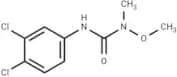
CAS:Linuron herbicide disrupts photosynthesis and acts as an androgen receptor antagonist.Formula:C9H10Cl2N2O2Purity:99.08%Color and Shape:White Crystalline Solid Linuron Is A Colorless Crystals Non Corrosive Used As An HerbicideMolecular weight:249.09LO-4-25
LO-4-25 is a covalent degrader targeting the androgen receptor (AR) and its splice variant AR-V7. It covalently binds to the E3 ubiquitin ligase CUL4 DCAF16, facilitating the ubiquitination of both AR and AR-V7, which are then recognized and degraded by the proteasome, leading to reduced protein levels of AR and AR-V7 in cells. LO-4-25 is promising for research on androgen-independent prostate cancer.Color and Shape:Odour SolidCl-4AS-1
CAS:steroidal androgen receptor agonistFormula:C26H33ClN2O2Purity:98%Color and Shape:SolidMolecular weight:441.01PROTAC AR Degrader-10
PROTACAR Degrader-10 is a protein degrader targeting androgen receptors (AR) with a DC50 value of ≤100 nM, and can be used in prostate cancer research.6-Amino-5-bromoquinoxaline
CAS:Compound PDK0245, with CAS No. 50358-63-9, is a fragment molecule that serves as an important scaffold for molecular linking, expansion, and modification. Compound PDK0245 provides a structural basis and research tool for the design and screening of novel drug candidates, and is commonly used in drug discovery, drug synthesis, and related research.Formula:C8H6BrN3Color and Shape:Yellow SolidMolecular weight:224.05