Enzyme
Enzyme inhibitors are molecules that bind to enzymes and decrease their activity. These inhibitors are widely used in research to study enzyme kinetics, regulation, and the role of specific enzymes in metabolic pathways. Enzyme inhibitors are also crucial in drug development, as many therapeutic agents function by inhibiting enzymes involved in disease processes. By targeting enzymes, these inhibitors can modulate biochemical pathways and offer potential treatments for various diseases. At CymitQuimica, we provide a comprehensive selection of high-quality enzyme inhibitors to support your research in biochemistry, pharmacology, and drug discovery.
Subcategories of "Enzyme"
- Carbonic Anhydrase(184 products)
- Hydroxylase(34 products)
- MPO(2 products)
- Reductase(52 products)
- Tyrosinase(70 products)
Found 3602 products of "Enzyme"
Sort by
Purity (%)
0
100
|
0
|
50
|
90
|
95
|
100
Glucosyltransferase 227-freeze dried
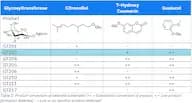
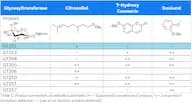
CAS:<p>Glucosyltransferase (GTase) is the enzyme that transfers glucose to another organic molecule (aglycon), establishing glycosidic linkage. UDP-glucose dependent GTases are part of the enzyme family of glucosyltransferases, they are versatile tools in glucosylation reactions. Different GTases have different substrate specificities. For the specificity of GT227 Glucosyltransferase, please see Table 1 that lists the available GTases with GT227 highlighted.Color: beigeForm: lyophilisateProtein content: 0.8 mg/mgThe glucosyltransferase was tested in a glucosylation reaction of a preferred substrate. High conversion after up to 24 h reaction time was observed.<br>Not sure which GTase to choose? Consider our Glucosyltransferase kit, which contains all 8 Glucosyltransferases.</p>NEK9 Protein, Human, Recombinant (His)
Expression system: E. coli<br>Length: 52-308, Partial<br>Activity: Not TestedPurity:85%Color and Shape:SoildMolecular weight:36.5 kDa (Predicted); 37 kDa (Reducing conditions)Glucosyltransferase 210-freeze dried
CAS:<p>Glucosyltransferase (GTase) is the enzyme that transfers glucose to another organic molecule (aglycon), establishing glycosidic linkage. UDP-glucose dependent GTases are part of the enzyme family of glucosyltransferases, they are versatile tools in glucosylation reactions. Different GTases have different substrate specificities. For the specificity of GT210 Glucosyltransferase, please see Table 1 that lists the available GTases with GT210 highlighted.Color: beigeForm: lyophilisateProtein content: 0.8 mg/mg The glucosyltransferase was tested in a glucosylation reaction of a preferred substrate. High conversion after up to 24 h reaction time was observed.<br>Not sure which GTase to choose? Consider our Glucosyltransferase kit, which contains all 8 Glucosyltransferases.</p>Glucosyltransferase 203-freeze dried
CAS:<p>Glucosyltransferase (GTase) is the enzyme that transfers glucose to another organic molecule (aglycon), establishing glycosidic linkage. UDP-glucose dependent GTases are part of the enzyme family of glucosyltransferases, they are versatile tools in glucosylation reactions. Different GTases have different substrate specificities. For the specificity of GT203 Glucosyltransferase, please see Table 1 that lists the available GTases with GT203 highlighted.Color: beigeForm: lyophilisateProtein content: 0.5 mg/mgThe glucosyltransferase was tested in a glucosylation reaction of a preferred substrate. High conversion after up to 24 h reaction time was observed.<br>Not sure which GTase to choose? Consider our Glucosyltransferase kit, which contains all 8 Glucosyltransferases.</p>Glucosyltransferase 201-freeze dried
CAS:<p>Glucosyltransferase (GTase) is the enzyme that transfers glucose to another organic molecule (aglycon), establishing glycosidic linkage. UDP-glucose dependent GTases are part of the enzyme family of glucosyltransferases, they are versatile tools in glucosylation reactions. Different GTases have different substrate specificities. For the specificity of GT201 Glucosyltransferase, please see Table 1 that lists the available GTases with GT201 highlighted.Color: beigeForm: lyophilisateProtein content: 0.5 mg/mgThe glucosyltransferase was tested in a glucosylation reaction of a preferred substrate. High conversion after up to 24 h reaction time was observed.<br>Not sure which GTase to choose? Consider our Glucosyltransferase kit, which contains all 8 Glucosyltransferases.</p>Urease from Canavalia ensiformis
CAS:<p>Urease from Canavalia ensiformis (Jack bean urease, EC 3.5.1.5) is an enzyme that catalyses the following reaction: (NH2)2CO + H2O → CO2 + 2 NH3 One unit of urease will yield 1.0 µmole of NH3 from urea per min at pH 7.0 and 25 °C.</p>Molecular weight:480 g/molLacBuster® - S 2000 IU, β-lactamase I & II, lyophilized, γ irradiated - EBL023.2
LacBuster®-S 2000 is a solid and Gamma-irradiated, freeze-dried, broad range beta-lactamase formulation with 2000 IU beta-lactamase II and 20000 IU beta-lactamase I activity per vial.Neuraminidase from Vibrio Chloerae
CAS:<p>Neuraminidase (Exo-α-sialidase, sialidase, systematic name acetylneuraminyl hydrolase; EC 3.2.1.18) is an enzyme that catalyzes hydrolysis of glycosidic linkages of neuraminic acids. As it is exo-hydrolase, it hydrolyzes terminal N- or O- acylneuramic acid units, that are linked by α2,3-, α2,6-, and α2,8- glycosidic bonds. One unit of neuraminidase will hydrolyze 1 μmol N-acetyl-neuraminosyl-D-lactose under optimal conditions.</p>Formula:C21H25NO11Purity:(Activity U/Ml) ≥ 0.00Molecular weight:467.42 g/molCarboxypeptidase A from bovine pancreas
CAS:<p>Carboxypeptidase A (EC 3.4.17.1) is an exopeptidase enzyme. It hydrolyzes peptide bonds of C-terminal residues with aliphatic or aromatic side-chains. One unit of Carboxypeptidase A will hydrolyze 1.0 μmole of hippuryl-L-phenylalanine per min at pH 7.5 and 25 °C.</p>EUCODIS® Nitrilhydratase 20, recombinant enzyme - ENH020
<p>Nitrile hydratase 20 recombinantly expressed in E. coli comes in a freeze-dried formulation. Nitrile hydratases can be utilized to convert nitriles into their corresponding amides, e.g. to produce acrylamide from acrylonitrile. Additional applications include the removal of nitriles from industrial wastewater. Our nitrile hydratases have been tested for hydrolysis of the following substrates:cyclohexanecarbonitrile, cinnamonitrile, benzonitrile, methacrylonitrile, pivalonitrile.</p>Purity:Min. 95%Nitrilhydratase Kit, 10 recombinant enzymes with different substrate specificities - ENH Kit
<p>Kit of 10 unique, nitrile hydratases recombinantly expressed in E. coli for screening. Nitrile hydratases can be utilized to convert nitriles into their corresponding amides, e.g. to produce acrylamide from acrylonitrile. Additional applications include the removal of nitriles from industrial wastewater. Please note, that the kit enzymes can also be supplied as whole cell biocatalysts in large scale.</p>EUCODIS® Nitrilhydratase 14, recombinant enzyme - ENH014
<p>Nitrile hydratase 14 recombinantly expressed in E. coli comes in a freeze-dried formulation. Nitrile hydratases can be utilized to convert nitriles into their corresponding amidese, e.g. to produce acrylamide from acrylonitrile. Additional applications include the removal of nitriles from industrial wastewater. Our nitrile hydratases have been tested for hydrolysis of the following substrates:cyclohexanecarbonitrile, cinnamonitrile, benzonitrile, methacrylonitrile, pivalonitrile.</p>Glutaminase from escherichia coli
CAS:Glutaminase (glutaminase I, L-glutaminase, glutamine aminohydrolase; EC 3.5.1.2) is an enzyme that catalyzes the following reaction: L-glutamine + H2O → L-glutamate + NH4+ One unit of glutaminase will convert 1.0 μmole of L-glutamine into L-glutamate per min at pH 4.9 and 37 °C.Purity:Min. 95%EUCODIS® Nitrilhydratase 17, recombinant enzyme - ENH017
<p>Nitrile hydratase 17 recombinantly expressed in E. coli comes in a freeze-dried formulation. Nitrile hydratases can be utilized to convert nitriles into their corresponding amides, e.g. to produce acrylamide from acrylonitrile. Additional applications include the removal of nitriles from industrial wastewater. Our nitrile hydratases have been tested for hydrolysis of the following substrates:cyclohexanecarbonitrile, cinnamonitrile, benzonitrile, methacrylonitrile, pivalonitrile.</p>Sucrose phosphorylase, recombinant, expressed in E. coli, ≥45 units/mg
CAS:<p>Sucrose phosphorylase (sucrose glucosyltransferase, disaccharide glucosyltransferase, systemic name Sucrose:orthophosphate α-D-glucosytransferase; EC 2.4.1.7) is an enzyme that catalyzes the following reaction: sucrose + Pi ⇌ D-fructose + α-D-glucose-1-phosphate One unit of Sucrose phosphorylase will produce 1.0 μmole of D-fructose per minute in the presence of sucrose and phosphate at pH 7.6 and 25 °C.</p>EUCODIS® Nitrilhydratase 19, recombinant enzyme - ENH019
<p>Nitrile hydratase 19 recombinantly expressed in E. coli comes in a freeze-dried formulation. Nitrile hydratases can be utilized to convert nitriles into their corresponding amides, e.g. to produce acrylamide from acrylonitrile. Additional applications include the removal of nitriles from industrial wastewater. Our nitrile hydratases have been tested for hydrolysis of the following substrates:cyclohexanecarbonitrile, cinnamonitrile, benzonitrile, methacrylonitrile, pivalonitrile.</p>D-Ribulose 1,5-diphosphate carboxylase from spinach
CAS:<p>D-Ribulose 1,5-diphosphate carboxylase, commonly known as RuBisCO, is an essential enzyme that catalyzes the first major step of carbon fixation, a process by which inorganic carbon from the atmosphere is converted into organic molecules. This enzyme is derived from spinach, a common model organism used in plant biology research due to its accessibility and well-characterized photosynthetic pathways.</p>Purity:Min. 95%EUCODIS® Nitrilhydratase 22, recombinant enzyme - ENH022
<p>Nitrile hydratase 22 recombinantly expressed in E. coli comes in a freeze-dried formulation. Nitrile hydratases can be utilized to convert nitriles into their corresponding amides, e.g. to produce acrylamide from acrylonitrile. Additional applications include the removal of nitriles from industrial wastewater. Our nitrile hydratases have been tested for hydrolysis of the following substrates:cyclohexanecarbonitrile, cinnamonitrile, benzonitrile, methacrylonitrile, pivalonitrile.</p>Purity:Min. 95%ODC1 Protein, Human, Recombinant (His)
Ornithine decarboxylase (ODC1) is an enzyme which belongs to the Orn/Lys/Arg decarboxylase class-II family.Color and Shape:Lyophilized PowderMolecular weight:25 &58 KDa (reducing condition)Thioglucosidase from Sinapis alba (white mustard) seed
CAS:<p>Thioglucosidase (thioglucoside glucohydrolase, Myrosinase, sinigrinase, sinigrase; EC 3.2.1.147) is an enzyme that cleaves thio-linked glucosides:a thioglucoside + H2O ⇌ a sugar + a thiol (the thiol formed is usually unstable and undergoes spontaneous re-arrangement into a isothiocyanate through a loss of a sulfate group)One unit will produce 1.0 μmole glucose per min from sinigrin (a thio-linked glucoside) at pH 6.0 and 25 °C.</p>