Enzyme
Subcategories of "Enzyme"
- Carbonic Anhydrase(196 products)
- Hydroxylase(36 products)
- MPO(2 products)
- Reductase(51 products)
- Tyrosinase(71 products)
Found 3619 products of "Enzyme"
β-Glucuronidase/hCAII-IN-2
β-Glucuronidase/hCAII-IN-2 is a potent inhibitor of β-glucuronidase and hCA II, and their IC50 values were 670.7 μM and 21.77 μM, respectively.Formula:C31H23NO8Color and Shape:SolidMolecular weight:537.52Tyrosinase-IN-37
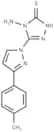
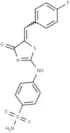
CAS:Tyrosinase-IN-37 (Compound 3c) is a potent inhibitor of tyrosinase, with an IC50 value of 1.02 μM, which is 14 times more effective than kojic acid (IC50 of 14.74 μM). This compound effectively prevents the browning of Rosa roxburghii and can also inhibit browning not caused by tyrosinase.Formula:C12H12N6SColor and Shape:SolidMolecular weight:272.33hCA XII/II/IX-IN-1
hCA XII/II/IX-IN-1 inhibits hCA I/II/IX/XII (IC50: 2.6, 0.004, 0.005, 0.001 μM) with anticancer properties.Formula:C25H34N4O7SColor and Shape:SolidMolecular weight:534.63Valerate sodium
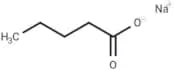
CAS:Valerate sodium is a potential Carbonic anhydrase 1/2 inhibitor for biochemical experiments.Formula:C5H9NaO2Purity:99.84% - 99.91%Color and Shape:SolidMolecular weight:124.11Carbonic anhydrase inhibitor 2
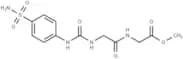
CAS:Compound 7c inhibits carbonic anhydrase II, lowering intraocular pressure in glaucomatous rabbits.Formula:C12H16N4O6SColor and Shape:SolidMolecular weight:344.34EGFR/VEGFR2-IN-2
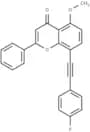
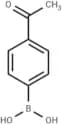
EGFR/VEGFR2-IN-2 (compound 4b) serves as a dual inhibitor of VEGFR-2 and EGFR.Formula:C24H15FO3Color and Shape:SolidMolecular weight:370.374-Acetylphenylboronic acid
CAS:4-Acetylphenylboronic acid acts as an effective inhibitor targeting carbonic anhydrase II (CAII), displaying inhibitory concentrations (IC50) of 246 μM for bovine CAII (bCA II) and 281.40 μM for human CAII (hCA II).Formula:C8H9BO3Color and Shape:SolidMolecular weight:163.97Tyrosinase-IN-20
CAS:Tyrosinase-IN-20 (compound 6a) acts as a potent Tyrosinase inhibitor, demonstrating an IC 50 value of 28.50 μM [1].Formula:C17H18N2O2SColor and Shape:SolidMolecular weight:314.4CAII-IN-3
CAII-IN-3, a thiosemicarbazone, potently inhibits CA-II with an IC50 of 13.4 μM.Formula:C18H18F2N4SColor and Shape:SolidMolecular weight:360.42hCAII-IN-4
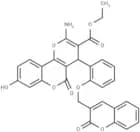
CAS:hCAII-IN-4 (Compound 12j) is a potent inhibitor of human carbonic anhydrase II (hCA II), exhibiting an inhibitory concentration (IC50) of 7.78 μM.Formula:C31H23NO9Color and Shape:SolidMolecular weight:553.52Sulclamide
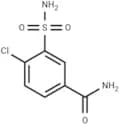
CAS:Sulclamide, a sulfamoylbenzoic acid derivative, exhibits diuretic activity and functions as an inhibitor of carbonic anhydrase [1].Formula:C7H7ClN2O3SColor and Shape:SolidMolecular weight:234.66α-Glucosidase-IN-63
CAS:α-Glucosidase-IN-63 (Compound 4d) serves as an α-Glucosidase inhibitor with an IC 50 value of 0.44 μM. Additionally, it exhibits inhibitory activity against hCA II, demonstrating a K i of 7.0 nM. The compound is also effective when administered orally. [1]Formula:C16H12FN3O3S2Color and Shape:SolidMolecular weight:377.41GSK 366
CAS:GSK 366 is a potent kynurenine-3-monooxygenase (KMO) inhibitor (IC50s: 0.7 nM and 2.3 nM for P. fluorescens-KMO and human KMO).Formula:C17H16ClN3O4Purity:98%Color and Shape:SolidMolecular weight:361.78Carbonic anhydrase inhibitor 10
CA inhibitor 10 targets MCF-7 cells, IC50: 11.9 μM; potent h CA IX inhibitor, Ki: 6.2 nM. Anti-cancer research.Formula:C14H17N5O3SColor and Shape:SolidMolecular weight:335.38Plodicitinib
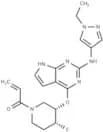
CAS:Plodicitinib is an inhibitor of Janus tyrosine kinase 3/TEC family kinase, exhibiting anti-inflammatory properties.Formula:C19H22FN7O2Color and Shape:SolidMolecular weight:399.422Carbonic anhydrase inhibitor 4
CA inhibitor 4, photoprobe; targets hCA I-XIV; Ki: 640-1166 nM.Formula:C21H18N2O4SColor and Shape:SolidMolecular weight:394.44Carbonic anhydrase inhibitor 19
CAS:Carbonic anhydrase inhibitor19 (compound 26a) targets glaucoma-associated isozymes hCA II and hCA XII, with inhibition constants (Kis) of 9.4 nM and 6.7 nM, respectively. This compound is effective in reducing intraocular pressure.Formula:C23H25N3O6S2Molecular weight:503.59Carbonic anhydrase inhibitor 17
CAS:Carbonic anhydrase inhibitor 17 (compound 7c) is a pyrazine-based sulfonamide that acts as a carbonic anhydrase II inhibitor, with an IC50 value of 0.63 nM.Formula:C18H15ClN4O3S2Molecular weight:434.92Alkaline phosphatase
CAS:One unit of alkaline phosphatase (EC 3.1.3.1) will hydrolyze 1.0 µmol of 4-nitrophenyl phosphate per min at 25°C and pH 9.6.Purity:Min. 95%Color and Shape:PowderKRAS Protein, Human, Recombinant (G12S, GST)
Expression system: E. coli<br>Length: 1-169, Partial<br>Activity: BLI
Color and Shape:Odour Lyophilized PowderCarboxypeptidase Q Protein, Human, Recombinant (His)
Expression system: HEK297 Cells<br>Length: 21-472, Full Length of Mature Protein<br>Activity: Not Tested
Color and Shape:Lyophilized PowderMolecular weight:49.72 kDa (Predicted)ACE2/ACEH Protein, Human, Recombinant (hFc), Biotinylated
ACE2/ACEH Protein, Human, Recombinant (hFc), Biotinylated is expressed in HEK293 mammalian cells with hFc tag.
Color and Shape:Lyophilized PowderMolecular weight:110.3 kDa (predicted); 127.74 kDa (reducing condition, due to glycosylation)Ref: TM-TMPY-06334
Discontinued productPFKFB3 Protein, Human, Recombinant (His & GST)
Fructose-2,6-biphosphatase 3, also known as 6-phosphofructo-2-kinase or PFK2 or PFKFB3, is a potent activator of phosphofructokinase, which is a rate-limiting
Color and Shape:Lyophilized PowderMolecular weight:87.4 kDa (predicted); 75 kDa (reducing conditions)Ref: TM-TMPY-04474
Discontinued productGUCY2C Protein, Canine, Recombinant (His)
GUCY2C Protein, Canine, Recombinant (His) is expressed in HEK293 mammalian cells with His tag.
Color and Shape:Lyophilized PowderMolecular weight:47.9 kDa (predicted); 84.32 kDa (reducing conditions)Ref: TM-TMPY-06518
Discontinued productCyclophilin A Protein, Human, Recombinant (His)
Cyclophilin A Protein, Human, Recombinant (His) is expressed in E.
Color and Shape:Lyophilized PowderMolecular weight:19.4 kDa (predicted); 19.4 kDa (reducing conditions)Ref: TM-TMPY-02177
Discontinued productPKC iota Protein, Human, Recombinant (GST)
Protein kinase C iota type, also known as Atypical protein kinase C-lambda/iota, aPKC-lambda/iota and PRKCI, is a cytoplasm, membrane and nucleus protein which
Color and Shape:Lyophilized PowderMolecular weight:93.5 kDa (predicted); 100 kDa (reducing conditions)GST Protein, Schistosoma japonicum, Recombinant
Genetic engineers have used glutathione S-transferase to create the GST gene fusion system.
Purity:97.9%Color and Shape:Lyophilized PowderMolecular weight:26.9 kDa (predicted); 28 kDa (reducing conditions)GUCY2C Protein, Cynomolgus, Recombinant (His)
GUCY2C Protein, Cynomolgus, Recombinant (His) is expressed in HEK293 mammalian cells with His tag.
Color and Shape:Lyophilized PowderMolecular weight:47.59 kDa (predicted); 81.26 kDa (reducing conditions)VEGFR3/FLT4 Protein, Human, Recombinant (His & Avi), Biotinylated
VEGFR3/FLT4 Protein, Human, Recombinant (His & Avi), Biotinylated is expressed in HEK293 mammalian cells with His and Avi tag.
Color and Shape:Lyophilized PowderMolecular weight:87.80 kDa (predicted); 126.18, 81.32 and 69.37 kDa (reducing conditions)Ref: TM-TMPY-06620
Discontinued productPPM1G Protein, Human, Recombinant (aa 317-546, His)
Protein phosphatase 1G, also known as Protein phosphatase 1C, Protein phosphatase 2C isoform gamma, Protein phosphatase magnesium-dependent 1 gamma, PP2C-gamma
Color and Shape:Lyophilized PowderMolecular weight:26.6 kDa (predicted); 30 kDa (reducing conditions)Ref: TM-TMPY-02197
Discontinued productCarbonic Anhydrase 9 Protein, Human, Recombinant (His & Avi), Biotinylated
Carbonic Anhydrase 9 Protein, Human, Recombinant (His & Avi), Biotinylated is expressed in HEK293 mammalian cells with His and Avi tag.
Color and Shape:Lyophilized PowderMolecular weight:44.23 kDa (predicted); 52.2 kDa (reducing conditions)Ref: TM-TMPY-06936
Discontinued productCarboxypeptidase B2 Protein, Human, Recombinant (His)
Carboxypeptidase B2 Protein, Human, Recombinant (His) is expressed in HEK293 mammalian cells with His tag.
Color and Shape:Lyophilized PowderMolecular weight:47.4 kDa (predicted); 45-50 kDa (reducing condition, due to glycosylation)EUCODIS® Lipase 037, screening grade, recombinant, from microbial sources - EL037
Lipase 37 recombinantly expressed in E. coli comes in a spray-dried formulation. It has its pH optimum at 8-9 and temp. optimum at <50°C. Lipases belong to the family of esterases and naturally act on triglycerides at lipid-water interfaces catalyzing hydrolytic reactions, esterifications and transesterification reactions in industrial and food applications. Lipase 37 was shown to hydrolyze p-Nitrophenyl esters of butyrate (48 % activity), octanoate (100 %), laurate (85 %), palmitate (5 %) and stearate (1 %).
α-Glucosidase, from yeast
CAS:α-Glucosidase (EC 3.2.1.20) is a glycoside hydrolase enzyme that hydrolyzes α-1,4-linked D-glucose residues (e.g. in starch or oligosaccharides) to produce α-D-glucose. One unit of α-Glucosidase will release 1.0 µmole of p-nitrophenol from the chromogenic substrate mimic 4-nitrophenyl α-D-glucopyranoside per minute at pH 6.8 and 37 °C.
Color and Shape:White PowderGlucosyltransferase227-freeze dried
CAS:Glucosyltransferase227-freeze dried is an enzyme-derived product, originating from microbial sources known for its role in catalyzing the transfer of glucose moieties from a donor molecule to specific acceptor molecules. The enzyme operates by facilitating covalent bond formation between glucose and target substrates, displaying specificity that can be exploited in various biochemical pathways.
Nicotinamide phosphoribosyltransferase, liquid
CAS:Please enquire for more information about Nicotinamide phosphoribosyltransferase, liquid including the price, delivery time and more detailed product information at the technical inquiry form on this page
EUCODIS® Lipase 032, screening grade, recombinant, from microbial sources - EL032
Lipase 32 recombinantly expressed in E. coli comes in a spray-dried formulation. It has its pH optimum at 7 and temp. optimum at 50-70°C. Lipases belong to the family of esterases and naturally act on triglycerides at lipid-water interfaces catalyzing hydrolytic reactions, esterifications and transesterification reactions in industrial and food applications. Lipase 32 was shown to hydrolyze p-Nitrophenyl esters of butyrate (100 % activity), octanoate (88 %), laurate (11 %), palmitate (0.3 %) and stearate (0.1 %).
Lipase, powder, food-grade, broad spectrum
CAS:Lipase, powder, food-grade, broad spectrum is an enzyme product, which is derived from microbial sources such as fungi and bacteria through a fermentation process. This enzyme operates by catalyzing the hydrolysis of fats into free fatty acids and glycerol, facilitating the breakdown of complex lipid molecules.
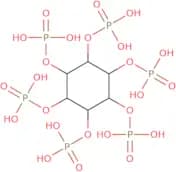
Phytate 1-phosphatase
CAS:Phytate 1-phosphatase is a phosphatase enzyme that cleaves orthophosphate groups from phytic acid's inositol ring. This releases inorganic phosphate.
Purity:Min. 95%Color and Shape:Clear LiquidRef: 3D-FP146295
Discontinued productRibokinase, liquid
CAS:Please enquire for more information about Ribokinase, liquid including the price, delivery time and more detailed product information at the technical inquiry form on this page
EUCODIS® Lipase 068, screening grade, recombinant, from microbial sources - EL068
Lipase 68 recombinantly expressed in E. coli comes in a spray-dried formulation. It has its pH optimum at 7-9 and temp. optimum at 30°C. Lipases belong to the family of esterases and naturally act on triglycerides at lipid-water interfaces catalyzing hydrolytic reactions, esterifications and transesterification reactions in industrial and food applications. Lipase 68 was shown to hydrolyze p-Nitrophenyl esters of butyrate (100 % activity), octanoate (75 %), laurate (8 %), palmitate (1 %) and stearate (0.1 %).
EUCODIS® Lipase 016, screening grade, recombinant, from microbial sources - EL016
Lipase 16 recombinantly expressed in E. coli comes in a spray-dried formulation. It has its pH optimum at 7-8 and temp. optimum at >40°C. Lipases belong to the family of esterases and naturally act on triglycerides at lipid-water interfaces catalyzing hydrolytic reactions, esterifications and transesterification reactions in industrial and food applications. Lipase 16 was shown to hydrolyze p-Nitrophenyl esters of butyrate (58 % activity compared to octanoate), octanoate (100 %), laurate (40 %), palmitate (27 %), stearate (13 %), arachidate (2 %) and behenate (0.2 %).
Sucrose phosphorylase, liquid
CAS:Please enquire for more information about Sucrose phosphorylase, liquid including the price, delivery time and more detailed product information at the technical inquiry form on this page
Endopeptidase, liquid, food grade, broad spectrum
CAS:Endopeptidase, liquid, food grade, broad spectrum is an enzymatic product used in the food industry. It is derived from microbial sources, specifically engineered strains capable of producing high yields of proteolytic enzymes. This endopeptidase functions by hydrolyzing peptide bonds within proteins, targeting internal sites to break down long protein chains into smaller peptides and amino acids.
Phospholipase D 040
CAS:Phospholipases D belong to the family of esterases and act on phosphatidylcholine in the plasma membrane to release phosphatidic acid (PA) and choline. Phospholipases D can be used as versatile tools in hydrolysis and transphosphatidylation reactions for industrial, chemical and food applications.
Catalase 01
CAS:A catalase product which neutralizes hydrogen peroxide at much higher concentrations (>10 %) compared to pyruvate, which is only capable of completely neutralizing hydrogen peroxide at the lowest concentration tested (2 %). Catalase (EC 1.11.1.6) catalyzes the following reaction:2H2O2 → 2H2O + O21 unit of catalase will decompose 1.0 μmole of H2O2 per min at pH 7.0 and 25 °C.
EUCODIS® Lipase 030, screening grade, recombinant, from microbial sources - EL030
Lipase 30 recombinantly expressed in E. coli comes in a spray-dried formulation. It has its pH optimum at 5.5-8 and temp. optimum at >55°C. Lipases belong to the family of esterases and naturally act on triglycerides at lipid-water interfaces catalyzing hydrolytic reactions, esterifications and transesterification reactions in industrial and food applications. Lipase 30 was shown to hydrolyze p-Nitrophenyl esters of butyrate (100 % activity), octanoate (72 %), laurate (38 %), palmitate (7 %) and stearate (2 %).
Phospholipase D 040, concentrated (100 U/mg), spray-dried, recombinant, of prokaryotic origin
CAS:Phospholipase D 040, concentrated (100 U/mg), spray-dried, recombinant, of prokaryotic origin, is an enzyme preparation designed for advanced biochemical applications. This enzyme is derived from a prokaryotic source through recombinant DNA technology, allowing for high purity and activity. Phospholipase D functions by catalyzing the hydrolysis of phospholipids to produce phosphatidic acid and free head groups, which is a crucial reaction in both lipid signaling and membrane dynamics.
Purity:Min. 95%Proteinase K, high-quality, freeze-dried, recombinant
CAS:A proteolytic enzyme; degrades protein contaminants in nucleic acid preparations