Enzyme
Enzyme inhibitors are molecules that bind to enzymes and decrease their activity. These inhibitors are widely used in research to study enzyme kinetics, regulation, and the role of specific enzymes in metabolic pathways. Enzyme inhibitors are also crucial in drug development, as many therapeutic agents function by inhibiting enzymes involved in disease processes. By targeting enzymes, these inhibitors can modulate biochemical pathways and offer potential treatments for various diseases. At CymitQuimica, we provide a comprehensive selection of high-quality enzyme inhibitors to support your research in biochemistry, pharmacology, and drug discovery.
Subcategories of "Enzyme"
- Carbonic Anhydrase(178 products)
- Hydroxylase(30 products)
- MPO(2 products)
- Reductase(52 products)
- Tyrosinase(67 products)
Found 3587 products of "Enzyme"
Sort by
Purity (%)
0
100
|
0
|
50
|
90
|
95
|
100
EUCODIS® CalB01 IA, engineered variant of Candida antarctica Lipase B, immobilized by adsorption on hydrophobic carrier - ELCB01IA
<p>Lipases belong to the family of esterases and naturally act on triglycerides at lipid-water interfaces. Lipases/esterases can be used as versatile tools in hydrolytic reactions, esterifications and transesterification reactions in industrial and food applications. The CalB01 IA lipase has been immobilized on a hydrophobic carrier by adsorption. The immobilized CalB01 lipase has a temperature optimum in the 40 - 50 °C range and pH optimum between pH 5 and 8.</p>β-Glucanase 2, thermostable
CAS:<p>Thermostable β-Glucanase 2 is an enzyme that hydrolases β-Glucans into glucose. One unit of β-Glucanase 2 will produce 1.0 μmole of glucose from β-glucan per minute at pH 5.8 and 70 °C.</p>Purity:Min. 95%Aspartic acid proteinase
CAS:<p>Aspartic acid proteinase is a type of proteolytic enzyme, which originates from various biological sources including humans, fungi, and plants. It is characterized by its action via two critical aspartic acid residues in the active site, which facilitate the hydrolysis of peptide bonds in proteins. This enzyme operates optimally in acidic environments, making it crucial in processes like digestion and protein processing within cellular compartments such as lysosomes.</p>α-Mannosidase
CAS:<p>α-Mannosidase (α-D-mannopyranosidase, 1,2-α-mannosidase, 1,2-α-D-mannosidase, exo-α-mannosidase, α-D-mannosidase, systematic name α-D-mannoside mannohydrolase; EC 3.2.1.24) is an enzyme that cleaves α-mannose to produce glucose. One unit of α-Mannosidase will hydrolyze 1.0 µmole of chromogenic phosphate mimic p-nitrophenyl-α-p-mannoside to p-nitrophenol in 1 minute at pH 5.0 and 37°C.</p>Molecular weight:65.4 g/molLuciferase from Vibrio fischeri
CAS:<p>Luciferase enzymes sourced from Vibrio fischeri</p>Color and Shape:PowderSerratiopeptidase
CAS:<p>Serratiopeptidase (serratio peptidase, serratia peptidase, serrapeptidase, serratia E-15 protease, serralysin, serrapeptase; EC 3.4.24.40) is a proteolitic enzyme (proteinase) that is produced by Serratia marcescens.</p>Purity:Min. 95%Color and Shape:PowderAminopeptidase I from streptomyces griseus
CAS:<p>Aminopeptidase I is a specialized proteolytic enzyme derived from the actinobacterium Streptomyces griseus. This enzyme functions by catalyzing the cleavage of amino acids from the N-terminus of peptides, which plays a pivotal role in protein metabolism and regulation. The source of this enzyme, Streptomyces griseus, is well-regarded for producing a variety of bioactive compounds owing to its rich genetic and biochemical repertoire.</p>Aminopeptidase, Aeromonas proteolytica
CAS:<p>One unit of Aminopeptidase (3.4.11.10) will hydrolyze 1.0 μmole of L-leucine p-nitroanilide to p-nitroaniline and L-leucine per min at pH 8.0 and 25 °C.</p>β-1,4-Galactosyltransferase 1
<p>β-1,4-Galactosyltransferase 1 is an enzyme that catalyzes the synthesis of the glycosaminoglycan-protein linkage in proteoglycans.</p>Cytochrome C oxidase
CAS:<p>Cytochrome C oxidase (originally assigned EC 1.9.3.1, now re-assigned EC 7.1.1.9) is an enzyme that catalyzes the following reaction: 4 Fe2+ – cytochrome c + 4 H+ + O2 → 4 Fe3+ – cytochrome c + 2 H2O</p>Lipoprotein lipase
CAS:<p>Lipoprotein lipase is a critical enzyme used to modulate lipid processing, primarily sourced from mammalian tissues. It functions by hydrolyzing triglycerides present in circulating chylomicrons and very low-density lipoproteins. This enzymatic process liberates free fatty acids, which can subsequently be utilized as energy by peripheral tissues or stored in adipose tissue. Lipoprotein lipase is pivotal in lipid metabolism, participating in maintaining homeostasis of plasma lipid levels.</p>Purity:Min. 95%Ubiquitin thiolesterase UCHL1
CAS:<p>Ubiquitin thiolesterase UCHL1 (Ubiquitin carboxy-terminal hydrolase L1; EC 3.1.2.15) is an enzyme that hydrolyses small C-terminal ubiquitin adducts to regenerate ubiquitin.</p>Immobilized Lipase Kit, 7 unique immobilized EUCODIS® Lipases, immobilized by adsorption and covalent binding - ELIM Kit
<p>Lipases belong to the family of esterases and naturally act on triglycerides at lipid-water interfaces. Lipases/esterases can be used as versatile tools in hydrolytic reactions, esterifications and transesterification reactions in industrial and food applications. The immobilized Lipase kit contains 7 different lipases, immobilised on a hydrophobic carrier either by adsorption or covalent linkage. Immobilized lipases can be utilized in various reaction types, and are optimal for all reactions in organic solvents or solvent-free systems.</p>3,4-Dihydroxybenzylamine hydrobromide
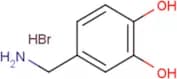
CAS:<p>3,4-Dihydroxybenzylamine hydrobromide inhibits DNA polymerase and melanoma growth, varying with tyrosinase activity.</p>Formula:C7H10BrNO2Purity:98.49%Color and Shape:Light Beige Crystalline PowderMolecular weight:220.06Deoxycytidine Kinase, human, recombinant
<p>Deoxycytidine kinase (dCK, EC 2.7.1.74) is an enzyme that catalyzes the following reaction: dC + ATP → dCMP + ADP It can also use UTP as a donor of the phosphate group, and it can phosphorylate other deoxyribonucleosides (e.g. dA, dG) as well as nucleoside analogues (like clofarabine). One unit of dCK will convert 1.0 µmole of dC and ATP to dCMP and ADP per minute at pH 7.5 and 37°C.</p>Purity:Min. 95%EUCODIS® CalB02, engineered variant of Candida antarctica Lipase B - ELCB02
<p>Lipases belong to the family of esterases and naturally act on triglycerides at lipid-water interfaces. Lipases/esterases can be used as versatile tools in hydrolytic reactions, esterifications and transesterification reactions in industrial and food applications. The CalB02 lipase has a temperature optimum in the 40 - 50 °C range and pH optimum between pH 5 and 8.</p>Sphingomyelinase from bacillus cereus
CAS:<p>Sphingomyelinase (SMase, Sphingomyelin phosphodiesterase, systematic name sphingomyelin cholinephosphohydrolase; EC 3.1.4.12) is an enzyme that hydrolyses sphingomyelin into phosphocholine and ceramide. One unit of sphingomyelinase will hydrolyze 1.0 µmole of chromogenic substrate analogue per minute at pH 7.4 and 37 °C.</p>Purity:Min. 95%Asparaginase, from E.coli, recombinant, lyophilized - EASP001
<p>Asparaginase (EC 3.5.1.1) is an enzyme that catalyzes the following reaction: Asparagine + H2O → Aspartate + NH4+ Industrially, asparaginase is used to reduce the formation of acrylamide in starch-containing food ingredients and products during production processes. Asparaginase has a temperature optimum in the 30 – 50 °C range and pH optimum between pH 8 and 9. One unit will yield 1.0 μmole of ammonia from asparagine per min.</p>Protein disulfide isomerase from bovine liver
CAS:<p>An enzyme that catalyzes the formation and breakage of disulfide bonds in the folding of proteins</p>Formula:C7H5Cl2NO5SPurity:Min. 95%Molecular weight:286.09 g/molAmidase, from Rhodococcus sp., recombinant, lyophilized - EAM02
CAS:<p>Amidase (EC 3.5.1.4) is a hydrolase acting on carbon-nitrogen bonds in linear amides and can be used in the hydrolysis of amides to acids. Amidase 02 is of bacterial origin (R. erythropolis and has been produced in E.coli).</p>