Enzyme
Enzyme inhibitors are molecules that bind to enzymes and decrease their activity. These inhibitors are widely used in research to study enzyme kinetics, regulation, and the role of specific enzymes in metabolic pathways. Enzyme inhibitors are also crucial in drug development, as many therapeutic agents function by inhibiting enzymes involved in disease processes. By targeting enzymes, these inhibitors can modulate biochemical pathways and offer potential treatments for various diseases. At CymitQuimica, we provide a comprehensive selection of high-quality enzyme inhibitors to support your research in biochemistry, pharmacology, and drug discovery.
Subcategories of "Enzyme"
- Carbonic Anhydrase(196 products)
- Hydroxylase(36 products)
- MPO(2 products)
- Reductase(51 products)
- Tyrosinase(71 products)
Found 3619 products of "Enzyme"
Sort by
Purity (%)
0
100
|
0
|
50
|
90
|
95
|
100
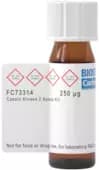
Casein Kinase 2
Casein kinase 2 (CK2, CSNK2; EC 2.7.11.1) is a constitutively active serine and threonine protein kinase. It plays a role in a range of cellular processes, including DNA repair, cell cycle control, metabolic regulation, circadian rhythms and more. Its known substrates include hundreds of proteins. One unit of CK2 will phosphorylate of 1 pmol of of peptide substrate in 1 minute at 30°C and presence of ATP.Formula:C45H73N19O24Purity:Min. 95%Molecular weight:1,264.17 g/molCytochrome C oxidase
CAS:Cytochrome C oxidase (originally assigned EC 1.9.3.1, now re-assigned EC 7.1.1.9) is an enzyme that catalyzes the following reaction: 4 Fe2+ – cytochrome c + 4 H+ + O2 → 4 Fe3+ – cytochrome c + 2 H2OAminopeptidase, Aeromonas proteolytica
CAS:One unit of Aminopeptidase (3.4.11.10) will hydrolyze 1.0 μmole of L-leucine p-nitroanilide to p-nitroaniline and L-leucine per min at pH 8.0 and 25 °C.C. rugosa Lipase 02, CRL 2 from Candida rugosa - ELCR02
Lipases belong to the family of esterases and naturally act on triglycerides at lipid-water interfaces. Lipases/esterases can be used as versatile tools in hydrolytic reactions, esterifications and transesterification reactions in industrial and food applications. The Lipase 02 from the yeast Candida rugosa has a temperature optimum in the 30 - 50 °C range and pH optimum between pH 7 and 8.Secreted Phospholipase A2-IIA, human, recombinant
The secreted phospholipase A2-IIA (sPLA2-IIA, PLA2, systematic name phosphatidylcholine 2-acylhydrolase; EC 3.1.1.4) is an enzyme that catalyses the hydrolysis of glycerophospholipids at the sn2 position, yielding 1-acylglycerophosphocholine and a fatty acid. One unit of secreted phospholipase A2-IIA will hydrolyze 1.0 μmole of substrate per min under optimal conditions.Purity:Min. 95%Immobilized Lipase Kit, 7 unique immobilized EUCODIS® Lipases, immobilized by adsorption and covalent binding - ELIM Kit
Lipases belong to the family of esterases and naturally act on triglycerides at lipid-water interfaces. Lipases/esterases can be used as versatile tools in hydrolytic reactions, esterifications and transesterification reactions in industrial and food applications. The immobilized Lipase kit contains 7 different lipases, immobilised on a hydrophobic carrier either by adsorption or covalent linkage. Immobilized lipases can be utilized in various reaction types, and are optimal for all reactions in organic solvents or solvent-free systems.3,4-Dihydroxybenzylamine hydrobromide
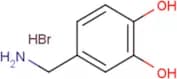
CAS:3,4-Dihydroxybenzylamine hydrobromide inhibits DNA polymerase and melanoma growth, varying with tyrosinase activity.Formula:C7H10BrNO2Purity:98.49%Color and Shape:Light Beige Crystalline PowderMolecular weight:220.06Chloroperoxidase, aqueous suspension
CAS:Chloroperoxidase (also known as chloride peroxidase, systemic name chloride:hydrogen-peroxide oxidoreductase, EC 1.11.1.10) is an enzyme that catalyzes chlorination of organic compounds. Overall reaction is the following:R-H + Cl− + H2O2 + H+ → R-Cl + 2 H2O; reaction intermediate is hypochlorous acid (HOCl). One unit of chloroperoxidase will convert 1.0 μmole of substrate per minute.
Color and Shape:PowderLipoxidase
CAS:Lipoxidase is an enzyme, which is typically sourced from various plant tissues, animals, and some microorganisms. It functions by catalyzing the oxidation of polyunsaturated fatty acids in the presence of oxygen. This enzymatic action results in the formation of lipid hydroperoxides, which are key intermediates in various biochemical pathways, including those involved in cell signaling and the modulation of gene expression.Purity:Min. 95%Serratiopeptidase
CAS:Serratiopeptidase (serratio peptidase, serratia peptidase, serrapeptidase, serratia E-15 protease, serralysin, serrapeptase; EC 3.4.24.40) is a proteolitic enzyme (proteinase) that is produced by Serratia marcescens.Purity:Min. 95%Color and Shape:PowderAminopeptidase I from streptomyces griseus
CAS:Aminopeptidase I is a specialized proteolytic enzyme derived from the actinobacterium Streptomyces griseus. This enzyme functions by catalyzing the cleavage of amino acids from the N-terminus of peptides, which plays a pivotal role in protein metabolism and regulation. The source of this enzyme, Streptomyces griseus, is well-regarded for producing a variety of bioactive compounds owing to its rich genetic and biochemical repertoire.Aminoacyl tRNA synthetase-IN-1
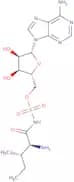
CAS:Enzyme involved in protein translation and catalyzes the aminoacylation reactionFormula:C16H25N7O7SPurity:Min. 95%Color and Shape:PowderMolecular weight:459.48 g/molPNPase
Specific activity: >500 units/mg-protein.Unit definition: One unit will polymerize 1.0 micro mole of ADP, releasing 1.0 micro mole of inorganic phosphate in 15 minutes at pH 9.1 at 37 °C.
Butyrylcholinesterase
Butyrylcholinesterase (BCHE, BuChE, PCHE, pseudocholinesterase, plasma cholinesterase, Acylcholine acyl-hydrolase, Choline esterase; EC 3.1.1.8, CAS No [9001-08-5]) is an enzyme that made in the liver and found mainly in blood plasma. It catalyzes the following reaction: Acylcholine + H2O → choline + carboxylic acidOne unit of Butyrylcholinesterase will change absorbance by 0.2 milliunits (mA) per minute at optimal buffer conditions and 37 ̊C. Equine serum butyrylcholinesterase is supplied as white to pale grey-green powder with activity of ≥50U/mg and specific activity of ≥300U/mg protein. It can be dissolved at 5 mg/mL concentration in 50 mM Tris-HCl pH 7.3 - 7.5, giving colorless to slightly green solution. Equine serum butyrylcholinesterase is activated by Ca2+, optimum pH 7-8, KM=18 µM (butyrylthiocholine at 25°C). Store at -20°C on arrival.Acid phosphatase
CAS:One unit will hydrolyse 1.0μmol of 4-nitrophenyl phosphate per minute at 37°C and pH 4.8. Substrate for enzyme analysis is the 4-nitrophenyl phosphate disodium hexahydrate (EN08508).Formula:C6H10O2Purity:Min. 95%Molecular weight:114.14 g/molLactase - >300U/mg
CAS:beta-Galactosidase (EC 3.2.1.23, shortly beta-Gal, also know as lactase) catalyses the hydrolysis of beta-d-galactoside in the presence of water to galactose and alcohol, or lactose into glucose and galactose. beta-Gal has a molecular weight of 540,000 and is composed of four identical subunits of MW 135,000, each with an independent active site. The enzyme has divalent metals as cofactors, with chelated Mg2+ ions required to maintain active site conformation. The molecule contains numerous sulfhydryl groups and is glycosylated.Amidase, from Rhodococcus sp., recombinant, lyophilized - EAM02
CAS:Amidase (EC 3.5.1.4) is a hydrolase acting on carbon-nitrogen bonds in linear amides and can be used in the hydrolysis of amides to acids. Amidase 02 is of bacterial origin (R. erythropolis and has been produced in E.coli).Plasmin
CAS:Plasmin, human is a serin protease which present in the blood and is involved in the cleavage of cross-linked fibrin, a process known as fibrinolysis.One unit will produce one micromole of P-Nitroanilide from D-Val-Leu-Lys-P-Nitroanilide per minute at pH 7.5 at 37°CSphingomyelinase from bacillus cereus
CAS:Sphingomyelinase (SMase, Sphingomyelin phosphodiesterase, systematic name sphingomyelin cholinephosphohydrolase; EC 3.1.4.12) is an enzyme that hydrolyses sphingomyelin into phosphocholine and ceramide. One unit of sphingomyelinase will hydrolyze 1.0 µmole of chromogenic substrate analogue per minute at pH 7.4 and 37 °C.Purity:Min. 95%Citrate lyase from klebsiella pneumonia ≥0.20 unit/mg solid
CAS:Citrate lyase (also known as ATP citrate synthase, EC 2.3.3.8) is an enzyme that catalyzes the following reaction:citrate + ATP + CoA → oxaloacetate + Acetyl-CoA + ADP + PiEnzymatic activity: One unit will convert 1.0 micromole of citrate to oxalacetate per minute at pH 7.6 and 25 °C in the presence of required cofactors. Citrate lyase is supplied lyophylized, with activity ≥0.20 unit/mg solid.Purity:Min. 95%