Acetyl-CoA Carboxylase
Acetyl-CoA Carboxylase (ACC) inhibitors are compounds that target and inhibit the activity of ACC, an enzyme that plays a key role in fatty acid biosynthesis by converting acetyl-CoA to malonyl-CoA. Inhibiting ACC can reduce lipid synthesis, making these inhibitors valuable in research related to metabolic disorders, obesity, and cancer. At CymitQuimica, we offer a range of ACC inhibitors to support your research in metabolic pathways, lipid metabolism, and therapeutic development.
Found 51 products for "Acetyl-CoA Carboxylase".
Sort by
Purity (%)
0
100
|
0
|
50
|
90
|
95
|
100
S-2E
CAS:S-2E, an oral inhibitor of HMG-CoA reductase/acetyl-CoA carboxylase, treats hyperlipidemia.Formula:C22H25NO4Color and Shape:SolidMolecular weight:367.44Quizalofop-P
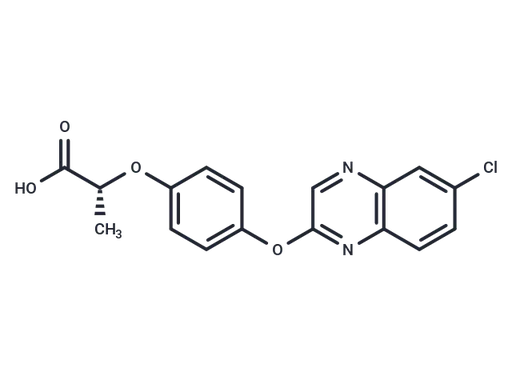
CAS:Quizalofop-P, a selective herbicide, is absorbed by weed stems and leaves before translocating both upward and downward within the plant, concentrating inFormula:C17H13ClN2O4Purity:98%Color and Shape:SolidMolecular weight:344.75ACC1/2-IN-1
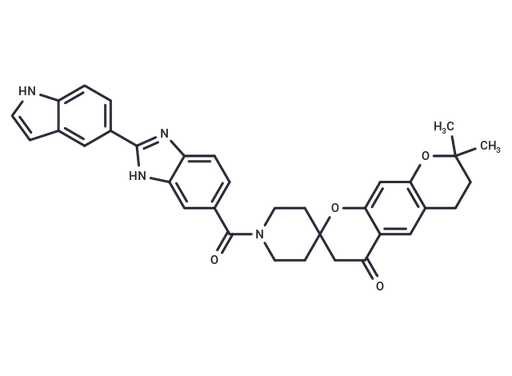
CAS:ACC1/2-IN-1 is a potent inhibitor of ACC1/2 and acts on ACC1 (IC50: 98.06 nM) and ACC2 (IC50: 29.43 nM). ACC1/2-IN-1 can be used in cancer research.Formula:C34H32N4O4Color and Shape:SolidMolecular weight:560.64AMPK activator 16
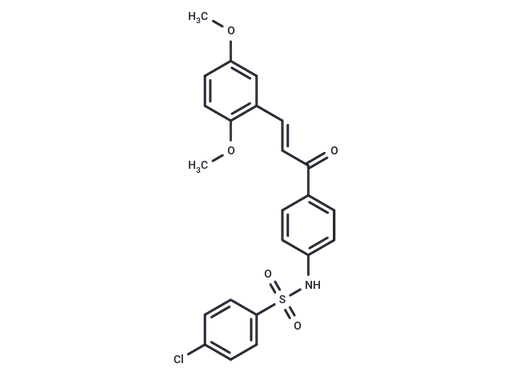
CAS:AMPK activator16 (compound 6) functions as an AMP-activated protein kinase (AMPK) inhibitor. It interacts effectively with crucial AMPK residues, significantly activating the enzyme. In N2a cells, AMPK activator16 enhances the expression of phosphorylated AMPK (p-AMPK) and its downstream signaling proteins, such as phosphorylated ACC (Acetyl-CoA Carboxylase) and phosphorylated raptor (p-raptor).Formula:C23H20ClNO5SColor and Shape:SolidMolecular weight:457.927ACC1/2-IN-3
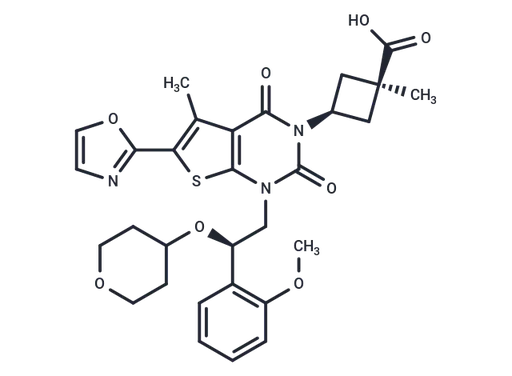
CAS:ACC1/2-IN-3 (example 66) is an inhibitor targeting both ACC1 and ACC2, with IC50 values of 1-10 nM for each. It is applicable in studies related to ACC-mediated conditions, such as metabolic diseases.Formula:C32H39N3O8SMolecular weight:625.73ACC-IN-1
CAS:ACC-IN-1 (Compound B1) is an allosteric inhibitor of acetyl-CoA carboxylase (ACC). It targets ACC to regulate lipid metabolism, potentially improving liver steatosis and inflammation associated with non-alcoholic steatohepatitis (NASH).Formula:C30H33N3O8SMolecular weight:595.66LCB-2122
CAS:LCB-2122 is an adenosine-like nucleoside analog featuring a C2'-stereoisomeric all-carbon quaternary carbon center. It inhibits doxorubicin-induced myocardial apoptosis with an IC50 value of 0.5 μM and also suppresses imatinib-induced apoptosis. LCB-2122 activates the AMPK signaling pathway, inducing the phosphorylation of AMPK and its downstream substrate acetyl-CoA carboxylase (ACC). Additionally, LCB-2122 alleviates mitochondrial damage caused by doxorubicin and is used in heart failure research.Formula:C16H25ClN5O7PMolecular weight:465.83CKBA
CAS:CKBA, a derivative of AKBA, acts as an acetyl-CoA carboxylase 1 (ACC1) inhibitor with an IC50 of 5.02 μM. It inhibits Th17 cell differentiation, displaying IC50 values of 3.28 μM in mouse cells and 3.61 μM in human cells. CKBA ointment significantly alleviates psoriasis-like inflammation in mice and can be used for psoriasis research.Formula:C37H56O5Molecular weight:580.85QPP-I-6
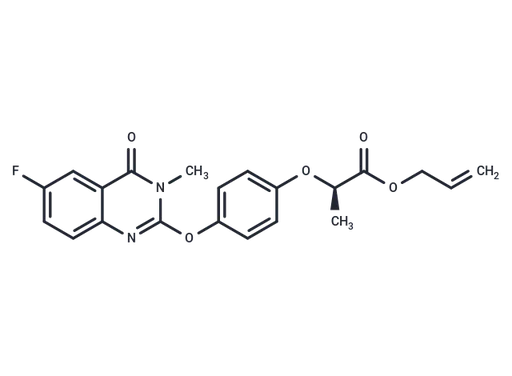
CAS:QPP-I-6, an inhibitor of acetyl-coenzyme A carboxylase (ACCase), exhibits herbicidal activity by inducing cell membrane permeability [1].Formula:C21H19FN2O5Molecular weight:398.38THR-β agonist 9
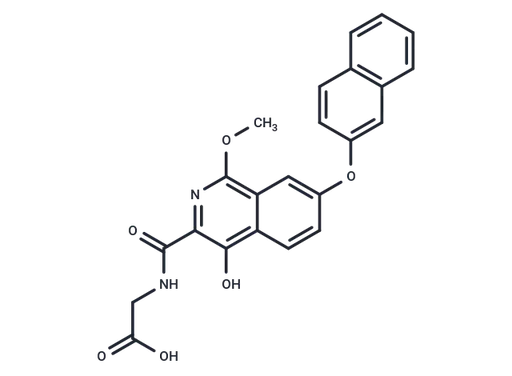
CAS:THR-β agonist 9 is a potent and selective THR-β activator, which shows sensitivity to His435 mutations with an EC50 of 3.2 nM. It demonstrates moderate selectivity, approximately 10-fold, and effectively activates various His435 mutants (H435A, H435Y, and H435R), with EC50 values ranging from 134.2 nM to 515.5 nM. THR-β agonist 9 presents potential for research into conditions such as dyslipidemia, metabolic syndrome-associated steatohepatitis (MASH), and resistance to thyroid hormone (RTH).Formula:C23H18N2O6Molecular weight:418.40Moiramide B
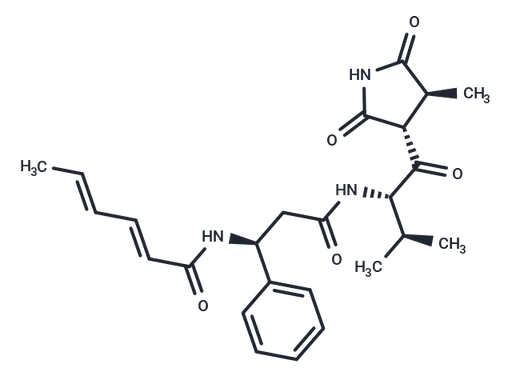
CAS:Moiramide B is an acetyl coenzyme A carboxylase inhibitor with antimicrobial activity, strongly inhibiting Gram-positive bacteria.Formula:C25H31N3O5Purity:98.53% - 99.78%Color and Shape:SolidMolecular weight:453.53