Dyes, Stains and Tinctures
Dyes, stains, and tinctures are essential tools in molecular biology, crucial for visualizing and studying DNA, chromosomes, and cell nuclei. These compounds enable researchers to highlight specific cellular components, facilitating detailed observation and analysis under a microscope. In this category, you will find a wide range of high-quality dyes and stains used in various staining techniques, including fluorescent dyes for DNA and chromosomal analysis, histological stains for tissue samples, and specific stains for cellular structures. These tools are indispensable in genetic research, cytology, histology, and diagnostics, providing clarity and contrast in biological specimens. At CymitQuimica, we offer a comprehensive selection of dyes, stains, and tinctures to support your molecular biology research and ensure precise and reliable results in your studies.
Subcategories of "Dyes, Stains and Tinctures"
- Acid Dyes(49 products)
- Azobenzenes(270 products)
- Azoic Dyes(7 products)
- Basic Dyes(27 products)
- Coumarin Dyes(71 products)
- Cyanine Dyes, Squarylium Dyes(53 products)
- DCM Dyes(4 products)
- Diarylethenes(12 products)
- Dipyrromethene Dyes(26 products)
- Direct Dyes(17 products)
- Disperse Dyes(2 products)
- Dye Sensitizers(12 products)
- Dyes(416 products)
- Dyes & Stains(911 products)
- Generating Insoluble Dyes(14 products)
- Generating Soluble Dyes(11 products)
- Hexaarylbiimidazole(4 products)
- Indicators(575 products)
- Mordant Dyes(10 products)
- Near-Infrared (NIR) Dyes(28 products)
- Oil Dyes(15 products)
- Other Stains and Dyes(2 products)
- Perylene Dyes(17 products)
- Photochromic Dyes(40 products)
- Phthalocyanine Dyes, Porphyrin Dyes(101 products)
- Quinacridone Dyes(8 products)
- Spiropyrans(16 products)
- Stains and Dyes(243 products)
- Stains and Dyes for Microscopy(5 products)
- Vat Dyes(5 products)
- Xanthene Dyes(65 products)
Show 23 more subcategories
Found 755 products of "Dyes, Stains and Tinctures"
Sort by
Purity (%)
0
100
|
0
|
50
|
90
|
95
|
100
Reactive Blue 19, Technical grade
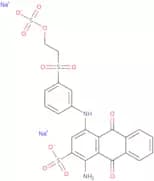
CAS:<p>Reactive Blue 19 is a chemical compound that has been used extensively in biological, biochemical, and clinical research. It is a reactive dye with the chemical formula C20H14N2Na4O8S4. The molecule's structure consists of two benzene rings linked by two amine groups, which are connected to an aromatic ring with four sulfonic acid side chains. Reactive Blue 19 has been shown to inhibit the activity of enzymes such as hydroxylase and nitrite reductase. This compound also reacts with protocatechuic acid to form an intense blue-colored complex that can be detected using electrochemical detection.</p>Formula:C22H16N2Na2O11S3Purity:Min. 95%Color and Shape:PowderMolecular weight:626.55 g/molC.I.Reactive Red 250
CAS:<p>C.I. Reactive Red 250 is a versatile dye that has been widely used in various experiments. It belongs to the category of Other Dyes, Stains, Indicators & Probes. This dye has shown potential in inhibiting glycogen synthase kinase-3β (GSK-3β), an enzyme involved in various signaling pathways. Additionally, C.I. Reactive Red 250 has been studied for its effects on HIV infection and autoimmune diseases.</p>Purity:Min. 95%C.I.Direct Red 89
CAS:<p>C.I. Direct Red 89 is a water-soluble dye that belongs to the group of organic compounds called sulfonated naphthol dyes. It has an absorption spectrum in the region of 540-580 nm and is used as a neutral red dye for inkjet and recording applications, as well as for textile printing. C.I. Direct Red 89 can be used with other dyes for pigments, especially blue, green, and violet dyes, to produce a wide range of colors from yellow through green to blue-green. The dye is also used in pharmaceuticals, cosmetics, food coloring agents, and industrial paints.</p>Purity:Min. 95%Pigment Yellow 127
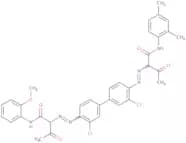
CAS:<p>Please enquire for more information about Pigment Yellow 127 including the price, delivery time and more detailed product information at the technical inquiry form on this page</p>Purity:Min. 95%Acid Black ATT
CAS:<p>Acid Black ATT is a chemical compound that is used to adjust the pH and remove organic matter in wastewater. It is a mixture of trimethyl, collagen, sodium carbonate, calcium carbonate, and sodium chloride. Acid Black ATT can be used as an additive for the treatment of wastewater because it has been shown to inhibit enzymes. This product should be added slowly to water in order to avoid inhaling the vaporized acid. The use of this chemical must be carefully monitored because it can cause corrosion and damage to pipes.</p>Purity:Min. 95%C.I.Solvent Yellow 51
CAS:<p>Please enquire for more information about C.I.Solvent Yellow 51 including the price, delivery time and more detailed product information at the technical inquiry form on this page</p>Purity:Min. 95%Acid Blue 83
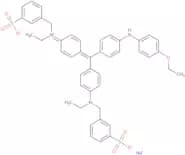
CAS:<p>Acid Blue 83 is a reactive dye that is used in the treatment of wastewater. It has been shown to inhibit metabolic disorders and transcriptional regulation by binding to DNA-dependent RNA polymerase. Acid Blue 83 also inhibits enzyme activities, such as co2 flow, sephadex g-100, and surface methodology. In addition, it binds to basic proteins, such as human serum albumin, and has been shown to have anti-inflammatory properties. Acid Blue 83 is a reactive dye that is used in the treatment of wastewater. It has been shown to inhibit metabolic disorders and transcriptional regulation by binding to DNA-dependent RNA polymerase. Acid Blue 83 also inhibits enzyme activities, such as co2 flow, sephadex g-100, and surface methodology. In addition, it binds to basic proteins, such as human serum albumin, and has been shown to have anti-inflammatory properties.</p>Formula:C45H44N3NaO7S2Purity:Min. 95%Color and Shape:Blue PowderMolecular weight:825.97 g/molIsoflupredone
CAS:Controlled Product<p>Isoflupredone is a nonsteroidal anti-inflammatory drug that is used for the treatment of inflammation and pain. It works by inhibiting the production of prostaglandin, which is a hormone that causes inflammation and pain. Isoflupredone has been shown to decrease cortisol concentration in rats and reduce the amount of hydrogen fluoride needed to inhibit bacterial growth. Isoflupredone also inhibits the activity of toll-like receptor 2, which plays an important role in inflammatory responses.</p>Formula:C21H27FO5Purity:Min. 95%Color and Shape:White PowderMolecular weight:378.43 g/molMetanil Yellow
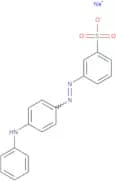
CAS:<p>Metanil Yellow is a reactive dye that is used in wastewater treatment as an adsorbent for removing organic pollutants. It has been shown to be effective in removing glycol ethers, which are toxic and persistent compounds used in industrial solvents. Metanil Yellow can also remove other toxic components such as phenol, benzene, and toluene. The Langmuir adsorption isotherm was used to determine the amount of dye required for maximum effectiveness. Metanil Yellow has been shown to have no significant negative effects on the growth of bacteria or yeast at concentrations up to 3%. The only adverse effect observed was a slight decrease in the rate of hydrogen fluoride degradation.</p>Formula:C18H14N3O3SNaPurity:Min. 98 Area-%Color and Shape:PowderMolecular weight:375.38 g/molC.I.Solvent Blue 13
CAS:<p>Please enquire for more information about C.I.Solvent Blue 13 including the price, delivery time and more detailed product information at the technical inquiry form on this page</p>Purity:Min. 95%Fast blue B salt
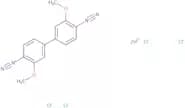
CAS:<p>For visualizing enzymatic activity</p>Formula:C14H12N4O2Cl2·ZnCl2Color and Shape:PowderMolecular weight:475.46 g/molLight green SF yellowish
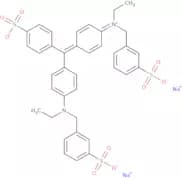
CAS:<p>Sodium salts are colloidal gold particles that are dispersed in aqueous solution and have a light green SF yellowish color. This type of salt is used for plant physiology studies, due to their ability to provide an accurate measurement of the surface area of leaves. Sodium salts can be used as biological samples, such as liver lesions or langmuir adsorption isotherm, to investigate kinetic data. They also have been shown to be useful in the study of human serum and particle interactions. The sodium salts form a thin layer on the surface of the particle, which makes it possible to measure the concentration of fatty acids or basic proteins on its surface. Sodium salts are also commonly used in toxicology studies and histological analyses.</p>Formula:C37H34N2O9S3Na2Purity:(%) Min. 80%Color and Shape:PowderMolecular weight:792.85 g/molC.I.Basic Yellow 5
CAS:<p>Basic Yellow 5 is a dye that belongs to the group of organic pigments. It is used in textile and leather production, as well as in food coloring. Basic Yellow 5 has been shown to bind to lectins on the surface of bacteria, which is how it exerts its antibacterial effects. This dye inhibits protein synthesis by binding to the ribosome and preventing amino acid incorporation into proteins. Basic Yellow 5 also inhibits bacterial growth by binding to the ribosome, interfering with protein synthesis and cell division.END></p>Purity:Min. 95%Acid Red 357
CAS:<p>Acid Red 357 is a basic dye, which is used in the treatment of wastewater. It binds to the surface of particles and reacts with sodium carbonate to form a hydroxide precipitate. This reaction leads to removal of colorants from the water. Acid Red 357 is also reactive, nucleophilic, and has high values for both kinetic data and transfer mechanism.</p>Purity:Min. 95%Disperse blue 60, technical grade dye content
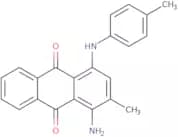
CAS:<p>Disperse Blue 60 is a stilbene-based dye that absorbs ultraviolet light and emits red fluorescent light. It is used in wastewater treatment, biological treatment, and supercritical water oxidation processes. Disperse Blue 60 is activated by fatty acid, alkanoic acid, or polymeric matrix to form an antimicrobial agent that can be used in radiation sterilization of food products. This dye also has the ability to absorb radiation in the range of 200 - 300 nm and emit fluorescence at 590 nm. The oxidation catalyst provides stability for the dye molecule under conditions of high temperature or pressure.</p>Formula:C20H17N3O5Purity:Min. 95%Color and Shape:PowderMolecular weight:379.37 g/molBis(5-bromo-6-chloro-3-indoxyl)pyrophosphoric acid, disodium salt
<p>Bis(5-bromo-6-chloro-3-indoxyl)pyrophosphoric acid, disodium salt is a versatile building block that can be used to synthesize complex compounds. This compound is a reagent for research and also has many uses in the pharmaceutical industry as a useful intermediate and scaffold. Bis(5-bromo-6-chloro-3-indoxyl)pyrophosphoric acid, disodium salt is an excellent high quality product that can be used in many reactions.</p>Formula:C16H8Br2Cl2N2Na2O7P2Molecular weight:678.90 g/molRef: 3D-B-3370
1gTo inquire5gTo inquire10gTo inquire500mgTo inquire2500mgTo inquire-Unit-ggTo inquireIohexol
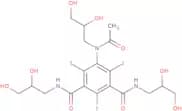
CAS:<p>a contrast agent used in medical imaging such as angiography, CT scans, and MRI.</p>Formula:C19H26I3N3O9Purity:98.0 To 102.0%Color and Shape:White PowderMolecular weight:821.14 g/molC.I.Reactive Red 223
CAS:<p>Please enquire for more information about C.I.Reactive Red 223 including the price, delivery time and more detailed product information at the technical inquiry form on this page</p>Purity:Min. 95%Crocein Orange G
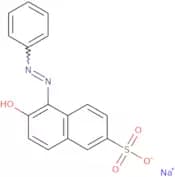
CAS:<p>Crocein Orange G is a water-soluble, orange fluorescent dye that is used in wastewater treatment. It has been shown to form stable complexes with fatty acids and other organic compounds. These complexes are more readily removed by adsorption. Crocein Orange G has also been shown to react with potassium dichromate and form a yellow product. This product can be detected at low concentrations and is not toxic to humans or animals.</p>Formula:C16H11N2O4SNaPurity:Min. 95%Color and Shape:PowderMolecular weight:350.33 g/molOrange G, Technical grade
CAS:<p>Orange G is a quaternary ammonium salt that can be used for the treatment of wastewater. It has been shown to adsorb to the surface of bacterial cells and inhibit their growth by preventing enzyme activity. Orange G has also been shown to have carcinogenic potential in experimental models, although it is less potent than dimethylhydrazine or N-nitrosodiethylamine. Orange G has genotoxic effects on human serum, as seen by increased DNA fragmentation and chromosomal aberrations. The kinetic and redox properties of Orange G are still being investigated.</p>Formula:C16H10N2Na2O7S2Purity:Min. 95 Area-%Color and Shape:Orange PowderMolecular weight:452.37 g/mol