Polycyclic Compounds
Subcategories of "Polycyclic Compounds"
- Acridines(98 products)
- Anthraquinones(533 products)
- Anthraquinonesulfonic Acids(16 products)
- Azobenzenes(270 products)
- Azonaphthalenes(98 products)
- Azoxybenzenes(12 products)
- Azulenes(11 products)
- Benzimidazoles(1,476 products)
- Benzodioxanes(27 products)
- Benzofurans(928 products)
- Benzothiophenes(701 products)
- Benzotriazoles(438 products)
- Binaphthyls(133 products)
- Carbazoles(464 products)
- Chromanes, Chromenes(480 products)
- Coumarins(1,124 products)
- Cyclophanes(11 products)
- Fluorenes and Fluorenones(384 products)
- Imidazopyridines(10 products)
- Indans(118 products)
- Indazoles(2,038 products)
- Indenes(22 products)
- Indoles(3,986 products)
- Indolines(119 products)
- Isatins(234 products)
- Isobenzofurans(17 products)
- N-Substituted Phthalimides(153 products)
- Naphthalenes(2,438 products)
- Naphthyridines(17 products)
- Naphtoquinone(2 products)
- Perylenes(36 products)
- Phenazines(25 products)
- Phthalazines(33 products)
- Phthalimide(153 products)
- Polycyclic Aromatic Hydrocarbons (PAHs)(287 products)
- Polyphenol(270 products)
- Pteridines(52 products)
- Pyrenes(87 products)
- Quinuclidine(1 products)
- Tetracenes(7 products)
Found 4575 products of "Polycyclic Compounds"
(1R,4R)-tert-Butyl 2,5-diazabicyclo[2.2.1]heptane-2-carboxylate hydrochloride
CAS:Tert-Butyl 2,5-diazabicyclo[2.2.1]heptane-2-carboxylate hydrochloride (TBDAHC) is a fine chemical that is an intermediate for the synthesis of other compounds. TBDAHC is a versatile building block that can be used in research chemicals, reaction components, and specialty chemicals. It is also a useful scaffold for making complex compounds and useful building blocks. The compound has high quality and can be used as a reagent in organic chemistry.
Formula:C10H18N2O2·HClPurity:Min. 95%Color and Shape:White PowderMolecular weight:234.72 g/molRef: 3D-FB15223
Discontinued product1-Phenyl-3-oxabicyclo[3.1.0]hexan-2-one
CAS:1-Phenyl-3-oxabicyclo[3.1.0]hexan-2-one (1POX) is a monomer that belongs to the class of cyclopropane compounds and can be used in the synthesis of polymers. It has been shown to react with benzene, irradiation, monoxide, oxiranyl, acetonitrile and trimeric dyes to form reactive intermediates such as ketones and carboxylic acids. These intermediates can undergo photolysis to produce products such as ketones and carboxylic acids. The wavelength of the light used for photolysis can influence the product formation. 1POX is also a substrate for cyclopropane ring formation reactions, which are known for their high reactivity due to the stability of this ring system. The carbonyl group on 1POX is electron withdrawing and stabilizes the planar geometry of 1POX.
Formula:C11H10O2Purity:Min. 95%Color and Shape:PowderMolecular weight:174.2 g/molRef: 3D-FP16068
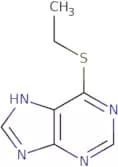
Discontinued product6-Ethylmercaptopurine
CAS:6-Ethylmercaptopurine is a purine analogue that inhibits the synthesis of DNA. It is used as an inhibitor of protein synthesis and in the treatment of inflammatory bowel disease. 6-Ethylmercaptopurine has been shown to inhibit the activity of ATPase, which may be responsible for its ability to suppress the proliferation of cells. This drug can also act as an analog to adenosine, which can be used to determine ATP levels in a cell or tissue sample by measuring the amount of p-nitrophenyl phosphate produced. 6-Ethylmercaptopurine has been shown to block phosphatase activity, which may lead to inflammation in some cases.
6-Ethylmercaptopurine has a molecular weight of 194.2 g/mol and an optimum pH of 4.5Formula:C7H8N4SPurity:Min. 95%Color and Shape:Off-White PowderMolecular weight:180.23 g/molRef: 3D-FE08008
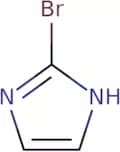
Discontinued product2-Bromo-1H-imidazole
CAS:2-Bromo-1H-imidazole is an environmental pollutant that has been detected in the atmosphere, water, and soil. It is used as a pesticide and has been found to be an impurity in biphenyl. 2-Bromo-1H-imidazole can be used as a substrate for the Suzuki coupling reaction or as a starting material for the synthesis of imidazole derivatives. The compound spontaneously fragments under acidic conditions to form nitric acid and hydrogen bromide. 2-Bromo-1H-imidazole has been shown to inhibit hepatitis C virus (HCV) replication and induce cancer cell apoptosis in vitro.
2-Bromo-1H-imidazole is also known to cause DNA fragmentation in cells through oxidation by reactive oxygen species or through spontaneous decomposition of the molecule into acid, bromine radicals, and ammonia.Formula:C3H3BrN2Purity:Min. 95%Color and Shape:PowderMolecular weight:146.97 g/molRef: 3D-FB12791
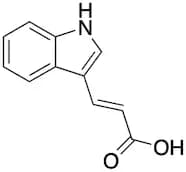
Discontinued product3-Indoleacrylic Acid
CAS:Controlled ProductApplications 3-Indoleacrylic Acid (cas# 1204-06-4) is a useful research chemical.
Formula:C11H9NO2Color and Shape:NeatMolecular weight:187.19Quinoline-6-sulfonyl chloride
CAS:Please enquire for more information about Quinoline-6-sulfonyl chloride including the price, delivery time and more detailed product information at the technical inquiry form on this page
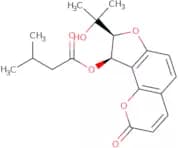
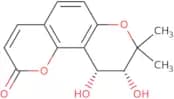
Formula:C9H6ClNO2SPurity:Min. 95%Molecular weight:227.67 g/molcis-Khellactone
CAS:cis-Khellactone is a naturally occurring organic compound, which is a type of coumarin derivative sourced predominantly from the roots of Peucedanum and Angelica species, plants native to various regions. These botanical sources are known for yielding secondary metabolites with diverse biological properties.
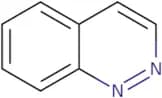
Formula:C14H14O5Purity:Min. 95%Molecular weight:262.26 g/molCinnoline
CAS:Cinnoline is a chemical compound that is structurally similar to phenol, containing a hydroxyl group, two nitrogen atoms and a cyclic structure. Cinnoline has been shown to have anti-inflammatory activity in rats with adjuvant-induced arthritis. The mechanism of the anti-inflammatory effect of cinnoline is not fully understood, but it may be due to its stability and ability to bind to biological molecules or its conformational properties. Cinnoline does not react with nitric acid, making it a good candidate for use in infectious diseases such as tuberculosis. It has also been shown to be stable in human serum and has low pharmacokinetic properties. The fluorescence intensity of cinnoline was found to increase when exposed to an electrochemical potential and can be used as a probe molecule for pharmacokinetics studies.
Formula:C8H6N2Purity:Min. 95%Color and Shape:PowderMolecular weight:130.15 g/molRef: 3D-FC144347
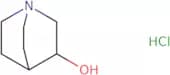
Discontinued product3-Quinuclidinol HCl
CAS:Controlled Product3-Quinuclidinol HCl is a cholinergic drug that inhibits the enzyme acetylcholinesterase. This action prevents the breakdown of the neurotransmitter acetylcholine, which causes an increase in its concentration in the synaptic cleft. 3-Quinuclidinol HCl has been shown to have a dose-dependent effect on increasing acetylcholine levels, which is believed to be due to its ability to inhibit butyrylcholinesterase. In addition, this drug has been shown to have pharmacokinetic properties that are consistent with those of other cholinergic drugs. 3-Quinuclidinol HCl also interacts with other substances and can block nicotinic receptors at high doses.
Formula:C7H13NO·HClPurity:Min. 95%Molecular weight:163.64 g/molTegerrardin A
CAS:Tegerrardin A is an innovative biopesticide derived from microbial fermentation processes, harnessing the potency of naturally occurring microorganisms. It is formulated to exploit the specific biochemical mechanisms within targeted pest populations, effectively disrupting their vital physiological functions. This selective mode of action is achieved through the inhibition of key enzymes essential for pest survival and proliferation, resulting in decreased pest pressure and improved crop health.
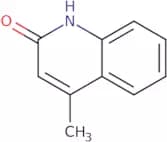
Formula:C15H13NO3Purity:Min. 95%Molecular weight:255.27 g/mol2-Hydroxy-4-methylquinoline
CAS:2-Hydroxy-4-methylquinoline is an organic compound that has a chelate ring. It is soluble in deionized water and reacts with metal ions to form a fluorescent product. The molecule also has antibacterial activity, which may be due to its ability to inhibit the growth of bacteria by acting as a metal ion chelator. 2-Hydroxy-4-methylquinoline can react with halides and ammonium persulfate to form isomeric products, such as 4,5-dihydroxyquinoline, which have been shown to have antimicrobial properties. 2-Hydroxy-4-methylquinoline can also react with phosphorus oxychloride and alkylating agents such as chloroethane or chloroform to form substituted derivatives.
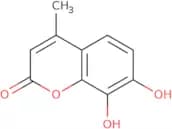
Formula:C10H9NOPurity:Min. 95%Color and Shape:PowderMolecular weight:159.18 g/mol7,8-Dihydroxy-4-methylcoumarin
CAS:7,8-Dihydroxy-4-methylcoumarin is a bioactive compound, specifically a derivative of coumarin. This compound is naturally derived from plant sources, where it acts as a metabolite in various biochemical pathways. Its chemical structure is characterized by the presence of two hydroxyl groups at the 7 and 8 positions, along with a methyl group at the 4 position of the coumarin core, contributing to its unique pharmacological profile.
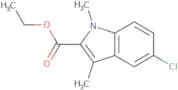
Formula:C10H8O4Purity:Min. 95%Molecular weight:192.17 g/molEthyl 5-chloro-1,3-dimethyl-1H-indole-2-carboxylate
CAS:Controlled ProductPlease enquire for more information about Ethyl 5-chloro-1,3-dimethyl-1H-indole-2-carboxylate including the price, delivery time and more detailed product information at the technical inquiry form on this page
Formula:C13H14ClNO2Purity:Min. 95%Molecular weight:251.71 g/molRef: 3D-FE118355
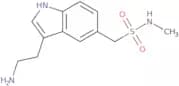
Discontinued product3-(2-Aminoethyl)-N-methyl-1H-indole-5-methanesulfonamide
CAS:3-(2-Aminoethyl)-N-methyl-1H-indole-5-methanesulfonamide (AMIS) is an intermediate in the preparation of medicaments. It is a stable process and can be used as an intermediate for other compounds. AMIS is prepared by reacting methanesulfonic acid with methanol and ammonium carbonate, which produces methanesulfonamide, succinic acid and ammonium hydroxide. The reaction liquid is then heated to produce a crystalline solid. The crystals are then recrystallized to yield AMIS as a white solid.
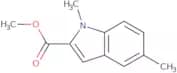
Formula:C12H17N3O2SPurity:Min. 95%Color and Shape:Off-White To Beige To Light Brown SolidMolecular weight:267.35 g/molMethyl 1,5-dimethyl-1H-indole-2-carboxylate
CAS:Controlled ProductPlease enquire for more information about Methyl 1,5-dimethyl-1H-indole-2-carboxylate including the price, delivery time and more detailed product information at the technical inquiry form on this pageFormula:C12H13NO2Purity:Min. 95%Molecular weight:203.24 g/molRef: 3D-FM118276
Discontinued product1-Bicyclo[2.2.1]hept-2-ylethanone
CAS:The bicyclo[2.2.1]hept-2-ylethanone is an isomer of the bicyclo[2.2.1]heptane, with a ketone group in place of a methylene group on one ring. It is a mixture of two isomers: the cis and trans form, which are in equilibrium with each other at room temperature. The equilibrium constants for this reaction are Kcis = 6.6×10 and Ktrans = 1.4×10 at 25°C and pH 7, respectively, which means that the trans isomer predominates at low concentrations and the cis form predominates at high concentrations.
Formula:C9H14OPurity:Min. 95%Molecular weight:138.21 g/molRef: 3D-FB114448
Discontinued product1,3,7,8-Tetramethylpurine-2,6-dione
CAS:Controlled Product1,3,7,8-Tetramethylpurine-2,6-dione is a synthetic compound that has been identified as a possible dietary supplement. It is found in human urine and has been shown to inhibit the growth of fungi such as tebuconazole. The compound has been used as a substitute for theophylline in bovine serum albumin and caffeine in imidazoles. This specific molecule also interacts with some other molecules such as photodecomposition of peroxides or acid solutions.
Formula:C9H12N4O2Purity:Min. 95%Color and Shape:PowderMolecular weight:208.22 g/molRef: 3D-FT142881
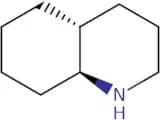
Discontinued producttrans-Decahydroquinoline
CAS:Trans-decahydroquinoline is a chiral compound that can be synthesized by an asymmetric synthesis. It is an amide with a carbonyl group and a dialkylamino group. Trans-decahydroquinoline can be used to synthesize different compounds, such as enantiopure drugs, pharmaceuticals, and agrochemicals. The synthesis of trans-decahydroquinoline can be accomplished through the aldol cyclization or the addition of an acid to the carbonyl group. The magnetic resonance spectroscopy (NMR) and molecular modeling techniques have been used to study its structure and properties.
Formula:C9H17NPurity:Min. 95%Molecular weight:139.24 g/molRef: 3D-FD76040
Discontinued productVaginidin
CAS:Please enquire for more information about Vaginidin including the price, delivery time and more detailed product information at the technical inquiry form on this page
Formula:C19H22O6Purity:Min. 95%Molecular weight:346.37 g/mol1-Methyl-2-(piperazin-1-ylcarbonyl)-1H-indole hydrochloride
CAS:Controlled ProductPlease enquire for more information about 1-Methyl-2-(piperazin-1-ylcarbonyl)-1H-indole hydrochloride including the price, delivery time and more detailed product information at the technical inquiry form on this pageFormula:C14H17N3OPurity:Min. 95%Molecular weight:243.3 g/molRef: 3D-FM125004
Discontinued product
![(1R,4R)-tert-Butyl 2,5-diazabicyclo[2.2.1]heptane-2-carboxylate hydrochloride](/_next/image/?url=https%3A%2Fstatic.cymitquimica.com%2Fproducts%2F3D%2Fthumb-webp%2FFB15223.webp&w=3840&q=75)

![1-Phenyl-3-oxabicyclo[3.1.0]hexan-2-one](/_next/image/?url=https%3A%2Fstatic.cymitquimica.com%2Fproducts%2F3D%2Fthumb-webp%2FFP16068.webp&w=3840&q=75)


![1-Bicyclo[2.2.1]hept-2-ylethanone](/_next/image/?url=https%3A%2Fstatic.cymitquimica.com%2Fproducts%2F3D%2Fthumb-webp%2FFB114448.webp&w=3840&q=75)