


Polycyclic Compounds
Subcategories of "Polycyclic Compounds"
- Acridines(98 products)
- Anthraquinones(533 products)
- Anthraquinonesulfonic Acids(16 products)
- Azobenzenes(270 products)
- Azonaphthalenes(98 products)
- Azoxybenzenes(12 products)
- Azulenes(11 products)
- Benzimidazoles(1,476 products)
- Benzodioxanes(27 products)
- Benzofurans(928 products)
- Benzothiophenes(701 products)
- Benzotriazoles(438 products)
- Binaphthyls(133 products)
- Carbazoles(464 products)
- Chromanes, Chromenes(480 products)
- Coumarins(1,124 products)
- Cyclophanes(11 products)
- Fluorenes and Fluorenones(384 products)
- Imidazopyridines(10 products)
- Indans(118 products)
- Indazoles(2,038 products)
- Indenes(22 products)
- Indoles(3,986 products)
- Indolines(119 products)
- Isatins(234 products)
- Isobenzofurans(17 products)
- N-Substituted Phthalimides(153 products)
- Naphthalenes(2,438 products)
- Naphthyridines(17 products)
- Naphtoquinone(2 products)
- Perylenes(36 products)
- Phenazines(25 products)
- Phthalazines(33 products)
- Phthalimide(153 products)
- Polycyclic Aromatic Hydrocarbons (PAHs)(289 products)
- Polyphenol(270 products)
- Pteridines(52 products)
- Pyrenes(87 products)
- Quinuclidine(1 products)
- Tetracenes(7 products)
Found 4575 products of "Polycyclic Compounds"
6-Nitroquinoline
CAS:6-Nitroquinoline is a nucleophilic compound that reacts with nitroalkanes to form alkyl nitrites. It undergoes a bioreductive reaction, in which it is reduced to the corresponding amine by hydrogen peroxide and ammonia. 6-Nitroquinoline contains functional groups that can act as either electron donors or electron acceptors and is therefore reactive towards other compounds. The reaction mechanism involves nucleophilic attack at the carbon atom in the ring of the 6-nitroquinoline molecule, resulting in an addition product. 6-Nitroquinoline has been shown to react with fluorophores such as fluorescein, forming a fluorescent product that can be detected by spectroscopy. This chemical can also form hydrogen bonds with other molecules, which are important for its reactivity. The reaction products of this compound are nitrite and quinolines where one or more of the nitrogens have been oxidized to nitro groups.
ENDFormula:C9H6N2O2Purity:Min. 95%Color and Shape:White PowderMolecular weight:174.16 g/molRef: 3D-FN31115
Discontinued productXanthine
CAS:Xanthine is a reactive, oxidized form of purine. It is found in the human body as a product of xanthine oxidase (XO) metabolism of xanthine and hypoxanthine. Xanthine is known to have antioxidant properties and has been shown to inhibit the activity of xanthine oxidase in vitro. Xanthine, when combined with other anticancer drugs such as doxorubicin, can be used as an anticancer agent. This drug has been shown to cause oxidative injury in humans and animal models at physiological levels.
Formula:C5H4N4O2Purity:Min. 98 Area-%Color and Shape:Off-White PowderMolecular weight:152.11 g/molRef: 3D-FX01318
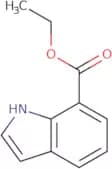
Discontinued productEthyl indole-7-carboxylate
CAS:Ethyl indole-7-carboxylate is a fine chemical that is used as a versatile building block for the synthesis of complex compounds. It can act as a research chemical, reagent, or specialty chemical. This compound has been used to prepare various useful intermediates and reaction components, such as 4-chloro-3-nitrobenzaldehyde and 3-(2,6-dimethoxyphenyl)acrylonitrile. The CAS number for ethyl indole-7-carboxylate is 205873-58-1.
Purity:Min. 95%Ref: 3D-FE43779
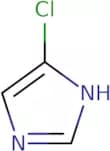
Discontinued product4-Chloro-1H-imidazole
CAS:4-Chloro-1H-imidazole is an organic chemical compound that contains a heterocyclic ring with one nitrogen and three carbons. It is classified as a weak acid. 4-Chloro-1H-imidazole can be found in hydrochloric acid, methyl ketones, and the acid conjugates of pyrazole rings. It has minimal toxicity. 4-Chloro-1H-imidazole binds to receptors in the body, which may account for its effects on blood pressure and heart rate. This drug also reacts with diazonium salts to form an intermediate that is then oxidized by chloride ions to form a reactive intermediate that can react with histidine or flavin (a type of vitamin B2) to form a fluorescent product that can be detected by light absorption or fluorescence emission spectroscopy.
Formula:C3H3ClN2Purity:Min. 95%Color and Shape:White PowderMolecular weight:102.52 g/molRef: 3D-FC19980
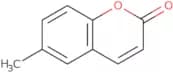
Discontinued product6-Methylcoumarin
CAS:The 6-methylcoumarin is a benzalkonium chloride that can be used as a stabilizer for biological samples. It has been shown to inhibit the activity of coumarin derivatives, which are receptors that are involved in the transmission of pain signals in the brain. The 6-methylcoumarin is also able to inhibit signal peptide, which is a protein that is secreted by cells and functions as a messenger between cells. This compound was found to have hypoglycemic effects due to its ability to stimulate glucose uptake in the body.
Formula:C10H8O2Purity:Min. 95%Color and Shape:PowderMolecular weight:160.17 g/mol6-Fluoroindole-3-acetic acid
CAS:6-Fluoroindole-3-acetic acid is a molecule that has been synthesized by the reaction of 6-fluoroindole with acetic anhydride. When mixed with acetonitrile, the fluorescence of 6-fluoroindole-3-acetic acid can be seen in the solution. The fluorescence intensity is proportional to the concentration of this molecule. 6-Fluoroindole-3-acetic acid is used as a template molecule for fluorescence labeling experiments. It interacts with hormones and can be used to identify their conformations and interactions. This compound has been shown to have anticancer properties in mice, and it may also be effective against cancer cells in humans. It has also been shown to inhibit the growth of pisum sativum (pea).
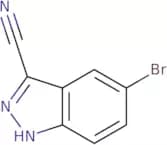
Formula:C10H8FNO2Purity:Min. 95%Color and Shape:PowderMolecular weight:193.17 g/mol5-Bromo-1H-indazole-3-carbonitrile
CAS:5-Bromo-1H-indazole-3-carbonitrile is a high quality, versatile building block that can be used in the synthesis of complex compounds. It has been described as a "useful intermediate" and a "useful scaffold".
Formula:C8H4BrN3Purity:Min. 95%Color and Shape:PowderMolecular weight:222.04 g/molRef: 3D-FB51079
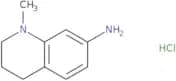
Discontinued product1-Methyl-1,2,3,4-tetrahydroquinolin-7-amine hydrochloride
CAS:1-Methyl-1,2,3,4-tetrahydroquinolin-7-amine hydrochloride (MQ) is a fluorescent probe that has been used to study the photostability of cisplatin in real time. MQ was synthesized by reacting 3-(2'-bromoacetyl)-7-methoxy-1,2,3,4-tetrahydroquinolin with 7-aminoquinaldine. The emission spectrum of MQ peaks at 615 nm and has an extinction coefficient at 615 nm of 12.5 mM/cm. This probe has been shown to be photostable for long periods of time and can be used to visualize DNA polymerase activity in living cells.Formula:C10H15ClN2Purity:Min. 95%Color and Shape:Off-White PowderMolecular weight:198.69 g/molRef: 3D-FM117303
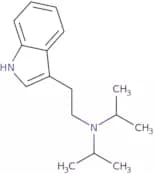
Discontinued product3-(2-Diisopropylaminoethyl)indole hydrochloride
CAS:Controlled Product3-(2-Diisopropylaminoethyl)indole hydrochloride is an inhibitor of the enzyme monoamine oxidase (MAO). MAO is responsible for the degradation of monoamines such as serotonin, dopamine, and norepinephrine. 3-(2-Diisopropylaminoethyl)indole hydrochloride inhibits these enzymes in order to increase the levels of these neurotransmitters in the brain. These effects are observed with a sectional study on the host plant species. 3-(2-Diisopropylaminoethyl)indole hydrochloride has been shown to have low potency for inhibiting 5-HT1A and 5-HT2A receptors in rat studies, but it is not active against 5-HT2C receptors. This drug was used to measure urinary serotonin and dopamine levels in human urine samples.
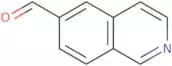
Formula:C16H25ClN2Purity:Min. 95%Molecular weight:280.84 g/molIsoquinoline-6-carbaldehyde
CAS:Isoquinoline-6-carbaldehyde is a fine chemical that belongs to the group of research chemicals. It can be used as a reagent for organic synthesis, a speciality chemical, or a building block in complex organic molecules. Isoquinoline-6-carbaldehyde is also an intermediate for the synthesis of many pharmaceuticals and other useful compounds. Isoquinoline-6-carbaldehyde has been shown to react with 2-aminoethanol to form (2E)-3-(4-(1,1'-biphenyl)-2-yl)butanal, which is an important reaction component in the synthesis of nitroaromatics. Isoquinoline-6-carbaldehyde is also a versatile scaffold for the synthesis of other fine chemicals.
Formula:C10H7NOPurity:Min. 95%Color and Shape:SolidMolecular weight:157.17 g/molRef: 3D-FI53537
Discontinued product2,2,4-Trimethyl-1,2-dihydroquinolin-6-ol
CAS:2,2,4-Trimethyl-1,2-dihydroquinolin-6-ol (TQ) is a naturally occurring phenolic compound that has been shown to inhibit lipid peroxidation in animal and human cells. TQ is an antioxidant that protects against oxidative damage by scavenging free radicals. This compound can act as a nitroxyl radical trap and inhibits the dimerization of quinones and other reactive oxygen species. TQ also has been found to have anti-inflammatory effects, which may be due to its ability to reduce the production of inflammatory cytokines.
A new study shows that TQ can inhibit the production of reactive oxygen species in quantum yields up to 10%. It is thought that this effect may be due to TQ’s ability to stabilize different forms of reduced glutathione.Formula:C12H15NOPurity:Min. 95%Color and Shape:PowderMolecular weight:189.25 g/molRef: 3D-FT125514
Discontinued product1,2,3,4-Tetrahydrophenanthren-4-one
CAS:1,2,3,4-Tetrahydrophenanthren-4-one is a synthetic quinone that is used as an intermediate in the Diels–Alder reaction. The compound has been shown to react with benzyne and amine molecules to form semicarbazones. 1,2,3,4-Tetrahydrophenanthren-4-one can be used as a reactive probe for studying intramolecular interactions. It can also be used to synthesize polycyclic compounds such as tetrafluoroborates. 1,2,3,4-Tetrahydrophenanthren-4-one can also serve as a reagent for the synthesis of frameworks such as zeolites.
Formula:C14H12OPurity:Min. 95%Color and Shape:PowderMolecular weight:196.24 g/molRef: 3D-FT28131
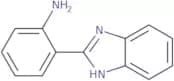
Discontinued product2-(2-Aminophenyl)benzimidazole
CAS:2-(2-Aminophenyl)benzimidazole is a synthetic compound with the chemical formula C8H6N2. It has an intramolecular hydrogen bond and reacts with salicylaldehyde to form 2-aminobenzimidazole, which is a reaction product. 2-(2-Aminophenyl)benzimidazole may be used as an antimicrobial agent, but it also has other uses such as a reagent in organic synthesis. It is soluble in water and can be obtained through liquid chromatography.
Formula:C13H11N3Purity:Min. 95%Color and Shape:Off-White PowderMolecular weight:209.25 g/molRef: 3D-FA10624
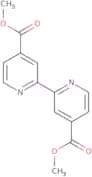
Discontinued product4,4'-Bis(methoxycarbonyl)-2,2'-bipyridine
CAS:4,4'-Bis(methoxycarbonyl)-2,2'-bipyridine is a ligand that can be used in cross-coupling reactions. It has been shown to bind to metal ions and form complexes with the ligands. 4,4'-Bis(methoxycarbonyl)-2,2'-bipyridine has a constant value for maximizing the yield of the reaction and is luminescent. This product also has photophysical properties that allow it to be utilized in voltammetry studies. The transfer of this product can be optimized by using chromophores or catalysis. 4,4'-Bis(methoxycarbonyl)-2,2'-bipyridine provides a means for cross-coupling reactions using electrochemical studies and dichroism.
Formula:C14H12N2O4Purity:Min. 95%Color and Shape:PowderMolecular weight:272.26 g/mol8-Azahypoxanthine
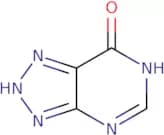
CAS:8-Azahypoxanthine is a hydroxyl analog of hypoxanthine. It contains a nitrogen atom in place of the oxygen atom on the 2-position. 8-Azahypoxanthine has been shown to be an effective inhibitor of purine biosynthesis in yeast cells and can be used as a replacement for xanthine during the synthesis of adenosine triphosphate (ATP) from uracil. 8-Azahypoxanthine was found to have good detection sensitivity, with an estimated detection limit of 0.2 µM. The optimum pH for this compound is 7.8, which is similar to that of wild type strain and tissue culture media. Mutants resistant to 8-azahypoxanthine were generated by exposure to high concentrations (>100 mM) for long periods (>2 days). Mutant strains showed no detectable enzyme activity against orotic acid or glycosidic bond formation with erythromycin
Purity:Min. 95%Color and Shape:PowderMolecular weight:137.1 g/molRef: 3D-FA03012
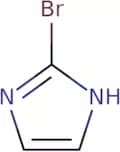
Discontinued product2-Bromo-1H-imidazole
CAS:2-Bromo-1H-imidazole is an environmental pollutant that has been detected in the atmosphere, water, and soil. It is used as a pesticide and has been found to be an impurity in biphenyl. 2-Bromo-1H-imidazole can be used as a substrate for the Suzuki coupling reaction or as a starting material for the synthesis of imidazole derivatives. The compound spontaneously fragments under acidic conditions to form nitric acid and hydrogen bromide. 2-Bromo-1H-imidazole has been shown to inhibit hepatitis C virus (HCV) replication and induce cancer cell apoptosis in vitro.
2-Bromo-1H-imidazole is also known to cause DNA fragmentation in cells through oxidation by reactive oxygen species or through spontaneous decomposition of the molecule into acid, bromine radicals, and ammonia.Formula:C3H3BrN2Purity:Min. 95%Color and Shape:PowderMolecular weight:146.97 g/molRef: 3D-FB12791
Discontinued product2-Butyl-1,3-diazaspiro[4.4]non-1-en-4-one Hydrochloride
CAS:Formula:C11H18N2O·HClPurity:>98.0%(T)(HPLC)Color and Shape:White to Almost white powder to crystalMolecular weight:230.741-Methylindole-2-Carboxylic Acid
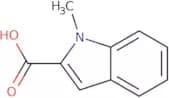
CAS:1-Methylindole-2-Carboxylic Acid is a chemical that belongs to the group of phenylacetic acid compounds. It has been shown to inhibit lymphocyte activation and t-cell proliferation in vitro, which may be due to its ability to interfere with the production of interleukin. 1-Methylindole-2-Carboxylic Acid also has an antitumor effect on animals and can reduce the tumor burden by inhibiting DNA synthesis, protein synthesis, and mineralization. The molecular modeling studies have shown that 1-Methylindole-2-Carboxylic Acid binds in the active site of protein kinase C as a competitive inhibitor and prevents ATP from binding to the enzyme.
Formula:C10H9NO2Purity:Min. 95%Color and Shape:PowderMolecular weight:175.18 g/molThiamine monophosphate chloride dihydrate
CAS:Thiamine monophosphate chloride dihydrate is a form of the vitamin thiamine. It has been used in control analysis to measure the activity of enzymes that require thiamine as a cofactor, such as transketolase and pyruvate kinase. Thiamine monophosphate chloride dihydrate has also been studied in biochemical properties, where it was found that this compound can be cleaved by picolinic acid to form thiazole phosphate. The matrix effect is an important factor in polymerase chain reactions and has been shown to be dependent on the presence of dinucleotide phosphate. This compound is an essential component of energy metabolism and plays a role in protein synthesis. Thiamine monophosphate chloride dihydrate also has toxicological studies, including a model system using wild-type strains of yeast. These studies have shown that this compound leads to physiological effects such as inhibition of glycolysis and lactic acid production.
Formula:C12H18N4O4PS•Cl•(H2O)2Purity:Min. 99 Area-%Color and Shape:PowderMolecular weight:416.82 g/molRef: 3D-FT47110
Discontinued product(1R,4R)-tert-Butyl 2,5-diazabicyclo[2.2.1]heptane-2-carboxylate hydrochloride
CAS:Tert-Butyl 2,5-diazabicyclo[2.2.1]heptane-2-carboxylate hydrochloride (TBDAHC) is a fine chemical that is an intermediate for the synthesis of other compounds. TBDAHC is a versatile building block that can be used in research chemicals, reaction components, and specialty chemicals. It is also a useful scaffold for making complex compounds and useful building blocks. The compound has high quality and can be used as a reagent in organic chemistry.
Formula:C10H18N2O2·HClPurity:Min. 95%Color and Shape:White PowderMolecular weight:234.72 g/molRef: 3D-FB15223
Discontinued product





![2-Butyl-1,3-diazaspiro[4.4]non-1-en-4-one Hydrochloride](/_next/image/?url=https%3A%2Fstatic.cymitquimica.com%2Fproducts%2F3B%2Fthumb-webp%2FB3291.webp&w=3840&q=75)


![(1R,4R)-tert-Butyl 2,5-diazabicyclo[2.2.1]heptane-2-carboxylate hydrochloride](/_next/image/?url=https%3A%2Fstatic.cymitquimica.com%2Fproducts%2F3D%2Fthumb-webp%2FFB15223.webp&w=3840&q=75)