Polycyclic Compounds
Polycyclic compounds are organic molecules that contain multiple interconnected rings. These compounds include polycyclic aromatic hydrocarbons and other complex ring systems. They are significant in materials science, pharmaceuticals, and organic electronics. At CymitQuimica, we provide high-quality polycyclic compounds to support your research and industrial applications, ensuring reliable and effective results in your projects.
Subcategories of "Polycyclic Compounds"
- Acridines(97 products)
- Anthraquinones(533 products)
- Anthraquinonesulfonic Acids(16 products)
- Azobenzenes(270 products)
- Azonaphthalenes(98 products)
- Azoxybenzenes(12 products)
- Azulenes(11 products)
- Benzimidazoles(1,470 products)
- Benzodioxanes(27 products)
- Benzofurans(923 products)
- Benzothiophenes(690 products)
- Benzotriazoles(436 products)
- Binaphthyls(133 products)
- Carbazoles(462 products)
- Chromanes, Chromenes(480 products)
- Coumarins(1,121 products)
- Cyclophanes(11 products)
- Fluorenes and Fluorenones(381 products)
- Imidazopyridines(10 products)
- Indans(118 products)
- Indazoles(2,029 products)
- Indenes(22 products)
- Indoles(3,984 products)
- Indolines(119 products)
- Isatins(231 products)
- Isobenzofurans(17 products)
- N-Substituted Phthalimides(153 products)
- Naphthalenes(2,427 products)
- Naphthyridines(17 products)
- Naphtoquinone(2 products)
- Perylenes(36 products)
- Phenazines(25 products)
- Phthalazines(33 products)
- Phthalimide(153 products)
- Polycyclic Aromatic Hydrocarbons (PAHs)(270 products)
- Polyphenol(261 products)
- Pteridines(52 products)
- Pyrenes(87 products)
- Quinuclidine(1 products)
- Tetracenes(7 products)
Show 32 more subcategories
Found 4574 products of "Polycyclic Compounds"
Sort by
Purity (%)
0
100
|
0
|
50
|
90
|
95
|
100
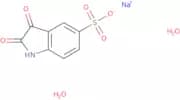
Isatin-5-sulfonic acid sodium salt dihydrate
CAS:<p>Isatin-5-sulfonic acid sodium salt dihydrate is a potent inhibitor of caspases. It has been shown to inhibit the activity of caspase-3 in vitro, thereby inhibiting apoptosis. Isatin-5-sulfonic acid sodium salt dihydrate has also been shown to increase survival rates in animal models of neurodegenerative diseases such as Parkinson's disease and Huntington's disease. Isatin-5-sulfonic acid sodium salt dihydrate may have neuroprotective effects by inhibiting the release of proinflammatory cytokines and nitric oxide, which are associated with neuronal death. This drug also inhibits monoamine oxidase A (MAO-A) and zymosterone B (ZVAD).</p>Formula:C8H4NNaO5S·2H2OPurity:Min. 95%Color and Shape:PowderMolecular weight:285.21 g/mol2-Hydroxyamino-3-methyl-3H-imidazo[4,5-f]quinoline
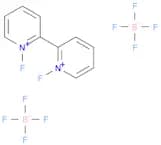
CAS:<p>2-Hydroxyamino-3-methyl-3H-imidazo[4,5-f]quinoline (2HAIQ) is a reactive compound that binds to DNA. It has been shown to be a potent inhibitor of the enzyme cytosolic protein kinase C, which plays an important role in regulating cellular metabolism. 2HAIQ also inhibits the activity of enzymes such as hydroxylases and polymerases. The binding of 2HAIQ to DNA is thought to inhibit transcription by preventing RNA polymerase from transcribing DNA. 2HAIQ may also inhibit replication by binding to the dinucleotide phosphate molecule, which is essential for DNA synthesis.</p>Formula:C11H10N4OPurity:Min. 95%Molecular weight:214.22 g/mol2,2'-Bipyridinium, 1,1'-difluoro-, tetrafluoroborate(1-) (1:2)
CAS:Formula:C10H8B2F10N2Purity:95%Color and Shape:SolidMolecular weight:367.79001-Azabicyclo[2.2.2]octan-3-one, hydrochloride (1:1)
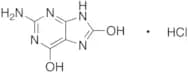
CAS:Formula:C7H12ClNOPurity:98%Color and Shape:SolidMolecular weight:161.62932-Amino-6,8-dihydroxypurine Hydrochloride (~90%)
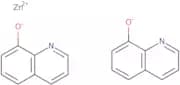
CAS:Controlled Product<p>Applications 2-Amino-6,8-dihydroxypurine is an 8-oxo-guanine repair pathway coordinated by MUTYH glycosylase and DNA polymerase λ.<br>References Avkin, S., et al.: Mutat. Res., 510, 81 (2002), Niimi, N., et al.: Biochem., 48, 4239 (2009), Muftuoglu, M., et al.: J. Biol. Chem., 284, 9270 (2009),<br></p>Formula:C5H6ClN5O2Purity:~90%Color and Shape:Off White SolidMolecular weight:203.59Bis(8-quinolinolato)zinc(II)
CAS:<p>Bis(8-quinolinolato)zinc (II) is a molecule that contains carboxylate groups. It has been shown to be processable and can be used in fabrication processes. Bis(8-quinolinolato)zinc (II) also exhibits optical properties. The metal ion in the molecule is able to form complexes with other metals, which may affect transport properties, ionization mass and morphology of the compound. It can also be used for magnetic resonance spectroscopy studies, as well as plasma mass spectrometry.</p>Formula:C18H12N2O2ZnPurity:Min. 95%Color and Shape:PowderMolecular weight:353.7 g/molRef: 3D-FB62127
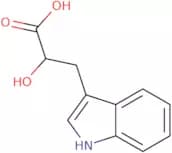
Discontinued productDL-Indole-3-lactic acid
CAS:<p>Indole-3-lactic acid is a plant hormone that is produced in the leaves of the plant when they are under stress. It has been shown to have activity against bowel diseases and metabolic disorders. Indole-3-lactic acid has been isolated from plants like Caproicum album, which is used in vitro to measure its effect on caproic acid production. This compound has also been detected in human serum and wastewater treatment. Indole-3-lactic acid inhibits tryptophan degradation by competing with indolecarboxylase for substrate. The effect of indole-3-lactic acid on dextran sulfate and glomerular filtration rate was studied using a rat model, where it was found that it had no significant effects.</p>Formula:C11H11NO3Purity:Min. 95%Color and Shape:PowderMolecular weight:205.21 g/mol(1R,2S,3S,5S)-3-(4-Iodophenyl)-8-methyl-8-azabicyclo[3.2.1]octane-2-carboxylicacid methyl ester
CAS:Controlled Product<p>(1R,2S,3S,5S)-3-(4-Iodophenyl)-8-methyl-8-azabicyclo[3.2.1]octane-2-carboxylicacid methyl ester is a molecule that has been shown to be effective in lowering the symptoms of Parkinson's disease. It also prevents the uptake of dopamine and serotonin in the brain by binding to dopamine and serotonin transporters on the cell membrane. This drug has been shown to be safe at doses up to 100 mg/kg/day in rats, but has not been tested in humans. The drug is stable in neutral pH environments and does not degrade upon exposure to light or oxygen.</p>Formula:C16H20INO2Purity:Min. 95%Molecular weight:385.24 g/mol5-Methylindole-3-acetic acid
CAS:<p>5-Methylindole-3-acetic acid (5MI3A) is a molecule that has been shown to have antiproliferative properties in bladder cancer cells. 5MI3A binds to the receptor for GABA, which is an inhibitory neurotransmitter. It also inhibits the production of proinflammatory mediators and reactive oxygen species in cancer cells. 5MI3A has anticancer activity in prostate cancer cells and may act by inducing apoptosis and inhibiting cell proliferation. Consumption of 5MI3A may reduce the risk of cancer development by preventing DNA damage from carcinogens, suppressing inflammation, and regulating cell growth through its antagonistic properties.</p>Formula:C11H11NO2Purity:Min. 95%Color and Shape:PowderMolecular weight:189.21 g/molRef: 3D-FM30491
Discontinued product2-Butyl-1,3-diazaspiro[4.4]non-1-en-4-one Hydrochloride
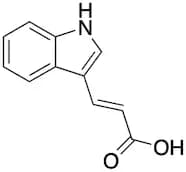
CAS:Formula:C11H18N2O·HClPurity:>98.0%(T)(HPLC)Color and Shape:White to Almost white powder to crystalMolecular weight:230.743-Indoleacrylic Acid
CAS:Controlled Product<p>Applications 3-Indoleacrylic Acid (cas# 1204-06-4) is a useful research chemical.<br></p>Formula:C11H9NO2Color and Shape:NeatMolecular weight:187.19Methyl 5-chloro-1-methyl-1H-indole-2-carboxylate
CAS:Controlled Product<p>Please enquire for more information about Methyl 5-chloro-1-methyl-1H-indole-2-carboxylate including the price, delivery time and more detailed product information at the technical inquiry form on this page</p>Formula:C11H10ClNO2Purity:Min. 95%Molecular weight:223.66 g/molRef: 3D-FM118368
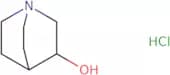
Discontinued product3-Quinuclidinol HCl
CAS:Controlled Product<p>3-Quinuclidinol HCl is a cholinergic drug that inhibits the enzyme acetylcholinesterase. This action prevents the breakdown of the neurotransmitter acetylcholine, which causes an increase in its concentration in the synaptic cleft. 3-Quinuclidinol HCl has been shown to have a dose-dependent effect on increasing acetylcholine levels, which is believed to be due to its ability to inhibit butyrylcholinesterase. In addition, this drug has been shown to have pharmacokinetic properties that are consistent with those of other cholinergic drugs. 3-Quinuclidinol HCl also interacts with other substances and can block nicotinic receptors at high doses.</p>Formula:C7H13NO·HClPurity:Min. 95%Molecular weight:163.64 g/mol

![2-Hydroxyamino-3-methyl-3H-imidazo[4,5-f]quinoline](/_next/image/?url=https%3A%2Fstatic.cymitquimica.com%2Fproducts%2F3D%2Fthumb-webp%2FFH24305.webp&w=3840&q=75)

![1-Azabicyclo[2.2.2]octan-3-one, hydrochloride (1:1)](/_next/image/?url=https%3A%2Fstatic.cymitquimica.com%2Fproducts%2FIN%2Fthumb-webp%2FDA000IK0.webp&w=3840&q=75)

![(1R,2S,3S,5S)-3-(4-Iodophenyl)-8-methyl-8-azabicyclo[3.2.1]octane-2-carboxylicacid methyl ester](/_next/image/?url=https%3A%2Fstatic.cymitquimica.com%2Fproducts%2F3D%2Fthumb-webp%2FFI76761.webp&w=3840&q=75)

![2-Butyl-1,3-diazaspiro[4.4]non-1-en-4-one Hydrochloride](/_next/image/?url=https%3A%2Fstatic.cymitquimica.com%2Fproducts%2F3B%2Fthumb-webp%2FB3291.webp&w=3840&q=75)