Coumarins
Coumarins are a class of polycyclic aromatic compounds consisting of a benzene ring fused to a pyrone ring. These compounds are widely used as fragrances, flavoring agents, and in the synthesis of pharmaceuticals and agrochemicals. Coumarins exhibit various biological activities, including anticoagulant, anti-inflammatory, and antimicrobial properties. At CymitQuimica, we provide a wide selection of high-quality coumarins for your research and industrial applications.
Found 1122 products of "Coumarins"
Sort by
Purity (%)
0
100
|
0
|
50
|
90
|
95
|
100
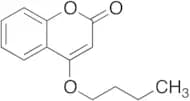
4-Butoxy-2H-1-benzopyran-2-one
CAS:Controlled ProductFormula:C13H14O3Color and Shape:NeatMolecular weight:218.25Imperatorin
CAS:Controlled Product<p>Applications Imperatorin (cas# 482-44-0) is a compound useful in organic synthesis.<br></p>Formula:C16H14O4Color and Shape:White To Light BeigeMolecular weight:270.28Coumestrol
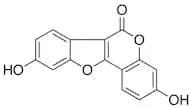
CAS:Controlled Product<p>Applications This compound has estrogenic activity. It exhibits bright blue fluorescence in neutral or acid solution, and greenish-yellow fluorescence in strong alkali solution.<br>References Wolfbeis, O.S. & K. Schaffner: Photochem. Photobiol., 32, 143(1980), Bickoff et al.: J.Am. Chem Soc. 80, 3969 (1958)<br></p>Formula:C15H8O5Color and Shape:NeatMolecular weight:268.227-Hydroxy Coumarin-d5
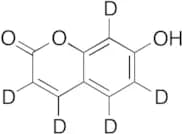
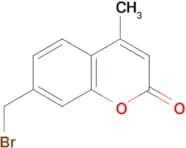
CAS:Controlled Product<p>Applications 7-Hydroxy Coumarin-d5 is the labeled analogue of 7-Hydroxy Coumarin (H924875), a metabolite of Coumarin that is present in many plants and is the aglucon of skimmin.<br>References Schilling, et al.: Nature, 221, 664 (1969); Indahl, S., et al.: Xenobiotica, 1, 13 (1971); Thompson, S.G., et al.: Antimicrob. Agents Chemother., 18, 264 (1980)<br></p>Formula:C9HD5O3Color and Shape:Off-White To Light BeigeMolecular weight:167.177-Bromomethyl-4-methyl-chromen-2-one
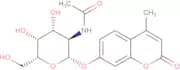
CAS:Formula:C11H9BrO2Color and Shape:SolidMolecular weight:253.0954-Methylumbelliferyl N-acetyl-β-D-galactosaminide
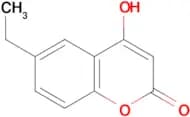
CAS:<p>M04120 - 4-Methylumbelliferyl N-acetyl-beta-D-galactosaminide</p>Formula:C18H21NO8Purity:97%Color and Shape:Solid, White to off-white powderMolecular weight:379.3656-Ethyl-4-hydroxycoumarin
CAS:Formula:C11H10O3Purity:97.0%Color and Shape:CrystallineMolecular weight:190.198Potassium 7-nitro-2-oxo-2H-chromene-3-carboxylate
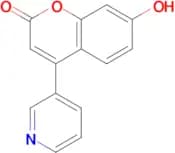
CAS:Formula:C10H4KNO6Purity:97.0%Color and Shape:SolidMolecular weight:273.2417-Hydroxy-4-(3-pyridyl)coumarin
CAS:Purity:95.0%Color and Shape:SolidMolecular weight:239.229995727539063-(1-(4-Chlorophenyl)-3-oxobutyl)-4-hydroxy-2H-chromen-2-one
CAS:Purity:98.0%Molecular weight:342.77999877929692-(7-((((9H-Fluoren-9-yl)methoxy)carbonyl)amino)-2-oxo-2H-chromen-4-yl)acetic acid
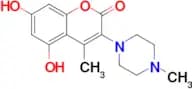
CAS:Purity:95%Molecular weight:441.43899536132815,7-Dihydroxy-4-methyl-3-(4-methylpiperazin-1-yl)-2H-chromen-2-one
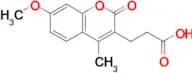
CAS:Purity:95.0%Molecular weight:290.31900024414063-(7-Methoxy-4-methyl-2-oxo-2h-chromen-3-yl)propanoic acid
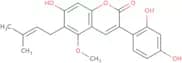
CAS:Purity:97%Molecular weight:262.260986328125Glycocoumarin - Glycyrrhiza uralensis (liquorice)
CAS:<p>Glycocoumarin is a phytochemical compound that is primarily categorized as a bioactive flavonoid. It is derived from Glycyrrhiza uralensis, commonly known as liquorice, a plant renowned for its diverse pharmacological properties. The mode of action of glycocoumarin involves the modulation of various biological pathways, including its potential to influence inflammatory responses and antioxidant activity. This compound is known to interact with cellular signaling mechanisms, which could mediate its effects on immune modulation and cellular protection.</p>Formula:C21H20O6Purity:Min. 98 Area-%Color and Shape:PowderMolecular weight:368.38 g/molEpoxybergamottin
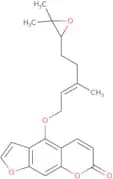
CAS:<p>Epoxybergamottin is a furanocoumarin derivative, which is a natural bioactive compound. It is primarily sourced from citrus fruits, particularly grapefruit. The primary mode of action of epoxybergamottin is the inhibition of cytochrome P450 enzymes, specifically CYP3A4. This enzyme is a major player in the metabolism of many pharmaceuticals, and its inhibition can lead to increased bioavailability and prolonged effects of drugs metabolized by this pathway.</p>Formula:C21H22O5Purity:Min. 95 Area-%Color and Shape:PowderMolecular weight:354.40 g/molIsosibiricin
CAS:<p>Isosibiricin is a naturally occurring lignan, which is extracted from certain plant sources. This compound is derived from the genus Daphne, traditionally known for its diverse range of biologically active constituents. Its mode of action is primarily through the modulation of key signaling pathways involved in cell proliferation and apoptosis. Isosibiricin exhibits notable inhibitory effects on specific enzymes and receptors implicated in oncogenic processes, making it a subject of interest for cancer research.</p>Formula:C16H18O5Purity:Min. 95%Color and Shape:PowderMolecular weight:290.31 g/mol