Coumarins
Found 1125 products of "Coumarins"
Fraxinol
CAS:Fraxinol is a natural lignan, which is a small class of polyphenols, derived from the inner bark of the Ash tree (Fraxinus species). Its primary action is believed to involve antioxidant and anti-inflammatory pathways, where it scavenages reactive oxygen species and modulates cytokine production. This activity suggests potential modulation of cellular oxidative stress responses, contributing to its therapeutic interest.
Purity:Min. 95%Anomelin
Anomelin is a synthetic anticancer compound, which is derived from complex organic synthesis methodologies. This compound is typically produced through careful laboratory processes due to its intricate chemical structure, which is crafted to target specific molecular pathways involved in cancer cell proliferation.
Purity:Min. 95%Calipteryxin
CAS:Please enquire for more information about Calipteryxin including the price, delivery time and more detailed product information at the technical inquiry form on this pageFormula:C24H26O7Purity:Min. 95%Molecular weight:426.46 g/molUmbelliprenin
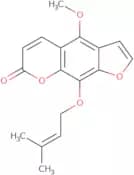
CAS:Umbelliprenin is a naturally occurring prenylated coumarin, which is primarily isolated from plants in the Apiaceae family. These plants are rich sources of various biologically active compounds. The mode of action of umbelliprenin is attributed to its ability to modulate multiple cellular pathways, including apoptosis and cell cycle arrest. This modulation is largely due to its interaction with reactive oxygen species and various signaling molecules within the cell.
Formula:C24H30O3Purity:Min. 95%Molecular weight:366.49 g/molPhellopterin
CAS:Phellopterin is a bioactive compound belonging to the class of furanocoumarins. It is extracted from various plants within the Apiaceae family, notably Angelica and Peucedanum species. These plants are found in diverse geographical regions and have been used in traditional medicine for centuries.Purity:Min. 95%Murrangetin
Murrangetin is a flavonoid compound, which is a natural phytochemical sourced from the peels of various citrus fruits. Its mode of action primarily involves the modulation of inflammatory pathways, potentially through the inhibition of specific enzymes like cyclooxygenases and lipoxygenases. This flavonoid is also known for its antioxidative properties, which contribute to its ability to scavenge free radicals, thereby reducing oxidative stress in biological systems.
Purity:Min. 95%Heratomol
CAS:Please enquire for more information about Heratomol including the price, delivery time and more detailed product information at the technical inquiry form on this page
Formula:C11H6O4Purity:Min. 95%Molecular weight:202.16 g/molOxypeucedanin hydrate
CAS:Oxypeucedanin hydrate is a natural furanocoumarin compound, which is derived from various plant sources, such as citrus fruits and members of the Apiaceae family. As a secondary metabolite, it plays a role in plant defense mechanisms against herbivores and pathogens.Purity:Min. 95%7-methoxy-8-hydroxy-4-phenylcoumarin
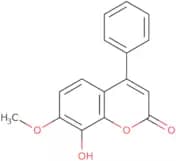
CAS:7-Methoxy-8-hydroxy-4-phenylcoumarin is a coumarin derivative, a type of organic compound characterized by a benzopyrone structure. This compound is typically derived from natural plant sources or synthesized in laboratory settings. Its structural features, such as the methoxy and hydroxy groups, are integral to its potential biological activity.Formula:C16H12O4Purity:Min. 95%Molecular weight:268.26 g/mol5,7-Dihydroxycoumarin
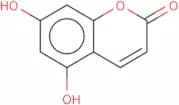
CAS:5,7-Dihydroxycoumarin is a natural product isolated from the dichloromethane extract of the inflorescences of Macaranga triloba.Formula:C9H6O4Purity:98.76%Color and Shape:SolidMolecular weight:178.14Marmesinin
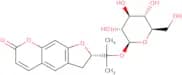
CAS:Marmesinin is a furanocoumarin compound, which is a type of phytochemical derived from certain plant species. It is specifically obtained from the plant Aegle marmelos, commonly known as the bael tree. Marmesinin acts primarily through mechanisms that are characteristic of coumarins, such as influencing biochemical pathways involved in cellular growth and immune response modulation.Formula:C20H24O9Purity:Min. 95%Molecular weight:408.4 g/molPeucedanol methyl ether
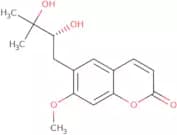
CAS:Peucedanol methyl ether is a bioactive natural compound, which is derived from certain species of the Peucedanum genus, commonly found in various geographic regions. This compound is predominantly obtained from natural extracts through advanced chromatographic techniques. Its molecular structure is characterized by its functional groups, which contribute to its biological activities.
Formula:C15H18O5Purity:Min. 95%3-Hydroxycoumarin
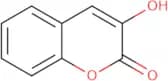
CAS:3-Hydroxycoumarin is a coumarin derivative, which is a type of organic compound with significant pharmacological interest. It is derived from the parent structure of coumarin, naturally found in various plant sources such as tonka beans and sweet clover. Its molecular structure includes a hydroxyl group added at the third position of the coumarin backbone, conferring distinct chemical properties.Formula:C9H6O3Purity:Min. 95%Color and Shape:PowderMolecular weight:162.14 g/molVinaxanthone
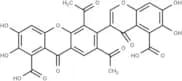
CAS:Vinaxanthone (SM-345431), an extract from Penicillium chrysogenum, is a semaphorin3A inhibitor with antimicrobial activity.Formula:C28H16O14Purity:82.56% - 97.8%Color and Shape:SolidMolecular weight:576.42Seselin
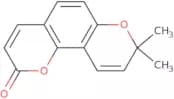
CAS:Seselin is a furanocoumarin, a type of organic compound, which is typically sourced from various plant species, particularly those in the Apiaceae family. This compound is characterized by a furan ring fused with a coumarin core, contributing to its unique chemical structure.
Formula:C14H12O3Purity:Min. 95%Molecular weight:228.24 g/mol(+)-Phyllodulcin
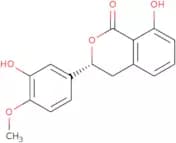
CAS:(+)-Phyllodulcin is a natural sweetener, which is predominantly derived from the leaves of the Hydrangea macrophylla var. thunbergii, commonly referred to as the sweet hydrangea. As a compound, it functions primarily as a sweetening agent by interacting with taste receptors on the human tongue, offering a sweetness intensity significantly greater than sucrose.Formula:C16H14O5Purity:Min. 95%Molecular weight:286.28 g/molCoumafuryl
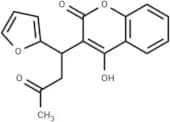
CAS:Coumafuryl is a coumarin-based rodenticide. It inhibits the metabolic cycle of vitamin K, thereby interfering with the biosynthesis of vitamin K-dependent clotting factors (factors II, VII, IX, and X) in the liver.Formula:C17H14O5Color and Shape:SolidMolecular weight:298.29Elsamicin B
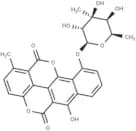
CAS:Elsamicin B is an antitumor antibiotic belonging to the Chartreusin group.Formula:C26H22O10Color and Shape:SolidMolecular weight:494.447Dalbergin
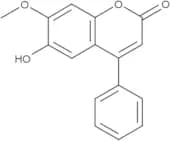
CAS:Dalbergin analytical standard provided with chromatographic purity, to be used as reference material for qualitative determination.
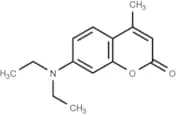
Formula:C16H12O4Purity:(HPLC) ≥90%Color and Shape:PowderMolecular weight:268.287-(Diethylamino)-4-methyl-2H-chromen-2-one
CAS:7-(Diethylamino)-4-methyl-2H-chromen-2-one is a useful organic compound for research related to life sciences.Formula:C14H17NO2Color and Shape:SolidMolecular weight:231.30