Coumarins
Coumarins are a class of polycyclic aromatic compounds consisting of a benzene ring fused to a pyrone ring. These compounds are widely used as fragrances, flavoring agents, and in the synthesis of pharmaceuticals and agrochemicals. Coumarins exhibit various biological activities, including anticoagulant, anti-inflammatory, and antimicrobial properties. At CymitQuimica, we provide a wide selection of high-quality coumarins for your research and industrial applications.
Found 1122 products of "Coumarins"
Sort by
Purity (%)
0
100
|
0
|
50
|
90
|
95
|
100
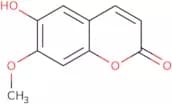
Isoscopoletin
CAS:<p>Isoscopoletin is a naturally occurring coumarin derivative, which is typically sourced from various plants, including some medicinal herbs. This compound is found in a variety of plant species, where it plays a role in the plant's defense mechanisms against pathogens. It is known for its characteristic chemical structure that belongs to the coumarin family, which is widespread in the plant kingdom.</p>Formula:C10H8O4Purity:Min. 95%Color and Shape:PowderMolecular weight:192.17 g/molScopolin
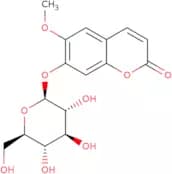
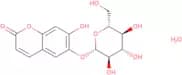
CAS:<p>Scopolin is a coumarin glucoside, which is derived from the plant secondary metabolism. It originates predominantly from species within the Solanaceae family, including tobacco and potato plants. Its biosynthesis involves the conversion of scopoline, a precursor molecule, through glucosylation. This process is catalyzed by glucosyltransferases, which facilitate the attachment of a glucose moiety.</p>Formula:C16H18O9Purity:Min. 98 Area-%Color and Shape:White PowderMolecular weight:354.31 g/molBergamottin
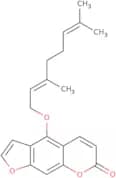
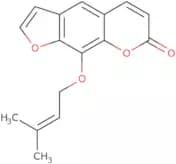
CAS:<p>Bergamottin is a furanocoumarin compound, which is primarily found in grapefruit juice and other citrus fruits. It is derived from natural sources, specifically within the fruit and peel of grapefruits. The mode of action of Bergamottin involves the inhibition of the cytochrome P450 enzymes, particularly CYP3A4, which play a significant role in the metabolism of various drugs. This inhibitory effect can alter the pharmacokinetics of certain medications by increasing their bioavailability.</p>Formula:C21H22O4Purity:Min. 98 Area-%Color and Shape:White PowderMolecular weight:338.4 g/molAngelicin
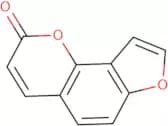
CAS:<p>Angelicin is a furanocoumarin compound, which is derived from various plant sources, particularly within the Apiaceae family. The source of angelicin is often linked to traditional medicinal plants, where it is extracted and subsequently isolated for scientific investigation. Angelicin's mode of action involves intercalating within DNA strands, thereby affecting transcription and replication processes. This action is understood to be primarily photoactivated, leading to the formation of covalent bonds with DNA upon exposure to ultraviolet light, which can result in cross-linking.</p>Formula:C11H6O3Purity:Min. 95%Color and Shape:PowderMolecular weight:186.16 g/molOroselol
CAS:<p>Oroselol is an innovative beta-adrenergic blocker, which is a synthetic derivative with unique cardiovascular targeting properties. It is sourced from engineered chemical synthesis, utilizing advanced molecular design to enhance selectivity for beta-adrenergic receptors. The mode of action of Oroselol involves competitive antagonism of beta-1 and beta-2 adrenergic receptors, leading to a decrease in heart rate and myocardial contractility. This blockade of adrenergic stimulation results in reduced cardiac output and lower blood pressure.</p>Formula:C14H12O4Purity:Min. 95%Color and Shape:PowderMolecular weight:244.24 g/molImperatorin
CAS:<p>Imperatorin is a furanocoumarin compound, which is a natural product primarily isolated from plants in the Apiaceae family, such as Angelica dahurica and Citrus species. This compound is characterized by its unique chemical structure that includes a furan ring fused to a coumarin backbone. Imperatorin exerts its biological activities through multiple modes of action, including the modulation of enzymatic activity, interference with cellular signaling pathways, and binding to specific biological targets.</p>Formula:C16H14O4Purity:Min. 98 Area-%Color and Shape:White PowderMolecular weight:270.28 g/mol(+/-)-Heraclenin
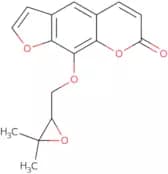
CAS:<p>(+/-)-Heraclenin is a naturally occurring coumarin, which is a class of organic compounds notable for diverse biological activities. This compound is primarily sourced from various plant species belonging to the family Apiaceae, such as Heracleum species. Coumarins like (+/-)-heraclenin are known for their ability to modify biological responses due to their chemical structure.</p>Formula:C16H14O5Purity:Min. 98 Area-%Color and Shape:PowderMolecular weight:286.28 g/mol7,8-Dihydroxycoumarin
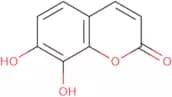
CAS:<p>7,8-Dihydroxycoumarin is a naturally occurring coumarin, which is derived from plants and certain fungi. It possesses a distinct chemical structure characterized by a benzopyrone core with hydroxyl groups at the 7th and 8th positions, contributing to its distinct biochemical properties. The mode of action of 7,8-Dihydroxycoumarin is largely attributed to its ability to act as a potent antioxidant, scavenging free radicals and chelating metal ions, thus mitigating oxidative stress at the cellular level.</p>Formula:C9H6O4Purity:Min. 95%Color and Shape:PowderMolecular weight:178.14 g/molEsculetin dibenzyl ether
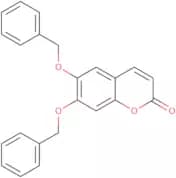
CAS:<p>Esculetin dibenzyl ether is a chemical compound, which is a derivative of esculetin, a natural coumarin obtained chiefly from plant sources such as the bark of horse chestnut and other similar species. The source of esculetin dibenzyl ether is typically synthesized from natural precursors through chemical modifications, allowing for the exploration of its structural analogs.</p>Formula:C23H18O4Purity:Min. 95%Molecular weight:358.39 g/molDecursinol
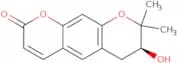
CAS:<p>Decursinol is a coumarin derivative, which is sourced from the roots of the plant Angelica gigas, commonly found in East Asia. The compound is recognized for its biochemical properties, specifically as a secondary metabolite in the umbelliferous family. Its mode of action involves the inhibition of key inflammatory pathways, notably through the suppression of pro-inflammatory cytokines and enzymes such as COX-2 and NF-κB. This molecular interaction effectively reduces inflammatory responses at the cellular level.</p>Formula:C14H14O4Purity:Min. 98 Area-%Color and Shape:White Off-White PowderMolecular weight:246.26 g/molEsculin sesquihydrate
CAS:<p>Fluorescent dye used in diagnostic culture media</p>Formula:C15H16O9•(H2O)1Purity:(Uv) Min. 97.5%Color and Shape:White Off-White PowderMolecular weight:367.31 g/molDecursin
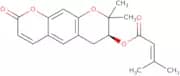
CAS:<p>MAO inhibitor; neuro-protective and cognitive enhancement effects</p>Formula:C19H20O5Purity:Min. 98 Area-%Color and Shape:White PowderMolecular weight:328.36 g/mol(7-Amino-2-oxo-2H-chromen-4-yl)acetic acid
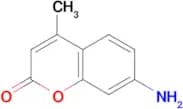
CAS:Formula:C11H9NO4Purity:95%Color and Shape:SolidMolecular weight:219.1967-Amino-4-methylcoumarin
CAS:Formula:C10H9NO2Purity:96%Color and Shape:Solid, Crystalline PowderMolecular weight:175.187Ref: 10-F017134
1g13.00€5g25.00€10g32.00€25g74.00€50g134.00€100g256.00€250g574.00€500g1,129.00€250mg9.00€Ethyl 7-hydroxy-2-oxo-2H-chromene-3-carboxylate
CAS:Formula:C12H10O5Purity:98%Color and Shape:SolidMolecular weight:234.207