Organometallic Ligands
In this category, you will be able to find a large number of organometallic molecules used as ligands in biomolecules. These organometallic ligands can be used in organic chemistry and synthesis in the laboratory. They play a critical role in forming coordination complexes and catalyzing various chemical reactions. At CymitQuimica, we offer a diverse selection of high-quality organometallic ligands to support your research and industrial needs.
Subcategories of "Organometallic Ligands"
- Buchwald Ligands(22 products)
- DPEN(4 products)
- DPHEN(4 products)
- JOSIPHOS(4 products)
- Phosphine(497 products)
- Porphirines(75 products)
Found 2887 products of "Organometallic Ligands"
Sort by
Purity (%)
0
100
|
0
|
50
|
90
|
95
|
100
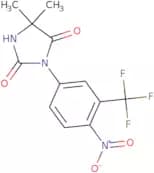
Nilutamide - Bio-X ™
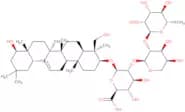
CAS:<p>Nilutamide is an antineoplastic agent that is used to treat prostate cancer. This drug is an androgen receptor antagonist and binds with androgen receptors thus blocking its action and resulting in growth arrest.</p>Formula:C12H10F3N3O4Purity:Min. 95%Color and Shape:PowderMolecular weight:317.22 g/molSoyasaponin II
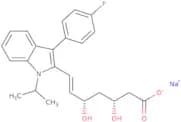
CAS:<p>Soyasaponin II is a naturally occurring triterpenoid saponin that is primarily extracted from soybeans, a rich source of biologically active phytochemicals. Its mode of action involves the modulation of cellular pathways and the alteration of membrane dynamics, which can affect various signaling cascades. This compound is particularly noted for its potential anti-inflammatory, antioxidant, and anticancer properties, making it a subject of extensive research in pharmacological contexts.</p>Formula:C47H76O17Purity:Min. 98 Area-%Color and Shape:PowderMolecular weight:913.1 g/molFluvastatin sodium
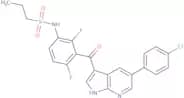
CAS:<p>Fluvastatin is a statin that lowers blood cholesterol and triglycerides by inhibiting HMG-CoA reductase, an enzyme that plays a critical role in the synthesis of cholesterol. Fluvastatin has also been shown to reduce the incidence of myocardial infarction, and to reduce atherosclerotic lesions in animal models, reducing the incidence of cardiovascular disease. Fluvastatin also has been shown to inhibit the activation of toll-like receptor 4 (TLR4) by lipopolysaccharide (LPS), which may be related to its anti-inflammatory effects. Furthermore, through lowering blood cholesterol, Fluvastatin also inhibits tubulointerstitial injury and prevents renal damage caused by high concentrations of the lipid.</p>Formula:C24H25FNNaO4Purity:Min. 98%Color and Shape:Off-White PowderMolecular weight:433.45 g/molPLX 4032
CAS:<p>BRAF kinase inhibitor; antineoplastic</p>Formula:C23H18ClF2N3O3SPurity:Min. 95%Color and Shape:PowderMolecular weight:489.92 g/molApixaban - Bio-X ™
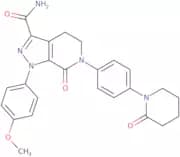
CAS:<p>Apixaban is an anticoagulant agent used for the prophylaxis of stroke and deep vein thrombosis leading to pulmonary embolism. This drug is an inhibitor of factor Xa and prothrominase. As a result, this prevents the formation of a thrombus.</p>Formula:C25H25N5O4Purity:Min. 95%Color and Shape:PowderMolecular weight:459.5 g/molIcatibant acetate
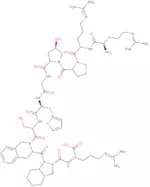
CAS:<p>Icatibant is a 10 amino acid peptidomimetic of bradykinin and a selective antagonist to the bradykinin B2 receptor. Icabinant has been used for the treatment of attacks in patients with hereditary angioedema. Recent evidence has shown a link between dysregulated bradykininâmediated inflammation and acute respiratory distress syndrome (ARDS), a common complication in COVID-19 patients. Icatibant was proposed to inhibit excessive activation of the bradykinin B2 receptor during the SARS-CoV-2 infection, reducing the risk of ARDS.</p>Formula:C59H89N19O13S•(C2H4O2)xPurity:Min. 98 Area-%Color and Shape:PowderMolecular weight:1,304.52 g/molRosuvastatin calcium - Bio-X ™
CAS:<p>Rosuvastatin is a drug that belongs to the group of statins. It is used for the treatment of high cholesterol and as an adjunct therapy for patients with coronary heart disease. Rosuvastatin reduces serum cholesterol by inhibiting HMG-CoA reductase, which is the rate-limiting enzyme in the production of cholesterol. Furthermore, this drug has been shown to have anti-inflammatory properties, which may be due to its ability to inhibit prostaglandin synthesis.</p>Formula:C22H27FN3O6SCaPurity:(%) Min. 95%Color and Shape:PowderMolecular weight:500.57 g/molGC376 sodium
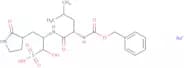
CAS:<p>GC 376 is an inhibitor of the main protease Mpro (3CLpro) in coronaviruses as well as picornaviruses. This broad-spectrum antiviral compound has been used as investigational veterinary drug for treatment of feline infectious peritonitis virus (FIPV) infections. Recent studies also showed that GC 376 inhibits the main protease Mpro (3CLpro) from SARS-CoV-2 with IC50 of 0.03 μM and EC50 of 3.37 μM.</p>Formula:C21H30N3NaO8SPurity:Min. 95 Area-%Color and Shape:White PowderMolecular weight:507.53 g/molPolmacoxib
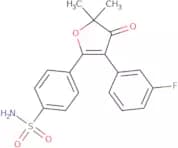
CAS:<p>Polmacoxib is a non-steroidal anti-inflammatory drug (NSAID), which is derived through synthetic chemical processes. It functions as a selective cyclooxygenase-2 (COX-2) inhibitor. By selectively inhibiting the COX-2 enzyme, polmacoxib reduces the conversion of arachidonic acid to prostaglandins that mediate inflammation and pain, while sparing the COX-1 enzyme that protects gastric mucosa and maintains platelet function.</p>Formula:C18H16FNO4SPurity:Min. 95%Color and Shape:Light (Or Pale) Yellow To Yellow SolidMolecular weight:361.07841Kifunensine - Bio-X ™
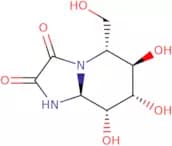
CAS:<p>Kifunensine is a small molecule inhibitor that was designed and synthesized to inhibit plant and animal α-mannosidase I. It is a potent and specific inhibitor with IC50 in nanomolar range. It inhibits the enzyme isoforms in Golgi apparatus (GMI) and endoplasmatic reticulum (ERMI). The compound prevents mannose trimming on glycoproteins and shifts the glycoform content from complex to oligomannose type. Used for the production of recombinant therapeutic glycoproteins with mannose rich N-linked glycans.</p>Formula:C8H12N2O6Purity:Min. 95%Color and Shape:White PowderMolecular weight:232.19 g/molMelitracen hydrochloride
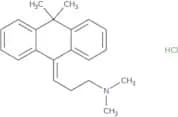
CAS:<p>Tricyclic antidepressant</p>Formula:C21H26NClPurity:Min. 95%Color and Shape:White PowderMolecular weight:327.89 g/molA 485
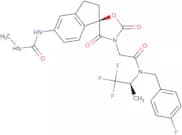
CAS:<p>Histone acetyltransferase inhibitor of p300/CBP; anti-proliferative</p>Formula:C25H24F4N4O5Purity:Min. 95%Color and Shape:PowderMolecular weight:536.48 g/mol6-O-Feruloylglucose
CAS:<p>6-O-Feruloylglucose is a bioactive compound, which is a glycosylated derivative of ferulic acid. It is derived from plant sources, particularly being prevalent in the cell walls of cereals and other plant materials. The compound's mode of action is associated with its ability to act as an antioxidant, neutralizing free radicals by donating hydrogen atoms or quenching reactive oxygen species. This makes it a significant molecule in the potential prevention of oxidative stress-related conditions.</p>Formula:C16H20O9Purity:Min. 95%Color and Shape:White PowderMolecular weight:356.32 g/molNicaraven
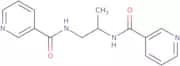
CAS:<p>Hydroxyl radical scavenger; anti-vasospastic</p>Formula:C15H16N4O2Purity:Min. 95%Molecular weight:284.31 g/molSulbactam - Bio-X ™
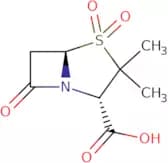
CAS:<p>Sulbactam is a synthetic antibacterial agent that inhibits bacterial cell wall synthesis. Sulbactam is a potent inhibitor of bacterial DNA-dependent RNA polymerase. The combination of sulbactam and polymyxin B has been shown to have synergistic inhibitory effects on Gram-negative bacteria and is used as an intravenous antibiotic for the treatment of infections caused by Gram-negative bacteria.</p>Formula:C8H11NO5SPurity:Min. 95%Color and Shape:White PowderMolecular weight:233.24 g/molABT 737
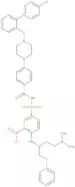
CAS:<p>Inhibits anti-apoptotic proteins Bcl-2, Bcl-xl and Bcl-w. Synergistic with chemotherapy and radiotherapy in several tumour cell lines. Potent activity as a single agent in lymphoid cancer and small cell lung cancer (SCLC) cell lines. Causes tumour regression in SCLC xenograft tumour in vivo.</p>Formula:C42H45ClN6O5S2Purity:Min. 95%Color and Shape:Yellow SolidMolecular weight:813.43 g/molErdafitinib
CAS:<p>Fibroblast growth factor receptor inhibitor</p>Formula:C25H30N6O2Purity:Min. 95%Color and Shape:White PowderMolecular weight:446.54 g/molFluticasone propionate - Bio-X ™
CAS:<p>As a synthetic trifluorinated glucocorticoid receptor agonist, Fluticasone exhibits anti-inflammatory properties. When binding to and activating glucocorticoid receptors, Fluticasone initiates the activation of lipocortin which inhibits cytosolic phospholipase A2. Consequently, the cascade of inflammatory mediator synthesis reactions are inactivated and the production of inflammatory cells namely mast cells, dendritic cells, macrophages and eosinophils and the cytokines that they produce are greatly reduced.It is this anti-inflammatory role which has enabled Fluticasone to successfully treat conditions such as asthma, emphysema, allergic rhinitis and atopic dermatitis. It has also been seen to increase anti-inflammatory effects of annexoin-1 and mitogen-activated kinase phosphatase-1; reduce mucus gland secretions and increase the number of beta-2 receptors on smooth muscles of the airways.<br>Fluticasone is part of our Bio-X ™ Range. These products are aimed at life science researchers who need high quality ready to use products for assay development, screening or other R&D work. With a solubility datasheet and convenient vials, all of our Bio-X ™ products are in stock across our global warehouses for rapid delivery and ease of use.</p>Formula:C25H31F3O5SPurity:Min. 95%Color and Shape:White/Off-White SolidMolecular weight:500.57 g/molBT 18
CAS:<p>Activator of RET signalling cascade and a derivative of a GFL mimetic compound BT 13. Molecular docking calculations and molecular dynamics simulations were performed in GDNF−GFRα1−RetA complex and showed that BT 18 binds to the allosteric site in GFRα1 as well as RetA surface interfacing GFRα1.</p>Formula:C30H31F4N3O6SPurity:Min. 95%Color and Shape:SolidMolecular weight:637.64 g/mol