Organometallic Ligands
In this category, you will be able to find a large number of organometallic molecules used as ligands in biomolecules. These organometallic ligands can be used in organic chemistry and synthesis in the laboratory. They play a critical role in forming coordination complexes and catalyzing various chemical reactions. At CymitQuimica, we offer a diverse selection of high-quality organometallic ligands to support your research and industrial needs.
Subcategories of "Organometallic Ligands"
- Buchwald Ligands(22 products)
- DPEN(4 products)
- DPHEN(4 products)
- JOSIPHOS(4 products)
- Phosphine(497 products)
- Porphirines(75 products)
Found 2887 products of "Organometallic Ligands"
Sort by
Purity (%)
0
100
|
0
|
50
|
90
|
95
|
100
Protein tyrosine phosphatase (PTP) substrate
<p>The sequence of this peptide has been derived from a highly conserved region of the T-cell phosphatase TC.PTP45 and is an excellent general substrate for protein tyrosine phosphatases.The protein tyrosine phosphatase (PTP) superfamily has 103 enzymes that catalyse substrate dephosphorylation at tyrosine residues through a covalent enzyme intermediate involving a thiophosphate linkage from the active site cysteine residue. All PTPs share a common signature motif (I/V)HCXAGXGR(S/T), named the P-loop, responsible for the enzyme activity. The PTP superfamily can be divided into four classes based on their cellular localization/catalytic domains: the receptor-like PTPs (rPTPs), the non-receptor PTPs (nrPTPs), the low molecular weight PTP (LMWPTP), and the VH-1 and CDC-25 groups.PTPs are involved in regulating a plethora of cellular activities, including proliferation and differentiation, survival, migration, metabolism, and the immune response. Abnormal protein tyrosine phosphorylation has been associated with the etiology of various human diseases, including cancer, diabetes, and autoimmune dysfunctions, therefore making PTPs novel therapeutic targets.</p>Purity:Min. 95%Molecular weight:1,117.4 g/molKGLWE (EYGF-56)
<p>During extraction of lecithin from egg yolk, peptide by-products can be isolated and purified by gel filtration. Within the by-products this has led to the discovery of biologically active value-added products. The egg yolk gel filtration (EFGF) fractions were analysed for their antioxidant and angiotensin converting enzyme (ACE) inhibitory activities. EYGF-56 predominantly contained 3 peptides - SDNRNQGY, KGLWE, and IQVPL. KGLWE in EYGF-56 was found to have very strong antioxidant activity. KGLWE showed minimal angiotensin converting enzyme (ACE) inhibitory activity.</p>Purity:Min. 95%Molecular weight:630.3 g/molBX471 hydrochloride
CAS:<p>BX471 hydrochloride is a selective antagonist of the C-C chemokine receptor type 1 (CCR1), which is synthesized through rigorous chemical processes. It operates by inhibiting the binding of chemokines to the CCR1 receptor, thus interfering with the signaling pathways that lead to inflammation and immune responses. This mechanism is specifically effective in modulating immune system functions and controlling pathophysiological responses in various tissue types.</p>Formula:C21H25Cl2FN4O3Purity:Min. 98 Area-%Color and Shape:PowderMolecular weight:471.35 g/mol[G]-JAK1 peptide (1015-1027) p(Y1022)
<p>This peptide is phosphorylated by Janus kinase 1 (JAK1) and is an ideal substrate for use in kinase assays. The JAK family of kinases is essential for the signalling of a host of immune modulators in tumour, stromal, and immune cells where they are highly expressed. JAK family proteins mediate the signalling of the interferon (IFN), IL-6, and IL-2 families of cytokines.JAK kinases are associated with cytokine receptors. Cytokine binding to these receptors results in activation of JAK kinases and receptor phosphorylation. Phosphorylated cytokine receptors recruit STAT proteins, which are then phosphorylated by the activated JAK kinases. Phosphorylated STAT proteins form homo- and hetero-dimers that translocate into the nucleus and function as transcription factors.This JAK1 substrate peptide contains an N-terminal Glycine-residue and a phospho-tyrosine-residue.</p>Purity:Min. 95%Color and Shape:PowderMolecular weight:1,710.7 g/molA15
<p>A15 also known as alpha2-Antiplasmin is a serine/protease inhibitor which inactivates plasmin in the blood. To inhibit plasmin in the blood alpha2-Antiplasmin forms a protease serpin complex with plasmin due to interactions of kringle 1 or 3 of plasmin and the lysine residues of alpha2-Antiplasmin's C-terminus. Although synthesised in the Liver A15 is also present within the neurons of the human brain and its expression has been found to be enhanced in Aβ plaques of Alzheimer's disease and during myocardial infarction. A high concentration of alpha2-Antiplasmin in the blood may also contribute to an increased risk of Ischemic strokes. Alternatively its expression appears to be diminished in patients with cirrhosis and acute liver failure. A further function of A15 is its ability to regulate fibrinolysis through crosslinking to fibrin.</p>Purity:Min. 95%Color and Shape:PowderMolecular weight:1,755.9 g/molAkt/SKG Substrate Peptide
<p>Protein kinase B (also known as RAC-alpha serine/threonine-protein kinase: Atk) is a serum and glucocorticoid-regulated protein kinase with three highly homologous isoforms (Akt1, 2 and 3). Akt1 and Akt3 are the predominant isoforms expressed in the brain, whereas Akt2 is mainly expressed in skeletal muscle and embryonic brown fat. These proteins play major regulatory roles in a range of physiological processes including: growth, proliferation, cell survival, angiogenesis, metabolism and Akt is also considered a proto-oncogene.This peptide (AKTide) is a selective substrate for these kinases and enables quick, easy and sensitive assays of Akt activity.</p>Purity:Min. 95%Color and Shape:PowderMolecular weight:817.5 g/molTraxoprodil
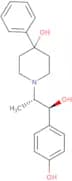
CAS:Controlled Product<p>NMDA glutamate receptor antagonist; anti-depressant</p>Formula:C20H25NO3Purity:Min. 98 Area-%Color and Shape:PowderMolecular weight:327.42 g/mol4-Deoxypyridoxine hydrochloride
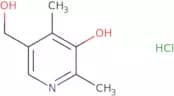
CAS:<p>Vitamin B6 antimetabolite</p>Formula:C8H11NO2•HClPurity:Min. 95%Color and Shape:PowderMolecular weight:189.64 g/molTolvaptan - Bio-X ™
CAS:Controlled Product<p>Tolvaptan is a vasopressin receptor antagonist. It binds to the V2 receptor in the cytosol and prevents it from activating the aquaporin 2 channel, which regulates water permeability. Inhibition of vasopressin receptors in the kidneys improves fluid and electrolyte balance. Tolvaptan has been shown to be effective for treating congestive heart failure, as well as other disorders that are associated with fluid retention, such as renal dysfunction and metabolic syndrome. Tolvaptan can also be used in combination therapy with other drugs to treat these conditions.</p>Formula:C26H25ClN2O3Purity:Min. 95%Color and Shape:PowderMolecular weight:448.94 g/molTravoprost
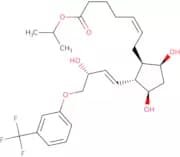
CAS:<p>FP prostaglandin receptor agonist</p>Formula:C26H35F3O6Purity:Min. 96 Area-%Color and Shape:Clear LiquidMolecular weight:500.55 g/molAmlodipine besylate - Bio-X ™
CAS:<p>Amlodipine is a calcium channel blocker that is used to treat hypertension and angina. This drug inhibits the influx of calcium ions into both vascular smooth muscle and cardiac muscle.</p>Formula:C20H25ClN2O5•C6H6O3SPurity:Min. 95%Color and Shape:PowderMolecular weight:567.05 g/molErismodegib
CAS:<p>Antagonist of Smoothened GPCR; antineoplastic</p>Formula:C26H26F3N3O3Purity:Min. 95%Color and Shape:PowderMolecular weight:485.5 g/molRoflumilast - Bio-X ™
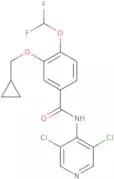
CAS:<p>Roflumilast is a selective phosphodiesterase-4 inhibitor that is used for the treatment of exacerbations in patients with chronic obstructive pulmonary disease (COPD). It is also used to treat plaque psoriasis. This drug has anti-inflammatory and immunomodulatory effects as it aids in increasing levels of cAMP.</p>Formula:C17H14Cl2F2N2O3Purity:Min. 95%Color and Shape:PowderMolecular weight:403.21 g/molHaloperidol - Bio-X ™
CAS:Controlled Product<p>Haloperidol is an antipsychotic drug that is used for the treatment of schizophrenia and for managing its symptoms such as agitation and delusions. This drug is a dopamine antagonist and aids in improving symptoms that are caused by an overproduction of dopamine. .</p>Formula:C21H23ClFNO2Purity:Min. 95%Color and Shape:PowderMolecular weight:375.86 g/molDG 172 hydrochloride
CAS:<p>Potent inverse agonist of peroxisome proliferator-activated receptor PPARβ and PPARδ with IC50 value of 27 nM. In mouse myoblasts, DG 172 enhanced recruitment of transcriptional corepressor and down-regulated transcription of PPARβ/δ target gene Angptl4. DG 172 also possess a PPARβ/δ-independent activity on bone marrow cells and promotes dendritic cell differentiation.</p>Formula:C20H20BrN3·HClPurity:Min. 95%Color and Shape:SolidMolecular weight:418.76 g/molIxazomib
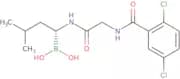
CAS:<p>Proteosome inhibitor; antineoplastic</p>Formula:C14H19BCl2N2O4Purity:Min. 95%Color and Shape:PowderMolecular weight:361.03 g/molTriamcinolone acetonide
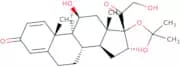
CAS:Controlled Product<p>Glucocorticoid receptor agonist; anti-inflammatory; immunosuppressant</p>Formula:C24H31FO6Purity:Min. 95%Color and Shape:White PowderMolecular weight:434.5 g/molTofacitinib citrate
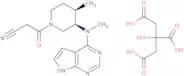
CAS:<p>Inhibits Jak kinases; immunosuppressive; anti-inflammatory</p>Formula:C16H20N6O·C6H8O7Purity:Min. 98 Area-%Color and Shape:White PowderMolecular weight:504.49 g/molPamidronic acid disodium hydrate - Bio-X ™
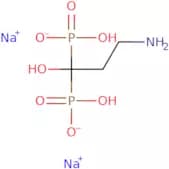
CAS:<p>Pamidronic acid is a bisphosphate used in the treatment of Paget’s disease, osteolytic bone lesions and in the treatment of hypercalcemia of malignancy. This drug inhibits farnesyl diphosphate and induces apoptosis of hematopoietic tumor cells.</p>Formula:C3H9NNa2O7P2·4H2OPurity:Min. 95%Color and Shape:PowderMolecular weight:351.11 g/molDanusertib
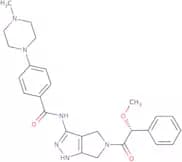
CAS:<p>Inhibitor of aurora kinases</p>Formula:C26H30N6O3Purity:Min. 95%Color and Shape:White PowderMolecular weight:474.57 g/mol


![[G]-JAK1 peptide (1015-1027) p(Y1022)](/_next/image/?url=https%3A%2Fstatic.cymitquimica.com%2Fproducts%2F3D%2Fthumb-webp%2FCRB1000480.webp&w=3840&q=75)