Organometallic Ligands
In this category, you will be able to find a large number of organometallic molecules used as ligands in biomolecules. These organometallic ligands can be used in organic chemistry and synthesis in the laboratory. They play a critical role in forming coordination complexes and catalyzing various chemical reactions. At CymitQuimica, we offer a diverse selection of high-quality organometallic ligands to support your research and industrial needs.
Subcategories of "Organometallic Ligands"
- Buchwald Ligands(22 products)
- DPEN(4 products)
- DPHEN(4 products)
- JOSIPHOS(4 products)
- Phosphine(497 products)
- Porphirines(75 products)
Found 2887 products of "Organometallic Ligands"
Sort by
Purity (%)
0
100
|
0
|
50
|
90
|
95
|
100
Ifosfamide - Bio-X ™
CAS:<p>Ifosfamide is an alkylating agent and immunosuppressive drug used in chemotherapy for the treatment of various cancers such as ovarian, testicular, cervical and bladder. This drug interferes with the normal process of DNA replication causing damage to the DNA in cancer cells hence preventing them from growing and dividing.</p>Formula:C7H15Cl2N2O2PPurity:Min. 95%Color and Shape:PowderMolecular weight:261.09 g/molRepaglinide - Bio-X ™
CAS:<p>Repaglinide is an antihyperglycemic drug that is used for the improvement of glycemic control in diabetes. This drug acts on the beta cells of the pancreas and binds to specific receptors on the beta cells known as ATP-sensitive potassium channels. As a result, this promotes insulin secretion from beta cells.</p>Formula:C27H36N2O4Purity:Min. 95%Color and Shape:PowderMolecular weight:452.59 g/molTIC10
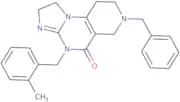
CAS:<p>TIC10 is a small molecule, which is sourced from a synthetic chemical library, with a novel mode of action that involves the induction of the tumor necrosis factor-related apoptosis-inducing ligand (TRAIL) pathway. This pathway is distinguished by its ability to selectively trigger apoptosis in cancer cells while sparing normal cells. TIC10 effectively crosses the blood-brain barrier, a feature that enhances its potential application in treating brain-related malignancies.</p>Formula:C24H26N4OPurity:Min. 98 Area-%Color and Shape:PowderMolecular weight:386.5 g/molGSK 4716
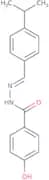
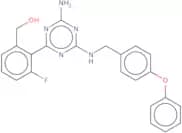
CAS:<p>Agonist of estrogen-related receptors ERRβ and ERRγ. In primary mouse myotubes, GSK 4716 activated ERRβ/γ transcriptional activity and increased expression of mitochondrial genes.</p>Formula:C17H18N2O2Purity:Min. 95%Color and Shape:SolidMolecular weight:282.34 g/molMetarrestin
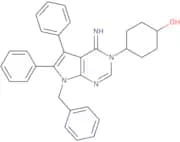
CAS:<p>Inhibits perinuclear compartment, by mediating its disassembly in cancer cell lines. Interacts with translation elongation factor eEF1A2, resulting in disruption of nucleolar structure and inhibition of RNA polymerase (Pol) I transcription. Whilst having mild effects on primary tumors, metarrestin suppresses growth and invasion of metastatic tumors in vivo.</p>Formula:C31H30N4OPurity:Min. 95%Color and Shape:SolidMolecular weight:474.6 g/molBarnidipine hydrochloride
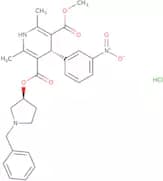
CAS:<p>Calcium channel blocker</p>Formula:C27H30ClN3O6Purity:Min. 95%Color and Shape:PowderMolecular weight:528 g/molBaricitinib phosphate
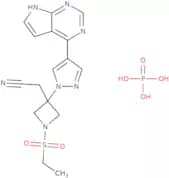
CAS:Controlled Product<p>Baricitinib phosphate is a selective Janus kinase (JAK) inhibitor, which is a synthetic product developed through targeted molecular design. Its mode of action involves the inhibition of JAKs, which are intracellular enzymes that transmit cytokine-mediated signals via the JAK-STAT pathway. By blocking these signals, baricitinib phosphate effectively reduces inflammatory responses.</p>Formula:C16H20N7O6PSPurity:Min. 95%Color and Shape:PowderMolecular weight:469.41 g/molOrg 24598
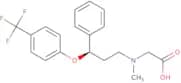
CAS:<p>A selective inhibitor of glial glycine transporter type 1 (GlyT-1b). It has no considerable affinity for noradrenaline, dopamine, serotonin and GABA receptors. Increases amplitude of electronically evoked NMDA receptor-mediated glutamatergic excitatory postsynaptic current (eEPSCs). This raises glycine levels in spinal cord slides and extends the duration of current at glycinergic synapses.</p>Formula:C19H20F3NO3Purity:Min. 95%Molecular weight:367.36 g/molCetirizine HCl - Bio-X ™
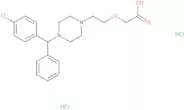
CAS:<p>Cetirizine is a selective histamine-1 antagonist drug used for the treatment of allergies. One of the common uses is for a condition called allergic rhinitis. As Cetirizine is an antihistamine, its main mode of action is by selectively inhibiting H1 receptors. In vivo and ex vivo animal models have shown insignificant anticholinergic and antiserotonergic effects.</p>Formula:C21H25ClN2O3•(HCl)2Purity:Min. 98 Area-%Color and Shape:PowderMolecular weight:461.81 g/molAminoglutethimide - Bio-X ™
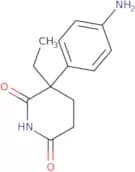
CAS:Controlled Product<p>Aminoglutethimide is an adrenocortical steroid synthesis inhibitor that is used for the treatment of Cushing’s syndrome. This drug is an aromatase inhibitor that blocks the production of adrenal steroids. Also, this drug blocks the conversion of androgens to estrogens. Aminoglutethimide has been studied for the treatment of cancers such as breast and prostate.</p>Formula:C13H16N2O2Purity:Min. 95%Color and Shape:PowderMolecular weight:232.28 g/molBenvitimod
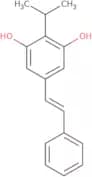
CAS:<p>Aryl hydrocarbon receptor (AhR) agonist</p>Formula:C17H18O2Purity:Min. 98 Area-%Color and Shape:White PowderMolecular weight:254.32 g/molBI 01383298
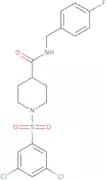
CAS:<p>Potent inhibitor of the sodium-coupled citrate cotransporter SLC13A5 (NaCT, INDY). The compound is not structurally related to citrate and is selective for SLC13A over other related transporters.</p>Formula:C19H19Cl2FN2O3SPurity:Min. 95%Color and Shape:SolidMolecular weight:445.34 g/molOSU 6162 hydrochloride
CAS:<p>OSU 6162 hydrochloride is a research chemical classified as a dopamine stabilizer, derived synthetically. It primarily acts as a dopamine receptor antagonist, targeting both D2 and D3 dopaminergic receptors in the central nervous system. By modulating dopamine receptor activity, OSU 6162 hydrochloride can help balance dopaminergic signaling, which is crucial in various neurological and psychiatric conditions.</p>Formula:C15H23NO2S·HClPurity:Min. 98 Area-%Color and Shape:PowderMolecular weight:281.41 g/molMonocrotaline
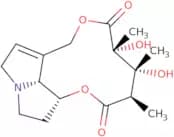
CAS:<p>Toxin; induces pulmonary hypertension</p>Formula:C16H23NO6Purity:Min. 98%Color and Shape:White Off-White Clear LiquidMolecular weight:325.36 g/molDabigatran etexilate - Bio-X ™
CAS:<p>Dabigatran is an anticoagulant that is used for the treatment of atrial fibrillation and prevention of venous thromboembolic events. It is a drug that acts as an inhibitor of the enzyme thrombin. Dabigatran inhibits platelet activation and aggregation, which reduces the risk of stroke or other vascular events. Dabigatran is a prodrug and does not have any activity in its active form.</p>Formula:C34H41N7O5Purity:Min. 95%Color and Shape:PowderMolecular weight:627.73 g/molTacrolimus monohydrate
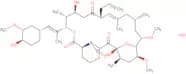
CAS:<p>Anti-rheumatic; immunosuppressant; neuroprotective; neuroregenerative</p>Formula:C44H69NO12·H2OPurity:Min. 98 Area-%Color and Shape:White PowderMolecular weight:822.03 g/molL-Albizziin
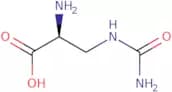
CAS:<p>Inhibitor of glutaminase; glutamine analogue</p>Formula:C4H9N3O3Color and Shape:PowderMolecular weight:147.13 g/molMS 48107
CAS:<p>GPR68 PAM, bioavailable in mice and with excellent brain penetration</p>Formula:C23H20FN5O2Purity:Min. 95%Color and Shape:SolidMolecular weight:417.44 g/mol(+)-Bicuculline - Bio-X ™
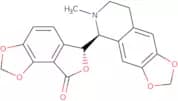
CAS:<p>Bicuculline is a phthalide-isoquinoline compound and is a competitive GABA receptor antagonist. It blocks GABA’s inhibitory action, mimicking epilepsy. This compound is used in research to better study epilepsy.</p>Formula:C20H17NO6Purity:Min. 99 Area-%Color and Shape:PowderMolecular weight:367.35 g/molBrinzolamide - Bio-X ™
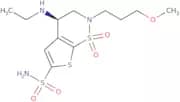
CAS:<p>Brinzolamide is a carbonic anhydrase inhibitor this is used for the treatment of ocular hypertension and glaucoma. Inhibition of carbonic anhydrase slows the formation of bicarbonate ions and as a result of this, it slows fluid flow in the eye, lowering the intraocular pressure. It has a high lipophilicity to enable diffusion across the blood-retinal barrier.</p>Formula:C12H21N3O5S3Purity:Min. 95%Color and Shape:PowderMolecular weight:383.51 g/mol