Organosilicon Compounds
Subcategories of "Organosilicon Compounds"
Found 4330 products of "Organosilicon Compounds"
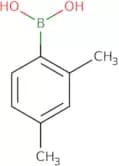
(2,4-Dimethylphenyl)boronic acid
CAS:(2,4-Dimethylphenyl)boronic acid is an arylboronic acid that is used in organic synthesis. The boron atom of the 2,4-dimethylphenyl group coordinates with the metal atom in the catalyst to form a stable complex. This allows for a multilayer reaction and fluorescence to occur. The activated fluorine atoms can be used to boost the reaction by adding them to the substrate and increasing the rate of oxidation. Astragalus membranaceus and rapeseed extracts have been shown to increase the rate of oxidation as well as inhibiting the formation of disaccharides. These extracts also have shown anti-inflammatory effects when tested on rats. (2,4-Dimethylphenyl)boronic acid has also been found to interact with dihydroisoquinolines, which are compounds that are structurally similar to morphine and codeine.
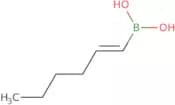
Formula:C8H11BO2Purity:Min. 95%Molecular weight:149.98 g/molE-Hexen-1-ylboronic acid
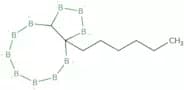
CAS:E-Hexen-1-ylboronic acid is a reactive, boron-containing compound that can be used for Suzuki coupling reactions and metathesis reactions. It is also useful in the analysis of organic compounds, due to its ability to form brightly coloured complexes with metal ions. E-Hexen-1-ylboronic acid has been shown to react with chloride, reoxidant and hexane. This compound can be used as an analytical reagent for the detection of stereoselectively in a stepwise reaction. E-Hexen-1-ylboronic acid forms crystals x-ray diffraction patterns that are characteristic of a chair conformation.Formula:C6H13BO2Purity:Min. 95%Molecular weight:127.98 g/mol1-Hexyl-o-carborane
CAS:Controlled Product1-Hexyl-o-carborane is a human bioassay that has shown carcinogenic activity. It has been observed to cause cancer in humans through its ability to bind to DNA and alter the cell cycle. 1-Hexyl-o-carborane is an organometallic compound that binds to ferrocene and other organometallic compounds, preventing their use as anticancer drugs. 1-Hexyl-o-carborane can be synthesized by reacting hexylmagnesium bromide with ammonium carbonyl chloride in a one pot reaction.Formula:C8B10H24Purity:Min. 95%Molecular weight:228.39 g/molIsopentylboronic acid
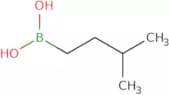
CAS:Isopentylboronic acid is a boron-containing organic compound that is used for the catalysis of cross-coupling reactions, such as the Suzuki reaction. It reacts with aryl halides to form an alkylboronic ester and a metal salt. Isopentylboronic acid is also used to produce trimers in the presence of formyl or nitro groups. Isopentylboronic acid may also be used as a reagent to convert alcohols into chlorides or bromides. This compound has been shown to react with alkali metal ions on one side and alkyl substituents on the other side, leading to deuterium incorporation at the carbon atom adjacent to the carboxylic acid group. Isopentylboronic acid can also be used for dehydrating alcohols and converting alkynes into alkenes when heated in the presence of an alkali metal chloride.
Formula:C5H13BO2Purity:Min. 95%Molecular weight:115.97 g/mol3-(4-Oxopiperidine-1-carbonyl)phenylboronic acid
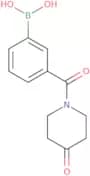
CAS:Controlled ProductPlease enquire for more information about 3-(4-Oxopiperidine-1-carbonyl)phenylboronic acid including the price, delivery time and more detailed product information at the technical inquiry form on this pageFormula:C12H14BNO4Purity:Min. 95%Molecular weight:247.05 g/mol2-(4-(4,4,5,5-Tetramethyl-l.3,2-dioxaborolan-2-yl)phenyl)ethanol
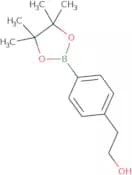
CAS:2-(4-(4,4,5,5-Tetramethyl-l,3,2-dioxaborolan-2-yl)phenyl)ethanol is a fine chemical that has been used as a reagent and as a building block for the synthesis of complex compounds. It is also an intermediate in organic reactions and has been used as a reaction component in the synthesis of various drugs and agrochemicals. 2-(4-(4,4,5,5-Tetramethyl-l,3,2-dioxaborolan-2-yl)phenyl)ethanol is useful as a scaffold in organic synthesis. This compound can be converted to other useful chemicals such as tetrahydropyranones and dibenzalacetone derivatives. 2-(4-(4,4,5,5-Tetramethyl-l,3,2-dioxaborolan-2-yl)phenyl)ethanolFormula:C14H21BO3Purity:Min. 95%Color and Shape:White PowderMolecular weight:248.13 g/molN,N-Dimethyl 4-boronobenzenesulfonamide
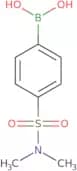
CAS:Please enquire for more information about N,N-Dimethyl 4-boronobenzenesulfonamide including the price, delivery time and more detailed product information at the technical inquiry form on this pageFormula:C8H12BNO4SPurity:Min. 95%Molecular weight:229.06 g/molEpsilon caprolactam
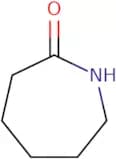
CAS:Epsilon caprolactam is a poly-functional compound that can be used as a monomer for the production of polyamides. It is produced from lysine and caproic acid in the presence of copper chloride by oxidative decarboxylation. Epsilon caprolactam has been shown to have synergistic effects with other compounds, such as toxicity studies on rats and mice. This compound also has an acidic nature due to its carboxylic acid group. Plasma mass spectrometry has shown that there are high values of epsilon caprolactam in the plasma of bacterial strains and it is rapidly metabolized to l-lysine. Epsilon caprolactam is also a solid catalyst for organic reactions, which causes phase transition temperature to increase and promotes reaction mechanisms.
Formula:C6H11NOPurity:Min. 95%Color and Shape:White To Off-White SolidMolecular weight:113.16 g/mol1,1,3,3-Tetramethyldisiloxane
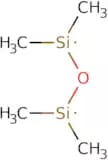
CAS:1,1,3,3-Tetramethyldisiloxane is a chemical compound that belongs to the group of functional groups. It can be isolated from hydrolysis of methyltrichlorosilane with sodium hydroxide and cellulose acetate. 1,1,3,3-Tetramethyldisiloxane has two isomers with different properties: 3-methylsilsesquioxane and 3-ethylsilsesquioxane. The former has an ethyl group at the end of its molecule and the latter has an ethyl group in the middle. The two isomers are not interchangeable because they have different physical properties. The 3-methylsilsesquioxane isomer reacts with aluminium to form a metathesis reaction product containing silanol groups on one side of the aluminum molecule and hydroxy groups on the other side. This product can be used as a catalyst for subsequent reactions in organic synthesis reactions involving
Formula:C4H14OSi2Purity:Min. 95%Color and Shape:Clear LiquidMolecular weight:134.32 g/mol(1-Chloroisoquinolin-4-yl)boronic acid
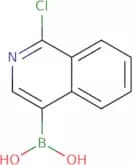
CAS:Please enquire for more information about (1-Chloroisoquinolin-4-yl)boronic acid including the price, delivery time and more detailed product information at the technical inquiry form on this pageFormula:C9H7BClNO2Purity:Min. 95%Molecular weight:207.42 g/molp-Carborane
CAS:Controlled Productp-Carborane is a compound that has been used in the palladium-catalyzed coupling of nitrogen atoms. It has been shown to have magnetic resonance spectroscopy, steric interactions, and cross-coupling properties. p-Carborane is stable under mild conditions and can be used as an alternative to other functional assays. p-Carborane also has been shown to inhibit the growth of prostate cancer cells and human leukemia cells (HL60). The redox potentials for this compound are low energy, making it difficult for these compounds to react with other substances.
Formula:C2H12B10Purity:Min. 95%Color and Shape:PowderMolecular weight:144.23 g/mol(1-Fluorovinyl)methyldiphenylsilane
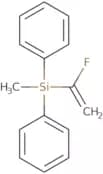
CAS:1-Fluorovinylmethyldiphenylsilane is a reactive, cross-coupling reagent that is used to synthesize organofluorine compounds. It reacts with nucleophiles such as sulfoxides, peroxides, halides, and amines to form an organofluorine compound. The nucleophile can be either in the presence or absence of hydrogen peroxide as a catalyst. The product of this reaction can be a sulfoxide, peroxide, or amine. 1-Fluorovinylmethyldiphenylsilane has been shown to react with nitro groups and iodides to form organofluorine compounds. 1-Fluorovinylmethyldiphenylsilane is soluble in organic solvents such as hexane and chloroform. This reagent should not be stored in metal containers because it will react with them spontaneously.Formula:C15H15FSiPurity:Min. 95%Molecular weight:242.36 g/mol2-[4-(tert-Butyldimethylsilyloxymethyl)-2-nitrophenoxy]acetic Acid
CAS:Please enquire for more information about 2-[4-(tert-Butyldimethylsilyloxymethyl)-2-nitrophenoxy]acetic Acid including the price, delivery time and more detailed product information at the technical inquiry form on this page
Formula:C15H23NO6SiPurity:Min. 95%Molecular weight:341.43 g/molTrichlorooctadecylsilane
CAS:Trichlorooctadecylsilane is a model system that consists of a monolayer of octadecyltrichlorosilane particles. The dispersive solid-phase extraction technique can be used to extract analytes from the surface of this particle. This technique involves removing the solvent from a sample by passing it through an adsorbent. The hydrophobic effect, which is the phenomenon that a nonpolar substance is dissolved in a nonpolar solvent, will cause analytes to bind to the hydrophobic surface of octadecyltrichlorosilane particles because they are hydrophobic.
Purity:Min. 95%6-(4,4,5,5-Tetramethyl-1,3,2-dioxaborolan-2-yl)-2,3-dihydrobenzo-1,4-dioxoline
CAS:Please enquire for more information about 6-(4,4,5,5-Tetramethyl-1,3,2-dioxaborolan-2-yl)-2,3-dihydrobenzo-1,4-dioxoline including the price, delivery time and more detailed product information at the technical inquiry form on this page
Formula:C14H19BO4Purity:Min. 95%Molecular weight:262.11 g/mol9,12-Diiodo-1,2-carborane
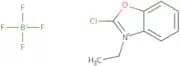
CAS:Controlled ProductPlease enquire for more information about 9,12-Diiodo-1,2-carborane including the price, delivery time and more detailed product information at the technical inquiry form on this pageFormula:I2C2B10H10Purity:Min. 95%Molecular weight:396.02 g/mol2-Chloro-3-ethylbenzoxazolium tetrafluoroborate
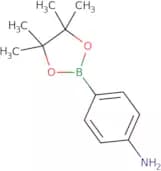
CAS:2-Chloro-3-ethylbenzoxazolium tetrafluoroborate is a synthetic compound that inhibits the enzyme maltase. This compound is used in the treatment of diabetic patients with intestinal maltase deficiency and has been shown to be effective in clinical studies. 2-Chloro-3-ethylbenzoxazolium tetrafluoroborate has also been shown to inhibit other enzymes, such as thiocarbamate synthetase and aminooxazoline synthetase, which are involved in the biosynthesis of chlorinated pesticides and herbicides. The chloride ion is necessary for this inhibition activity. The compound can be prepared by a preparative method that involves hexaacetate and chloride ion or by using an aglycone, trehalamine, or stereospecific method.Formula:C9H9BClF4NOPurity:Min. 95%Color and Shape:PowderMolecular weight:269.43 g/mol(4-Aminophenyl)boronic acid pinacol ester
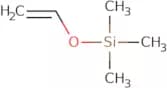
CAS:(4-Aminophenyl)boronic acid pinacol ester is a semiconducting material that can be used in thin film devices. It has been shown to be a good candidate for transistor and device applications due to its high yield, low cost, and high stability. This compound can also be used to modify the structure of other compounds through substitution reactions. (4-Aminophenyl)boronic acid pinacol ester has been synthesized from inexpensive starting materials, such as triphenylamine and amines.Formula:C12H18BNO2Purity:Min. 95%Color and Shape:White PowderMolecular weight:219.09 g/molVinyloxytrimethylsilane
CAS:Controlled ProductVinyloxytrimethylsilane is an organosilicon compound that is used as a polymerization initiator. It reacts with cyclobutanone to form a ruthenium complex, which can be used to coat surfaces and produce polymers. The use of this compound has been shown to increase the reaction yield and decrease the amount of by-products in the polymerization process. Vinyloxytrimethylsilane is biodegradable, making it an environmentally friendly alternative for coating surfaces or producing polymers.
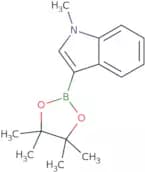
Formula:C5H12OSiPurity:Min. 95%Molecular weight:116.23 g/mol1-Methylindole-3-boronic acid pinacol ester
CAS:Please enquire for more information about 1-Methylindole-3-boronic acid pinacol ester including the price, delivery time and more detailed product information at the technical inquiry form on this pageFormula:C15H20BNO2Purity:Min. 95%Molecular weight:257.14 g/mol


![2-[4-(tert-Butyldimethylsilyloxymethyl)-2-nitrophenoxy]acetic Acid](/_next/image/?url=https%3A%2Fstatic.cymitquimica.com%2Fproducts%2F3D%2Fthumb-webp%2FFB60313.webp&w=3840&q=75)