Organosilicon Compounds
In this section, you will find a large number of organosilicon compounds. Organosilicon compounds are characterized by carbon atoms bonded to silicon atoms. Other non-metallic compounds may also be present. These compounds are widely used in organic synthesis, materials science, and pharmaceuticals due to their unique chemical properties. At CymitQuimica, we provide a broad range of high-quality organosilicon compounds to support your research and industrial projects.
Subcategories of "Organosilicon Compounds"
Found 4330 products of "Organosilicon Compounds"
Sort by
Purity (%)
0
100
|
0
|
50
|
90
|
95
|
100
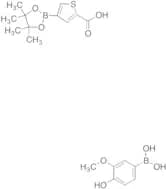
2-Carboxythiophene-4-boronic Acid Pinacol Ester
CAS:Controlled ProductFormula:C11H15BO4SColor and Shape:NeatMolecular weight:254.11Benzo[b]thien-3-ylboronic Acid
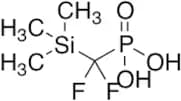
CAS:Controlled Product<p>Applications Benzo[b]thien-3-ylboronic acid is used in the synthesis and evaluation of dual wavelength fluorescent benzo[b]thiophene boronic acid derivatives for sugar/glycoprotein sensing.<br>References Akay, S., et al.: Chem. Biol. Drug Des., 70, 279 (2007)<br></p>Formula:C8H7BO2SColor and Shape:NeatMolecular weight:178.02Difluoro(trimethylsilyl)methylphosphonic Acid
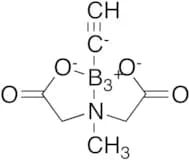
CAS:Controlled ProductFormula:C4H11F2O3PSiColor and Shape:NeatMolecular weight:204.184Ethynylboronic Acid MIDA Ester (>90%)
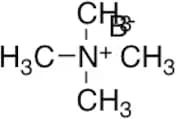
CAS:Controlled Product<p>Applications Ethynylboronic Acid MIDA Ester is a useful reagent in preparatino of borono-substited 1(2H)-isoquinolinones by rhodium-catalyzed cycloaddition.<br>References Wang, H., et al.: J. Am. Chem. Soc., 134, 19592 (2012);<br></p>Formula:C7H8BNO4Purity:>90%Color and Shape:NeatMolecular weight:180.95Tetramethylammonium Borohydride
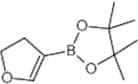
CAS:Controlled Product<p>Applications TETRAMETHYLAMMONIUM BOROHYDRIDE (cas# 16883-45-7) is a useful research chemical.<br></p>Formula:C4H12N·BColor and Shape:NeatMolecular weight:84.9564,5-Dihydrofuran-3-boronic Acid Pinacol Ester
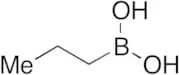
CAS:Controlled ProductFormula:C10H17BO3Color and Shape:NeatMolecular weight:196.051N-Propylboronic Acid
CAS:Controlled Product<p>Applications N-Propylboronic Acid is a chemical reagent used in the synthesis of pharmaceutical agents such as inhibitors of mTOR for use in anti-tumor treatments. Also used to synthesize endothelial lipase inhibitors<br>References Takeuchi, C. et al.: J. Med. Chem., 56, 2218 (2013); O'Connell, D. et al.: Bioorg. Med. Chem. Lett., 22, 1397 (2012);<br></p>Formula:C3H9BO2Color and Shape:NeatMolecular weight:87.91p-Carborane
CAS:Controlled Product<p>p-Carborane is a compound that has been used in the palladium-catalyzed coupling of nitrogen atoms. It has been shown to have magnetic resonance spectroscopy, steric interactions, and cross-coupling properties. p-Carborane is stable under mild conditions and can be used as an alternative to other functional assays. p-Carborane also has been shown to inhibit the growth of prostate cancer cells and human leukemia cells (HL60). The redox potentials for this compound are low energy, making it difficult for these compounds to react with other substances.</p>Formula:C2H12B10Purity:Min. 95%Color and Shape:PowderMolecular weight:144.23 g/molPotassium trimethylsilanolate
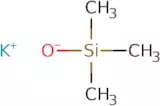
CAS:Potassium trimethylsilanolate is a chemical substance that has inhibitory properties. It is a trifluoroacetic acid derivative that inhibits the activity of certain enzymes, such as proteases and lipases. The compound's inhibitory properties are due to its ability to bind to cytochrome cb2 receptors by means of hydrogen bonding. The binding of potassium trimethylsilanolate to the receptor prevents the activation of apoptosis proteins and protein synthesis in cells. This substance also has an inhibitory effect on water vapor, inhibiting the formation of water molecules from hydrogen atoms and oxygen atoms. Potassium trimethylsilanolate can be used as an anti-cancer agent by preventing cell division in tumor cells and preventing cancer metastasis through inhibition of protease activity.Formula:C3H9KOSiPurity:Min. 95%Molecular weight:128.29 g/moltert-Butyl 3-(4,4,5,5-tetramethyl-1,3,2-dioxaborolan-2-yl)-5,6-dihydropyridine-1(2H)-carboxylate
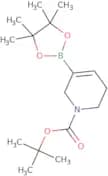
CAS:tert-Butyl 3-(4,4,5,5-tetramethyl-1,3,2-dioxaborolan-2-yl)-5,6-dihydropyridine-1(2H)-carboxylate is a chemical compound that is used as a reagent in organic synthesis. It is also used as a building block for the preparation of other compounds. This compound can be used in the synthesis of complex molecules such as heterocycles and natural products.Formula:C16H28BNO4Purity:Min. 95%Color and Shape:PowderMolecular weight:309.21 g/mol6-Methoxypyridine-2-boronic acid
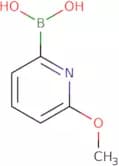
CAS:6-Methoxypyridine-2-boronic acid is a boronate ligand that can be used to form coordination complexes with metals. It has been shown to interact with silver ions, which are the most effective ligands for enhancing the fluorescence of organic dyes. 6-Methoxypyridine-2-boronic acid is able to rigidify organic molecules by binding to their steric and electronic properties, making them more resistant to photodegradation. This property makes it an excellent candidate for the use in the development of fluorescent labels in analytical chemistry.Formula:C6H8BNO3Purity:Min. 95%Molecular weight:152.94 g/mol1-(4-Fluorophenyl)pyrazole-4-boronic acid
CAS:<p>Please enquire for more information about 1-(4-Fluorophenyl)pyrazole-4-boronic acid including the price, delivery time and more detailed product information at the technical inquiry form on this page</p>Formula:C9H8BFN2O2Purity:Min. 95%Molecular weight:205.98 g/mol1-Butyl-3-methylimidazolium terafluoroborate
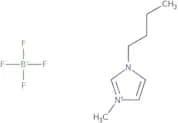
CAS:1-Butyl-3-methylimidazolium terafluoroborate is an ionic liquid that has been used in a number of research applications.Formula:C8H15N2·BF4Purity:Min. 95%Color and Shape:Colorless PowderMolecular weight:226.02 g/molBis(trimethylsilyl)acetylene
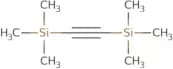
CAS:<p>Bis(trimethylsilyl)acetylene (bis-TMS) is a reactive ancillary that can be used in polymerization reactions as an initiator. The bis-TMS is prepared by reaction of trimethylsilyl chloride with acetylene to form the trimethylsilyl acetylene, which is then reacted with copper to generate the bis-TMS. Bis-TMS reacts with nucleophiles such as alcohols and amines to produce polymers through a nucleophilic attack. It also has been used for sample preparation for NMR spectra. Bis-TMS is a synthetic compound that has been characterized using nmr spectroscopy and analytical methods. The molecular formula of bis-TMS is C8H16Si2 and its molecular weight is 196.13 g/mol. The chemical structure of bis-TMS consists of two benzyl groups connected by a single carbon bond at the 3 o'clock position on the central</p>Formula:C8H18Si2Purity:Min. 95%Color and Shape:Clear LiquidMolecular weight:170.4 g/mol3-Chloro-4-cyanophenylboronic acid
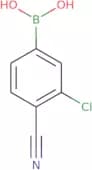
CAS:Controlled ProductPlease enquire for more information about 3-Chloro-4-cyanophenylboronic acid including the price, delivery time and more detailed product information at the technical inquiry form on this pageFormula:C7H5BClNO2Purity:Min. 95%Molecular weight:181.38 g/molDiethylsilane
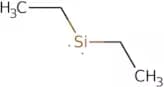
CAS:<p>Diethylsilane is a chemical species that has a high value. It is an inorganic compound that contains silicon and boron, which are both chemical elements. Diethylsilane has been shown to react with hydroxy groups on the surface of many different materials, such as aluminum oxide or steel. The reaction between diethylsilane and the hydroxyl group results in the formation of silicon-hydrogen bonds, which are strong and stable. This reaction mechanism can be used for synthesizing solids with high values, such as boron nitride.</p>Formula:C4H12SiPurity:Min. 95%Color and Shape:Clear LiquidMolecular weight:88.22 g/molTrimethylsilyl isocyanate
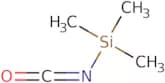
CAS:<p>Trimethylsilyl isocyanate (TMISC) is a 5-membered heteroaryl. It has been shown to bind to the receptor and shows activity in vitro. TMISC has been reported as a potential drug for bowel disease, congestive heart, and inflammatory bowel disease. TMISC binds to the protein receptor with high affinity, but its binding affinity decreases when it is combined with trifluoroacetic acid or palladium-catalyzed coupling. TMISC can be used to synthesize degarelix acetate, which is an anti-androgen drug that is used in the treatment of prostate cancer.</p>Formula:C4H9NOSiPurity:Min. 95%Molecular weight:115.21 g/molN,N-Dimethyl 4-boronobenzenesulfonamide
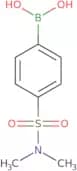
CAS:Please enquire for more information about N,N-Dimethyl 4-boronobenzenesulfonamide including the price, delivery time and more detailed product information at the technical inquiry form on this pageFormula:C8H12BNO4SPurity:Min. 95%Molecular weight:229.06 g/mol(4-Chloro-3-(methoxycarbonyl)phenyl)boronic acid
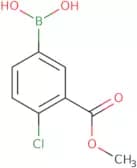
CAS:<p>Please enquire for more information about (4-Chloro-3-(methoxycarbonyl)phenyl)boronic acid including the price, delivery time and more detailed product information at the technical inquiry form on this page</p>Formula:C8H8BClO4Purity:Min. 95%Molecular weight:214.41 g/molTrichloro(1H,1H,2H,2H-heptadecafluorodecyl)silane
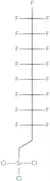
CAS:Controlled ProductTrichloro(1H,1H,2H,2H-heptadecafluorodecyl)silane is a chemical substance that belongs to the group of synthetic substances. It has been shown to have antiviral properties in clinical studies. Trichloro(1H,1H,2H,2H-heptadecafluorodecyl)silane is used to synthesize thymidylate by a two-step process. The first step involves the hydrolysis of sodium hydroxide solution in the presence of hydroxide solution and chemical substances. The second step involves the reaction of synthase enzyme with waveform and water vapor to produce monolayer. This product also has antiviral activity against human pathogens such as HIV and herpes simplex virus type 1 (HSV-1).Formula:C10H4Cl3F17SiPurity:Min. 95%Color and Shape:Clear LiquidMolecular weight:581.56 g/mol

![Benzo[b]thien-3-ylboronic Acid](/_next/image/?url=https%3A%2Fstatic.cymitquimica.com%2Fproducts%2FTR%2Fthumb-webp%2FB206890.webp&w=3840&q=75)