


Organosilicon Compounds
In this section, you will find a large number of organosilicon compounds. Organosilicon compounds are characterized by carbon atoms bonded to silicon atoms. Other non-metallic compounds may also be present. These compounds are widely used in organic synthesis, materials science, and pharmaceuticals due to their unique chemical properties. At CymitQuimica, we provide a broad range of high-quality organosilicon compounds to support your research and industrial projects.
Subcategories of "Organosilicon Compounds"
Found 4330 products of "Organosilicon Compounds"
Sort by
Purity (%)
0
100
|
0
|
50
|
90
|
95
|
100
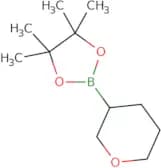
Tetrahydropyran-3-boronic acid pinacol ester
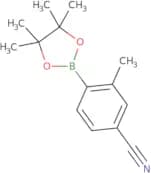
CAS:<p>Please enquire for more information about Tetrahydropyran-3-boronic acid pinacol ester including the price, delivery time and more detailed product information at the technical inquiry form on this page</p>Formula:C11H21BO3Purity:Min. 95%Molecular weight:212.09 g/mol4-Cyano-2-methylphenylboronic acid, pinacol ester
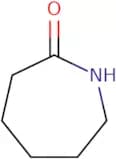
CAS:Please enquire for more information about 4-Cyano-2-methylphenylboronic acid, pinacol ester including the price, delivery time and more detailed product information at the technical inquiry form on this pageFormula:C14H18BNO2Purity:Min. 95%Molecular weight:243.11 g/molEpsilon caprolactam
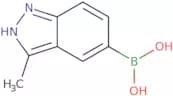
CAS:<p>Epsilon caprolactam is a poly-functional compound that can be used as a monomer for the production of polyamides. It is produced from lysine and caproic acid in the presence of copper chloride by oxidative decarboxylation. Epsilon caprolactam has been shown to have synergistic effects with other compounds, such as toxicity studies on rats and mice. This compound also has an acidic nature due to its carboxylic acid group. Plasma mass spectrometry has shown that there are high values of epsilon caprolactam in the plasma of bacterial strains and it is rapidly metabolized to l-lysine. Epsilon caprolactam is also a solid catalyst for organic reactions, which causes phase transition temperature to increase and promotes reaction mechanisms.</p>Formula:C6H11NOPurity:Min. 95%Color and Shape:White To Off-White SolidMolecular weight:113.16 g/mol3-Methyl-1H-indazol-5-yl-5-boronic acid
CAS:Please enquire for more information about 3-Methyl-1H-indazol-5-yl-5-boronic acid including the price, delivery time and more detailed product information at the technical inquiry form on this pageFormula:C8H9BN2O2Purity:Min. 95%Molecular weight:175.98 g/mol[2-(Difluoromethyl)phenyl]boronic acid
CAS:Please enquire for more information about [2-(Difluoromethyl)phenyl]boronic acid including the price, delivery time and more detailed product information at the technical inquiry form on this pageFormula:C7H7BF2O2Purity:Min. 95%Molecular weight:171.94 g/molBoron carbide - 10um particle size
CAS:Controlled ProductBoron carbide is a hard, refractory material with high melting point. It is used in the production of ceramic and as a catalyst. Boron carbide has been shown to be effective in the treatment of wastewater due to its ability to adsorb organic matter and heavy metals. Boron carbide also has thermal expansion properties that make it suitable for use in various engineering applications. Boron carbide is composed of boron and carbon atoms, which interact through steric effects. The nitrogen atoms on the surface of boron carbide particles are responsible for its reactivity with other materials, such as silicon or zirconium oxide. The kinetic energy of the reaction mechanism can be determined by examining the surface methodology of boron carbide particles with a microscope.Formula:B4CPurity:Min. 95%Molecular weight:55.25 g/molBromotrimethylsilane
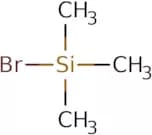
CAS:Bromotrimethylsilane is an inhibitor of the enzyme hydroxyl methyl transferases. It binds to the penicillin-binding protein and inhibits the activity of this enzyme, which is involved in the synthesis of bacterial cell walls. Bromotrimethylsilane has been shown to be active against murine sarcoma virus and other viruses as well as bacterial growth. This compound has also been shown to inhibit the growth of several types of cancer cells, including leukemia cells from mice.Formula:C3H9BrSiPurity:Min. 95%Color and Shape:Colorless Clear LiquidMolecular weight:153.09 g/mol2-Hydroxypyrimidine-5-boronicacid
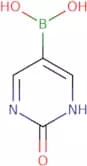
CAS:<p>Please enquire for more information about 2-Hydroxypyrimidine-5-boronicacid including the price, delivery time and more detailed product information at the technical inquiry form on this page</p>Formula:C4H5BN2O3Purity:Min. 95%Molecular weight:139.91 g/molVinyloxytrimethylsilane
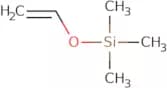
CAS:Controlled Product<p>Vinyloxytrimethylsilane is an organosilicon compound that is used as a polymerization initiator. It reacts with cyclobutanone to form a ruthenium complex, which can be used to coat surfaces and produce polymers. The use of this compound has been shown to increase the reaction yield and decrease the amount of by-products in the polymerization process. Vinyloxytrimethylsilane is biodegradable, making it an environmentally friendly alternative for coating surfaces or producing polymers.</p>Formula:C5H12OSiPurity:Min. 95%Molecular weight:116.23 g/molBis(trimethylsilyl)bromomethane
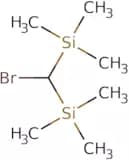
CAS:<p>Bis(trimethylsilyl)bromomethane is an alkali metal compound that is a multinuclear, crystalline solid. It has an x-ray diffraction pattern with peaks at 30, 39, and 44 degrees. The elemental analysis of the compound shows it to be composed of carbon and hydrogen. Bis(trimethylsilyl)bromomethane is a tetrahydrofuran derivative that can be alkylated or silylated with metal compounds. This compound has been shown to have coordination properties when combined with potassium. The molecular structure of bis(trimethylsilyl)bromomethane is composed of two trimethylsiloxy groups linked together by one bromine atom.</p>Formula:C7H19BrSi2Purity:Min. 95%Color and Shape:Clear LiquidMolecular weight:239.3 g/molTriisopropylsilylacetylene
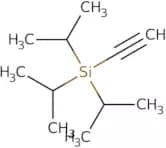
CAS:Triisopropylsilylacetylene is an aliphatic hydrocarbon with a reactive site that can be used in the synthesis of other chemical compounds. It has been shown to have an inhibitory effect on the formation of reactive oxygen species and inflammation in mice, which may be due to its ability to reduce the production of inflammatory mediators such as prostaglandin E2. Triisopropylsilylacetylene also has a hydroxyl group, which allows it to act as an anti-inflammatory agent by inhibiting the enzyme cyclooxygenase. Additionally, triisopropylsilylacetylene has a carbonyl group, which gives it aromatic properties that can be used for synthetic purposes.Formula:C11H22SiPurity:Min. 97 Area-%Color and Shape:Clear LiquidMolecular weight:182.38 g/mol4-Phenoxyphenylboronic acid
CAS:<p>4-Phenoxyphenylboronic acid is a chemical inhibitor of protein kinase. It binds to the ATP binding site of the enzyme and prevents ATP from binding, thereby inhibiting the phosphorylation of proteins. This inhibition blocks the activation of downstream pathways that are involved in cell proliferation, leading to apoptotic cell death. 4-Phenoxyphenylboronic acid has been shown to inhibit growth of human cancer cells in vitro. This molecule also inhibits root formation and plant growth, which may be due to its ability to selectively inhibit protein kinases found in plant cells.</p>Formula:C12H11BO3Purity:Min. 95%Molecular weight:214.02 g/mol6-Methoxypyridine-2-boronic acid
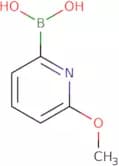
CAS:6-Methoxypyridine-2-boronic acid is a boronate ligand that can be used to form coordination complexes with metals. It has been shown to interact with silver ions, which are the most effective ligands for enhancing the fluorescence of organic dyes. 6-Methoxypyridine-2-boronic acid is able to rigidify organic molecules by binding to their steric and electronic properties, making them more resistant to photodegradation. This property makes it an excellent candidate for the use in the development of fluorescent labels in analytical chemistry.Formula:C6H8BNO3Purity:Min. 95%Molecular weight:152.94 g/mol(2-Bromoethoxy)-tert-butyldimethylsilane
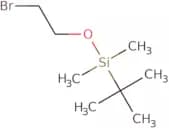
CAS:<p>2-Bromoethoxy-tert-butyldimethylsilane is a conjugate that has been shown to have anticancer efficacy in vivo. It is a pyrimidine derivative and inhibits the viral enzyme RNA polymerase, thereby inhibiting viral replication. 2-Bromoethoxy-tert-butyldimethylsilane also inhibits glyceraldehyde 3-phosphate dehydrogenase, which is an enzyme that catalyzes the conversion of glucose into glyceraldehyde 3-phosphate and plays an important role in glycolysis. The compound has been shown to be active against mouse tumors, which are associated with endogenous retroviruses. The compound has also been shown to inhibit gapdh, an enzyme involved in energy metabolism and cancer therapy.</p>Formula:C8H19BrOSiPurity:Min. 95%Color and Shape:Colorless Clear LiquidMolecular weight:239.23 g/molTrichloro(1H,1H,2H,2H-heptadecafluorodecyl)silane
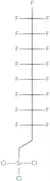
CAS:Controlled ProductTrichloro(1H,1H,2H,2H-heptadecafluorodecyl)silane is a chemical substance that belongs to the group of synthetic substances. It has been shown to have antiviral properties in clinical studies. Trichloro(1H,1H,2H,2H-heptadecafluorodecyl)silane is used to synthesize thymidylate by a two-step process. The first step involves the hydrolysis of sodium hydroxide solution in the presence of hydroxide solution and chemical substances. The second step involves the reaction of synthase enzyme with waveform and water vapor to produce monolayer. This product also has antiviral activity against human pathogens such as HIV and herpes simplex virus type 1 (HSV-1).Formula:C10H4Cl3F17SiPurity:Min. 95%Color and Shape:Clear LiquidMolecular weight:581.56 g/molPotassium trimethylsilanolate
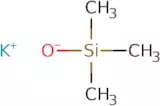
CAS:Potassium trimethylsilanolate is a chemical substance that has inhibitory properties. It is a trifluoroacetic acid derivative that inhibits the activity of certain enzymes, such as proteases and lipases. The compound's inhibitory properties are due to its ability to bind to cytochrome cb2 receptors by means of hydrogen bonding. The binding of potassium trimethylsilanolate to the receptor prevents the activation of apoptosis proteins and protein synthesis in cells. This substance also has an inhibitory effect on water vapor, inhibiting the formation of water molecules from hydrogen atoms and oxygen atoms. Potassium trimethylsilanolate can be used as an anti-cancer agent by preventing cell division in tumor cells and preventing cancer metastasis through inhibition of protease activity.Formula:C3H9KOSiPurity:Min. 95%Molecular weight:128.29 g/mol2-Chloro-3-ethylbenzoxazolium tetrafluoroborate
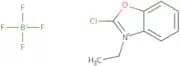
CAS:2-Chloro-3-ethylbenzoxazolium tetrafluoroborate is a synthetic compound that inhibits the enzyme maltase. This compound is used in the treatment of diabetic patients with intestinal maltase deficiency and has been shown to be effective in clinical studies. 2-Chloro-3-ethylbenzoxazolium tetrafluoroborate has also been shown to inhibit other enzymes, such as thiocarbamate synthetase and aminooxazoline synthetase, which are involved in the biosynthesis of chlorinated pesticides and herbicides. The chloride ion is necessary for this inhibition activity. The compound can be prepared by a preparative method that involves hexaacetate and chloride ion or by using an aglycone, trehalamine, or stereospecific method.Formula:C9H9BClF4NOPurity:Min. 95%Color and Shape:PowderMolecular weight:269.43 g/molO-Benzyl psilocin
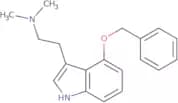
CAS:Controlled ProductO-Benzyl psilocin is a form of the hallucinogenic drug psilocybin. Psilocybin and other related substances are classified as indole alkaloids, which are synthesised by the enzyme tryptophan decarboxylase. O-Benzyl psilocin is synthesised in a two-step reaction that involves catalytic hydrogenation of 4-hydroxyindole to 4-hydroxyphenylacetaldehyde followed by formylation of the latter with formic acid or paraformaldehyde. It was first isolated from sheep's blood serum in 1958 and has been used as an immunogen to produce antisera against cocaine and serotonin. This substance also utilizes a number of endogenous substances for its metabolism, including dopamine, serotonin, noradrenaline, and adrenaline.Formula:C19H22N2OPurity:Min. 95%Molecular weight:294.39 g/molLithium tetrakis(pentafluorophenyl)borate ethyl etherate
CAS:Controlled Product<p>Lithium tetrakis(pentafluorophenyl)borate ethyl etherate is a lithium salt of the etherate ester of pentafluorophenylboronic acid (B(C6F5)3). The complex is an electron donor and ligand, which can stabilize the high-energy intermediate state in the reaction. Lithium tetrakis(pentafluorophenyl)borate ethyl etherate reacts with magnesium to form a magnesium salt and ethylene. This product can be used as a co-catalyst for coupling reactions, such as the synthesis of cyclic compounds from alkenes.</p>Formula:C24BF20·(C4H10O)2·LiPurity:Min. 95%Molecular weight:760.11 g/mol2-[4-(tert-Butyldimethylsilyloxymethyl)-2-nitrophenoxy]acetic Acid
CAS:<p>Please enquire for more information about 2-[4-(tert-Butyldimethylsilyloxymethyl)-2-nitrophenoxy]acetic Acid including the price, delivery time and more detailed product information at the technical inquiry form on this page</p>Formula:C15H23NO6SiPurity:Min. 95%Molecular weight:341.43 g/mol

![[2-(Difluoromethyl)phenyl]boronic acid](/_next/image/?url=https%3A%2Fstatic.cymitquimica.com%2Fproducts%2F3D%2Fthumb-webp%2FFD84620.webp&w=3840&q=75)



![2-[4-(tert-Butyldimethylsilyloxymethyl)-2-nitrophenoxy]acetic Acid](/_next/image/?url=https%3A%2Fstatic.cymitquimica.com%2Fproducts%2F3D%2Fthumb-webp%2FFB60313.webp&w=3840&q=75)