Deuterated Compounds
Found 4238 products of "Deuterated Compounds"
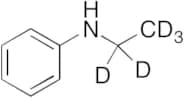
N-Ethylaniline-d5
CAS:Controlled ProductApplications N-Ethylaniline-d5 is labelled N-Ethylaniline (E899362) which is a versatile organic building block used for the synthesis of various pharmaceutical and biologically active compounds. It can be used for the synthesis of benzenesulfonamides as inhibitors of microsomal prostaglandin E2 synthase 1 (mPGES-1) in mice and in humans as potential anti-inflammatory agents.
Not a dangerous good if item is equal to or less than 1g/ml and there is less than 100g/ml in the package
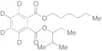
References Hanke, Th., et al.: Biorg. Med. Chem., 21 (24), 7874 (2013)Formula:C8D5H6NColor and Shape:NeatMolecular weight:126.21n-Hexyl 1-Ethyl-2-methylpropyl Phthalate-d4
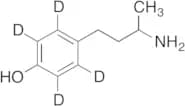
Controlled ProductFormula:C20D4H26O4Color and Shape:NeatMolecular weight:338.4744-(3-Aminobutyl)-phen-2,3,5,6-d4-ol
CAS:Controlled ProductFormula:C10D4H11NOColor and Shape:NeatMolecular weight:169.257Hexanedioyl-d8 Chloride
CAS:Controlled ProductApplications Hexanedioyl-d8 Chloride (CAS# 284487-62-3) is a useful isotopically labeled research compound.
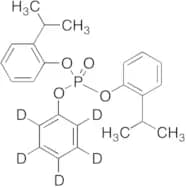
Formula:C6D8Cl2O2Color and Shape:NeatMolecular weight:191.08Bis(2-isopropylphenyl) Phenyl Phosphate-d5
CAS:Controlled ProductApplications Bis(2-isopropylphenyl) Phenyl Phosphate-d5 is the deuterated form of Bis(2-isopropylphenyl) Phenyl Phosphate (B451445), which is a triaryl phosphate used as plasticizers in polyvinyl chloride (PVC) as well as a flame retardant. Studies show that Bis(2-isopropylphenyl) Phenyl Phosphate inhibits the human androgen receptor.
References Duke, A.J.: Chimia, 32, 457 (1978); Honkakoski, P. et al.: Biochem. Pharmacol., 67, 97 (2004); Nobile, E.R. et al.: Bull. Environ. Contam. Toxicol., 25, 755 (1980);Formula:C24D5H22O4PColor and Shape:NeatMolecular weight:415.473(±)-2-Hydroxyhexanoic-6,6,6-d3 Acid
CAS:Controlled ProductApplications (±)-2-Hydroxyhexanoic-6,6,6-d3 Acid (CAS# 1219798-84-1) is a useful isotopically labeled research compound.
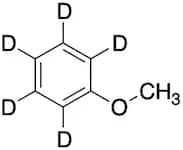
Formula:C6H9D3O3Color and Shape:NeatMolecular weight:135.18Anisole-2,3,4,5,6-d5
CAS:Controlled ProductApplications Anisole-2,3,4,5,6-d5 (CAS# 50629-14-6) is a useful isotopically labeled research compound.
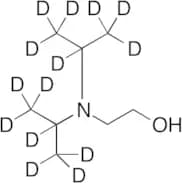
Formula:C7H3D5OColor and Shape:NeatMolecular weight:113.172-Diisopropylaminoethanol-D14
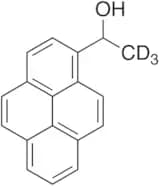
CAS:Controlled ProductFormula:C8D14H5NOColor and Shape:NeatMolecular weight:159.329α-Methyl-1-pyrenemethanol-d3
CAS:Controlled ProductApplications Labelled α-Methyl-1-pyrenemethanol is used in the synthesis of colorimetric and fluorescent ratiometric mercury sensors. This is applicable to the quantification of transition metals in the environment as well as biological systems.
References Weng, J. et al.: Tetra., 68, 3129 (2012);Formula:C18D3H11OColor and Shape:NeatMolecular weight:249.322Glyceryl Tri(octadecanoate-18,18,18-d3)
CAS:Controlled ProductApplications Glyceryl Tri(octadecanoate-18,18,18-d3) (CAS# 285979-76-2) is a useful isotopically labeled research compound.
Formula:C57H101D9O6Color and Shape:NeatMolecular weight:900.56Methylboronic Acid-d3
CAS:Controlled ProductApplications Isotope labelled Methylboronic Acid is an methylated derivative of boronic acid, an building block towards various intermediates in suzuki coupling.
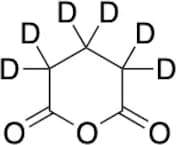
References Baker, J. O., et al.: Biochem.. 22, 2098 (1983); Garner, C.W., et al.: J. Biol. Chem., 255, 5064 (1980);Formula:CH2D3BO2Color and Shape:NeatMolecular weight:62.88Pentanedioic-d6 Anhydride
CAS:Controlled ProductApplications Pentanedioic-d6 Anhydride (CAS# 1219794-53-2) is a useful isotopically labeled research compound.
Formula:C5D6O3Color and Shape:NeatMolecular weight:120.14Bromoacetic acid-13C2
CAS:Please enquire for more information about Bromoacetic acid-13C2 including the price, delivery time and more detailed product information at the technical inquiry form on this pageFormula:C2H3BrO2Purity:Min. 95%Color and Shape:PowderMolecular weight:140.95 g/molChloroacetic Acid-13C2
CAS:Please enquire for more information about Chloroacetic Acid-13C2 including the price, delivery time and more detailed product information at the technical inquiry form on this pagePurity:Min. 95%AMOZ-d5
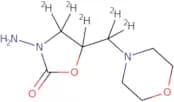
CAS:Controlled ProductAMOZ-d5 is a new analytical method for the determination of drug metabolites in animal muscle tissue. The sample preparation process involves hydrolysis with aqueous acid and subsequent extraction into methanol. AMOZ-d5 has been validated using a range of different samples, such as drugs, food supplements, and animals. This method is an improvement over other techniques due to its speed and sensitivity.Formula:C8H10D5N3O3Purity:Min. 95%Molecular weight:206.25 g/molCholesterol-2,2,3,4,4,6-d6
CAS:Controlled ProductCholesterol-2,2,3,4,4,6-d6 is a chemical compound that is used as a reference standard for cholesterol. It is typically used in the preparation of samples for analysis by nuclear magnetic resonance spectroscopy and other analytical techniques. Cholesterol-2,2,3,4,4,6-d6 has been shown to be an effective inhibitor of influenza virus replication in vitro and in vivo. It also inhibits the replication of a number of other viruses including papillomavirus and herpes simplex virus. The molecule has been shown to bind to the viral membrane system with high affinity and specificity. Cholesterol-2,2,3,4,4,6-d6 also prevents the fusion of influenza virus with host cell membranes by inhibiting the conformational changes required for this process.Formula:C27D6H40OPurity:Min. 95%Molecular weight:392.69 g/mol24,25-Dihydroxy vitamin D2
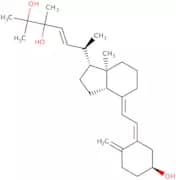
CAS:24,25-Dihydroxy vitamin D2 is a form of vitamin D that has been shown to be effective in the treatment of biliary cirrhosis and neonatal cirrhosis. It is synthesized from 25-hydroxyvitamin D3 by the enzyme 24-hydroxylase. The assay sensitivity for this compound is 10 ng/mL. This form of vitamin D has been shown to have an effect on serum bilirubin levels in patients with biliary cirrhosis. 24,25-Dihydroxy vitamin D2 can also be used to treat patients with chronic renal failure who are deficient in vitamin D3. The plasma concentration of 24,25-dihydroxyvitamin D2 is lower than that of 25-hydroxyvitamin D2 and 1,25-dihydroxyvitamin D2 because it is more rapidly metabolized by the liver.
Formula:C28H44O3Purity:Min. 98 Area-%Color and Shape:PowderMolecular weight:428.65 g/molProgesterone-d9
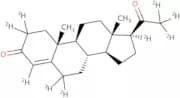
CAS:Controlled ProductProgesterone-d9 is a compound that is used in the diagnosis of adrenocortical carcinoma. It can be extracted from the serum of patients with this cancer using an acetate extraction technique. Progesterone-d9 has been shown to be a useful biomarker for short-term exposure to water contaminated with nomegestrol acetate, and it has also been shown to be a useful tool for wastewater treatment. The use of Progesterone-d9 as a biomarker is limited by its instability in human serum and its susceptibility to matrix effects. This compound can be analyzed by liquid chromatography mass spectrometry (LC-MS/MS) methods, which are sensitive and specific. A drawback of this analytical method is that it requires extensive sample preparation. The LC-MS/MS method can also be used to measure prosteroid levels, which have been found to correlate with levels of camp in humans.Formula:C21H21O2D9Purity:Min. 95%Color and Shape:Off-White To Yellow SolidMolecular weight:323.51 g/molDeoxycholic acid-D4
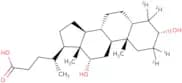
CAS:Controlled ProductDeoxycholic acid-D4 is a bile acid that is produced by the liver. It has been shown to be an indicator of insulin resistance in women with breast cancer. Deoxycholic acid-D4 has also been found to have significant interactions with other drugs, such as phenytoin, carbamazepine, and penicillin. The concentration of deoxycholic acid-D4 in the serum may be reduced by taking these drugs. This drug has a detection time of 3 hours and can be detected by liquid chromatography. Deoxycholic acid-D4 is metabolized through the human metabolism pathway, which includes dietary and logistic regression models.Formula:C24H36D4O4Purity:Min. 95%Molecular weight:396.6 g/mol4-Aminobiphenyl-D9
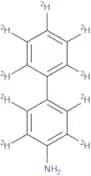
CAS:Controlled Product4-Aminobiphenyl is a chemical compound that belongs to the group of aromatic amines. It is a human carcinogen and has been shown to cause cancer in animals. 4-Aminobiphenyl has been detected in the environment as an environmental pollutant and can be found in small quantities at low levels in food, air, and water. 4-Aminobiphenyl can be hydrolyzed by acid or alkaline hydrolysis to form its hydrolysate, which contains nitroarenes that are not present in the original compound. The DNA modification caused by 4-aminophenol may be due to its ability to modify DNA bases through reactive metabolites such as nitroarenes.
Formula:C12H2D9NPurity:Min. 95%Molecular weight:178.27 g/mol