Organic Halides
Subcategories of "Organic Halides"
Found 20442 products of "Organic Halides"
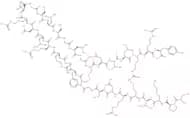
Amylin (human) trifluoroacetate salt
CAS:Amylin is a hormone that regulates the release of insulin from the pancreas. Amylin is a protein that consists of 39 amino acids, and in its natural form it is not soluble in water. The amyloid fibrils are insoluble aggregates of proteins that can be found in the brain tissue of patients with Alzheimer's disease. Amylin has been shown to have an entrapment efficiency greater than 96% by using polymeric particles with a diameter less than 50 microns. These particles are able to increase water solubility and nutrient metabolism, as well as improve evaporation rates. They also provide an increased surface area for absorption and pharmacological properties. Amylin has been shown to lower postprandial glycemia when used with insulin in type II diabetes mellitus patients, and may also be an anorectic agent.
Formula:C165H261N51O55S2Purity:Min. 95%Molecular weight:3,903.28 g/molN-[(RS)-1-Carboxy-3-phenyl-propyl]-Ala-Ala-Phe-4-Abz-OH trifluoroacetate salt
CAS:The N-[(RS)-1-carboxy-3-phenyl-propyl]-Ala-Ala-Phe-4-Abz-OH trifluoroacetate salt is a synthetic substrate for the study of metalloendopeptidase. This compound was used to develop a model system to study the function of human liver, and has been shown to inhibit the growth of PC12 cells. The N-[(RS)-1-Carboxy-3-phenyl-propyl]-Ala-Ala-Phe-4-Abz-OH trifluoroacetate salt is also an experimental model for congestive heart failure. This compound has been shown to increase glomerular filtration rate in experimental animals as well as basic fibroblast growth factor activity in cell culture by increasing intracellular calcium levels.Formula:C32H36N4O7Purity:Min. 95%Molecular weight:588.65 g/molRef: 3D-FR111118
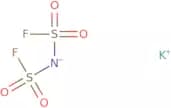
Discontinued productPotassium bis(fluorosulfonyl)imide
CAS:Potassium bis(fluorosulfonyl)imide (K2FSI) is a reactive chemical that can be used to remove sulfur from petroleum products. It is also used in the manufacturing of ethylene and perovskite solar cells. K2FSI reacts with potassium ions to form potassium hexafluorophosphate (KHF2). This reaction reduces the vapor pressure of KHF2 and increases its solubility in water. The use of K2FSI can reduce the amount of energy needed for desulfurization, as it does not require heating. The following are some uses for potassium bis(fluorosulfonyl)imide: - As a catalyst for production of ethylene - In organic solvent to produce perovskite solar cells - To remove sulfur from petroleum products - To make hydrogen fluoride - For desulfurization
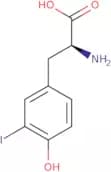
Formula:F2NO4S2•KPurity:Min. 95%Color and Shape:White PowderMolecular weight:219.23 g/mol3-Iodo-L-tyrosine
CAS:Please enquire for more information about 3-Iodo-L-tyrosine including the price, delivery time and more detailed product information at the technical inquiry form on this page
Formula:C9H10INO3Purity:Min. 96.0 Area-%Color and Shape:PowderMolecular weight:307.09 g/molRef: 3D-FI12110
Discontinued productH-Arg(Pmc)-2-chlorotrityl resin (200-400 mesh)
Please enquire for more information about H-Arg(Pmc)-2-chlorotrityl resin (200-400 mesh) including the price, delivery time and more detailed product information at the technical inquiry form on this page
Purity:Min. 95%Ref: 3D-FA111748
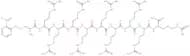
Discontinued productH-Cys(NPys)-Arg-Arg-Arg-Arg-Arg-Arg-Arg-Arg-Arg-NH2 trifluoroacetate salt
CAS:Please enquire for more information about H-Cys(NPys)-Arg-Arg-Arg-Arg-Arg-Arg-Arg-Arg-Arg-NH2 trifluoroacetate salt including the price, delivery time and more detailed product information at the technical inquiry form on this pageFormula:C62H118N40O12S2Purity:Min. 95%Molecular weight:1,679.99 g/molRef: 3D-FC110138
Discontinued productDnp-(Leu421)-Collagen Type VIII a1 Chain (419-426) amide (human, mouse) trifluoroacetate salt
Please enquire for more information about Dnp-(Leu421)-Collagen Type VIII a1 Chain (419-426) amide (human, mouse) trifluoroacetate salt including the price, delivery time and more detailed product information at the technical inquiry form on this page
Formula:C40H64N14O12SPurity:Min. 95%Molecular weight:965.09 g/molRef: 3D-FD110972
Discontinued product6-Bromo-pyrazolo[1,5-a]pyrimidine
CAS:6-Bromo-pyrazolo[1,5-a]pyrimidine is a bone morphogenetic protein (BMP) inhibitor. It has been shown to be a potent inhibitor of the tyrosine kinase activity of BMP receptors and may be useful for the development of new strategies for the treatment of osteoporosis. 6-Bromo-pyrazolo[1,5-a]pyrimidine is also an effective inhibitor of the proliferation and survival of cancer cells. It inhibits cell growth by interfering with cellular signaling pathways that regulate these processes. 6-Bromo-pyrazolo[1,5-a]pyrimidine was also found to inhibit the production of bone morphogenetic protein 2 (BMP2) in mouse calvaria cells without affecting other bone metabolism markers such as alkaline phosphatase or osteocalcin.
Formula:C6H4BrN3Purity:Min. 95%Color and Shape:PowderMolecular weight:198.02 g/molBiotinyl-Amylin (mouse, rat) trifluoroacetate salt
CAS:Please enquire for more information about Biotinyl-Amylin (mouse, rat) trifluoroacetate salt including the price, delivery time and more detailed product information at the technical inquiry form on this pageFormula:C177H286N54O55S3Purity:Min. 95%Molecular weight:4,146.69 g/molRef: 3D-FB110085
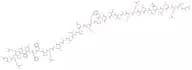
Discontinued productPACAP-38 (31-38) (human, chicken, mouse, ovine, porcine, rat) trifluoroacetate salt
CAS:Please enquire for more information about PACAP-38 (31-38) (human, chicken, mouse, ovine, porcine, rat) trifluoroacetate salt including the price, delivery time and more detailed product information at the technical inquiry form on this pageFormula:C47H83N17O11Purity:Min. 95%Molecular weight:1,062.27 g/molRef: 3D-FP109526
Discontinued productNeuromedin S (rat) trifluoroacetate salt
CAS:Please enquire for more information about Neuromedin S (rat) trifluoroacetate salt including the price, delivery time and more detailed product information at the technical inquiry form on this pageFormula:C193H307N57O49SPurity:Min. 95%Molecular weight:4,241.92 g/molRef: 3D-FN109763
Discontinued product6-Bromoisoquinoline
CAS:6-Bromoisoquinoline is a tetradentate ligand that can be used as a molecular model to study the binding of metal ions and organic molecules. 6-Bromoisoquinoline has been shown to bind covalently and noncovalently with phosphate groups on the surface of Caco-2 cells and to induce surface-enhanced Raman spectroscopy. This ligand has a high nucleophilicity and reacts readily with chloride, which is an acidic functional group. The reaction products are hydrochloric acid, trifluoroacetic acid, or both. 6-Bromoisoquinoline can also act as an allosteric modulator in some enzymes, such as phosphofructokinase in glycolysis.
Formula:C9H6BrNPurity:Min. 95%Molecular weight:208.05 g/molRef: 3D-FB11908
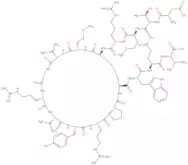
Discontinued productTIP-39 trifluoroacetate salt
CAS:Please enquire for more information about TIP-39 trifluoroacetate salt including the price, delivery time and more detailed product information at the technical inquiry form on this pageFormula:C202H325N61O54SPurity:Min. 95%Molecular weight:4,504.19 g/molRef: 3D-FT109386
Discontinued productTetraethylammonium tetrafluoroborate
CAS:Tetraethylammonium tetrafluoroborate is a diamagnetic chemical species that reacts with water, forming the hydrated salt tetraethylammonium hydroxide. Tetraethylammonium tetrafluoroborate has a high resistance to oxidation and reduction reactions. It can be used as an electrolyte in electrochemistry and as a thermal expansion agent in plastics. The potentials of this substance are around +1 V, which makes it useful for electrochemical impedance spectroscopy. Tetraethylammonium tetrafluoroborate is activated by organic solvents, but not by water vapor.
Formula:C8H20N·BF4Color and Shape:White Off-White PowderMolecular weight:217.06 g/molMCH (salmon) trifluoroacetate salt
CAS:Trifluoroacetate salt
Formula:C89H139N27O24S4Purity:Min. 95%Molecular weight:2,099.49 g/molRef: 3D-FM110322
Discontinued product11-(1-Piperazinyl)-dibenzo[b,f][1,4]thiazepine dihydrochloride
CAS:11-(1-Piperazinyl)-dibenzo[b,f][1,4]thiazepine dihydrochloride is a long-acting drug that has been synthesized as an analog of diazepam. The compound is characterized by high diffraction, interaction and evaporation constants and low molecular weight. It is soluble in water and methanol. 11-(1-Piperazinyl)-dibenzo[b,f][1,4]thiazepine dihydrochloride has been shown to have a constant pharmacokinetic profile and high chemical stability in vivo.Formula:C17H17N3S·2HClPurity:Min. 98 Area-%Color and Shape:White Off-White PowderMolecular weight:368.32 g/molBNP-32 (porcine) trifluoroacetate salt
CAS:BNP-32 is a porcine-specific antibody that is used to detect the presence of BNP in human serum. It is biotinylated and can be coated on a plate. The antibody binds to BNP, which has been labeled with peroxidase, and produces a colored reaction product. This product can be visualized by adding 3,3'-diaminobenzidine (DAB) as a substrate. The sealer then prevents the unbound antibody from binding to the plate and interfering with the assay.Formula:C149H250N52O44S3Purity:Min. 95%Molecular weight:3,570.1 g/molRef: 3D-FB108820
Discontinued productNeuroendocrine Regulatory Peptide-4 (human, mouse, rat) trifluoroacetate salt
CAS:Please enquire for more information about Neuroendocrine Regulatory Peptide-4 (human, mouse, rat) trifluoroacetate salt including the price, delivery time and more detailed product information at the technical inquiry form on this pageFormula:C87H135N25O24Purity:Min. 95%Molecular weight:1,915.16 g/molRef: 3D-FN110030
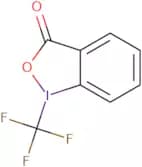
Discontinued product1-(Trifluoromethyl)-1,2-benziodoxol-3(1h)-one
CAS:1-(Trifluoromethyl)-1,2-benziodoxol-3(1H)-one is a deuterated analog of the phenoxy radical. It has been shown to be a potent inhibitor of the apical radiation-induced chain reactions in mitochondria and chloroplasts. The deuterium isotope effect makes 1-(Trifluoromethyl)-1,2-benziodoxol-3(1H)-one more reactive than its non-deuterated counterpart. This increased reactivity leads to an increase in biological properties, such as toxicity studies and reaction mechanism. This drug also has modulating effects on sulfonic acids, which are important for many biological reactions.
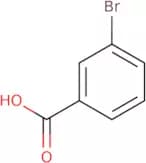
Formula:C8H4F3IO2Purity:Min. 95 Area-%Color and Shape:White PowderMolecular weight:316.02 g/mol3-Bromobenzoic acid
CAS:3-Bromobenzoic acid is a molecule that is classified as a Group P2. It has an electronegativity of 1.3 and an acidity of 0.8, which are both in the middle range of values for this group. 3-Bromobenzoic acid is soluble in water and is soluble in ethanol, acetone, and ether. The chemical structure of 3-bromobenzoic acid can be determined by its monoclonal antibody binding sites, electrochemical impedance spectroscopy data, and Langmuir adsorption isotherm data. 3-Bromobenzoic acid reacts with hydrochloric acid to form benzoate and HCl gas. Chronic exposure to 3-bromobenzoic acid has been shown to cause glutamate dehydrogenase inhibition, leading to an accumulation of p-hydroxybenzoic acid in the body. This compound also reacts with thiourea or
Formula:C7H5BrO2Purity:Min. 95%Color and Shape:PowderMolecular weight:201.02 g/molXenopsin-Related Peptide 1 (XP-1) trifluoroacetate salt
CAS:Xenopsin-related peptide 1 (XP-1) is a synthetic peptide that has been shown to bind to the neurotensin receptor. XP-1 is expressed in gastrointestinal tissues and has been found to modulate intestinal motility, as well as glucose homeostasis. It also has immunohistochemical staining for pancreatic tissues and vasoactive intestinal polypeptide, which are both involved in glucose control. XP-1 can reduce high plasma concentrations of glucose by stimulating the pancreas and lowering the release of glucagon from the α cells of the pancreas. The function of XP-1 is not yet fully understood, but it may have potential therapeutic effects on diabetes mellitus type 2.Formula:C51H79N15O9Purity:Min. 95%Molecular weight:1,046.27 g/molRef: 3D-FX110420
Discontinued productOsteostatin (1-5) (human, bovine, dog, horse, mouse, rabbit, rat) trifluoroacetate salt
CAS:Please enquire for more information about Osteostatin (1-5) (human, bovine, dog, horse, mouse, rabbit, rat) trifluoroacetate salt including the price, delivery time and more detailed product information at the technical inquiry form on this page
Formula:C27H41N9O8Purity:Min. 95%Molecular weight:619.67 g/molRef: 3D-FO110332
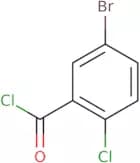
Discontinued product5-Bromo-2-chlorobenzoyl chloride
CAS:5-Bromo-2-chlorobenzoyl chloride is a chemical compound that is used as an intermediate for the production of compounds. It can be produced by the reaction of benzene with thionyl chloride in the presence of phenetole. The chemical reaction proceeds with high yield and utilizes a high concentration of benzene, which is a pollutant. The reaction yields a mixture of 5-bromo-2-chlorobenzoyl chloride and 2,4,6-trichlorobenzoyl chloride and utilizes an organic solvent such as formic acid or acetic acid to form 5-bromo-2,4,6-trichlorobenzoic acid in situ. 5-Bromo-2,4,6-trichlorobenzoic acid is then reacted with ammonia to produce 2-(5'-bromo)benzothiazole. This chemical compound has been used as a reagent
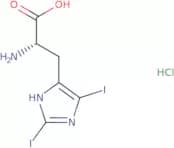
Formula:C7H3BrCl2OPurity:Min. 95%Color and Shape:PowderMolecular weight:253.91 g/molH-2,5-Diiodo-His-OH·HCl
CAS:Please enquire for more information about H-2,5-Diiodo-His-OH·HCl including the price, delivery time and more detailed product information at the technical inquiry form on this page
Formula:C6H7I2N3O2·HClPurity:Min. 95%Molecular weight:443.41 g/molRef: 3D-FD107915
Discontinued productAmyloid beta-Protein (40-1) trifluoroacetate salt
CAS:Trifluoroacetate salt
Formula:C194H295N53O58SPurity:Min. 95%Molecular weight:4,329.81 g/molRef: 3D-FA108830
Discontinued product(Dibromomethyl)benzene
CAS:Dibromomethylbenzene is a reactive, non-metallic chemical compound with the formula CHBr2. It is a colorless liquid that is soluble in water and has a strong odor. Dibromomethylbenzene can be used to treat wastewater by removing metals, such as iron and copper, that are not removed by conventional methods. This compound also has been shown to inhibit the growth of infectious bacteria, such as Salmonella enterica and Escherichia coli. Dibromomethylbenzene reacts with metal hydroxides to produce volatile bromide ions, which react with the carbohydrate to form cyclic peptides. These reactions are catalyzed by solid catalysts like activated carbon or alumina.
Formula:C7H6Br2Purity:95%MinMolecular weight:249.93 g/molRef: 3D-FD138919
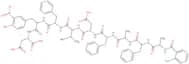
Discontinued productAbz-Ala-Phe-Ala-Phe-Asp-Val-Phe-3-nitro-Tyr-Asp-OH trifluoroacetate salt
CAS:Please enquire for more information about Abz-Ala-Phe-Ala-Phe-Asp-Val-Phe-3-nitro-Tyr-Asp-OH trifluoroacetate salt including the price, delivery time and more detailed product information at the technical inquiry form on this pageFormula:C62H71N11O18Purity:Min. 95%Molecular weight:1,258.29 g/molRef: 3D-FA110961
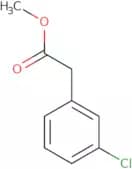
Discontinued productMethyl 3-chlorophenylacetate
CAS:Methyl 3-chlorophenylacetate is a chemical intermediate that has been used in the synthesis of pharmaceuticals and organic compounds. It has also been used as a reagent for research, especially in the study of organic chemistry. Methyl 3-chlorophenylacetate is a versatile building block and can be used as a reaction component to synthesize other chemicals. This compound is also an excellent scaffold for medicinal chemistry.
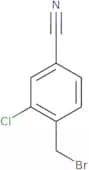
Formula:C9H9ClO2Purity:Min. 95%Color and Shape:Clear LiquidMolecular weight:184.62 g/mol4-(Bromomethyl)-3-chlorobenzonitrile
CAS:4-(Bromomethyl)-3-chlorobenzonitrile is a radioactive compound that has no specific use. It is used for the production of butylamino, which is a precursor to various other compounds. 4-(Bromomethyl)-3-chlorobenzonitrile can be used as an unlabelled replacement for any other radioactive compound in a laboratory setting.
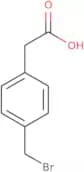
Formula:C8H5BrClNPurity:Min. 95%Color and Shape:SolidMolecular weight:230.49 g/mol4-(Bromomethyl)phenylacetic acid
CAS:4-(Bromomethyl)phenylacetic acid is a potent cancer drug that blocks the activity of hydrogen-bonding interactions. It inhibits the growth of prostate cancer cells, DU145 cells, and other cell lines. The drug has been shown to inhibit the activation of toll-like receptor 4 (TLR4) in primary blood cells from healthy donors. TLR4 is a protein found on the surface of immune cells that senses molecules from bacteria, fungi, parasites, and viruses. This protein plays an important role in triggering anti-inflammatory and pro-inflammatory responses to infection. The drug also inhibits platelet aggregation and lipoprotein lipase activity in vitro.
Formula:C9H9BrO2Purity:Min. 95%Color and Shape:SolidMolecular weight:229.07 g/molRef: 3D-FB31005
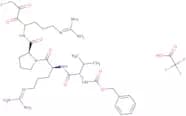
Discontinued productZ-Val-Arg-Pro-DL-Arg-fluoromethylketone trifluoroacetate salt
CAS:Please enquire for more information about Z-Val-Arg-Pro-DL-Arg-fluoromethylketone trifluoroacetate salt including the price, delivery time and more detailed product information at the technical inquiry form on this pageFormula:C31H49FN10O6Purity:Min. 95%Molecular weight:676.78 g/molRef: 3D-FV111123
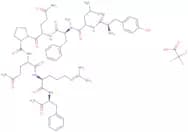
Discontinued product(D-Tyr1,N-Me-Phe3)-Neuropeptide FF trifluoroacetate salt
CAS:Please enquire for more information about (D-Tyr1,N-Me-Phe3)-Neuropeptide FF trifluoroacetate salt including the price, delivery time and more detailed product information at the technical inquiry form on this pageFormula:C55H78N14O11Purity:Min. 95%Molecular weight:1,111.3 g/molRef: 3D-FT109351
Discontinued productAtrial Natriuretic Factor (1-28) (human) hydrochloride salt
CAS:Controlled ProductPlease enquire for more information about Atrial Natriuretic Factor (1-28) (human) hydrochloride salt including the price, delivery time and more detailed product information at the technical inquiry form on this pageFormula:C127H203N45O39S3Purity:Min. 95%Molecular weight:3,080.45 g/molRef: 3D-FA110233
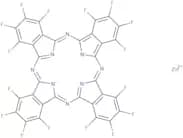
Discontinued productZinc 1,2,3,4,8,9,10,11,15,16,17,18,22,23,24,25-hexadecafluoro-29H,31H-phthalocyanine
CAS:Please enquire for more information about Zinc 1,2,3,4,8,9,10,11,15,16,17,18,22,23,24,25-hexadecafluoro-29H,31H-phthalocyanine including the price, delivery time and more detailed product information at the technical inquiry form on this pageFormula:C32F16N8ZnPurity:Min. 95%Molecular weight:865.75 g/molAmmonium Undecafluorohexanoate
CAS:Undecafluorohexanoic acid is a perfluoroalkyl carboxylic acid that has been shown to disrupt steroidogenesis in vitro. It may be able to inhibit the transport of cholesterol, fats, and other lipids in cells, which causes disruption in steroidogenesis. This compound also has anti-cancer properties due to its ability to induce apoptosis and arrest cancer cell proliferation. Undecafluorohexanoic acid may also have developmental effects on animals because it can bind to estrogen receptors and disrupt the normal process of estrogen-mediated signaling pathways.
Formula:C6H4F11NO2Purity:Min. 95%Molecular weight:331.08 g/molRef: 3D-FA79593
Discontinued product2,3,5-Trichlorobenzaldehyde
CAS:2,3,5-Trichlorobenzaldehyde is a chemical compound that has been shown to have anticancer and apoptotic effects. It inhibits the growth of bacteria by chelating iron ions and inhibiting bacterial dna synthesis. 2,3,5-Trichlorobenzaldehyde has also been shown to inhibit the growth of cancer cells in culture in an experimental study. This chemical has been used as a substrate for nmr spectroscopy to study its functional groups and radical scavenging activities. 2,3,5-Trichlorobenzaldehyde can be synthesized from phenacyl chloride and benzaldehyde in the presence of hydrogen chloride gas. The carbonyl group in 2,3,5-trichlorobenzaldehyde may cause metabolic disorders such as diabetes mellitus or hyperglycemia.
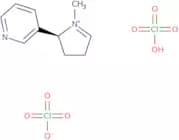
Formula:C7H3Cl3OPurity:Min. 95%Color and Shape:PowderMolecular weight:209.46 g/molS-(-)-Nicotine-delta1’-(5’)-iminium diperchlorate salt
CAS:Please enquire for more information about S-(-)-Nicotine-delta1’-(5’)-iminium diperchlorate salt including the price, delivery time and more detailed product information at the technical inquiry form on this page
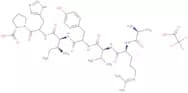
Formula:C10H14Cl2N2O8Purity:Min. 95%Molecular weight:361.13 g/molAngiotensin A (1-7) trifluoroacetate
CAS:Endogenous heptapetide which causes vasodilation and has anti-hypertensive properties.
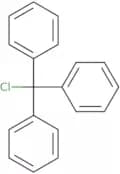
Formula:C40H62N12O9•(C2HF3O2)xPurity:Min. 95%Color and Shape:PowderMolecular weight:855 g/molTrityl chloride resin
CAS:Trityl chloride resin is a chemical compound that is used as a model system for the study of trifluoroacetic acid and its reactions. Trityl chloride resin is insoluble in water and has been used as a reaction solution for transfer reactions. It has been shown to be an effective ligand for many types of receptors, with binding constants ranging from 10 M-1 to 10 M-10. Trityl chloride resin can also be chiral, which means that it may exist in two forms that are mirror images of each other. The physiological effects of this compound are not well understood, but it has been shown to have an effect on coordination geometry.
Color and Shape:PowderRef: 3D-FT29918
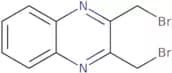
Discontinued product2,3-Bis(bromomethyl)quinoxaline
CAS:2,3-Bis(bromomethyl)quinoxaline is a nitrogenous heterocyclic compound that has a coordination geometry of square planar. It has been used as an inhibitor for the protein p21 and the nucleophile in palladium complexes. 2,3-Bis(bromomethyl)quinoxaline is also a model system for studying reaction mechanisms and chemical structures. The electron density map of the compound was obtained by X-ray crystal structure analysis. The reaction mechanism of this molecule is proposed to be through a chelate ring cross-coupling process.
Formula:C10H8Br2N2Purity:Min. 95%Color and Shape:Brown PowderMolecular weight:315.99 g/molRef: 3D-FB04248
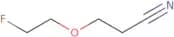
Discontinued product3-(2-Fluoroethoxy)Propanenitrile
CAS:3-(2-Fluoroethoxy)Propanenitrile is a chemical with toxic properties. It is classified as a fluoroacetic acid and has been used in the production of other chemicals. Fluoroacetic acid is toxic to humans, showing signs of skin irritation, respiratory tract irritation, and kidney damage. 3-(2-Fluoroethoxy)Propanenitrile is not found naturally and has been sponsored by many companies.
Formula:C5H8FNOPurity:Min. 95%Molecular weight:117.12 g/molRef: 3D-FF80270
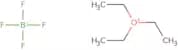
Discontinued productTriethyloxonium tetrafluoroborate
CAS:Triethyloxonium tetrafluoroborate is an antimicrobial agent that inhibits the transfer of electrons from one molecule to another. It has been shown to be effective against methicillin-resistant Staphylococcus aureus and Mycobacterium tuberculosis. Triethyloxonium tetrafluoroborate binds to the bacterial enzyme, Jak1, which is involved in the formation of cytokines and interleukins. This binding inhibits the production of these molecules, leading to cell death by apoptosis. The use of triethyloxonium tetrafluoroborate as a research tool has facilitated its discovery as a potential anti-inflammatory drug for autoimmune diseases such as type 1 diabetes mellitus and rheumatoid arthritis. Triethyloxonium tetrafluoroborate can be used to inhibit amide synthesis, which may have applications in the study of carbohydrate chemistry and nitrogen atoms in biological systems. This compound has also been used
Formula:C6H15BF4OPurity:Min. 95%Color and Shape:PowderMolecular weight:189.99 g/mol


![N-[(RS)-1-Carboxy-3-phenyl-propyl]-Ala-Ala-Phe-4-Abz-OH trifluoroacetate salt](/_next/image/?url=https%3A%2Fstatic.cymitquimica.com%2Fproducts%2F3D%2Fthumb-webp%2FFR111118.webp&w=3840&q=75)

![6-Bromo-pyrazolo[1,5-a]pyrimidine](/_next/image/?url=https%3A%2Fstatic.cymitquimica.com%2Fproducts%2F3D%2Fthumb-webp%2FFB140359.webp&w=3840&q=75)



![11-(1-Piperazinyl)-dibenzo[b,f][1,4]thiazepine dihydrochloride](/_next/image/?url=https%3A%2Fstatic.cymitquimica.com%2Fproducts%2F3D%2Fthumb-webp%2FFP32447.webp&w=3840&q=75)