Organic Halides
Subcategories of "Organic Halides"
Found 20442 products of "Organic Halides"
BIM-23627 trifluoroacetate salt
CAS:Please enquire for more information about BIM-23627 trifluoroacetate salt including the price, delivery time and more detailed product information at the technical inquiry form on this page
Formula:C58H69ClN12O8S2Purity:Min. 95%Molecular weight:1,161.83 g/molRef: 3D-FB109641
Discontinued productAcetyl-(Asn30,Tyr32)-Calcitonin (8-32) (salmon I) trifluoroacetate salt
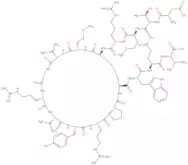
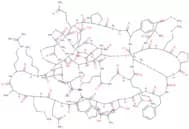
CAS:Please enquire for more information about Acetyl-(Asn30,Tyr32)-Calcitonin (8-32) (salmon I) trifluoroacetate salt including the price, delivery time and more detailed product information at the technical inquiry form on this pageFormula:C127H205N37O40Purity:Min. 95%Molecular weight:2,890.21 g/molRef: 3D-FA109403
Discontinued product1-(4,4'-Difluorobenzhydry)piperazine
CAS:1-(4,4'-Difluorobenzhydry)piperazine (1-DFBP) is a potential antitumor agent that has been shown to inhibit the growth of leukemia cells. It may be an inhibitor of apoptotic cell death, as it has been shown to induce hydrogen bond formation with coumarin derivatives. 1-DFBP has also been shown to have inhibitory activities against leukemia HL-60 cells, and is a competitive inhibitor of cinnarizine. The catalytic mechanism for 1-DFBP is not known, although kinetic data suggest that it involves hydrogen bonding and/or pi stacking interactions.
Formula:C17H18F2N2Purity:Min. 95%Molecular weight:288.34 g/molRef: 3D-FD55069
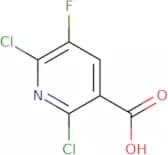
Discontinued product2,6-Dichloro-5-fluoronicotinic acid
CAS:2,6-Dichloro-5-fluoronicotinic acid (2,6-DCFNA) is a chlorinating agent that is activated in acidic solutions. It is used to produce the disinfectant peracetic acid and in the industrial process of producing phenol. 2,6-DCFNA reacts with chloride to form hypochlorous acid (HOCl), which causes inflammation in cells by activating inflammatory cells such as neutrophils and macrophages. 2,6-DCFNA also inhibits tyrosine kinase activity, which may contribute to its anti-inflammatory properties. The toxic effects of 2,6-DCFNA have been studied on hematopoietic cells in vitro. Studies show that this compound can cause apoptosis or death of these cells and may be useful for the treatment of inflammatory diseases such as rheumatoid arthritis. 2,6-DCFNA has also been shown to inhibit tumor growth when
Formula:C6H2Cl2FNO2Purity:Min. 95%Color and Shape:PowderMolecular weight:209.99 g/molRef: 3D-FD70870
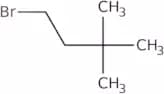
Discontinued product1-Bromo-3,3-dimethylbutane
CAS:1-Bromo-3,3-dimethylbutane is an alkali metal compound that can be used as a substitute for ethylene. It is expressed in the liquid phase and reacts with halogens to form reactive intermediates. These reactive intermediates react with other molecules to cause bond cleavage. The reaction time is dependent on the temperature of the system. 1-Bromo-3,3-dimethylbutane has three isomers that are formed during the reaction: 2-, 3-, and 4-bromohexane. The mechanism for this reaction involves a single electron transfer from one molecule to another, which causes a series of reactions that leads to the formation of 1-bromo-3,3-dimethylbutane. This process occurs spontaneously due to irradiation by ultraviolet light or electron beams.
Formula:C6H13BrPurity:Min. 95%Molecular weight:165.07 g/molPotassium bis(fluorosulfonyl)imide
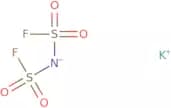
CAS:Potassium bis(fluorosulfonyl)imide (K2FSI) is a reactive chemical that can be used to remove sulfur from petroleum products. It is also used in the manufacturing of ethylene and perovskite solar cells. K2FSI reacts with potassium ions to form potassium hexafluorophosphate (KHF2). This reaction reduces the vapor pressure of KHF2 and increases its solubility in water. The use of K2FSI can reduce the amount of energy needed for desulfurization, as it does not require heating. The following are some uses for potassium bis(fluorosulfonyl)imide: - As a catalyst for production of ethylene - In organic solvent to produce perovskite solar cells - To remove sulfur from petroleum products - To make hydrogen fluoride - For desulfurization
Formula:F2NO4S2•KPurity:Min. 95%Color and Shape:White PowderMolecular weight:219.23 g/mol(Cys47)-HIV-1 tat Protein (47-57) trifluoroacetate salt
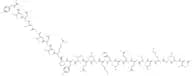
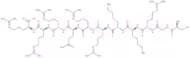
CAS:Please enquire for more information about (Cys47)-HIV-1 tat Protein (47-57) trifluoroacetate salt including the price, delivery time and more detailed product information at the technical inquiry form on this page
Formula:C58H114N32O13SPurity:Min. 95%Molecular weight:1,499.8 g/molRef: 3D-FC110136
Discontinued product2-(Chloromethyl)-5-(trifluromethyl)-1,3,4-oxadiazole
CAS:Please enquire for more information about 2-(Chloromethyl)-5-(trifluromethyl)-1,3,4-oxadiazole including the price, delivery time and more detailed product information at the technical inquiry form on this pageFormula:C4H2ClF3N2OPurity:Min. 95%Color and Shape:Colorless PowderMolecular weight:186.52 g/molRef: 3D-FC33413
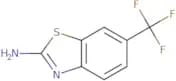
Discontinued product2-Amino-6-(trifluoromethyl)benzothiazole
CAS:2-Amino-6-(trifluoromethyl)benzothiazole is a new, optimised insecticide with alkylthio, halogen and alkoxy groups. It is highly toxic to insects and has been shown to be active against various species of Lepidoptera, Coleoptera and Diptera. 2-Amino-6-(trifluoromethyl)benzothiazole is also a broad spectrum contact insecticide that exhibits systemic properties. This insecticide can be used on plants, crops, livestock and pets.Formula:C8H5F3N2SPurity:Min. 95%Molecular weight:218.2 g/molRef: 3D-FA53923
Discontinued productAQEE-30 (mouse, rat) trifluoroacetate salt
CAS:Please enquire for more information about AQEE-30 (mouse, rat) trifluoroacetate salt including the price, delivery time and more detailed product information at the technical inquiry form on this page
Formula:C156H245N47O56Purity:Min. 95%Molecular weight:3,674.9 g/molRef: 3D-FA110034
Discontinued product(D-Trp8)-Somatostatin-14 trifluoroacetate salt
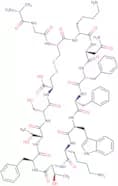
CAS:Please enquire for more information about (D-Trp8)-Somatostatin-14 trifluoroacetate salt including the price, delivery time and more detailed product information at the technical inquiry form on this page
Formula:C76H104N18O19S2Purity:Min. 95%Molecular weight:1,637.88 g/molRef: 3D-FT108921
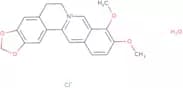
Discontinued productBerberine chloride hydrate
CAS:Berberine chloride hydrate is an isoquinoline alkaloid, which is a natural compound derived from various plants, such as Berberis species, with a robust pharmacological profile. Its mode of action is primarily through the modulation of multiple biochemical pathways. Berberine activates adenosine monophosphate-activated protein kinase (AMPK), a crucial regulator of energy homeostasis, and influences lipid and glucose metabolism. It exhibits significant antimicrobial activity, disrupting microbial cell walls and inhibiting the nucleic acid synthesis of pathogens.
Formula:C20H18ClNO4•(H2O)xPurity:Min. 95%Color and Shape:Yellow PowderMolecular weight:371.81 g/molRef: 3D-FB167137
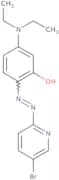
Discontinued product2-(5-Bromo-2-pyridylazo)-5-(diethylamino)phenol
CAS:2-(5-Bromo-2-pyridylazo)-5-(diethylamino)phenol is a chemical that is used for the detection of hydrochloric acid in water vapor. It reacts with zirconium oxide, which generates a red fluorescing complex. The reaction can be detected by using a fluorescence spectrometer with a test sample. 2-(5-Bromo-2-pyridylazo)-5-(diethylamino)phenol is also used to detect the presence of nitrogen atoms and sodium citrate in samples by reacting with them. This chemical reacts with an acid complex to form stable complexes. The analytical method is based on measuring the redox potential of this reaction. The flow system of this technique allows for dehydration of dehydroascorbic acid (DHA).
Formula:C15H17BrN4OPurity:Min. 95%Color and Shape:PowderMolecular weight:349.23 g/molLIP2 (human) trifluoroacetate salt
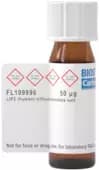
Please enquire for more information about LIP2 (human) trifluoroacetate salt including the price, delivery time and more detailed product information at the technical inquiry form on this pageFormula:C184H288N58O58Purity:Min. 95%Molecular weight:4,240.61 g/molRef: 3D-FL109896
Discontinued productH-Asp(OtBu)-2-chlorotrityl resin (200-400 mesh)
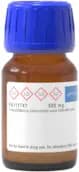
Please enquire for more information about H-Asp(OtBu)-2-chlorotrityl resin (200-400 mesh) including the price, delivery time and more detailed product information at the technical inquiry form on this page
Purity:Min. 95%Ref: 3D-FA111747
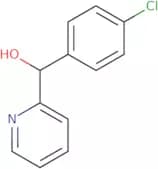
Discontinued product4-Chlorophenyl-2-pyridinylmethanol
CAS:Please enquire for more information about 4-Chlorophenyl-2-pyridinylmethanol including the price, delivery time and more detailed product information at the technical inquiry form on this page
Formula:C12H10ClNOPurity:Min. 95%Molecular weight:219.67 g/molPAR-2 (1-6) amide (human) trifluoroacetate salt
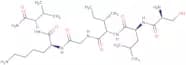
CAS:PAR-2 (1-6) amide (human) trifluoroacetate salt H-Ser-Leu-Ile-Gly-Lys-Val-NH2 trifluoroacetate salt is a protease inhibitor that inhibits the activity of PAR2, a protein receptor. PAR2 is implicated in cancer and inflammation. It has been shown to inhibit growth factor signaling, as well as activate toll-like receptor 4 and other inflammatory pathways. PAR2 inhibition has also been studied in vivo and found to be effective in treating wild type mice with melanoma cells. In vitro studies have shown that PAR2 inhibition by PAR 2 (1-6) amide (human) trifluoroacetate salt H-Ser-Leu-Ile-Gly-Lys-Val NH2 trifluoroacetate salt blocks the production of tumour necrosis factor alpha and interleukin 6.Formula:C28H54N8O7Purity:Min. 95%Molecular weight:614.78 g/molRef: 3D-FP109317
Discontinued productMCH (salmon) trifluoroacetate salt
CAS:Trifluoroacetate salt
Formula:C89H139N27O24S4Purity:Min. 95%Molecular weight:2,099.49 g/molRef: 3D-FM110322
Discontinued productAmyloid beta-Protein (40-1) trifluoroacetate salt
CAS:Trifluoroacetate salt
Formula:C194H295N53O58SPurity:Min. 95%Molecular weight:4,329.81 g/molRef: 3D-FA108830
Discontinued product(±)-DOI Hydrochloride
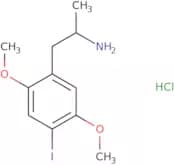
CAS:Controlled Product(±)-DoiHydrochloride is a serotonergic drug that belongs to the group of serotonin reuptake inhibitors. It affects the serotonergic system by inhibiting serotonin reuptake, which leads to increased synaptic concentrations of serotonin. This in turn activates signal pathways and increases levels of dopamine, norepinephrine, and epinephrine. (±)-DoiHydrochloride has antioxidative properties and can be used for the treatment of chronic schizophrenia. It was shown to be effective in patients with atrial fibrillation who were not responding well to other treatments.
Formula:C11H16INO2•HClPurity:Min. 95%Molecular weight:357.62 g/molIron(II) tetrafluoroborate - 40-45% aqueous solution
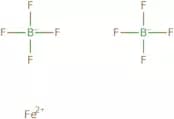
CAS:Iron(II) tetrafluoroborate is a green-yellow crystalline solid that is soluble in water. It has been shown to have structural and optical properties that are similar to those of ferric chloride, but with the advantage of being less toxic. Iron(II) tetrafluoroborate is used as a homogeneous catalyst for organic reactions such as the hydrogenation of nitroarenes and the reduction of ketones. The catalytic activity of Iron(II) tetrafluoroborate arises from its ability to form hydrogen bonding interactions with other molecules and ions in solution.
Iron(II) tetrafluoroborate undergoes a number of reactions with other compounds, including cleavage products such as hydrogen sulfate and nitrogen atoms, which may be due to its chelate ligand. In coordination chemistry, Iron(II) tetrafluoroborate can form coordination complexes by reacting with potassium dichromate or calcium carbonate. These complexes areFormula:B2F8FePurity:About 45%Color and Shape:Slightly Green Clear LiquidMolecular weight:229.45 g/molRef: 3D-FI105721
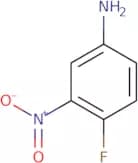
Discontinued product4-Fluoro-3-nitroaniline
CAS:4-Fluoro-3-nitroaniline is a chemical that can be used for industrial preparation. It is an efficient method for the production of 4-fluoroaniline, which is used in the manufacture of dyes and pharmaceuticals. The chemical ionization technique has been shown to be a good way to determine the presence of 4-fluoro-3 nitroaniline in animals. It has also been found to be active against infections caused by bacteria such as Salmonella enterica, Escherichia coli, and Klebsiella pneumoniae. This chemical may have adverse effects on testicular function and hematocrit levels in animals.
Formula:C6H5FN2O2Purity:Min. 95%Molecular weight:156.11 g/molPAR-2 (1-6) amide (human) (scrambled) trifluoroacetate salt
CAS:Please enquire for more information about PAR-2 (1-6) amide (human) (scrambled) trifluoroacetate salt including the price, delivery time and more detailed product information at the technical inquiry form on this page
Formula:C28H54N8O7Purity:Min. 95%Molecular weight:614.78 g/molRef: 3D-FP109836
Discontinued productSerpinin (mouse, rat) trifluoroacetate salt
CAS:Please enquire for more information about Serpinin (mouse, rat) trifluoroacetate salt including the price, delivery time and more detailed product information at the technical inquiry form on this pageFormula:C123H202N32O46Purity:Min. 95%Molecular weight:2,865.11 g/molRef: 3D-FS109925
Discontinued product(3-(4-Azidophenyl)propionyl1,D-Tyr(Me)2,Arg6,Arg8,Tyr-NH29)-Vasopressin trifluoroacetate salt
CAS:Please enquire for more information about (3-(4-Azidophenyl)propionyl1,D-Tyr(Me)2,Arg6,Arg8,Tyr-NH29)-Vasopressin trifluoroacetate salt including the price, delivery time and more detailed product information at the technical inquiry form on this pageFormula:C63H84N20O13Purity:Min. 95%Molecular weight:1,329.47 g/molRef: 3D-FA109005
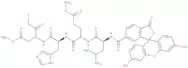
Discontinued productFluorescein-6-carbonyl-Leu-Glu(OMe)-His-DL-Asp(OMe)-fluoromethylketone
CAS:Please enquire for more information about Fluorescein-6-carbonyl-Leu-Glu(OMe)-His-DL-Asp(OMe)-fluoromethylketone including the price, delivery time and more detailed product information at the technical inquiry form on this page
Formula:C45H47FN6O14Purity:Min. 95%Molecular weight:914.89 g/molTetraethylammonium tetrafluoroborate
CAS:Tetraethylammonium tetrafluoroborate is a diamagnetic chemical species that reacts with water, forming the hydrated salt tetraethylammonium hydroxide. Tetraethylammonium tetrafluoroborate has a high resistance to oxidation and reduction reactions. It can be used as an electrolyte in electrochemistry and as a thermal expansion agent in plastics. The potentials of this substance are around +1 V, which makes it useful for electrochemical impedance spectroscopy. Tetraethylammonium tetrafluoroborate is activated by organic solvents, but not by water vapor.
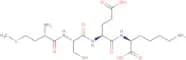
Formula:C8H20N·BF4Color and Shape:White Off-White PowderMolecular weight:217.06 g/molH-Met-Cys-Glu-Lys-OH trifluoroacetate salt
CAS:Please enquire for more information about H-Met-Cys-Glu-Lys-OH trifluoroacetate salt including the price, delivery time and more detailed product information at the technical inquiry form on this page
Formula:C19H35N5O7S2Purity:Min. 95%Molecular weight:509.64 g/molRef: 3D-FM109242
Discontinued productNeuropeptide Y-Lys(biotinyl) (free acid) (human, rat) trifluoroacetate salt
Please enquire for more information about Neuropeptide Y-Lys(biotinyl) (free acid) (human, rat) trifluoroacetate salt including the price, delivery time and more detailed product information at the technical inquiry form on this page
Formula:C205H310N58O61S2Purity:Min. 95%Molecular weight:4,627.14 g/molRef: 3D-FN110180
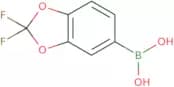
Discontinued product2,2-Difluoro-1,3-Benzodioxol-5-Ylboronic Acid
CAS:Please enquire for more information about 2,2-Difluoro-1,3-Benzodioxol-5-Ylboronic Acid including the price, delivery time and more detailed product information at the technical inquiry form on this pageFormula:C7H5BF2O4Purity:Min. 95%Molecular weight:201.92 g/molRef: 3D-FD89242
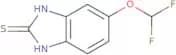
Discontinued product5-(Difluoromethoxy)-2-mercaptobenzimidazole
CAS:5-(Difluoromethoxy)-2-mercaptobenzimidazole is an organic solvent that is used in the crystallization process of pantoprazole, a benzimidazole derivative. It is also used as a corrosion inhibitor and pump inhibitor in analytical chemistry. The purity of 5-(difluoromethoxy)-2-mercaptobenzimidazole can be determined by chromatographic methods or by the use of analytical chemistry. Impurities may be genotoxic and include reactive impurities such as thiourea and 2-thiouracil. These impurities are removed during the synthetic process to produce 5-(difluoromethoxy)-2-mercaptobenzimidazole. This drug substance has been found to inhibit DNA polymerase activity in vitro, but its effects on human cells have not been studied.
Formula:C8H6F2N2OSPurity:Min. 95%Color and Shape:Off-White PowderMolecular weight:216.21 g/molChlorotoxin trifluoroacetate salt
CAS:Chlorotoxin trifluoroacetate salt is a chlorotoxin derivative that has been modified to be more soluble in aqueous solutions. It is used to identify skin cancer and other forms of cancer, as well as for the study of cellular function and structure. The molecule can be injected into tissue or cells, where it binds to nuclei and causes cell death. Chlorotoxin trifluoroacetate salt has minimal toxicity in humans and can be used on histological specimens with little disruption to the tissue. This reagent may also be used to target intracellular targets such as glioma cells.
Formula:C158H249N53O47S11Purity:Min. 95%Molecular weight:3,995.72 g/molRef: 3D-FC109715
Discontinued product2-Amino-6-chloropyrimidin-4(3h)-one
CAS:2-Amino-6-chloropyrimidin-4(3H)-one (ACPP) is a betaine that has been shown to exhibit potent activity against clinical isolates of methicillin-resistant Staphylococcus aureus (MRSA). It is a mesomeric molecule, which means that it can exist as two different tautomers. The frequency of the absorption bands in the FTIR spectra for ACPP are characteristic of the carbenes and ethanolamine tautomers. The presence of these tautomers may be due to stabilization from the nucleophilic character of the nitrogen atom in betaines. Betaines are also able to form polymersized chains by reacting with themselves or other molecules, such as ethanolamine.
Formula:C4H4ClN3OPurity:Min. 95%Color and Shape:PowderMolecular weight:145.55 g/molRef: 3D-FA35262
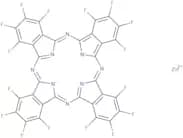
Discontinued productZinc 1,2,3,4,8,9,10,11,15,16,17,18,22,23,24,25-hexadecafluoro-29H,31H-phthalocyanine
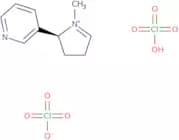
CAS:Please enquire for more information about Zinc 1,2,3,4,8,9,10,11,15,16,17,18,22,23,24,25-hexadecafluoro-29H,31H-phthalocyanine including the price, delivery time and more detailed product information at the technical inquiry form on this pageFormula:C32F16N8ZnPurity:Min. 95%Molecular weight:865.75 g/molS-(-)-Nicotine-delta1’-(5’)-iminium diperchlorate salt
CAS:Please enquire for more information about S-(-)-Nicotine-delta1’-(5’)-iminium diperchlorate salt including the price, delivery time and more detailed product information at the technical inquiry form on this page
Formula:C10H14Cl2N2O8Purity:Min. 95%Molecular weight:361.13 g/mol2,3,5-Trichlorobenzaldehyde
CAS:2,3,5-Trichlorobenzaldehyde is a chemical compound that has been shown to have anticancer and apoptotic effects. It inhibits the growth of bacteria by chelating iron ions and inhibiting bacterial dna synthesis. 2,3,5-Trichlorobenzaldehyde has also been shown to inhibit the growth of cancer cells in culture in an experimental study. This chemical has been used as a substrate for nmr spectroscopy to study its functional groups and radical scavenging activities. 2,3,5-Trichlorobenzaldehyde can be synthesized from phenacyl chloride and benzaldehyde in the presence of hydrogen chloride gas. The carbonyl group in 2,3,5-trichlorobenzaldehyde may cause metabolic disorders such as diabetes mellitus or hyperglycemia.
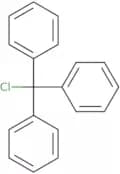
Formula:C7H3Cl3OPurity:Min. 95%Color and Shape:PowderMolecular weight:209.46 g/molTrityl chloride resin
CAS:Trityl chloride resin is a chemical compound that is used as a model system for the study of trifluoroacetic acid and its reactions. Trityl chloride resin is insoluble in water and has been used as a reaction solution for transfer reactions. It has been shown to be an effective ligand for many types of receptors, with binding constants ranging from 10 M-1 to 10 M-10. Trityl chloride resin can also be chiral, which means that it may exist in two forms that are mirror images of each other. The physiological effects of this compound are not well understood, but it has been shown to have an effect on coordination geometry.
Color and Shape:PowderRef: 3D-FT29918
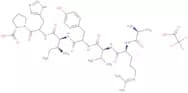
Discontinued productAngiotensin A (1-7) trifluoroacetate
CAS:Endogenous heptapetide which causes vasodilation and has anti-hypertensive properties.
Formula:C40H62N12O9•(C2HF3O2)xPurity:Min. 95%Color and Shape:PowderMolecular weight:855 g/molAmmonium Undecafluorohexanoate
CAS:Undecafluorohexanoic acid is a perfluoroalkyl carboxylic acid that has been shown to disrupt steroidogenesis in vitro. It may be able to inhibit the transport of cholesterol, fats, and other lipids in cells, which causes disruption in steroidogenesis. This compound also has anti-cancer properties due to its ability to induce apoptosis and arrest cancer cell proliferation. Undecafluorohexanoic acid may also have developmental effects on animals because it can bind to estrogen receptors and disrupt the normal process of estrogen-mediated signaling pathways.
Formula:C6H4F11NO2Purity:Min. 95%Molecular weight:331.08 g/molRef: 3D-FA79593
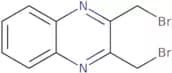
Discontinued product2,3-Bis(bromomethyl)quinoxaline
CAS:2,3-Bis(bromomethyl)quinoxaline is a nitrogenous heterocyclic compound that has a coordination geometry of square planar. It has been used as an inhibitor for the protein p21 and the nucleophile in palladium complexes. 2,3-Bis(bromomethyl)quinoxaline is also a model system for studying reaction mechanisms and chemical structures. The electron density map of the compound was obtained by X-ray crystal structure analysis. The reaction mechanism of this molecule is proposed to be through a chelate ring cross-coupling process.
Formula:C10H8Br2N2Purity:Min. 95%Color and Shape:Brown PowderMolecular weight:315.99 g/molRef: 3D-FB04248
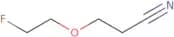
Discontinued product3-(2-Fluoroethoxy)Propanenitrile
CAS:3-(2-Fluoroethoxy)Propanenitrile is a chemical with toxic properties. It is classified as a fluoroacetic acid and has been used in the production of other chemicals. Fluoroacetic acid is toxic to humans, showing signs of skin irritation, respiratory tract irritation, and kidney damage. 3-(2-Fluoroethoxy)Propanenitrile is not found naturally and has been sponsored by many companies.
Formula:C5H8FNOPurity:Min. 95%Molecular weight:117.12 g/molRef: 3D-FF80270
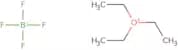
Discontinued productTriethyloxonium tetrafluoroborate
CAS:Triethyloxonium tetrafluoroborate is an antimicrobial agent that inhibits the transfer of electrons from one molecule to another. It has been shown to be effective against methicillin-resistant Staphylococcus aureus and Mycobacterium tuberculosis. Triethyloxonium tetrafluoroborate binds to the bacterial enzyme, Jak1, which is involved in the formation of cytokines and interleukins. This binding inhibits the production of these molecules, leading to cell death by apoptosis. The use of triethyloxonium tetrafluoroborate as a research tool has facilitated its discovery as a potential anti-inflammatory drug for autoimmune diseases such as type 1 diabetes mellitus and rheumatoid arthritis. Triethyloxonium tetrafluoroborate can be used to inhibit amide synthesis, which may have applications in the study of carbohydrate chemistry and nitrogen atoms in biological systems. This compound has also been used
Formula:C6H15BF4OPurity:Min. 95%Color and Shape:PowderMolecular weight:189.99 g/mol