Organic Halides
Subcategories of "Organic Halides"
Found 20442 products of "Organic Halides"
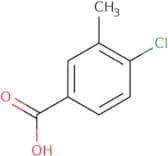
4-Chloro-3-methylbenzoic acid
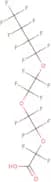
CAS:4-Chloro-3-methylbenzoic acid is a white crystalline solid that is soluble in water and alcohol. It has a melting point of 247°C and a boiling point of 305°C. This compound is used as an intermediate for the production of dyes and pharmaceuticals, such as anti-inflammatory drugs. 4-Chloro-3-methylbenzoic acid has been shown to be an inhibitor of DNA synthesis, RNA synthesis, and protein synthesis in bacteria. In addition, this compound inhibits the growth of Mycobacterium tuberculosis by inhibiting the metabolic pathways necessary for cell proliferation. 4-Chloro-3-methylbenzoic acid also has been shown to inhibit the growth of other bacteria such as Staphylococcus aureus, Escherichia coli, Streptococcus pyogenes, and Pseudomonas aeruginosa.Formula:C8H7ClO2Purity:Min. 95%Color and Shape:PowderMolecular weight:170.59 g/molPerfluoro-3,6,9-trioxatridecanoic acid
CAS:Perfluoro-3,6,9-trioxatridecanoic acid (PFOA) is a fluorinated chemical that is used in the production of zirconium oxide and other metal halides. It is processable, luminescent, and has a constant ligand. PFOA can be toxic to humans and animals through oral exposure or inhalation. PFOA may be bioaccumulated in humans and animals due to its hydrophobicity. It also has been shown to cause adverse effects on the liver and thyroid gland in rats. This chemical may have carcinogenic properties as it was found to induce tumor formation in mice following subcutaneous injection. PFOA has been shown to have toxic effects on cells grown in culture at concentrations greater than 10 μM.Formula:C10HF19O5Purity:Min. 95%Color and Shape:LiquidMolecular weight:562.08 g/molNesfatin-1 (rat) trifluoroacetate salt
CAS:Please enquire for more information about Nesfatin-1 (rat) trifluoroacetate salt including the price, delivery time and more detailed product information at the technical inquiry form on this pageFormula:C424H684N116O136Purity:Min. 95%Molecular weight:9,582.67 g/mol3-Phenylpropionyl chloride
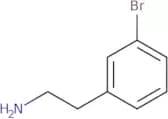
CAS:3-Phenylpropionyl chloride is an acylating agent with antimicrobial properties. It is used as a precursor in the synthesis of many pharmaceuticals, such as amines and cyclohexane derivatives. 3-Phenylpropionyl chloride is a reactive compound that can undergo an acylation reaction with nucleophilic compounds to form an n-oxide. This reaction can be catalyzed by metal ions or bases. 3-Phenylpropionyl chloride has inhibitory properties against enzymes, such as aminoglycoside acetyltransferase and carbonyl reductase. It also has shown antitumor activity in cancer cells and metabolic disorders in the liver due to its ability to inhibit glycosidic bond formation.Formula:C9H9ClOPurity:Min. 95%Color and Shape:LiquidMolecular weight:168.62 g/mol2-(3-Bromophenyl)ethanamine
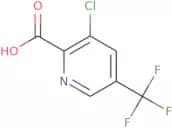
CAS:Controlled Product2-(3-Bromophenyl)ethanamine is an affinity ligand for the 5-hydroxytryptamine receptor 7 (5-HT7). It has a high affinity for the 5-HT7 receptor and can also be used to study other serotonin receptors. This compound has been shown to bind to the 5-HT7 with a Kd of 0.3 nM and no significant binding at other serotonin receptors. It was found that 2-(3-bromophenyl)ethanamine does not inhibit the uptake of serotonin from synaptosomal preparations, but does inhibit the uptake of serotonin from cerebrospinal fluid. These results were confirmed in vitro using radioligand binding assays and autoradiography, demonstrating that 2-(3-bromophenyl)ethanamine binds selectively to the 5-HT7 receptor.Formula:C8H10BrNPurity:Min. 95%Color and Shape:Colorless PowderMolecular weight:200.08 g/mol3-Chloro-5-(trifluoromethyl)pyridine-2-carboxylic acid
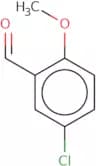
CAS:The compound 3-Chloro-5-(trifluoromethyl)pyridine-2-carboxylic acid is a synthetic intermediate that has been used in the synthesis of amides with high analytical quality. It is also an important reagent for the synthesis of many pharmaceuticals and agrochemicals. In addition, 3-chloro-5-(trifluoromethyl)pyridine-2-carboxylic acid has been shown to have dose dependent phytotoxic effects and causes plant growth inhibition.Formula:C7H3ClF3NO2Purity:Min. 95%Color and Shape:White PowderMolecular weight:225.55 g/mol5-Chloro-2-methoxybenzaldehyde
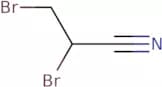
CAS:5-Chloro-2-methoxybenzaldehyde is a potent inhibitor of the bacterial enzyme acetylcholinesterase. It has been shown to have an interaction with biomolecules, such as chalcones, and can be used in the manufacture of antibacterial agents. 5-Chloro-2-methoxybenzaldehyde has been found to have potent inhibitory activity against organocatalytic aldehydes and atypical aldehydes and can be used as an active ingredient in the synthesis of novel compounds with antibacterial activity.Formula:C8H7ClO2Purity:Min. 95%Color and Shape:PowderMolecular weight:170.59 g/mol2,3-Dibromopropionitrile
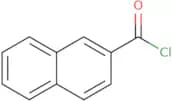
CAS:2,3-Dibromopropionitrile is a chiral microextraction semivolatile synthetic that is used as a disinfectant. It is also used in the synthesis of quinoline derivatives and as an intermediate for the synthesis of other chemicals such as cancer drugs. The low efficiency of this compound has been attributed to its low reactivity with potassium t-butoxide. 2,3-Dibromopropionitrile has been shown to cause bladder cancer in rats and reduce cancer cell proliferation. As a result, it may be useful in the treatment of bladder cancer and other cancers. This compound also has fungicidal activity against some fungal diseases.Formula:C3H3Br2NPurity:Min. 95%Color and Shape:Colorless Clear LiquidMolecular weight:212.87 g/mol2-Naphthoyl chloride
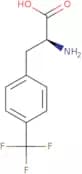
CAS:2-Naphthoyl chloride is an enantiomer of the chiral compound naphthalene. It is a redox potential and a fatty acid, which can be detected using the detection sensitivity. The 2-naphthoyl chloride has been used to determine the stereoselectivity of reactions with hydroxyl groups and carbonyl groups in organic syntheses. The hydroxide solution was added to hydrolyze the esterification product from 2-naphthoyl chloride and naphthalene to produce a mixture of products. This reactant also reacts with hydrogen peroxide in a flow system to form acetaldehyde.Formula:C11H7ClOPurity:Min. 95%Color and Shape:White/Off-White SolidMolecular weight:190.63 g/mol4-(Trifluoromethyl)-L-phenylalanine
CAS:4-(Trifluoromethyl)-L-phenylalanine (4-TFMP) is an acyltransferase inhibitor that prevents the formation of fatty acids by inhibiting the enzyme ketoreductase. 4-TFMP has been shown to inhibit protein synthesis in myeloid leukemia cells and to have a cytotoxic effect on cancer cells. It also inhibits the growth of bacteria such as Salmonella enterica and Mycobacterium tuberculosis. In addition, 4-TFMP is used to treat infectious diseases such as tuberculosis, as well as metabolic disorders and some types of enzyme deficiencies. 4-TFMP is stereoselective and binds only to one type of acyltransferase, which is not present in humans.
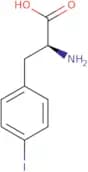
Formula:C10H10F3NO2Purity:Min. 95%Color and Shape:PowderMolecular weight:233.19 g/mol4-Iodo-L-phenylalanine
CAS:4-Iodo-L-phenylalanine is an unlabeled amino acid that has been shown to inhibit the protein synthesis of cancer cells. It binds to the thrombin receptor and inhibits the activation of proteases, thereby inhibiting cancer cell growth. 4-Iodo-L-phenylalanine also inhibits translation by binding to the ribosome during the translation process and binding to the hydroxyl group on a mRNA molecule during transcription. This inhibition leads to a decrease in protein synthesis and cell proliferation.Formula:C9H10INO2Purity:Min. 95%Color and Shape:White Off-White PowderMolecular weight:291.09 g/molNile blue chloride
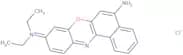
CAS:Nile blue chloride is a dye used in wastewater treatment. It can be used to measure the dry weight of a sample of material. Nile blue chloride has been shown to be a reliable fluorescent probe for bacterial detection in cell culture and tissue culture, as well as for the detection of infectious diseases. This compound has also been shown to have an effect on the oxygen transport in living cells, which may be due to its high affinity for fatty acids.
Formula:C20H20N3OClPurity:Min. 95%Color and Shape:PowderMolecular weight:353.85 g/mol1-Biotinylamino-3,6,9-trioxaundecane-11-bromide
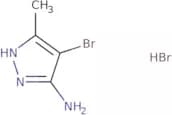
CAS:1-Biotinylamino-3,6,9-trioxaundecane-11-bromide is a high quality reagent that is used in research and development. It has a CAS number of 1041766-91-9. 1-Biotinylamino-3,6,9-trioxaundecane-11-bromide is a versatile building block that can be used as an intermediate or scaffold in chemical reactions. It is also a useful reaction component for the synthesis of fine chemicals.Formula:C18H32BrN3O5SPurity:Min. 95%Color and Shape:PowderMolecular weight:482.43 g/mol5-Amino-4-bromo-3-methylpyrazole hydrobromide
CAS:5-Amino-4-bromo-3-methylpyrazole hydrobromide is an intermediate in the synthesis of a variety of compounds. It is also a building block for the synthesis of heterocycles, such as pyrazoles, indazoles, benzoxazoles, and benzothiazoles. 5-Amino-4-bromo-3-methylpyrazole hydrobromide can be used as a reagent to synthesize pharmaceuticals and other useful compounds. 5-Amino-4-bromo-3-methylpyrazole hydrobromide is a versatile building block that can be used in the synthesis of many different types of compounds. This compound has been shown to react with various groups on organic molecules to form new chemical structures.Formula:C4H6BrN3•BrHPurity:Min. 95%Color and Shape:PowderMolecular weight:256.93 g/mol4-[2-(3,4-Dimethoxyphenyl)-1,2-dibromoethyl]-1,2-dimethoxybenzene
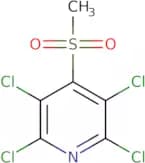
CAS:4-[2-(3,4-Dimethoxyphenyl)-1,2-dibromoethyl]-1,2-dimethoxybenzene is a high quality chemical that is an intermediate for the synthesis of other compounds. It has been used as a reagent in the synthesis of complex compounds and has been shown to be useful for the production of fine chemicals. This compound can also be used as a scaffold or building block in organic chemistry. The versatility of 4-[2-(3,4-Dimethoxyphenyl)-1,2-dibromoethyl]-1,2-dimethoxybenzene makes it an important reaction component in organic chemistry and research chemicals.Formula:C18H20Br2O4Purity:Min. 95%Molecular weight:460.16 g/mol2,3,5,6-Tetrachloro-4-(methylsulfonyl)pyridine
CAS:2,3,5,6-Tetrachloro-4-(methylsulfonyl)pyridine is a n-oxide with antimicrobial activity. It is used in horticultural applications for the control of microbial infection on plants. 2,3,5,6-Tetrachloro-4-(methylsulfonyl)pyridine has been shown to have high bactericidal activity against gram positive and gram negative bacteria. It has also been shown to be effective against fungi and some viruses. This compound is used as an additive in glycol ethers and gel pores. It is also used as a biocide in the form of trifluoroacetic acid or benzalkonium chloride.END>Formula:C6H3Cl4NO2SPurity:Min. 95%Color and Shape:White To Light (Or Pale) Yellow SolidMolecular weight:294.97 g/molL-Valinamide hydrochloride
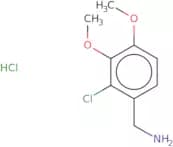
CAS:L-Valinamide hydrochloride is an amide with a reactive group. It binds to the CB2 receptor and the CB1 receptor, which are found in the brain and immune system. L-Valinamide hydrochloride has been shown to have anti-inflammatory effects in animal models of inflammatory diseases, such as rheumatoid arthritis. L-Valinamide hydrochloride has also been shown to be a synthetic cannabinoid that inhibits pain transmission by binding to the same receptors as delta-9 tetrahydrocannabinol (THC), one of the active components of cannabis.Formula:C5H12N2O·HClColor and Shape:White Off-White PowderMolecular weight:152.62 g/mol2-Chloro-3,4-dimethoxybenzylamine HCl
CAS:2-Chloro-3,4-dimethoxybenzylamine HCl is a fine chemical that can be used as a building block to synthesize new compounds. It is also a useful intermediate in the production of pharmaceuticals and other organic chemicals. 2-Chloro-3,4-dimethoxybenzylamine HCl has been used as a reaction component for the synthesis of various complex compounds. This compound has been shown to have high purity and quality.Formula:C9H12ClNO2·HClPurity:Min. 95%Molecular weight:238.11 g/molMethyl 2-fluoro-6-hydroxybenzoate
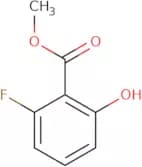
CAS:Methyl 2-fluoro-6-hydroxybenzoate is a colorless liquid that is soluble in water. It has a sulfur atom and two hydroxyl groups at the 2 and 6 positions on the benzene ring. This compound is an isotopologue of methyl 2,6-dihydroxybenzoate, which can be distinguished by deuterium labeling. At equilibrium, the tautomers are found in equal proportions. The hydrogen bond between the hydroxyl group at position 6 and the methyl group at position 2 plays a large role in determining the relative abundance of these tautomers. The equilibrium constant for this reaction is 1.01 x 10^9. Methyl 2-fluoro-6-hydroxybenzoate has been shown to have an isotope effect on its intermolecular interactions with other molecules, such as acceptors and donors, in solution.END>>
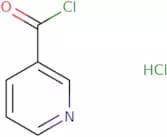
Formula:C8H7FO3Purity:Min. 95%Molecular weight:170.14 g/molNicotinoyl chloride hydrochloride
CAS:Nicotinoyl chloride hydrochloride is a coordination complex with a hydroxyl group. It is an antimicrobial agent that inhibits the growth of bacteria by binding to the adenosine A3 receptor and inhibiting adenylate cyclase activity. Nicotinoyl chloride hydrochloride has been shown to inhibit the proliferation of muscle cells in vitro and may be used as an anti-inflammatory agent in pharmaceutical preparations. This compound also has proton transport properties, which are related to its amide group. The nicotinic acid moiety of nicotinoyl chloride hydrochloride is metabolized by fatty acid synthase, which produces fatty acids that can be used as a source of energy by muscle cells. Nicotinoyl chloride hydrochloride also has growth factor activity and can modulate brain functions such as memory and learning.Formula:C6H5Cl2NOPurity:Min. 95%Color and Shape:PowderMolecular weight:178.02 g/mol



![4-[2-(3,4-Dimethoxyphenyl)-1,2-dibromoethyl]-1,2-dimethoxybenzene](/_next/image/?url=https%3A%2Fstatic.cymitquimica.com%2Fproducts%2F3D%2Fthumb-webp%2FFD66282.webp&w=3840&q=75)