


Organic Halides
Subcategories of "Organic Halides"
Found 20442 products of "Organic Halides"
4-Bromo-2-pyrrolecarboxaldehyde
CAS:4-Bromo-2-pyrrolecarboxaldehyde is a synthetic chemical that is used as an antifungal agent. It inhibits the growth of filamentous fungi by binding to their pyrrole rings and inhibiting the synthesis of proteins. 4-Bromo-2-pyrrolecarboxaldehyde has shown in vitro antifungal activity against isolates of Candida albicans, Aspergillus niger, and Fusarium oxysporum. This compound also has substitutions at positions 1 and 2 of the pyrrole ring, which are thought to be responsible for its inhibitory properties. 4-Bromo-2-pyrrolecarboxaldehyde is soluble in organic solvents such as acetone and chloroform.Formula:C5H4BrNOPurity:Min. 95%Color and Shape:PowderMolecular weight:174 g/mol2-Amino-5-(trifluoromethoxy)benzoic acid
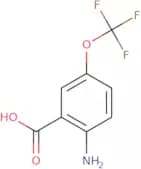
CAS:Please enquire for more information about 2-Amino-5-(trifluoromethoxy)benzoic acid including the price, delivery time and more detailed product information at the technical inquiry form on this pageFormula:C8H6F3NO3Purity:Min. 95%Molecular weight:221.13 g/mol(1R,3S)-3-Aminocyclopentanol hydrochloride
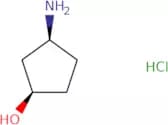
CAS:Intermediate in the synthesis of bictegravirFormula:C5H12ClNOPurity:Min. 95%Molecular weight:137.61 g/molC5a Anaphylatoxin (37-53) (human) trifluoroacetate salt
CAS:Please enquire for more information about C5a Anaphylatoxin (37-53) (human) trifluoroacetate salt including the price, delivery time and more detailed product information at the technical inquiry form on this pageFormula:C82H141N27O22SPurity:Min. 95%Molecular weight:1,889.23 g/molHepcidin-24 (human) trifluoroacetate salt
Please enquire for more information about Hepcidin-24 (human) trifluoroacetate salt including the price, delivery time and more detailed product information at the technical inquiry form on this pageFormula:C109H165N33O28S9Purity:Min. 95%Molecular weight:2,674.28 g/molUrocortin (rat) trifluoroacetate salt
CAS:Trifluoroacetate saltFormula:C206H338N62O64Purity:Min. 95%Molecular weight:4,707.27 g/mol4-Bromo-6-chloropyridazin-3(2H)-one
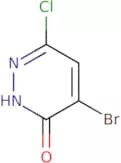
CAS:4-Bromo-6-chloropyridazin-3(2H)-one is a glycosylation inhibitor and nucleoside analog that can be used in the treatment of cancer. It inhibits the synthesis of deoxyribonucleotides from ribonucleotides by binding to the enzyme ribonucleotide reductase, which catalyzes the conversion of ribonucleotides to deoxynucleotides. 4-Bromo-6-chloropyridazin-3(2H)-one has been shown to inhibit glycosylation in rat liver cells. This drug also inhibits acetone and glycosidation, which are reactions that produce glucose from amino acids or carbohydrates. The crystallization process is also inhibited by this drug because it prevents the formation of nucleoside crystals, which are involved in DNA replication and cell division.
Formula:C4H2BrClN2OPurity:Min. 95%Molecular weight:209.43 g/mol(alphaR)-alpha-[[[2-(4-Nitrophenyl)ethyl]amino]methyl]benzenemethanol hydrochloride
CAS:Intermediate in the synthesis of mirabegron
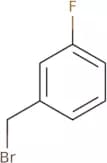
Formula:C16H18N2O3·HClPurity:Min. 95%Molecular weight:322.79 g/mol3-Fluorobenzyl bromide
CAS:3-Fluorobenzyl bromide is a fluorinated benzyl derivative that can be used as a fluorescent probe for the study of cellular uptake and metabolism. 3-Fluorobenzyl bromide has been shown to have potent inhibitory activity against the growth of cancer cells in culture. It has also been shown to reduce ischemia reperfusion injury in cardiac tissue. The pharmacokinetic properties of 3-fluorobenzyl bromide have been studied in detail, revealing a rapid uptake into cells and elimination by renal excretion. This compound also inhibits the growth of P. aeruginosa in an animal model, with no effect on other bacterial strains or mammalian cells.Purity:Min. 95%ACTH (3-24) (human, bovine, rat) trifluoroacetate salt
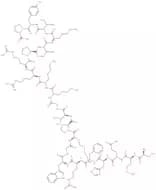
CAS:Please enquire for more information about ACTH (3-24) (human, bovine, rat) trifluoroacetate salt including the price, delivery time and more detailed product information at the technical inquiry form on this pageFormula:C124H196N38O27SPurity:Min. 95%Molecular weight:2,683.19 g/molC-Type Natriuretic Peptide (1-53) (human) trifluoroacetate salt
CAS:Trifluoroacetate saltFormula:C251H417N81O71S3Purity:Min. 95%Molecular weight:5,801.7 g/molH-Ala-Ala-pNA hydrochloride salt
CAS:Please enquire for more information about H-Ala-Ala-pNA hydrochloride salt including the price, delivery time and more detailed product information at the technical inquiry form on this page
Formula:C12H16N4O4Purity:Min. 95%Molecular weight:280.28 g/molMART-1 (27-35) (human) trifluoroacetate salt
CAS:Controlled ProductPlease enquire for more information about MART-1 (27-35) (human) trifluoroacetate salt including the price, delivery time and more detailed product information at the technical inquiry form on this pageFormula:C37H67N9O11Purity:Min. 95%Molecular weight:813.98 g/molTris[4-(trifluoromethyl)phenyl]phosphine
CAS:Tris[4-(trifluoromethyl)phenyl]phosphine (TFPP) is a diphosphine ligand that binds to metal ions in the active site of enzymes. It has been shown to bind to methylenecyclopropanes, which are intermediates in the reaction of Grignard reagents with quinoline derivatives. TFPP is also able to form complexes with phosphines and other ligands, such as borane. The crystal structures of TFPP have been determined by x-ray diffraction studies. These structures show that TFPP is monosubstituted with four trifluoromethyl groups and one phosphorus atom.br>br> TFPP has also been shown to be an effective catalyst for reactions involving amides, such as hydroamination and acylation reactions. In addition, it was found that TFPP inhibits the growth of bacteria by inhibitingFormula:C21H12F9PPurity:Min. 95%Color and Shape:SolidMolecular weight:466.28 g/molLIP1 (human) trifluoroacetate salt
Please enquire for more information about LIP1 (human) trifluoroacetate salt including the price, delivery time and more detailed product information at the technical inquiry form on this pageFormula:C133H229N45O37Purity:Min. 95%Molecular weight:3,050.52 g/molH-Lys-Ala-Pro-OH hydrochloride salt
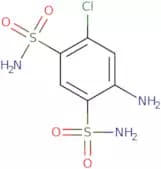
Please enquire for more information about H-Lys-Ala-Pro-OH hydrochloride salt including the price, delivery time and more detailed product information at the technical inquiry form on this pageFormula:C14H26N4O4Purity:Min. 95%Molecular weight:314.38 g/mol4-Amino-6-chloro-1,3-benzenedisulfonamide
CAS:4-Amino-6-chloro-1,3-benzenedisulfonamide is a natural substance that has been used in Chinese medicine preparations for the treatment of cardiac problems. It belongs to the class of organic compounds called benzenedisulfonamides. 4-Amino-6-chloro-1,3-benzenedisulfonamide is produced by the bacterial enzyme aminase from amino acid and benzoic acid. The adsorption mechanism of 4-Amino-6-chloro-1,3-benzenedisulfonamide is not fully understood, but it is believed that the benzyl groups are key players in this process. The high affinity of 4-Amino-6-chloro1,3 benzenedisulfonamide to proteins may be due to its ability to form hydrogen bonds with protein side chains, such as serine or threonine residues. 4 AminoFormula:C6H8ClN3O4S2Purity:Min. 95%Color and Shape:White To Light Brown SolidMolecular weight:285.73 g/mol2-[(3,5,6-Trichloro-2-pyridinyl)oxy]acetic acid
CAS:Carbaryl is a broad-spectrum insecticide that has been used to control pests in homes, gardens, and agricultural fields. It can be found in many products for use around the home, including flea collars and ant traps. Carbaryl is absorbed by plants through their leaves and roots and can affect photosynthetic activity. Carbaryl also affects plant metabolism by inhibiting proximal tubule function, which leads to an increase in urea nitrogen and urine production. Carbaryl can be toxic to humans when ingested or inhaled. The toxicity of carbaryl depends on its route of exposure (oral, inhalation, or skin). Carbaryl is metabolized through a number of metabolic reactions that include oxidation by cytochrome P450 enzymes, reduction by glutathione reductase, or conjugation with glucuronic acid.Formula:C7H4Cl3NO3Purity:Min. 95%Color and Shape:PowderMolecular weight:256.47 g/molTriphenylsulfonium chloride
CAS:Triphenylsulfonium chloride is a cross-linking agent that is used in the textile industry as a reactive dye and in plant physiology. It reacts with hydroxyl groups to form sulfonic acid esters. Triphenylsulfonium chloride also reacts with sodium salts, which yield an acid, and it has been used as a molecule for testing reactions involving radiation. This chemical can be activated by light or heat, forming a reactive cationic polymerization that is used in wastewater treatment.Formula:C18H15ClSPurity:Min. 95%Color and Shape:White PowderMolecular weight:298.83 g/mol2-Chloro-6-methoxypyridine
CAS:2-Chloro-6-methoxypyridine (2CMP) is a potent antagonist that binds to copper chloride, inhibiting its ability to activate aryl chlorides. This chemical has been shown to have anti-angiogenic effects in human cancer cells and can be used for the treatment of cancer. 2CMP has also been shown to be effective at blocking angiogenesis in mice with breast cancer. 2CMP is synthesized through an asymmetric synthesis process, which involves the use of a dipole and molecular docking analysis.Formula:C6H6ClNOPurity:Min. 95%Color and Shape:Clear LiquidMolecular weight:143.57 g/mol




![(alphaR)-alpha-[[[2-(4-Nitrophenyl)ethyl]amino]methyl]benzenemethanol hydrochloride](/_next/image/?url=https%3A%2Fstatic.cymitquimica.com%2Fproducts%2F3D%2Fthumb-webp%2FFN156825.webp&w=3840&q=75)


![Tris[4-(trifluoromethyl)phenyl]phosphine](/_next/image/?url=https%3A%2Fstatic.cymitquimica.com%2Fproducts%2F3D%2Fthumb-webp%2FFT100710.webp&w=3840&q=75)

![2-[(3,5,6-Trichloro-2-pyridinyl)oxy]acetic acid](/_next/image/?url=https%3A%2Fstatic.cymitquimica.com%2Fproducts%2F3D%2Fthumb-webp%2FFT28420.webp&w=3840&q=75)

