Organic Halides
Subcategories of "Organic Halides"
Found 20442 products of "Organic Halides"
1-(4-Bromophenyl)ethylamine
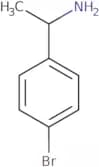
CAS:1-(4-Bromophenyl)ethylamine is a hdac inhibitor. This drug has been shown to be an amide, which is a class of chemical compounds that are the basis of many pharmaceuticals. It has been shown to have degenerative diseases, such as Alzheimer's disease and Parkinson's disease, and may also have an effect on amines. 1-(4-Bromophenyl)ethylamine inhibits hydrogen chloride and enantiomer with inflammatory diseases. It also has antiinflammatory activity, which may be due to its ability to inhibit acid molecules and biological studies.Formula:C8H10BrNPurity:Min. 95%Color and Shape:Colorless Clear LiquidMolecular weight:200.08 g/mol2-Chloro-3,4-dimethoxybenzylamine HCl
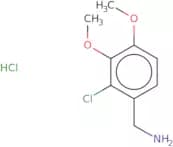
CAS:2-Chloro-3,4-dimethoxybenzylamine HCl is a fine chemical that can be used as a building block to synthesize new compounds. It is also a useful intermediate in the production of pharmaceuticals and other organic chemicals. 2-Chloro-3,4-dimethoxybenzylamine HCl has been used as a reaction component for the synthesis of various complex compounds. This compound has been shown to have high purity and quality.Formula:C9H12ClNO2·HClPurity:Min. 95%Molecular weight:238.11 g/molNesfatin-1 (mouse) trifluoroacetate salt
CAS:Please enquire for more information about Nesfatin-1 (mouse) trifluoroacetate salt including the price, delivery time and more detailed product information at the technical inquiry form on this pageFormula:C424H683N117O137Purity:Min. 95%Molecular weight:9,611.67 g/mol4-Fluoro-L-histidine
CAS:4-Fluoro-L-histidine is a fluorinated analog of L-histidine that functions as an inhibitor of protein synthesis by the virus. 4-Fluoro-L-histidine was found to be more potent than L-histidine in inhibiting murine sarcoma virus (MSV) replication and cytopathogenicity in vitro. This molecule has been shown to be a pentadecapeptide, which is comprised of five amino acids. The conformational properties of 4FLH are similar to those of histidine, and it can act as a substrate for enzymes involved in protein synthesis. 4FLH is also available with a deuterium isotope effect, which may affect its biological activity.Purity:Min. 95%Hoechst 33342
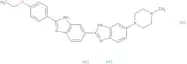
CAS:2'-(4-Ethoxyphenyl)-5-(4-methyl-1-piperazinyl)-2,5'-bi-1H-benzimidazole trihydrochloride (EPMB) is a DNA binding agent that is used in tumor detection and research into apoptosis. It has been shown to inhibit the activity of p-glycoprotein, which is an efflux pump protein, and Bcl-2 protein. EPMB has also been shown to cause apoptosis in human squamous cell carcinoma cells in a concentration dependent manner. This compound has shown potential as a treatment for cancer because it inhibits the ability of cancer cells to proliferate by binding to the NMDA receptor.
Formula:C27H28N6O·3HCl·xH2OPurity:Min. 95%Color and Shape:Yellow PowderMolecular weight:561.93 g/mol1-Ethyl-2-methyl-5,6-dichlorobenzimidazole
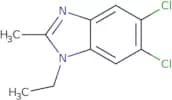
CAS:1-Ethyl-2-methyl-5,6-dichlorobenzimidazole is an organic compound that is a salt of the thiazolium cation with the ammonium anion. It has been used for the synthesis of dyes and other organic compounds. 1-Ethyl-2-methyl-5,6-dichlorobenzimidazole has also been detected in a number of plant species as a natural product or metabolite. The compound is found in plants from the families Araceae, Chenopodiaceae, Fabaceae, and Solanaceae. In terms of its physical properties, it is insoluble in water and soluble in acetone.Formula:C10H10Cl2N2Purity:Min. 95%Molecular weight:229.11 g/mol5-Fluoro-3-hydrazonoindolin-2-one
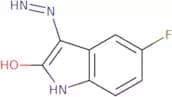
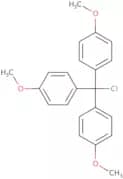
CAS:5-Fluoro-3-hydrazonoindolin-2-one is an organic compound that can be synthesized using ethyl acetate as a solvent and formylation with malate. This process is scalable and offers high yields. The reaction time for this synthesis is relatively short, making it ideal for industrialization. 5-Fluoro-3-hydrazonoindolin-2-one can also be used to synthesize sunitinib, which is an experimental drug used to treat cancer. Sunitinib has been shown to inhibit the growth of cancer cells by interfering with the activity of proteins involved in cell proliferation, cell cycle progression, and cellular differentiation.Formula:C8H6FN3OPurity:Min. 95%Color and Shape:SolidMolecular weight:179.15 g/mol4,4',4''-Trimethoxytrityl chloride
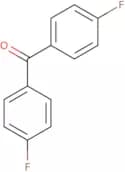
CAS:4,4',4''-Trimethoxytrityl chloride is a carbonyl compound that reacts with alkenyloxy groups to form alkaloids. It also reacts with halogen atoms to form halogenated products. 4,4',4''-Trimethoxytrityl chloride is used in the synthesis of ecteinascidins and acyl group compounds. This chemical can be used in the synthesis of alkaloids and alkenyloxy compounds. It has a reactive carbon atom that can be substituted by other organic groups.Formula:C22H21ClO3Purity:Min. 95%Color and Shape:Off-White PowderMolecular weight:368.85 g/mol4,4'-Difluorobenzophenone
CAS:4,4'-Difluorobenzophenone is a nucleophile that can be synthesized by the borane-tetrahydrofuran complex reaction and the Suzuki coupling reaction. It has been shown to react with diazonium salt in a Friedel-Crafts reaction and with acylation agents. This compound is also used as a model system for studying light emission reactions. 4,4'-Difluorobenzophenone reacts with hydrogen fluoride or sodium carbonate to form diphenyl ether, which is also a light emitter. Phase liquid chromatography is an effective technique for separating compounds. This compound can be detected using UV light at wavelengths of 284 nm or 254 nm.Formula:C13H8F2OPurity:Min. 95%Color and Shape:PowderMolecular weight:218.2 g/mol5,6,12,13-Tetrachloroanthra[2,1,9-def:6,5,10-d'e'f']diisochromene-1,3,8,10-tetraone
CAS:5,6,12,13-Tetrachloroanthra[2,1,9-def:6,5,10-d'e'f']diisochromene-1,3,8,10-tetraone is a polyester that is chemically related to the anthracenes. It can be used as a precursor for the synthesis of other polymers. This compound has been shown to induce apoptosis in cancer cells and can be used as an anticancer agent. 5,6,12,13-Tetrachloroanthra[2,1,9-def:6,5,10-d'e'f']diisochromene-1,3,8,10-tetraone has also been shown to have a fluorescence property that can be analyzed using an electron spin resonance spectroscopy technique.
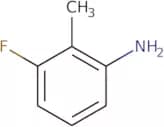
Formula:C24H4Cl4O6Purity:Min. 95%Color and Shape:Red To Orange SolidMolecular weight:530.1 g/mol3-Fluoro-2-methylaniline
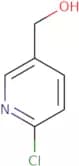
CAS:3-Fluoro-2-methylaniline is a reactive, electron-deficient compound that can react with cytochromes. It has been shown to bind to the microsomal preparations of rat liver and inhibit the interaction of 3-fluoro-2-methylaniline with cytochrome P450 system by stereoselective interactions. The molecular modelling studies revealed that this drug inhibits the reaction intermediate between cocrystallized benzoate and 3-fluoro-2-methylaniline.Formula:C7H8FNPurity:Min. 95%Color and Shape:Yellow To Dark Red LiquidMolecular weight:125.14 g/mol2-Chloro-5-hydroxymethylpyridine
CAS:2-Chloro-5-hydroxymethylpyridine is a metabolite of the active substance 2-chloro-5,6-dihydroxymethylpyridine (mk-0674), which has been shown to inhibit cytochrome P450 enzymes. It is found in urine samples from patients treated with mk-0674 and can be used to monitor the efficacy of treatment. The biochemical properties of 2-chloro-5,6-dihydroxymethylpyridine have been studied in yeast cells and it has been shown that this compound is glucuronidated and excreted as a conjugate with glycine. The yeast strain Saccharomyces cerevisiae was used for these studies.Formula:C6H6ClNOPurity:Min. 95%Color and Shape:Off-White To Light Brown SolidMolecular weight:143.57 g/mol7-Chloroquinoxaline
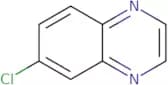
CAS:7-Chloroquinoxaline is a nucleophilic compound that can be synthesized by reductive chlorination of 7-chloroquinoline. 7-Chloroquinoxaline has been shown to have anticancer activity in vitro, as well as the ability to inhibit the proliferation of human breast cancer cells (MCF-7) in culture. It also inhibits glyoxalase I and II, which are enzymes that catalyze the conversion of glyoxal to D-lactate and H2O2. This inhibition may be due to its ability to react with the C=N bond at carbon 2 of dimethylformamide (DMF), forming a covalent adduct with DMF and an anticancer agent such as methotrexate or 5-fluorouracil. The formation of this conjugate would result in a decrease in DMF concentration, leading to decreased production of H2O2 and increased levels of D-l
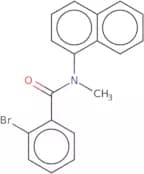
Formula:C8H5ClN2Purity:Min. 95%Molecular weight:164.59 g/molN-Methyl-N-(1-naphthyl)-2-bromobenzamide
CAS:N-Methyl-N-(1-naphthyl)-2-bromobenzamide is a high quality reagent that is used as a complex compound. It has CAS No. 74881-58-6 and it can be used as a useful intermediate, fine chemical or speciality chemical. N-Methyl-N-(1-naphthyl)-2-bromobenzamide is also a versatile building block that is used in reactions to synthesize other compounds.Formula:C18H14BrNOPurity:Min. 95%Molecular weight:340.21 g/mol4-Chloromethylbenzophenone
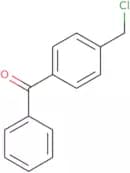
CAS:4-Chloromethylbenzophenone is a chemical compound that can be used as an efficacious pesticide. It is reactive and photodegrades in the environment. The compound has been shown to have a high toxicity to animals and humans, leading to dermatitis or phoma. 4-Chloromethylbenzophenone is also known as a chlorinated hydrocarbon and has been shown to cause bioaccumulation in the environment.
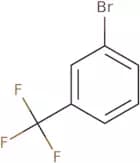
Formula:C14H11ClOPurity:Min. 95%Color and Shape:White to off-white solid.Molecular weight:230.69 g/mol3-Bromobenzotrifluoride
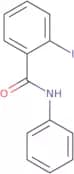
CAS:3-Bromobenzotrifluoride is a chemical reagent that is used to synthesize aryl halides. It can be used in the cross-coupling reaction of an aryl bromide with an organopalladium complex to form an aryl triflate. 3-Bromobenzotrifluoride has been shown to be stable when heated, making it a good choice for synthesis reactions. The use of 3-bromobenzotrifluoride and other halides in chemical reactions was first demonstrated by Alder Wright in 1843. 3-Bromobenzotrifluoride can be used to synthesize isoxazolidines from diazonium salts and isoxazolidines from dehydrating agents such as phosphorus pentoxide. Isolation yields are also high, with chloride being the most common impurity found in the product.Formula:C7H4BrF3Purity:Min. 95%Color and Shape:Clear LiquidMolecular weight:225.01 g/mol2-Iodo-N-phenylbenzamide
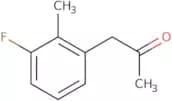
CAS:2-Iodo-N-phenylbenzamide is a palladium compound that inhibits bacterial growth by binding to DNA and preventing transcription. The drug binds to the DNA as a monomer, but also forms polymeric matrixes with other drugs. 2-Iodo-N-phenylbenzamide has been shown to have genotoxic effects on subtilis and methicillin resistant Staphylococcus aureus (MRSA) in vitro, which may be due to its ability to form crosslinks between adjacent strands of DNA. 2-Iodo-N-phenylbenzamide has been shown to be an effective anti-bacterial agent against MRSA, methicillin resistant coagulase negative staphylococci and erythromycin resistant strains of Streptococcus pyogenes.Formula:C13H10INOPurity:Min. 95%Molecular weight:323.13 g/mol3-Fluoro-2-methylphenylacetone
CAS:3-Fluoro-2-methylphenylacetone is a reaction component and reagent that is useful in the synthesis of complex compounds. 3-Fluoro-2-methylphenylacetone, also known as 2-fluoromethylbenzaldehyde, is a versatile building block that can be used to synthesize a wide variety of chemical compounds. It has been shown to be an excellent intermediate and building block for the synthesis of pharmaceuticals, pesticides, agrochemicals, specialty chemicals, and other organic compounds. 3-Fluoro-2-methylphenylacetone is a fine chemical that has CAS No. 1017060-34-2.
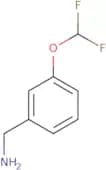
Formula:C10H11FOPurity:Min. 95%Molecular weight:166.19 g/mol3-(Difluoromethoxy)benzyl amine
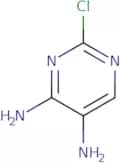
CAS:3-(Difluoromethoxy)benzyl amine is a high-quality reagent that is used as an intermediate in the synthesis of complex compounds. 3-(Difluoromethoxy)benzyl amine is also a useful building block for the synthesis of speciality chemicals and research chemicals. This compound can be used as a versatile building block, which can be used to synthesize different functional groups. 3-(Difluoromethoxy)benzyl amine is soluble in many organic solvents and has a boiling point of 193 °C.Formula:C8H9F2NOPurity:Min. 95%Molecular weight:173.16 g/mol2-Chloro-4,5-diaminopyrimidine
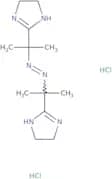
CAS:2-Chloro-4,5-diaminopyrimidine is a pyrimidine compound with the molecular formula CHClN. It can be synthesized by reacting glycine and phenol with piperidine in the presence of hydrochloric acid. 2-Chloro-4,5-diaminopyrimidine has a solubility of 1.2 g/100 mL in water and reacts with quinine to form a red solution. This product also reacts with proline to produce an orange solution that fluoresces green when exposed to UV light. 2-Chloro-4,5-diaminopyrimidine has been used as an intermediate in the synthesis of other compounds such as pyridoxal phosphate and cefixime.Formula:C4H5ClN4Purity:Min. 95%Color and Shape:PowderMolecular weight:144.56 g/mol1,2-Bis(2-(4,5-dihydro-1H-imidazol-2-yl)propan-2-yl)diazene dihydrochloride
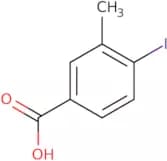
CAS:1,2-Bis(2-(4,5-dihydro-1H-imidazol-2-yl)propan-2-yl)diazene dihydrochloride is an analog of bis(pentafluorophenyl)diazene. It is a surfactant that can be used in micelles or as a solvent for amine reactions. It has been shown to cause death in mice and inhibit the growth of cells. The mechanism of this compound's effects is not fully understood but may involve the transfer of pentafluorophenyl groups from one molecule to another.Formula:C12H24Cl2N6Purity:Min. 95%Color and Shape:White PowderMolecular weight:323.26 g/mol4-Iodo-3-methylbenzoic acid
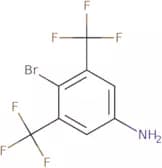
CAS:4-Iodo-3-methylbenzoic acid is a bifunctional phosphine that can be activated by phosphine gas. This compound has been shown to react with diethyl ethers and form a lanthanide phosphine complex. 4-Iodo-3-methylbenzoic acid also reacts with azides to form triazinylphosphines, which are used in fluorescence techniques. 4-Iodo-3-methylbenzoic acid has luminescent properties, which may be due to its ability to produce singlet oxygen when irradiated with visible light.Formula:C8H7IO2Purity:Min. 80%Color and Shape:PowderMolecular weight:262.04 g/mol4-Bromo-3,5-bis(trifluoromethyl)aniline
CAS:4-Bromo-3,5-bis(trifluoromethyl)aniline is a chemical compound that belongs to the group of brominated compounds. It has high adsorption capacity for potassium and can be used as an adsorbent for gasification. 4-Bromo-3,5-bis(trifluoromethyl)aniline has been activated by carbons and catalysed with potassium to form an ionic complex with the carboxylic acid site on the surface of activated carbon. This process is used for purifying water or air from pollutants.
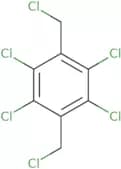
Formula:C8H4BrF6NPurity:Min. 95%Color and Shape:PowderMolecular weight:308.02 g/molalpha,alpha'-2,3,5,6-Hexachloro-p-xylene
CAS:alpha,alpha'-2,3,5,6-Hexachloro-p-xylene is a chemical compound that is used as a research and speciality chemical. It is a versatile building block that can be used in the synthesis of complex compounds. alpha,alpha'-2,3,5,6-Hexachloro-p-xylene has been used as a reaction component and useful intermediate in the synthesis of many compounds. This compound is also involved in the production of pesticides and pharmaceuticals. CAS No. 1079-17-0Formula:C8H4Cl6Purity:Min. 95%Molecular weight:312.83 g/molN-Methyl-N-(1-naphthyl)-1-chlorobenzamide
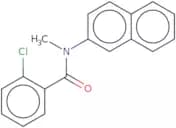
CAS:N-Methyl-N-(1-naphthyl)-1-chlorobenzamide is a versatile and useful chemical that can be used in the preparation of many different compounds. It is a reaction component and reagent, as well as a useful scaffold for the synthesis of many different compounds. It has high quality and is used in research chemicals. N-Methyl-N-(1-naphthyl)-1-chlorobenzamide has CAS No. 74881-60-0 and is a speciality chemical. It can also be used as a versatile building block or intermediates for the synthesis of more complex compounds.Formula:C18H14ClNOPurity:Min. 95%Molecular weight:295.76 g/mol4-Fluoro-3-methylphenol
CAS:4-Fluoro-3-methylphenol is a low molecular weight compound that has been shown to have antibacterial activity. It inhibits the growth of Mycobacterium tuberculosis, and this inhibition may be due to a transfer mechanism. 4-Fluoro-3-methylphenol also inhibits the enzyme activities of esterases and glutathione reductase, which may contribute to its antitubercular activity. This molecule has been shown to have vibrational and optical properties. It has been used in microscopy experiments for the detection of mineralization in bone tissue.Formula:C7H7FOPurity:Min. 95%Molecular weight:126.13 g/mol3,4-Dichloromethylphenidate HCl
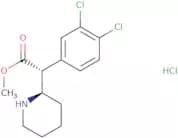
CAS:Controlled Product3,4-Dichloromethylphenidate HCl is a versatile building block that can be used in the synthesis of many complex compounds. It has been shown to be useful as a reagent and as an intermediate in the synthesis of pharmaceuticals. This compound may also have potential for use as a reaction component and scaffold in organic chemistry. 3,4-Dichloromethylphenidate HCl is available at high quality and is a useful building block for research purposes.Formula:C14H17Cl2NO2·HClPurity:Min. 95%Color and Shape:PowderMolecular weight:338.66 g/mol3,4-Difluoro-2-methoxybenzonitrile
CAS:3,4-Difluoro-2-methoxybenzonitrile is an organic chemical compound that is a useful scaffold for the synthesis of complex compounds. It reacts with nucleophiles such as Grignard reagents to form a wide range of products. 3,4-Difluoro-2-methoxybenzonitrile has been shown to be a versatile building block for the synthesis of high quality and speciality chemicals, including pharmaceuticals and agrochemicals. This chemical is also used as a research chemical, which can be used in drug discovery and development. The CAS number for this chemical is 886496-72-6.Formula:C8H5F2NOPurity:Min. 95%Color and Shape:Clear LiquidMolecular weight:169.13 g/mol3-Iodopentafluoropropene-1
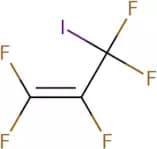
CAS:3-Iodopentafluoropropene-1 is a monomer that can be used in the synthesis of polymers. It is synthesized by an asymmetric synthesis from silicon, terminal alkynes, and hydrochloric acid. 3-Iodopentafluoropropene-1 also reacts with epoxides to form polyethers. This reaction occurs in supercritical carbon dioxide at high pressures (200 bar). The chlorine atom introduced in this reaction is removed by zinc powder to yield a functional group. 3-Iodopentafluoropropene-1 can also react with hydrocarbon ligands to form a variety of products. 3-Iodopentafluoropropene-1 can be reacted with carbon tetrachloride to yield chlorofluorocarbons, which are widely used as propellants or refrigerants.
Formula:C3F5IPurity:Min. 95%Color and Shape:Clear LiquidMolecular weight:257.93 g/mol1-Benzyl-3-[3-(dimethylamino)propoxy]-1H-indazole hydrochloride
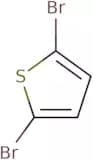
CAS:Controlled Product1-Benzyl-3-[3-(dimethylamino)propoxy]-1H-indazole hydrochloride is an intubation agent that belongs to the group of benzydamine. It has been shown to have anti-inflammatory properties and may be used for the treatment of throat inflammation, including sore throat caused by squamous cell carcinoma, as well as for other inflammatory conditions such as mucositis, which is a complication from radiation therapy or chemotherapy. This drug can also be used with nonsteroidal anti-inflammatory drugs (NSAIDs) to treat pain and inflammation associated with osteoarthritis. 1-Benzyl-3-[3-(dimethylamino)propoxy]-1H-indazole hydrochloride has been shown to inhibit polymerization reactions by intramolecular hydrogen transfer and may have analytical applications in polymer compositions.Formula:C19H24ClN3OPurity:Min. 95%Color and Shape:White PowderMolecular weight:345.87 g/mol2,5-Dibromothiophene
CAS:2,5-Dibromothiophene is a reactive intermediate that has been used in the synthesis of ondansetron hydrochloride. 2,5-Dibromothiophene can be prepared by the reaction of triethyl orthoformate and thiophene. The compound spontaneously undergoes bond cleavage to give the dibromo derivative followed by oxidation with aqueous hydrogen peroxide. 2,5-Dibromothiophene has been shown to have photocatalytic activity under visible light irradiation. This compound functions as a monomer in the polymerization of polythiophenes. 2,5-Dibromothiophene can also be used in palladium-catalyzed cross-coupling reactions with azasetron hydrochloride to form x-ray crystal structures and nmr spectra.Formula:C4H2Br2SPurity:Min. 95%Color and Shape:Colourless To Yellow LiquidMolecular weight:241.93 g/mol4-Bromo-5-chloro-2-fluorotoluene
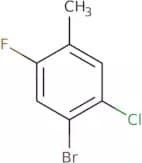
CAS:4-Bromo-5-chloro-2-fluorotoluene is a research chemical that is used in the synthesis of pharmaceuticals, pesticides, and other chemicals. It is also a versatile building block that can be used as an intermediate or a building block for complex compounds. 4-Bromo-5-chloro-2-fluorotoluene has been shown to have high quality and is useful in the manufacture of fine chemicals.Formula:C7H5BrClFPurity:Min. 95%Molecular weight:223.47 g/molDL-Cystein hydrochloride hydrate
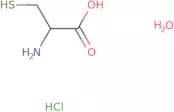
CAS:DL-Cystein hydrochloride hydrate is a chemical compound with an amino acid structure. It is a structural analogue of the amino acid cysteine and has been shown to protect cells in culture from the toxic effects of proteases. This drug has been used in animal studies to test its ability to protect against diabetic neuropathy, but it is not yet known whether it will be effective for humans. DL-Cystein hydrochloride hydrate can be used as a fluorescence probe for albumin concentration and as a chemical chaperone that stabilizes proteins and prevents their aggregation. This compound has also been shown to have antioxidant properties, which may help prevent cellular damage caused by reactive oxygen species.
Formula:C3H7NO2S·HCl·H2OPurity:Min. 95%Molecular weight:175.64 g/mol5-Chloroindole-2-carboxylic acid
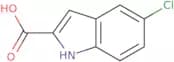
CAS:5-Chloroindole-2-carboxylic acid is a fatty acid that is synthesized from glucose. It has been shown to have inhibitory properties against the enzyme cyclooxygenase-2 (COX-2), which may be due to its ability to suppress prostaglandin synthesis. 5-Chloroindole-2-carboxylic acid also has been shown to have anticancer properties and can inhibit cancer cell growth in vitro. The drug may also play a role in the central nervous system, as it has been shown to cause neuronal death. 5-Chloroindole-2-carboxylic acid is not water soluble, so it must be dissolved in organic solvents such as cyclohexane or chloroform before being used for chemical reactions. This drug can be used with other drugs that are coxib sensitive, such as aspirin, acetaminophen, and ibuprofen.
Formula:C9H6ClNO2Color and Shape:PowderMolecular weight:195.6 g/mol1-(3-Fluorophenyl)-2-nitropropene
CAS:1-(3-Fluorophenyl)-2-nitropropene is a versatile building block that can be used as a reagent, speciality chemical, or a reaction component. This compound is also useful for the synthesis of complex compounds. 1-(3-Fluorophenyl)-2-nitropropene has been shown to react with various electrophiles, including carbonyl compounds and nitro compounds, to give substituted products. This chemical is classified as a high quality compound and can be used in the synthesis of pharmaceuticals and other fine chemicals.
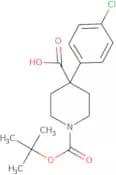
Formula:C9H8FNO2Purity:Min. 95%Molecular weight:181.16 g/molBoc-4-(4-chlorophenyl)-piperidine-4-carboxylic acid
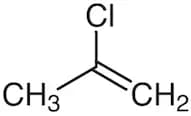
CAS:Boc-4-(4-chlorophenyl)-piperidine-4-carboxylic acid is a versatile building block that can be used to synthesize complex compounds. It is a high quality, research chemical that can be used as a reagent or speciality chemical. Boc-4-(4-chlorophenyl)-piperidine-4-carboxylic acid is an intermediate for the synthesis of pharmacologically active compounds and has been used as a reaction component in the synthesis of other useful scaffolds. CAS No. 644981-94-2Formula:C17H22ClNO4Purity:Min. 95%Color and Shape:White PowderMolecular weight:339.81 g/mol2-Chloro-1-propene
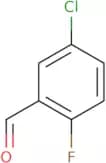
CAS:Formula:C3H5ClPurity:>97.0%(GC)Color and Shape:Colorless to Almost colorless clear liquidMolecular weight:76.525-Chloro-2-fluorobenzaldehyde
CAS:5-Chloro-2-fluorobenzaldehyde is an efficient method for synthesizing substituted benzoic acid derivatives. It is a useful reagent in the acylation reaction. 5-Chloro-2-fluorobenzaldehyde also has high yields and can be used as a substitute for other more toxic or expensive compounds.
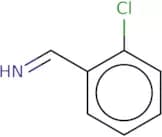
Formula:C7H4ClFOPurity:Min. 95%Molecular weight:158.56 g/mol2-(Chlorophenyl)methanimine
CAS:2-(Chlorophenyl)methanimine is a fine chemical with CAS No. 91589-24-1 that is used in the synthesis of other research chemicals and speciality chemicals. This compound has a high quality, complex structure, and can be used as an intermediate or scaffold for a variety of reactions. 2-(Chlorophenyl)methanimine is also versatile, as it can be used as a building block or reagent in many different reactions.Formula:C7H6ClNPurity:Min. 95%Color and Shape:PowderMolecular weight:139.58 g/mol4-Aminophenylboronic acid hydrochloride
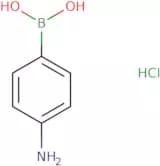
CAS:4-Aminophenylboronic acid hydrochloride is a fluorescent probe that can be used to detect hydrogen bonds in proteins. It has been used to measure water vapor in human serum and as an electrochemical impedance spectroscopy probe for the detection of ATP levels. This compound has also been used as a fluorescence probe for the detection of viruses and fetal bovine serum, as well as nanomaterials and matrix effect studies. 4-Aminophenylboronic acid hydrochloride is synthesized through the reaction of 4-aminophenylboronic acid with hydrochloric acid in water at high temperature, which produces a white solid. The thermal expansion coefficient of this compound is 2.6 x 10^-5 K^-1.
Formula:C6H8BNO2•HClPurity:Min. 95%Color and Shape:PowderMolecular weight:173.4 g/mol2-Chloro-5-chloromethylpyridine
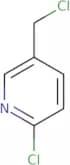
CAS:2-Chloro-5-chloromethylpyridine is a nicotinic acetylcholine analog. It is synthesized by chlorinating anhydrous sodium and phosphorus pentachloride in the presence of sodium carbonate. 2-Chloro-5-chloromethylpyridine is soluble in water, but insoluble in organic solvents. The synthesis produces a yellow solution that contains hydrogen chloride, hydrogen fluoride, and other products such as 2-chloropyridinol and 2-methylpyridine. The yield of this reaction is not reported.END>Formula:C6H5Cl2NPurity:Min. 95%Color and Shape:White To Yellow SolidMolecular weight:162.02 g/mol3-Bromo-5-methyl-1H-1,2,4-triazole
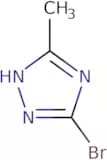
CAS:3-Bromo-5-methyl-1H-1,2,4-triazole is a bifunctional building block that can be used in organic synthesis as a versatile building block. It is also an important intermediate for the preparation of various types of chemical compounds and can be used as a research chemical or speciality chemical. This compound has been shown to have high purity and quality. 3-Bromo-5-methyl-1H-1,2,4-triazole is a complex compound that has been used in the synthesis of pharmaceuticals and agrochemicals.Formula:C3H4BrN3Purity:Min. 95%Color and Shape:PowderMolecular weight:161.99 g/mol3-(Trifluoromethoxy)phenol
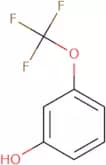
CAS:3-(Trifluoromethoxy)phenol is a drug that has been shown to function as an amide and a biomolecular. It has also been used in the development of drugs for depression, but it is not known whether it is effective in humans. 3-(Trifluoromethoxy)phenol binds to the cation channel of the NMDA receptor, which may be related to its antidepressant properties. The compound has been shown to have a radiotracer effect on positron emission tomography (PET). 3-(Trifluoromethoxy)phenol yields positrons when it undergoes deamination. This reaction is catalyzed by enzymes such as acetylcholine esterase, choline oxidase, and monoamine oxidases.
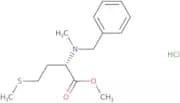
Formula:C7H5F3O2Purity:Min. 95%Color and Shape:Clear LiquidMolecular weight:178.11 g/molN-Benzyl-N-methyl-L-methionine methyl ester hydrochloride
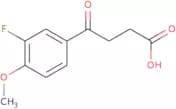
CAS:N-Benzyl-N-methyl-L-methionine methyl ester hydrochloride is a chemical substance that has been used as a reaction component in organic synthesis. It has also been used as a reagent for the quantitative determination of N,N'-dimethylbenzidine by measuring its absorption at 450 nm. It is soluble in water and ethanol and is stable up to 100 °C. The CAS Registry Number for this compound is 1272754-99-0.Formula:C14H21NO2S·HClPurity:Min. 95%Color and Shape:PowderMolecular weight:303.85 g/mol3-(3-Fluoro-4-methoxybenzoyl)propionic acid
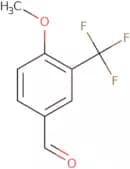
CAS:3-(3-Fluoro-4-methoxybenzoyl)propionic acid is a versatile building block that is used in the synthesis of many organic compounds. 3-(3-Fluoro-4-methoxybenzoyl)propionic acid has been used as a reagent in the synthesis of pharmaceuticals and other chemicals. 3-(3-Fluoro-4-methoxybenzoyl)propionic acid can be used to produce high quality research chemicals, speciality chemicals, and fine chemicals. This compound is also used to produce complex compounds and useful intermediates. 3-(3-Fluoro-4-methoxybenzoyl)propionic acid is available through chemical suppliers such as Sigma Aldrich or Acros Organics.Formula:C11H11FO4Purity:Min. 95%Molecular weight:226.2 g/mol4-Methoxy-3-(trifluoromethyl)benzaldehyde
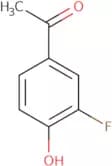
CAS:4-Methoxy-3-(trifluoromethyl)benzaldehyde is a fine chemical that can be used as a building block for pharmaceuticals and other organic compounds. It is also used in research for the synthesis of complex compounds. This chemical has been reported to be a useful intermediate or scaffold for organic syntheses. 4-Methoxy-3-(trifluoromethyl)benzaldehyde is soluble in water and ethanol, and insoluble in ether. It has a melting point of 140°C, boiling point of 249°C, density 1.096 g/cm³, and refractive index (20°C) 1.567.Formula:C9H7F3O2Purity:Min. 95%Molecular weight:204.15 g/mol3'-Fluoro-4'-hydroxyacetophenone
CAS:3'-Fluoro-4'-hydroxyacetophenone is a fluorinated acetophenone that is synthesized by catalytic hydrogenation of 3,4-difluoroacetophenone. This reaction produces the desired product in high yield. The product can be used in the synthesis of various pharmaceuticals, such as analgesics, antihistamines and antidiabetic agents. 3'-Fluoro-4'-hydroxyacetophenone has been shown to have higher yields and better solubility than its counterparts. It also has a high boiling point, making it suitable for industrial use.Formula:C8H7FO2Purity:Min. 95%Color and Shape:PowderMolecular weight:154.14 g/mol3-Isopropoxybenzoyl chloride
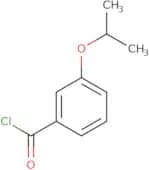
CAS:3-Isopropoxybenzoyl chloride is an organic compound that is used as a reactant, reagent, or building block in organic chemistry. 3-Isopropoxybenzoyl chloride is a versatile building block with a wide range of chemical properties. It has been shown to be useful as an intermediate and building block in the synthesis of complex compounds. 3-Isopropoxybenzoyl chloride can be used for research purposes and as a speciality chemical. This compound has been assigned the CAS number 214847-64-0.Formula:C10H11ClO2Purity:Min. 95%Color and Shape:PowderMolecular weight:198.65 g/mol3-Bromoheptane
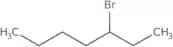
CAS:3-Bromoheptane is a solvent that is used in the production of polystyrene, which is a plastic material. It is also an intermediate in the synthesis of other chemicals. 3-Bromoheptane has been shown to be an efficient reagent for the preparation of alkyl bromides from alkyl halides and nitrates. The reaction mechanism starts with the protonation of 3-bromoheptane by acid or base, followed by nucleophilic attack by the metal halide. The ligand on the metal ion then displaces a bromide ion from 3-bromoheptane to form an organometallic complex. This process can be carried out at temperatures as low as -78°C, making it ideal for use in cryogenic devices.Formula:C7H15BrPurity:Min. 95%Color and Shape:Clear LiquidMolecular weight:179.1 g/mol4-Acetamido-2'-nitro-4'-(trifluoromethyl)diphenyl sulphone
CAS:4-Acetamido-2'-nitro-4'-(trifluoromethyl)phenyl sulphone is a fine chemical that has versatile building block properties. It is a complex compound that has been used in research chemicals and as a reagent. 4-Acetamido-2'-nitro-4'-(trifluoromethyl)phenyl sulphone is also useful for the production of speciality chemicals and as an intermediate for the synthesis of high quality compounds, such as pharmaceuticals, agrochemicals and other industrial products. This product can be used as a reaction component or scaffold for the synthesis of new compounds.
Formula:C15H11F3N2O5SPurity:Min. 95%Color and Shape:PowderMolecular weight:388.32 g/mol


![5,6,12,13-Tetrachloroanthra[2,1,9-def:6,5,10-d'e'f']diisochromene-1,3,8,10-tetraone](/_next/image/?url=https%3A%2Fstatic.cymitquimica.com%2Fproducts%2F3D%2Fthumb-webp%2FFT140318.webp&w=3840&q=75)


![1-Benzyl-3-[3-(dimethylamino)propoxy]-1H-indazole hydrochloride](/_next/image/?url=https%3A%2Fstatic.cymitquimica.com%2Fproducts%2F3D%2Fthumb-webp%2FFB18262.webp&w=3840&q=75)