Organic Halides
Subcategories of "Organic Halides"
Found 20442 products of "Organic Halides"
(Dibromomethyl)benzene
CAS:Dibromomethylbenzene is a reactive, non-metallic chemical compound with the formula CHBr2. It is a colorless liquid that is soluble in water and has a strong odor. Dibromomethylbenzene can be used to treat wastewater by removing metals, such as iron and copper, that are not removed by conventional methods. This compound also has been shown to inhibit the growth of infectious bacteria, such as Salmonella enterica and Escherichia coli. Dibromomethylbenzene reacts with metal hydroxides to produce volatile bromide ions, which react with the carbohydrate to form cyclic peptides. These reactions are catalyzed by solid catalysts like activated carbon or alumina.
Formula:C7H6Br2Purity:95%MinMolecular weight:249.93 g/molRef: 3D-FD138919
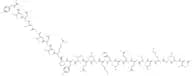
Discontinued productVIP (3-28) (human, mouse, rat) trifluoroacetate salt
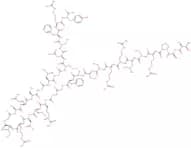
CAS:Please enquire for more information about VIP (3-28) (human, mouse, rat) trifluoroacetate salt including the price, delivery time and more detailed product information at the technical inquiry form on this pageFormula:C138H226N40O39SPurity:Min. 95%Molecular weight:3,101.58 g/molRef: 3D-FV109877
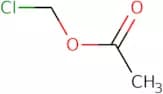
Discontinued productChloromethyl acetate
CAS:Chloromethyl acetate is a potent antibacterial agent that inhibits the growth of bacteria by inhibiting the synthesis of fatty acids. It also has an inhibitory effect on adenosine receptors and is used to treat congestive heart failure, inflammatory diseases, metabolic disorders, and other conditions. Chloromethyl acetate has been shown to be effective against a number of bacterial strains, including methicillin-resistant Staphylococcus aureus (MRSA), Streptococcus pneumoniae, and Mycobacterium tuberculosis. Chloromethyl acetate binds to the cyanoformate group in the bacterial cell wall by competitive inhibition. This binding prevents the formation of an antibiotic-inhibitor complex with the enzyme fatty acid synthase that is required for fatty acid biosynthesis, inhibiting protein synthesis and cell division.
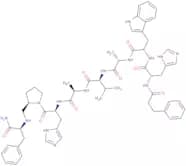
Formula:C3H5ClO2Purity:Min. 95%Molecular weight:108.52 g/mol(Deamino-Phe19,D-Ala24,D-Pro26-psi(CH2NH)Phe27)-GRP (19-27) (human, porcine, canine) trifluoroacetate salt
CAS:Please enquire for more information about (Deamino-Phe19,D-Ala24,D-Pro26-psi(CH2NH)Phe27)-GRP (19-27) (human, porcine, canine) trifluoroacetate salt including the price, delivery time and more detailed product information at the technical inquiry form on this page
Formula:C57H72N14O8Purity:Min. 95%Molecular weight:1,081.27 g/molRef: 3D-FD108769
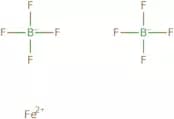
Discontinued productIron(II) tetrafluoroborate - 40-45% aqueous solution
CAS:Iron(II) tetrafluoroborate is a green-yellow crystalline solid that is soluble in water. It has been shown to have structural and optical properties that are similar to those of ferric chloride, but with the advantage of being less toxic. Iron(II) tetrafluoroborate is used as a homogeneous catalyst for organic reactions such as the hydrogenation of nitroarenes and the reduction of ketones. The catalytic activity of Iron(II) tetrafluoroborate arises from its ability to form hydrogen bonding interactions with other molecules and ions in solution.
Iron(II) tetrafluoroborate undergoes a number of reactions with other compounds, including cleavage products such as hydrogen sulfate and nitrogen atoms, which may be due to its chelate ligand. In coordination chemistry, Iron(II) tetrafluoroborate can form coordination complexes by reacting with potassium dichromate or calcium carbonate. These complexes areFormula:B2F8FePurity:About 45%Color and Shape:Slightly Green Clear LiquidMolecular weight:229.45 g/molRef: 3D-FI105721
Discontinued productPACAP-38 (31-38) (human, chicken, mouse, ovine, porcine, rat) trifluoroacetate salt
CAS:Please enquire for more information about PACAP-38 (31-38) (human, chicken, mouse, ovine, porcine, rat) trifluoroacetate salt including the price, delivery time and more detailed product information at the technical inquiry form on this pageFormula:C47H83N17O11Purity:Min. 95%Molecular weight:1,062.27 g/molRef: 3D-FP109526
Discontinued productBNP-45 (mouse) trifluoroacetate salt
CAS:Please enquire for more information about BNP-45 (mouse) trifluoroacetate salt including the price, delivery time and more detailed product information at the technical inquiry form on this page
Formula:C209H354N70O63S2Purity:Min. 95%Molecular weight:4,919.61 g/molRef: 3D-FB110157
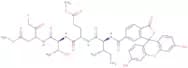
Discontinued productFluorescein-6-carbonyl-Ile-Glu(OMe)-Thr-DL-Asp(OMe)-fluoromethylketone
CAS:Please enquire for more information about Fluorescein-6-carbonyl-Ile-Glu(OMe)-Thr-DL-Asp(OMe)-fluoromethylketone including the price, delivery time and more detailed product information at the technical inquiry form on this page
Formula:C43H47FN4O15Purity:Min. 95%Molecular weight:878.85 g/molRef: 3D-FF111109
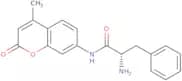
Discontinued productH-Phe-AMC trifluoroacetate salt
CAS:H-Phe-AMC Trifluoroacetate salt is a synthetic, protease inhibitor that inhibits the activity of serine and cysteine proteases. It binds to the active site of these enzymes and blocks their function. H-Phe-AMC trifluoroacetate salt has been used in food chemistry to hydrolyze proteins, and can be used to measure enzyme activities. This product also has been shown to have biological functions such as the inhibition of molting, physiological function, and the prevention of carcinogenesis.
Formula:C19H18N2O3Purity:Min. 95%Molecular weight:322.36 g/molRef: 3D-FP110514
Discontinued productBiotinyl-Pancreatic Polypeptide (human) trifluoroacetate salt
CAS:Please enquire for more information about Biotinyl-Pancreatic Polypeptide (human) trifluoroacetate salt including the price, delivery time and more detailed product information at the technical inquiry form on this page
Formula:C195H301N55O56S3Purity:Min. 95%Molecular weight:4,408.01 g/molRef: 3D-FB110183
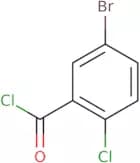
Discontinued product5-Bromo-2-chlorobenzoyl chloride
CAS:5-Bromo-2-chlorobenzoyl chloride is a chemical compound that is used as an intermediate for the production of compounds. It can be produced by the reaction of benzene with thionyl chloride in the presence of phenetole. The chemical reaction proceeds with high yield and utilizes a high concentration of benzene, which is a pollutant. The reaction yields a mixture of 5-bromo-2-chlorobenzoyl chloride and 2,4,6-trichlorobenzoyl chloride and utilizes an organic solvent such as formic acid or acetic acid to form 5-bromo-2,4,6-trichlorobenzoic acid in situ. 5-Bromo-2,4,6-trichlorobenzoic acid is then reacted with ammonia to produce 2-(5'-bromo)benzothiazole. This chemical compound has been used as a reagent
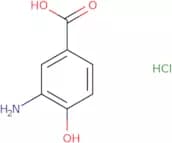
Formula:C7H3BrCl2OPurity:Min. 95%Color and Shape:PowderMolecular weight:253.91 g/mol3-Amino-4-hydroxybenzoic acid hydrochloride
CAS:3-Amino-4-hydroxybenzoic acid hydrochloride (3ABA) is a crystalline compound with a molecular formula of C6H5NO2. It is an acidic compound that is soluble in water and alcohol, but not in ether. 3ABA has been used as the starting material for the synthesis of many other organic compounds. It can be obtained by reacting phenol with chlorobenzoyl chloride to form the chlorobenzoate salt, which on hydrolysis yields 3ABA. This compound has also been used as a reagent for synthesizing carbon nanotubes. The crystal structure of 3ABA was determined using X-ray diffraction data from crystallographic studies, and it was found to have three independent molecules per unit cell. Diffraction indicated that each molecule is composed of two benzene rings joined by a single bond between carbon atoms 1 and 2 and another bond between carbon atoms 2 and 3.
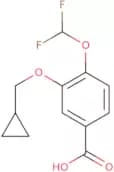
Formula:C7H8ClNO3Purity:Min. 95%Molecular weight:189.6 g/mol3-Cyclopropylmethoxy-4-difluoromethoxy-benzoic acid
CAS:3-Cyclopropylmethoxy-4-difluoromethoxy-benzoic acid is an industrial chemical that is used as a binding agent in the production of dyes, rubber, and pharmaceuticals. The compound is produced by the acylation of 3-chloromethoxybenzoic acid with cyclopropylmethanol. This reaction requires an inorganic base such as potassium carbonate or sodium bicarbonate to activate the chloride. 3-Cyclopropylmethoxy-4-difluoromethoxybenzoic acid can be used as a reactive alkylating agent for the production of amides and other organic compounds, which increases its versatility.
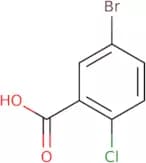
Formula:C12H12O4F2Purity:Min. 95%Color and Shape:White/Off-White SolidMolecular weight:258.22 g/mol5-Bromo-2-chlorobenzoic acid
CAS:Intermediate in the synthesis of dapagliflozin
Formula:C7H4BrClO2Purity:Min. 95%Color and Shape:PowderMolecular weight:235.46 g/molNuclear Factor NF-KB Inhibitor SN50 trifluoroacetate salt
CAS:SN50 is a nuclear factor NF-KB inhibitor that blocks the activity of transcription factors that are involved in inflammation and cancer. SN50 inhibits protease activity, which may be due to its ability to bind to response elements on DNA, leading to cytosolic calcium release and activation of signal pathways. It also binds to endothelin-a receptor and induces apoptosis. SN50 has been shown to have anti-tumour effects in resistant breast cancer cells as well as reducing serum aminotransferase levels in rats. This drug also activates transcriptional regulation by binding toll-like receptors and inducing colony stimulating factors. SN50 also has cardioprotective properties, which may be due to its ability to inhibit fatty acid synthase in cardiomyocytes.Formula:C129H230N36O29SPurity:Min. 95%Molecular weight:2,781.5 g/molRef: 3D-FN109704
Discontinued product2-(Chloromethyl)-5-(trifluromethyl)-1,3,4-oxadiazole
CAS:Please enquire for more information about 2-(Chloromethyl)-5-(trifluromethyl)-1,3,4-oxadiazole including the price, delivery time and more detailed product information at the technical inquiry form on this pageFormula:C4H2ClF3N2OPurity:Min. 95%Color and Shape:Colorless PowderMolecular weight:186.52 g/molRef: 3D-FC33413
Discontinued product(Des-Gly10,Ser(Ac)4,D-Leu6,Pro-NHEt 9)-LHRH trifluoroacetate salt
Please enquire for more information about (Des-Gly10,Ser(Ac)4,D-Leu6,Pro-NHEt 9)-LHRH trifluoroacetate salt including the price, delivery time and more detailed product information at the technical inquiry form on this pageFormula:C61H86N16O13Purity:Min. 95%Molecular weight:1,251.44 g/molRef: 3D-FD109745
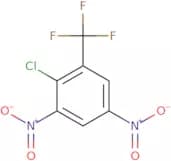
Discontinued product2-Chloro-3,5-dinitrobenzotrifluoride
CAS:2-Chloro-3,5-dinitrobenzotrifluoride is a chemical compound that is used as an intermediate in the synthesis of dyes and pharmaceuticals. It reacts with nitrous acid to form 2-chloro-3,5-dinitrobenzoic acid. The hydrogen bond between the hydroxyl group and the chlorine atom in this compound is weak, which leads to a constant value for its spectrometer. This chemical compound has photophysical properties that are dependent on the concentration of solutes. When it is mixed with other solutes such as potassium ion or sulfoxide, it can produce isomers. This chemical compound can be refluxed in a neutral pH environment to form anilines and acetonitrile, two compounds that are important for organic synthesis.
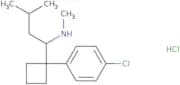
Formula:C7H2ClF3N2O4Purity:Min. 95%Color and Shape:Light (Or Pale) Yellow To Yellow SolidMolecular weight:270.55 g/molDesmethyl sibutramine hydrochloride salt
CAS:Desmethyl sibutramine hydrochloride salt is a pharmaceutical preparation that has been used in the treatment of depression and chronic pain. It is a synthetic drug that increases the level of dopamine in the brain by inhibiting its reuptake. In addition, it has been shown to be effective in the treatment of hyperactivity, diabetic neuropathy, and other amines. Desmethyl sibutramine hydrochloride salt also has an antidepressant effect by decreasing serotonin reuptake.
Formula:C16H25Cl2NPurity:Min. 95 Area-%Color and Shape:White PowderMolecular weight:302.28 g/molThr-Ala-Pro-Arg-Atrial Natriuretic Factor (1-28) (human, bovine, porcine) trifluoroacetate salt
CAS:Thr-Ala-Pro-Arg-Atrial Natriuretic Factor (1-28) (human, bovine, porcine) trifluoroacetate salt is a peptide hormone that regulates blood pressure by causing the kidneys to excrete sodium and water. It is used as a model system for studying the physiological effects of urodilatin and has been shown to inhibit the cyclase enzyme. Thr-Ala-Pro-Arg-Atrial Natriuretic Factor (1-28) (human, bovine, porcine) trifluoroacetate salt may also have an antihypertensive effect through its ability to reduce levels of natriuretic peptides in plasma. This drug is also being investigated as a possible treatment for congestive heart failure. The small molecular weight makes it suitable for use as a natriuretic or antihypertensive drug with minimal side effects.
Formula:C145H234N52O44S3Purity:Min. 95%Molecular weight:3,505.93 g/molRef: 3D-FT108857
Discontinued product3-[(Dimethylamino)methyl]-1,2,4-oxadiazol-5-amine hydrochloride
CAS:3-[(Dimethylamino)methyl]-1,2,4-oxadiazol-5-amine hydrochloride is a versatile building block that is used as an intermediate in the synthesis of fine chemicals. It is also a useful scaffold for the synthesis of biologically active compounds and research chemicals. 3-[(Dimethylamino)methyl]-1,2,4-oxadiazol-5-amine hydrochloride can be prepared by reacting methylamine with 2-aminothiophenol in the presence of a base. This reagent is also useful for the preparation of other compounds such as carbamates and cyclic ureas.
Formula:C5H10N4O•HClPurity:Min. 95%Color and Shape:PowderMolecular weight:178.62 g/molRef: 3D-FD135937
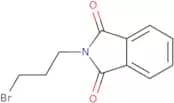
Discontinued productN-(3-Bromopropyl)phthalimide
CAS:N-(3-Bromopropyl)phthalimide is a chiral compound that can be used as a linker in the synthesis of ornithine. It is also an antibacterial agent. N-(3-Bromopropyl)phthalimide binds to the N-terminal amino group of ornithine and reacts with nucleophilic attack on the carbonyl carbon, forming the corresponding amide. The second-order rate constant for this reaction was measured to be 0.037 M-1s-1 at 25°C and pH 7. Photosensitizers such as silver nitrate are added to react with N-(3-bromopropyl)phthalimide and generate reactive oxygen species (ROS), which leads to surface-enhanced Raman scattering (SERS). SERS has been shown to be a useful technique for detecting N-(3-bromopropyl)phthalimide in food products.
Formula:C11H10BrNO2Color and Shape:PowderMolecular weight:268.11 g/molRef: 3D-FB53575
Discontinued product6-Bromoindazole
CAS:6-Bromoindazole is a hydrogen bond inhibitor that has potential neuroprotective effects. It inhibits the enzyme DNA Gyrase, which is necessary for bacterial replication, and has antibacterial properties. 6-Bromoindazole interacts with the receptor tyrosine kinase axitinib and inhibits its activity. This interaction may be responsible for its neuroprotective effects.
Formula:C7H5BrN2Purity:Min. 95%Molecular weight:197.03 g/molRef: 3D-FB51087
Discontinued productH-Asp(OtBu)-2-chlorotrityl resin (200-400 mesh)
Please enquire for more information about H-Asp(OtBu)-2-chlorotrityl resin (200-400 mesh) including the price, delivery time and more detailed product information at the technical inquiry form on this page
Purity:Min. 95%Ref: 3D-FA111747
Discontinued productNeuromedin S (human) trifluoroacetate salt
Please enquire for more information about Neuromedin S (human) trifluoroacetate salt including the price, delivery time and more detailed product information at the technical inquiry form on this page
Formula:C173H265N53O44Purity:Min. 95%Molecular weight:3,791.29 g/molRef: 3D-FN109764
Discontinued productOxyntomodulin (bovine, dog, porcine) trifluoroacetate salt
CAS:Please enquire for more information about Oxyntomodulin (bovine, dog, porcine) trifluoroacetate salt including the price, delivery time and more detailed product information at the technical inquiry form on this pageFormula:C192H295N59O60SPurity:Min. 95%Molecular weight:4,421.82 g/mol(Arg17)-Amyloid b-Protein (1-42) trifluoroacetate salt
CAS:Please enquire for more information about (Arg17)-Amyloid b-Protein (1-42) trifluoroacetate salt including the price, delivery time and more detailed product information at the technical inquiry form on this page
Formula:C203H312N58O60SPurity:Min. 95%Molecular weight:4,557.07 g/molRef: 3D-FA109844
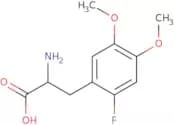
Discontinued product6-Fluoro DL-DOPA hydrobromide salt
CAS:Please enquire for more information about 6-Fluoro DL-DOPA hydrobromide salt including the price, delivery time and more detailed product information at the technical inquiry form on this page
Formula:C9H11BrFNO4Purity:Min. 95%Color and Shape:Off-White PowderMolecular weight:296.09 g/molRef: 3D-FF23355
Discontinued product(Arg13)-Amyloid b-Protein (1-40) trifluoroacetate salt
CAS:Please enquire for more information about (Arg13)-Amyloid b-Protein (1-40) trifluoroacetate salt including the price, delivery time and more detailed product information at the technical inquiry form on this pageFormula:C194H300N54O58SPurity:Min. 95%Molecular weight:4,348.85 g/molRef: 3D-FA110203
Discontinued productAcetyl-(Asn30,Tyr32)-Calcitonin (8-32) (salmon I) trifluoroacetate salt
CAS:Please enquire for more information about Acetyl-(Asn30,Tyr32)-Calcitonin (8-32) (salmon I) trifluoroacetate salt including the price, delivery time and more detailed product information at the technical inquiry form on this pageFormula:C127H205N37O40Purity:Min. 95%Molecular weight:2,890.21 g/molRef: 3D-FA109403
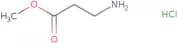
Discontinued productb-Alanine methyl ester hydrochloride
CAS:b-Alanine methyl ester hydrochloride is a fatty acid that is found in animal and plant tissues. It is a bifunctional molecule that can act as an inhibitor of serine proteases and also as an activator of fatty acid uptake by cells. This molecule has the potential to be used for the treatment of heart disease and other conditions caused by activation of serine proteases.
Formula:C4H9NO2·HClPurity:Min. 95%Color and Shape:White PowderMolecular weight:139.58 g/molRef: 3D-FA38110
Discontinued product3,5-Diiodothyroformic acid
CAS:3,5-Diiodothyroformic acid is a fine chemical that is used as a versatile building block in organic synthesis. It is also an intermediate for research chemicals and speciality chemicals. In addition to its use as a reagent, 3,5-Diiodothyroformic acid has been shown to be useful as a building block for the synthesis of pharmaceuticals and agricultural chemicals.
Formula:C13H8I2O4Purity:Min. 95%Molecular weight:482.01 g/molRef: 3D-FD66758
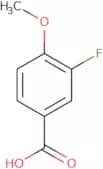
Discontinued product3-Fluoro-4-methoxybenzoic acid
CAS:3-Fluoro-4-methoxybenzoic acid is a dipolar molecule with a fluorine atom. It has been synthesized experimentally and the yields are determined by the experimental conditions. 3-Fluoro-4-methoxybenzoic acid has two isomers, which can be differentiated by their resonances. The molecule also has an asymmetric C3(CF)2Cl group in the middle of its structure that can rotate freely.
Formula:C8H7FO3Purity:Min. 95%Color and Shape:PowderMolecular weight:170.14 g/molRef: 3D-FF55157
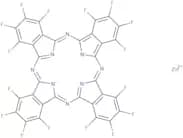
Discontinued productZinc 1,2,3,4,8,9,10,11,15,16,17,18,22,23,24,25-hexadecafluoro-29H,31H-phthalocyanine
CAS:Please enquire for more information about Zinc 1,2,3,4,8,9,10,11,15,16,17,18,22,23,24,25-hexadecafluoro-29H,31H-phthalocyanine including the price, delivery time and more detailed product information at the technical inquiry form on this pageFormula:C32F16N8ZnPurity:Min. 95%Molecular weight:865.75 g/molAngiotensin A (1-7) trifluoroacetate
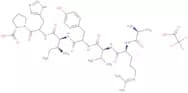
CAS:Endogenous heptapetide which causes vasodilation and has anti-hypertensive properties.
Formula:C40H62N12O9•(C2HF3O2)xPurity:Min. 95%Color and Shape:PowderMolecular weight:855 g/molTrityl chloride resin
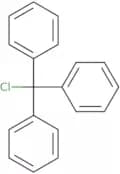
CAS:Trityl chloride resin is a chemical compound that is used as a model system for the study of trifluoroacetic acid and its reactions. Trityl chloride resin is insoluble in water and has been used as a reaction solution for transfer reactions. It has been shown to be an effective ligand for many types of receptors, with binding constants ranging from 10 M-1 to 10 M-10. Trityl chloride resin can also be chiral, which means that it may exist in two forms that are mirror images of each other. The physiological effects of this compound are not well understood, but it has been shown to have an effect on coordination geometry.
Color and Shape:PowderRef: 3D-FT29918
Discontinued productAmmonium Undecafluorohexanoate
CAS:Undecafluorohexanoic acid is a perfluoroalkyl carboxylic acid that has been shown to disrupt steroidogenesis in vitro. It may be able to inhibit the transport of cholesterol, fats, and other lipids in cells, which causes disruption in steroidogenesis. This compound also has anti-cancer properties due to its ability to induce apoptosis and arrest cancer cell proliferation. Undecafluorohexanoic acid may also have developmental effects on animals because it can bind to estrogen receptors and disrupt the normal process of estrogen-mediated signaling pathways.
Formula:C6H4F11NO2Purity:Min. 95%Molecular weight:331.08 g/molRef: 3D-FA79593
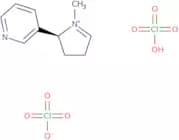
Discontinued productS-(-)-Nicotine-delta1’-(5’)-iminium diperchlorate salt
CAS:Please enquire for more information about S-(-)-Nicotine-delta1’-(5’)-iminium diperchlorate salt including the price, delivery time and more detailed product information at the technical inquiry form on this page
Formula:C10H14Cl2N2O8Purity:Min. 95%Molecular weight:361.13 g/mol2,3,5-Trichlorobenzaldehyde
CAS:2,3,5-Trichlorobenzaldehyde is a chemical compound that has been shown to have anticancer and apoptotic effects. It inhibits the growth of bacteria by chelating iron ions and inhibiting bacterial dna synthesis. 2,3,5-Trichlorobenzaldehyde has also been shown to inhibit the growth of cancer cells in culture in an experimental study. This chemical has been used as a substrate for nmr spectroscopy to study its functional groups and radical scavenging activities. 2,3,5-Trichlorobenzaldehyde can be synthesized from phenacyl chloride and benzaldehyde in the presence of hydrogen chloride gas. The carbonyl group in 2,3,5-trichlorobenzaldehyde may cause metabolic disorders such as diabetes mellitus or hyperglycemia.
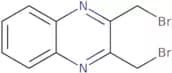
Formula:C7H3Cl3OPurity:Min. 95%Color and Shape:PowderMolecular weight:209.46 g/mol2,3-Bis(bromomethyl)quinoxaline
CAS:2,3-Bis(bromomethyl)quinoxaline is a nitrogenous heterocyclic compound that has a coordination geometry of square planar. It has been used as an inhibitor for the protein p21 and the nucleophile in palladium complexes. 2,3-Bis(bromomethyl)quinoxaline is also a model system for studying reaction mechanisms and chemical structures. The electron density map of the compound was obtained by X-ray crystal structure analysis. The reaction mechanism of this molecule is proposed to be through a chelate ring cross-coupling process.
Formula:C10H8Br2N2Purity:Min. 95%Color and Shape:Brown PowderMolecular weight:315.99 g/molRef: 3D-FB04248
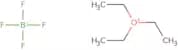
Discontinued productTriethyloxonium tetrafluoroborate
CAS:Triethyloxonium tetrafluoroborate is an antimicrobial agent that inhibits the transfer of electrons from one molecule to another. It has been shown to be effective against methicillin-resistant Staphylococcus aureus and Mycobacterium tuberculosis. Triethyloxonium tetrafluoroborate binds to the bacterial enzyme, Jak1, which is involved in the formation of cytokines and interleukins. This binding inhibits the production of these molecules, leading to cell death by apoptosis. The use of triethyloxonium tetrafluoroborate as a research tool has facilitated its discovery as a potential anti-inflammatory drug for autoimmune diseases such as type 1 diabetes mellitus and rheumatoid arthritis. Triethyloxonium tetrafluoroborate can be used to inhibit amide synthesis, which may have applications in the study of carbohydrate chemistry and nitrogen atoms in biological systems. This compound has also been used
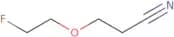
Formula:C6H15BF4OPurity:Min. 95%Color and Shape:PowderMolecular weight:189.99 g/mol3-(2-Fluoroethoxy)Propanenitrile
CAS:3-(2-Fluoroethoxy)Propanenitrile is a chemical with toxic properties. It is classified as a fluoroacetic acid and has been used in the production of other chemicals. Fluoroacetic acid is toxic to humans, showing signs of skin irritation, respiratory tract irritation, and kidney damage. 3-(2-Fluoroethoxy)Propanenitrile is not found naturally and has been sponsored by many companies.
Formula:C5H8FNOPurity:Min. 95%Molecular weight:117.12 g/molRef: 3D-FF80270
Discontinued product





![3-[(Dimethylamino)methyl]-1,2,4-oxadiazol-5-amine hydrochloride](/_next/image/?url=https%3A%2Fstatic.cymitquimica.com%2Fproducts%2F3D%2Fthumb-webp%2FFD135937.webp&w=3840&q=75)