Organic Halides
In this category, you can find organic molecules containing one or more halogen atoms in their structure. These organic halides include brominated, iodinated, chlorinated, and cyclic halide compounds. Organic halides are widely used in organic synthesis, pharmaceuticals, agrochemicals, and materials science due to their reactivity and ability to undergo a variety of chemical transformations. At CymitQuimica, we offer a comprehensive selection of high-quality organic halides to support your research and industrial applications, ensuring reliable and effective performance in your synthetic and analytical projects.
Subcategories of "Organic Halides"
Found 20440 products of "Organic Halides"
Sort by
Purity (%)
0
100
|
0
|
50
|
90
|
95
|
100
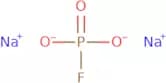
Sodium monofluorophosphate
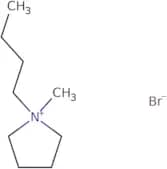
CAS:<p>Sodium monofluorophosphate is a salt that contains sodium cations and fluorine anions. It is used as an agent in the production of dental fillings, toothpaste, and other products. Sodium monofluorophosphate has been shown to inhibit the activity of serine proteases such as trypsin by interfering with their catalytic activity and binding to their active site. This agent has also been shown to react with p-nitrophenyl phosphate to form a fluorescent product, which can be detected at low concentrations. Sodium monofluorophosphate has a thermal expansion coefficient that is only slightly larger than those of water and glycerol, which makes it ideal for use in the production of dental fillings.</p>Formula:FNa2O3PPurity:Min. 95%Color and Shape:White PowderMolecular weight:143.95 g/mol1-Butyl-1-methylpyrrolidinium bromide
CAS:<p>1-Butyl-1-methylpyrrolidinium bromide is a pyridinium salt with a pyrrolidinium moiety. It forms by the reaction of 1-butylpiperidine and 2 equivalents of Br2 in dichloromethane at -20 degrees Celsius. The formation rate can be determined by measuring the absorbance of the product at 227 nm. 1-Butyl-1-methylpyrrolidinium bromide is an analytical reagent that has been used to determine the viscosity and pH of organic solutions, as well as enzyme activities and kinetic parameters. It has also been used for chemical structures and chromatographic science studies, such as electrochemical impedance spectroscopy.</p>Formula:C9H20BrNPurity:Min. 95%Color and Shape:White PowderMolecular weight:222.17 g/molRef: 3D-FB60715
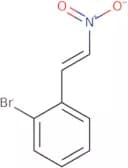
Discontinued product1-(2-Bromophenyl)-2-nitroethene
CAS:<p>1-(2-Bromophenyl)-2-nitroethene is a chiral, enantioselective nitroalkene that is used in the synthesis of many biologically active compounds. The compound was found to be an effective chiral ligand for asymmetric reactions involving aldehydes, indoles, and bipyridine. It has been shown to be more reactive than other bromoalkyltin reagents and can be used in a variety of reactions. 1-(2-Bromophenyl)-2-nitroethene also has conformationally rigid skeletons, which may allow for higher yields when compared with other alkylation agents.</p>Formula:C8H6BrNO2Purity:Min. 95%Molecular weight:228.04 g/mol2-(Chloromethyl)-1,2-epoxybutane
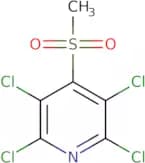
CAS:Formula:C5H9ClOPurity:>95.0%(GC)Color and Shape:Colorless to Almost colorless clear liquidMolecular weight:120.582,3,5,6-Tetrachloro-4-(methylsulfonyl)pyridine
CAS:<p>2,3,5,6-Tetrachloro-4-(methylsulfonyl)pyridine is a n-oxide with antimicrobial activity. It is used in horticultural applications for the control of microbial infection on plants. 2,3,5,6-Tetrachloro-4-(methylsulfonyl)pyridine has been shown to have high bactericidal activity against gram positive and gram negative bacteria. It has also been shown to be effective against fungi and some viruses. This compound is used as an additive in glycol ethers and gel pores. It is also used as a biocide in the form of trifluoroacetic acid or benzalkonium chloride.END></p>Formula:C6H3Cl4NO2SPurity:Min. 95%Color and Shape:White To Light (Or Pale) Yellow SolidMolecular weight:294.97 g/molRef: 3D-FT11714
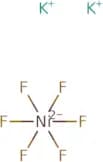
Discontinued productPotassium hexafluoronickelate(IV)
CAS:<p>Potassium hexafluoronickelate is a chemical compound that is a versatile building block and can be used as a reagent in organic synthesis. It is also an important intermediate for the preparation of other chemicals, such as potassium hexafluoroarsenate, which is used to make perfluorocarbons. Potassium hexafluoronickelate has many uses as a research chemical and as an intermediate in the production of other compounds. The compound has been shown to be useful in reactions involving carbon-carbon bond formation, such as the synthesis of heterocycles. Potassium hexafluoronickelate can also be used to produce metal complexes for use in catalysis or polymerization reactions.</p>Formula:F6K2NiPurity:Min. 95%Color and Shape:PowderMolecular weight:250.88 g/molPotassium fluoroaluminate
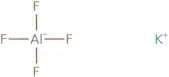
CAS:<p>Potassium fluoroaluminate (KAlF) is a reactive chemical compound that is used as a reducing agent in metallurgical processes. KAlF is not an aluminothermic reaction product, but it can be produced as a by-product of the reaction between aluminum and hydrogen fluoride. It is produced when potassium reacts with hydrogen fluoride in the presence of sodium carbonate or boron nitride. KAlF does not produce stable complexes with zinc or magnesium, but it does stabilize zirconium oxide to some extent. The human serum contains antibodies against KAlF particles, which may cause allergic reactions following inhalation or skin contact.</p>Formula:AlF4•KColor and Shape:PowderMolecular weight:142.07 g/molSodium fluoride
CAS:Controlled Product<p>Sodium fluoride is a chemical that can be used to treat water and wastewater. It is an effective inhibitor of the growth of bacteria, fungi, and algae. The use of sodium fluoride improves the quality of drinking water by reducing levels of hydrogen ion and trihalomethanes (THMs). This chemical also has been shown to have beneficial effects in patients with inflammatory bowel disease. Sodium fluoride inhibits the activity of enzymes in mitochondria, which are responsible for converting food into energy. The inhibition leads to a decrease in the production of free radicals and reactive oxygen species, which may reduce oxidative stress in the body.</p>Formula:NaFPurity:Min. 95%Color and Shape:White PowderMolecular weight:41.99 g/molRef: 3D-FS29949
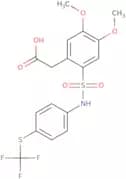
Discontinued product2-(4,5-dimethoxy-2-(((4-(trifluoromethylthio)phenyl)amino)sulfonyl)phenyl)acetic acid
CAS:<p>Please enquire for more information about 2-(4,5-dimethoxy-2-(((4-(trifluoromethylthio)phenyl)amino)sulfonyl)phenyl)acetic acid including the price, delivery time and more detailed product information at the technical inquiry form on this page</p>Purity:Min. 95%Ref: 3D-FD169440
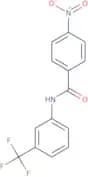
Discontinued product(4-nitrophenyl)-N-(3-(trifluoromethyl)phenyl)formamide
CAS:<p>Please enquire for more information about (4-nitrophenyl)-N-(3-(trifluoromethyl)phenyl)formamide including the price, delivery time and more detailed product information at the technical inquiry form on this page</p>Purity:Min. 95%Ref: 3D-FN169066
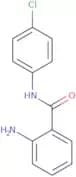
Discontinued product2-Amino-N-(4-chlorophenyl)benzamide
CAS:<p>Please enquire for more information about 2-Amino-N-(4-chlorophenyl)benzamide including the price, delivery time and more detailed product information at the technical inquiry form on this page</p>Formula:C13H11ClN2OPurity:Min. 95%Color and Shape:PowderMolecular weight:246.69 g/molRef: 3D-FA133474
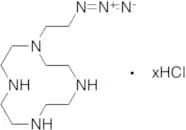
Discontinued productN-(2-Azidoethyl) Cyclen Hydrochloride
CAS:<p>Applications N-(2-Azidoethyl) Cyclen is used in the synthesis of lanthanide cyclen derivative complexes.<br>References Szijjarto, C., et al.: Dalton Trans., 41, 7660 (2012)<br></p>Formula:C10H23N7·xHClColor and Shape:White to Off-White SolidMolecular weight:241.34 + x(36.46)2-Diethylamino)ethanol hydrochloride
CAS:Controlled Product<p>2-Diethylamino)ethanol hydrochloride is a chemical compound that is used in analytical chemistry as a stationary phase for thin layer chromatography. Sephadex G-100 was developed by Pharmacia & Upjohn Company and marketed in the 1970s. It has been shown to be useful in plasma mass spectrometry experiments, which measure the molecular weight of proteins and other compounds. The solubility of 2-diethylamino)ethanol hydrochloride has been studied using experimental solubility data, electrochemical impedance spectroscopy, and amines. The reaction mechanism of 2-diethylamino)ethanol hydrochloride is not well understood but it appears to involve potassium dichromate, hydrochloric acid, fluoroacetic acid, benzalkonium chloride and other chemicals.</p>Formula:C6H16ClNOPurity:Min. 95%Molecular weight:153.65 g/molRef: 3D-FD21828
Discontinued product(R,S)-Z-3-Amino-7-chloro-2-oxo-5-phenyl-1,4-benzodiazepine
CAS:Controlled Product<p>Please enquire for more information about (R,S)-Z-3-Amino-7-chloro-2-oxo-5-phenyl-1,4-benzodiazepine including the price, delivery time and more detailed product information at the technical inquiry form on this page</p>Formula:C23H18ClN3O3Purity:Min. 95%Molecular weight:419.86 g/molRef: 3D-FA154498
Discontinued product(17R)-4-Chloro-5-ethyl-9-fluoro-11b-hydroxy-16b-methylspiro[androsta-1,4-diene-17,2(3H)-furan]-3,3-dione
CAS:<p>Clobetasol propionate is an organic acid with a chemical structure that is stable in pharmaceutical preparations. It is used to treat inflammatory skin disorders such as psoriasis and atopic dermatitis. Clobetasol propionate is an impurity of clobetasol, which has been shown to be chemically stable in preparations. The clobetasol propionate compound has been found to be more potent than other topical corticosteroids for the treatment of plaque psoriasis and atopic dermatitis.</p>Formula:C25H30ClFO4Purity:Min. 95%Molecular weight:448.95 g/molRef: 3D-FF103612
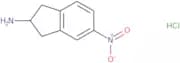
Discontinued product2-Amino-5-nitroindan hydrochloride
CAS:Controlled Product<p>Please enquire for more information about 2-Amino-5-nitroindan hydrochloride including the price, delivery time and more detailed product information at the technical inquiry form on this page</p>Formula:C9H10N2O2·HClPurity:Min. 95%Molecular weight:214.65 g/molPhenadoxone hydrochloride
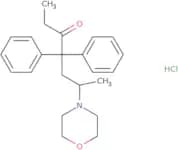
CAS:Controlled Product<p>Phenadoxone hydrochloride is a synthetic opioid drug with excitatory effects that is structurally related to meperidine. It has been used as an analgesic and antitussive, but is now rarely prescribed due to the high risk of addiction. Phenadoxone hydrochloride is a haloalkyl drug, which means it contains one or more halogen atoms in its chemical structure. These compounds are known to cause physical dependence and withdrawal symptoms when discontinued after prolonged use. Side effects may include nausea, vomiting, dizziness, headache, blurred vision, constipation, dry mouth and urinary retention. The most efficient method of synthesis involves the reaction of dimethylformamide with phenol and formaldehyde in a ring-opening reaction to form dipipanone. Dipipanone is then converted into phenadoxone hydrochloride by reacting with nitroethane and sodium hydroxide in the presence of hydrogen chloride gas.</p>Formula:C23H30ClNO2Purity:Min. 95%Molecular weight:387.94 g/molRef: 3D-FP26861
Discontinued product[3-(1-Piperidin-1-ylcyclohexyl)phenyl]amine hydrochloride
CAS:Controlled Product<p>3-(1-Piperidin-1-ylcyclohexyl)phenyl]amine hydrochloride is a ligand that binds to the acetylcholine receptor. 3-(1-Piperidin-1-ylcyclohexyl)phenyl]amine hydrochloride is an active analogue and has a high binding affinity for the cholinergic receptor. It has been shown to have a kinetic effect on the excitatory system, enhancing excitatory effects of acetylcholine without affecting inhibitory effects. 3-(1-Piperidin-1-ylcyclohexyl)phenyl]amine hydrochloride also has an antagonistic effect on modifiers of acetylcholine activity such as amantadine, but enhances the effects of other drugs, such as clonidine.</p>Formula:C17H26N2Purity:Min. 95%Molecular weight:258.4 g/molRef: 3D-FP120158
Discontinued productBis-trifluoromethyl ethylphosphonate
CAS:Controlled Product<p>Bis-trifluoromethyl ethylphosphonate is a trivalent, cyclic, scientific device that has been used as an additive to graphene oxide. Voltammetric studies have shown that this compound has a high flammability limit and can be used as a rechargeable battery electrode. The chemical's pentavalent form exhibits densities of 1.65 g/cm3 and 2.25 g/cm3 at 20 °C and 0 °C respectively. Bis-trifluoromethyl ethylphosphonate is used in research for its ability to form tervalent bonds with many other elements, including carbon, nitrogen, oxygen and sulfur.</p>Formula:C6H9F6O3PPurity:Min. 95%Molecular weight:274.1 g/molRef: 3D-FB18837
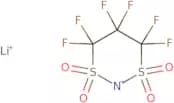
Discontinued productLithium 1,1,2,2,3,3-Hexafluoropropane-1,3-disulfonimide
CAS:<p>Lithium 1,1,2,2,3,3-hexafluoropropane-1,3-disulfonimide is a compound of lithium and fluorine. It is an additive that can be used in the manufacture of polymers and other materials. Lithium 1,1,2,2,3,3-hexafluoropropane-1,3-disulfonimide has been shown to act as a transition metal ion catalyst for the oxidation of fluoride to form hydrogen gas. This compound has also been shown to promote the formation of layered films made up of transition metals such as nickel oxide. Lithium 1,1,2,2,3,3-hexafluoropropane-1</p>Formula:C3F6LiNO4S2Purity:Min. 95%Molecular weight:299.1 g/molRef: 3D-FL60528
Discontinued product






![(17R)-4-Chloro-5-ethyl-9-fluoro-11b-hydroxy-16b-methylspiro[androsta-1,4-diene-17,2(3H)-furan]-3,3…](/_next/image/?url=https%3A%2Fstatic.cymitquimica.com%2Fproducts%2F3D%2Fthumb-webp%2FFF103612.webp&w=3840&q=75)
![[3-(1-Piperidin-1-ylcyclohexyl)phenyl]amine hydrochloride](/_next/image/?url=https%3A%2Fstatic.cymitquimica.com%2Fproducts%2F3D%2Fthumb-webp%2FFP120158.webp&w=3840&q=75)