Organic Halides
In this category, you can find organic molecules containing one or more halogen atoms in their structure. These organic halides include brominated, iodinated, chlorinated, and cyclic halide compounds. Organic halides are widely used in organic synthesis, pharmaceuticals, agrochemicals, and materials science due to their reactivity and ability to undergo a variety of chemical transformations. At CymitQuimica, we offer a comprehensive selection of high-quality organic halides to support your research and industrial applications, ensuring reliable and effective performance in your synthetic and analytical projects.
Subcategories of "Organic Halides"
Found 20437 products of "Organic Halides"
Sort by
Purity (%)
0
100
|
0
|
50
|
90
|
95
|
100
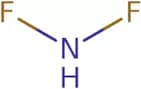
Difluoroamine
CAS:Controlled Product<p>Difluoroamine is a chemical compound that is used in the production of organic compounds. It has been shown to have high stability and detection sensitivity, which is attributed to its hydrogen bond forming ability. Difluoroamine also reacts with trifluoroacetic acid and hydrogen fluoride, both of which are strong acids. The reaction mechanism of difluoroamine involves the protonation of nitrogen atoms on the molecule followed by a nucleophilic attack on the electrophilic carbon atom that results in the formation of an amine group. This reaction can be carried out in a flow system as well as in a batch process. Difluoramine is an intermediate product during this process and can be converted into glycol ethers or nitrobenzene.</p>Formula:F2HNPurity:Min. 95%Molecular weight:53.01 g/molN-Ethyl-N-(2-hydroxyethyl)perfluorooctylsulphonamide
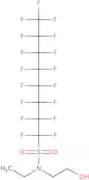
CAS:Controlled Product<p>N-Ethyl-N-(2-hydroxyethyl)perfluorooctylsulphonamide is a novel glycol ester with cytotoxic effects. It has been shown to inhibit the growth of cancer cells in rat liver microsomes and in vivo. N-Ethyl-N-(2-hydroxyethyl)perfluorooctylsulphonamide inhibits the synthesis of fatty acids by inhibiting the enzyme lipoxygenase. This drug also has a reactive carbon nanotube that may be used as an anticancer agent, which can bind to cell membranes and disrupt their function.</p>Formula:C12H10F17NO3SPurity:Min. 95%Color and Shape:PowderMolecular weight:571.25 g/molRef: 3D-FE104045
Discontinued productMethyltriphenoxyphosphonium Trifluoromethanesulfonate
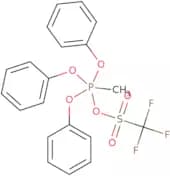
CAS:Controlled Product<p>Methyltriphenoxyphosphonium Trifluoromethanesulfonate is a reagent for the synthesis of alkenes, ethers, nitriles, esters and alkanes. It is also used to synthesize heterocycles. Methyltriphenoxyphosphonium Trifluoromethanesulfonate can be used to synthesise a wide variety of organic compounds. It reacts with electrophiles such as alcohols, amines and carboxylic acids to produce the corresponding ethers, nitriles, esters or alkanes. This reagent can also be used in many different cross-coupling reactions such as Suzuki-Miyaura reaction or Sonogashira reaction.</p>Formula:C20H18F3O6PSPurity:Min. 95%Molecular weight:474.39 g/molMonofluoroamine
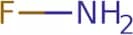
CAS:Controlled Product<p>Monofluoroamine is a chemical substance with the chemical formula NH2F. It is a colorless liquid that is stable to both acidic and basic environments, but reacts with fluorine gas to form hydrofluoric acid. Monofluoroamine is used in the synthesis of pharmaceuticals, pesticides, and other organic compounds. This compound can be prepared by reacting ammonia with hydrogen fluoride at low temperature or by reacting ammonia with hydrogen fluoride at high pressure. The Friedel-Crafts reaction of monofluoroamine with an amide produces the corresponding amine. Monofluoroamine has been used as a conditioning agent in NMR spectroscopy experiments to remove the water signal from complex NMR spectra. In addition, this compound has been shown to have antiviral effects against HIV infection through its ability to inhibit protein synthesis.</p>Formula:FH2NPurity:Min. 95%Molecular weight:35.02 g/molDecafluorobis(Trifluoromethyl)Cyclohexane
CAS:Controlled Product<p>Decafluorobis(trifluoromethyl)cyclohexane is a film-forming polymer that can be used as a nutrient solution. It is synthesized by the thermal decomposition of hydrogen fluoride and caproic acid. Decafluorobis(trifluoromethyl)cyclohexane can be analyzed by combining it with fatty acids in an enzyme hydrolysis reaction. The product will then form a film on the surface of the container, which can be analyzed using ionization techniques such as mass spectrometry or nuclear magnetic resonance.</p>Formula:C8F16Purity:Min. 95%Molecular weight:400.06 g/molBis(2,2,2-trichloroethyl)azodicarboxylate
CAS:<p>Bis(2,2,2-trichloroethyl)azodicarboxylate is a nucleophile that can be used as an alkylating agent in the industrial process. It is also used to prepare chiral amines by adding an amine to the enantiomerically pure bis(2,2,2-trichloroethyl)azodicarboxylate. The anticancer activity of Bis(2,2,2-trichloroethyl)azodicarboxylate is due to its ability to inhibit tumor cell proliferation. Bis(2,2,2-trichloroethyl)azodicarboxylate is not effective against cancerous cells that do not have functional groups such as amino acids.</p>Formula:C6H4Cl6N2O4Purity:Min. 95%Color and Shape:Yellow SolidMolecular weight:380.82 g/molRef: 3D-FB01254
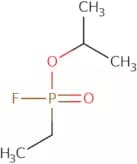
Discontinued product2-(Ethyl-Fluorophosphoryl)Oxypropane
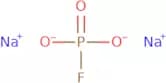
CAS:Controlled Product<p>2-(Ethyl-Fluorophosphoryl)Oxypropane (EFOP) is a chemical substance that is used as an analytical reagent in the detection of volatile and semi-volatile organic compounds in urine samples. EFOP has a high detection sensitivity, which allows it to be used for the analysis of low levels of chemicals in complex matrices. The matrix effect can be reduced by using human serum as the sample preparation medium. EFOP has been shown to be useful for determining sarin exposure in humans and mass analyzer data has shown that EFOP can detect high values of this chemical substance.</p>Formula:C5H12FO2PPurity:Min. 95%Molecular weight:154.12 g/molSodium monofluorophosphate
CAS:<p>Sodium monofluorophosphate is a salt that contains sodium cations and fluorine anions. It is used as an agent in the production of dental fillings, toothpaste, and other products. Sodium monofluorophosphate has been shown to inhibit the activity of serine proteases such as trypsin by interfering with their catalytic activity and binding to their active site. This agent has also been shown to react with p-nitrophenyl phosphate to form a fluorescent product, which can be detected at low concentrations. Sodium monofluorophosphate has a thermal expansion coefficient that is only slightly larger than those of water and glycerol, which makes it ideal for use in the production of dental fillings.</p>Formula:FNa2O3PPurity:Min. 95%Color and Shape:White PowderMolecular weight:143.95 g/molMagnesium hexafluorosilicate hexahydrate
CAS:<p>Magnesium hexafluorosilicate hexahydrate is a fine chemical that can be used as a versatile building block in the synthesis of organic compounds. It can also be used as a reaction component and provides a speciality chemical reagent for research purposes. Magnesium hexafluorosilicate hexahydrate is an intermediate in the synthesis of other chemicals and has been commercially available since 2006. This compound can also be used as a catalyst for the polymerization of polystyrene, polyurethane, and polyester resins. Magnesium hexafluorosilicate hexahydrate is high quality and is not hazardous to health or the environment.</p>Formula:F6Si•(H2O)6•MgPurity:Min. 95%Color and Shape:PowderMolecular weight:274.47 g/molRef: 3D-FH106107
Discontinued productAmmonium hexafluorotitanate(iv)
CAS:<p>Ammonium hexafluorotitanate(IV) is a fine chemical that can be used as a reagent, building block, or intermediate in the synthesis of other chemicals. It is a versatile building block and reacts with other compounds to form complex compounds. Ammonium hexafluorotitanate(IV) is also an intermediate for the production of ammonium hexafluorophosphate (III), which is used in the manufacture of fertilizers. Ammonium hexafluorotitanate(IV) can be used as a reactant to produce titanium metal, which has many industrial applications.</p>Formula:F6H8N2TiPurity:Min. 95%Color and Shape:White SolidMolecular weight:197.93 g/molRef: 3D-FA105292
Discontinued productSodium fluoride
CAS:Controlled Product<p>Sodium fluoride is a chemical that can be used to treat water and wastewater. It is an effective inhibitor of the growth of bacteria, fungi, and algae. The use of sodium fluoride improves the quality of drinking water by reducing levels of hydrogen ion and trihalomethanes (THMs). This chemical also has been shown to have beneficial effects in patients with inflammatory bowel disease. Sodium fluoride inhibits the activity of enzymes in mitochondria, which are responsible for converting food into energy. The inhibition leads to a decrease in the production of free radicals and reactive oxygen species, which may reduce oxidative stress in the body.</p>Formula:NaFPurity:Min. 95%Color and Shape:White PowderMolecular weight:41.99 g/molRef: 3D-FS29949
Discontinued product2-(Chloromethyl)-1,2-epoxybutane
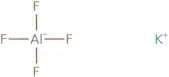
CAS:Formula:C5H9ClOPurity:>95.0%(GC)Color and Shape:Colorless to Almost colorless clear liquidMolecular weight:120.58Potassium fluoroaluminate
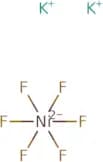
CAS:<p>Potassium fluoroaluminate (KAlF) is a reactive chemical compound that is used as a reducing agent in metallurgical processes. KAlF is not an aluminothermic reaction product, but it can be produced as a by-product of the reaction between aluminum and hydrogen fluoride. It is produced when potassium reacts with hydrogen fluoride in the presence of sodium carbonate or boron nitride. KAlF does not produce stable complexes with zinc or magnesium, but it does stabilize zirconium oxide to some extent. The human serum contains antibodies against KAlF particles, which may cause allergic reactions following inhalation or skin contact.</p>Formula:AlF4•KColor and Shape:PowderMolecular weight:142.07 g/molPotassium hexafluoronickelate(IV)
CAS:<p>Potassium hexafluoronickelate is a chemical compound that is a versatile building block and can be used as a reagent in organic synthesis. It is also an important intermediate for the preparation of other chemicals, such as potassium hexafluoroarsenate, which is used to make perfluorocarbons. Potassium hexafluoronickelate has many uses as a research chemical and as an intermediate in the production of other compounds. The compound has been shown to be useful in reactions involving carbon-carbon bond formation, such as the synthesis of heterocycles. Potassium hexafluoronickelate can also be used to produce metal complexes for use in catalysis or polymerization reactions.</p>Formula:F6K2NiPurity:Min. 95%Color and Shape:PowderMolecular weight:250.88 g/molN-(2-Azidoethyl) Cyclen Hydrochloride
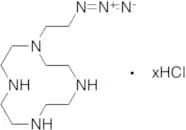
CAS:<p>Applications N-(2-Azidoethyl) Cyclen is used in the synthesis of lanthanide cyclen derivative complexes.<br>References Szijjarto, C., et al.: Dalton Trans., 41, 7660 (2012)<br></p>Formula:C10H23N7·xHClColor and Shape:White to Off-White SolidMolecular weight:241.34 + x(36.46)Ammonium tetrafluoroborate
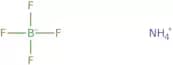
CAS:<p>Ammonium tetrafluoroborate is a salt of the organic compound tetrafluoroborate and ammonium. It is a colorless solid that can be used as a chemical reagent. Ammonium tetrafluoroborate has a higher chemical stability than other salts of tetrafluoroborate, such as ammonium hexafluorophosphate and ammonium hexafluoroarsenate. Ammonium tetrafluoroborate is used to make the dinucleotide phosphate, which is an important component in DNA synthesis. In a redox potential test, ammonium tetrafluoroborate showed no electrochemical activity in water vapor at pH 7. Ammonium tetrafluoroborate reacts with trifluoroacetic acid to produce hydrogen fluoride and ammonium chloride. This reaction is reversible, which means that it can be used for the synthesis of ammonia gas from hydrogen and nitrogen gases or for the</p>Formula:NH4BF4Purity:Min. 98%Color and Shape:White PowderMolecular weight:104.84 g/molRef: 3D-FA55588
Discontinued productSilver fluoride
CAS:<p>Silver fluoride is a chemical compound that consists of silver and fluoride. It is used in the form of a powder or a solution to sterilize surfaces, and can be applied to skin as an antiseptic. The chemical stability of silver fluoride has been studied using thermodynamic data and biological properties. Silver fluoride is able to inhibit the metabolism of some microorganisms, such as the growth of Staphylococcus aureus and Escherichia coli. Silver fluoride also inhibits the synthesis of DNA and RNA, which are important for cell division.</p>Formula:AgFPurity:Min. 95%Color and Shape:PowderMolecular weight:126.87 g/molN-Propyl-N-(2,3-epoxypropyl)perfluoro-n-octylsulfonamide
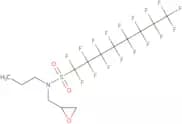
CAS:Controlled Product<p>Please enquire for more information about N-Propyl-N-(2,3-epoxypropyl)perfluoro-n-octylsulfonamide including the price, delivery time and more detailed product information at the technical inquiry form on this page</p>Formula:C14H12F17NO3SPurity:Min. 95%Molecular weight:597.29 g/molLead dibromide
CAS:<p>Lead dibromide is a non-radioactive catalyst that can be used in the organic synthesis of pharmaceuticals and other organic compounds. It is typically used as an oxidizing agent for the formation of carbon-carbon bonds. The electron microscopic study of lead dibromide reveals the presence of small, crystalline particles with a diameter of about 0.2 microns. Lead dibromide is soluble in allylation, n-dimethyl formamide, and trifluoroacetic acid and insoluble in water or polar solvents. This compound has been found to stabilize reactive intermediates in organic reactions, such as those involving ketones, epoxides, and nitriles.</p>Formula:PbBr2Purity:Min. 95%Molecular weight:367.01 g/molAmmonium bromide
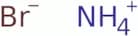
CAS:<p>Ammonium bromide is a chemical compound used in wastewater treatment. It is the active ingredient in a number of water purification methods, including those used to remove nitrates and heavy metals. Ammonium bromide also has inhibitory properties on the release of neurotransmitters from nerve cells. This inhibition of neurotransmitter release may be due to its ability to inhibit the action of neurokinin-1 receptor (NK-1) at the synapse. Ammonium bromide has been shown to have some toxic effects on the heart, although it does not appear to be toxic to other organs or tissues. Experimental solubility data shows that this solution is soluble in water, but insoluble in ethanol and ether. 4-Hydroxycinnamic acid, which can be found in coffee beans, has been shown to increase ammonium bromide solubility in water solutions by forming an inclusion complex with ammonium bromide.</p>Formula:H4BrNPurity:Min. 95%Color and Shape:White SolidMolecular weight:97.94 g/molRef: 3D-FA33731
Discontinued product