Organic Halides
In this category, you can find organic molecules containing one or more halogen atoms in their structure. These organic halides include brominated, iodinated, chlorinated, and cyclic halide compounds. Organic halides are widely used in organic synthesis, pharmaceuticals, agrochemicals, and materials science due to their reactivity and ability to undergo a variety of chemical transformations. At CymitQuimica, we offer a comprehensive selection of high-quality organic halides to support your research and industrial applications, ensuring reliable and effective performance in your synthetic and analytical projects.
Subcategories of "Organic Halides"
Found 20437 products of "Organic Halides"
Sort by
Purity (%)
0
100
|
0
|
50
|
90
|
95
|
100
Lead dibromide
CAS:<p>Lead dibromide is a non-radioactive catalyst that can be used in the organic synthesis of pharmaceuticals and other organic compounds. It is typically used as an oxidizing agent for the formation of carbon-carbon bonds. The electron microscopic study of lead dibromide reveals the presence of small, crystalline particles with a diameter of about 0.2 microns. Lead dibromide is soluble in allylation, n-dimethyl formamide, and trifluoroacetic acid and insoluble in water or polar solvents. This compound has been found to stabilize reactive intermediates in organic reactions, such as those involving ketones, epoxides, and nitriles.</p>Formula:PbBr2Purity:Min. 95%Molecular weight:367.01 g/molAmmonium Hexafluoroniobate
CAS:<p>Ammonium hexafluoroniobate is an organosilicon compound that does not react with water and is used as a solvent for other organics. It can be activated to form a reactive surface by treatment with a metal such as copper or aluminum, which can then be used in the treatment of metals. Ammonium hexafluoroniobate has been used as a diagnostic agent and diagnostic reagent in various reactions at different temperatures. It has also been used as the photoreceptor in electrophotographic printing processes, where it is exposed to light-sensitive material and then developed using organic solvents.</p>Formula:F6H4NNbPurity:Min. 95%Molecular weight:224.94 g/molAmmonium bromide
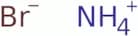
CAS:<p>Ammonium bromide is a chemical compound used in wastewater treatment. It is the active ingredient in a number of water purification methods, including those used to remove nitrates and heavy metals. Ammonium bromide also has inhibitory properties on the release of neurotransmitters from nerve cells. This inhibition of neurotransmitter release may be due to its ability to inhibit the action of neurokinin-1 receptor (NK-1) at the synapse. Ammonium bromide has been shown to have some toxic effects on the heart, although it does not appear to be toxic to other organs or tissues. Experimental solubility data shows that this solution is soluble in water, but insoluble in ethanol and ether. 4-Hydroxycinnamic acid, which can be found in coffee beans, has been shown to increase ammonium bromide solubility in water solutions by forming an inclusion complex with ammonium bromide.</p>Formula:H4BrNPurity:Min. 95%Color and Shape:White SolidMolecular weight:97.94 g/molRef: 3D-FA33731
Discontinued productPotassium fluoride dihydrate
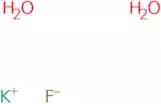
CAS:Controlled Product<p>Potassium fluoride is an inorganic chemical that is used in the water fluoridation process. It is also used as a source of fluoride ions for the synthesis of hydroxyapatite, a mineral found in teeth and bones. Fluoride ions are also used to treat certain infectious diseases, such as malaria. The asymmetric synthesis of potassium fluoride was first reported by M. S. Kharasch and J. A. Fink in 1943 using plasma mass spectrometry. This method has been widely adopted for commercial production of potassium fluoride because it can be scaled up easily and does not require specialized equipment.<br><br>Potassium fluoride has been shown to inhibit viral replication by hydrogen bonding with the guanine-cytosine base pairs on the viral dsDNA, which prevents the DNA from uncoiling and copying its genetic information into new viral particles. Potassium fluoride has also been shown to be effective against hepatitis B virus (HBV) and mammalian cells infected by HB</p>Formula:KF·2H2OPurity:Min. 95%Molecular weight:94.13 g/molRef: 3D-FP34794
Discontinued productSilver hexafluoroantimonate(V)
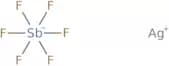
CAS:<p>Silver hexafluoroantimonate is a polymeric matrix that is used for its reaction mechanism. The hydroxyl group on the surface of the silver hexafluoroantimonate reacts with hydrochloric acid to produce hydrogen fluoride and an ionic silver chloride complex. Silver hexafluoroantimonate can also be synthesized by cationic polymerization, which involves a coordination complex between the metal and the nitrogen atoms. This coordination geometry allows for hydrogen bonding interactions.</p>Formula:AgSbF6Purity:Min. 95%Color and Shape:White PowderMolecular weight:343.62 g/molSilver fluoride
CAS:<p>Silver fluoride is a chemical compound that consists of silver and fluoride. It is used in the form of a powder or a solution to sterilize surfaces, and can be applied to skin as an antiseptic. The chemical stability of silver fluoride has been studied using thermodynamic data and biological properties. Silver fluoride is able to inhibit the metabolism of some microorganisms, such as the growth of Staphylococcus aureus and Escherichia coli. Silver fluoride also inhibits the synthesis of DNA and RNA, which are important for cell division.</p>Formula:AgFPurity:Min. 95%Color and Shape:PowderMolecular weight:126.87 g/molSilver hexafluorophosphate
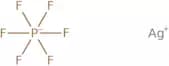
CAS:<p>Silver hexafluorophosphate (AgPF) is a silver salt of the inorganic acid hexafluoro-phosphoric acid. It has been shown to have a high reactivity with organic compounds and is insoluble in water. Silver hexafluorophosphate is used as an additive for certain polymers, such as PVC, to improve their insulating properties. In addition, AgPF has shown biological properties that may be due to its ability to act as a chelate ligand and bind metal ions. The reaction mechanism of AgPF involves the formation of hydrogen bonding interactions with nitrogen atoms, which are found in biological molecules such as proteins and nucleic acids.</p>Formula:AgPF6Purity:Min. 95%Molecular weight:252.83 g/molSilicon tetrabromide
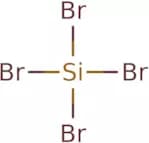
CAS:<p>Silicon tetrabromide is a chemical compound that is reactive and has the chemical formula SiBr4. This compound is prepared by reacting ethylene diamine with water vapor over a solid catalyst such as phosphorus pentoxide. Silicon tetrabromide can be used as a catalyst in various organic reactions, such as the production of glycerin from the reaction of halides and glycerin. Silicon tetrabromide can also be used to produce low energy silicon radicals from aromatic hydrocarbons, which are useful for structural analysis.</p>Formula:Br4SiPurity:Min. 95%Color and Shape:Clear LiquidMolecular weight:347.7 g/molPeptide YY (3-36) (human) trifluoroacetate salt
CAS:<p>Peptide YY (3-36) (human) trifluoroacetate salt H-Ile-Lys-Pro-Glu-Ala-Pro-Gly-Glu-Asp-Ala-Ser-Pro-Glu-Glu-Leu-Asn -Arg -Tyr -Tyr -Ala -Ser -Leu -Arg <br>Peptide YY (3.36) is a peptide hormone that is secreted by L cells in the small intestine and colon. It has been shown to be an effective treatment for obesity, type 2 diabetes, and other metabolic disorders. Peptide YY (3.36) has been shown to increase insulin sensitivity, reduce food intake and body weight, increase metabolic rate, and improve glucose homeostasis in animal studies. In humans, it has been found to have similar effects on postprandial plasma levels of peptide YY (3.</p>Formula:C180H279N53O54Purity:Min. 95%Molecular weight:4,049.47 g/molRef: 3D-FP110326
Discontinued productZinc bromide dihydrate
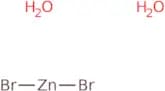
CAS:<p>Zinc bromide dihydrate is a crystalline compound that is used as a catalyst for the conversion of metalloporphyrins to hydroporphyrins. This process is used in the production of vitamin B12. Zinc bromide dihydrate can also be used to inhibit the function of ion pumps, which are proteins that pump ions across membranes. The inhibition of these pumps may lead to a decrease in intracellular calcium levels and an increase in free radicals.<br>Zinc bromide dihydrate has been shown to react with chlorophylls, vinylated heterostructures, and polyvinyl nonmetals. These reactions produce morphology changes in zinc bromide dihydrate crystals</p>Formula:ZnBr2•2H2OPurity:Min. 95%Color and Shape:PowderMolecular weight:261.22 g/mol3-Iodo-L-tyrosine
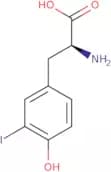
CAS:<p>Please enquire for more information about 3-Iodo-L-tyrosine including the price, delivery time and more detailed product information at the technical inquiry form on this page</p>Formula:C9H10INO3Purity:Min. 96.0 Area-%Color and Shape:PowderMolecular weight:307.09 g/molRef: 3D-FI12110
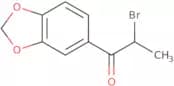
Discontinued product2-Bromo-3',4'-(methylenedioxy)propiophenone
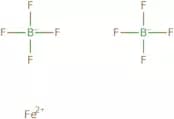
CAS:Controlled Product<p>Please enquire for more information about 2-Bromo-3',4'-(methylenedioxy)propiophenone including the price, delivery time and more detailed product information at the technical inquiry form on this page</p>Formula:C10H9BrO3Purity:Min. 95%Color and Shape:PowderMolecular weight:257.08 g/molIron(II) tetrafluoroborate - 40-45% aqueous solution
CAS:<p>Iron(II) tetrafluoroborate is a green-yellow crystalline solid that is soluble in water. It has been shown to have structural and optical properties that are similar to those of ferric chloride, but with the advantage of being less toxic. Iron(II) tetrafluoroborate is used as a homogeneous catalyst for organic reactions such as the hydrogenation of nitroarenes and the reduction of ketones. The catalytic activity of Iron(II) tetrafluoroborate arises from its ability to form hydrogen bonding interactions with other molecules and ions in solution.<br>Iron(II) tetrafluoroborate undergoes a number of reactions with other compounds, including cleavage products such as hydrogen sulfate and nitrogen atoms, which may be due to its chelate ligand. In coordination chemistry, Iron(II) tetrafluoroborate can form coordination complexes by reacting with potassium dichromate or calcium carbonate. These complexes are</p>Formula:B2F8FePurity:About 45%Color and Shape:Slightly Green Clear LiquidMolecular weight:229.45 g/molRef: 3D-FI105721
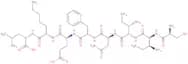
Discontinued productOvalbumin (257-264) (chicken) trifluoroacetate salt
CAS:<p>Please enquire for more information about Ovalbumin (257-264) (chicken) trifluoroacetate salt including the price, delivery time and more detailed product information at the technical inquiry form on this page</p>Formula:C45H74N10O13·C2HF3O2Purity:Min. 95%Molecular weight:1,077.15 g/molRef: 3D-FO109383
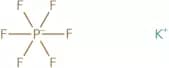
Discontinued productPotassium hexafluorophosphate
CAS:<p>Potassium hexafluorophosphate is a chemical compound that is used as an antimicrobial agent in the laboratory. It reacts with hydroxyl groups on various surfaces to form potassium hexafluorophosphate and water. The reaction solution can be used to disinfect equipment and surfaces, and is stable at room temperature. Potassium hexafluorophosphate has been shown to have biological properties such as inhibiting the growth of bacteria and fungi, but not viruses. This chemical compound has been shown to be effective against E. coli, Klebsiella pneumoniae, Staphylococcus aureus, Proteus vulgaris, Bacillus subtilis, Pseudomonas aeruginosa, Aspergillus niger, Candida albicans, or Saccharomyces cerevisiae.</p>Formula:KPF6Purity:Min. 95%Color and Shape:PowderMolecular weight:184.06 g/mol(Ala31, Aib 32)-Neuropeptide Y (porcine) trifluoroacetate salt
CAS:<p>Please enquire for more information about (Ala31, Aib 32)-Neuropeptide Y (porcine) trifluoroacetate salt including the price, delivery time and more detailed product information at the technical inquiry form on this page</p>Formula:C187H281N55O56Purity:Min. 95%Molecular weight:4,195.57 g/molRef: 3D-FA109454
Discontinued productPotassium bis(fluorosulfonyl)imide
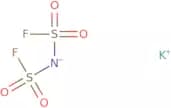
CAS:<p>Potassium bis(fluorosulfonyl)imide (K2FSI) is a reactive chemical that can be used to remove sulfur from petroleum products. It is also used in the manufacturing of ethylene and perovskite solar cells. K2FSI reacts with potassium ions to form potassium hexafluorophosphate (KHF2). This reaction reduces the vapor pressure of KHF2 and increases its solubility in water. The use of K2FSI can reduce the amount of energy needed for desulfurization, as it does not require heating. The following are some uses for potassium bis(fluorosulfonyl)imide: - As a catalyst for production of ethylene - In organic solvent to produce perovskite solar cells - To remove sulfur from petroleum products - To make hydrogen fluoride - For desulfurization</p>Formula:F2NO4S2•KPurity:Min. 95%Color and Shape:White PowderMolecular weight:219.23 g/mol