Organic Halides
Subcategories of "Organic Halides"
Found 20442 products of "Organic Halides"
3-Chlorophenylhydrazine hydrochloride
CAS:3-Chlorophenylhydrazine hydrochloride is a pyrazole that has been shown to have potent antibacterial activity. It is used in the treatment of inflammatory diseases and has been shown to be effective against Helicobacter pylori, which causes gastritis, peptic ulcers, and stomach cancer. 3-Chlorophenylhydrazine hydrochloride is an acidic compound with a molecular weight of 192.2 g/mol. It contains a pyrazole ring that is eluted with hydrochloric acid and reacts with gyrase enzymes in bacteria, inhibiting DNA synthesis. 3-Chlorophenylhydrazine hydrochloride also has anti-inflammatory properties due to its ability to inhibit prostaglandin synthesis.Formula:C6H7ClN2•HClPurity:Min. 95%Color and Shape:PowderMolecular weight:179.05 g/mol3,4-Dichloromethylphenidate HCl
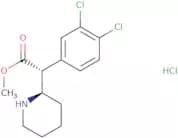
CAS:Controlled Product3,4-Dichloromethylphenidate HCl is a versatile building block that can be used in the synthesis of many complex compounds. It has been shown to be useful as a reagent and as an intermediate in the synthesis of pharmaceuticals. This compound may also have potential for use as a reaction component and scaffold in organic chemistry. 3,4-Dichloromethylphenidate HCl is available at high quality and is a useful building block for research purposes.Formula:C14H17Cl2NO2·HClPurity:Min. 95%Color and Shape:PowderMolecular weight:338.66 g/mol2-Bromo-3,6-difluorobenzaldehyde
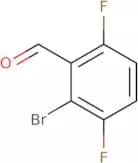
CAS:2-Bromo-3,6-difluorobenzaldehyde is a versatile building block that is used in the synthesis of many complex compounds. It has been shown to be a useful intermediate and reaction component in organic synthesis. 2-Bromo-3,6-difluorobenzaldehyde can be used as a reagent or speciality chemical for research purposes. This compound has high quality and is a useful scaffold for the preparation of fine chemicals.
Formula:C7H3BrF2OPurity:Min. 95%Color and Shape:Off-White PowderMolecular weight:221 g/mol3-Bromoheptane
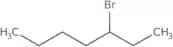
CAS:3-Bromoheptane is a solvent that is used in the production of polystyrene, which is a plastic material. It is also an intermediate in the synthesis of other chemicals. 3-Bromoheptane has been shown to be an efficient reagent for the preparation of alkyl bromides from alkyl halides and nitrates. The reaction mechanism starts with the protonation of 3-bromoheptane by acid or base, followed by nucleophilic attack by the metal halide. The ligand on the metal ion then displaces a bromide ion from 3-bromoheptane to form an organometallic complex. This process can be carried out at temperatures as low as -78°C, making it ideal for use in cryogenic devices.Formula:C7H15BrPurity:Min. 95%Color and Shape:Clear LiquidMolecular weight:179.1 g/molN-α-Benzoyl-L-arginine methyl ester hydrochloride
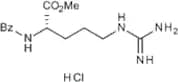
CAS:N-alpha-Benzoyl-L-arginine methyl ester hydrochloride is a useful intermediate in the synthesis of a variety of complex compounds. It is an important reagent for the synthesis of high quality fine chemicals, and can be used as a building block in the construction of new chemical compounds. The CAS number for N-alpha-Benzoyl-L-arginine methyl ester hydrochloride is 1784-04-9. This compound has been shown to be useful in research on speciality chemicals, and it has been utilized as a reaction component for the synthesis of versatile building blocks.Formula:C14H20N4O3•HClPurity:Min. 95%Color and Shape:PowderMolecular weight:328.79 g/mol6-Bromo-4-chloro-1H-indazole
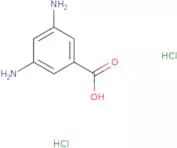
CAS:6-Bromo-4-chloro-1H-indazole is an organic compound that has been reported as a reaction component, reagent, and useful scaffold in the synthesis of complex compounds. It is also a speciality chemical with versatile building block and useful intermediate properties. 6-Bromo-4-chloro-1H-indazole is a fine chemical with complex structure and high purity.Formula:C7H4BrClN2Purity:Min. 95%Color and Shape:Off-white to brown solid.Molecular weight:231.48 g/mol3,5-Diaminobenzoic acid dihydrochloride
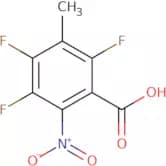
CAS:3,5-Diaminobenzoic acid dihydrochloride (DABA) is a potent inhibitor of peroxidase and has been shown to inhibit the activity of hydrogen peroxide. It has been used in medicine as an antiseptic and disinfectant. 3,5-Diaminobenzoic acid dihydrochloride also inhibits uncatalysed and catalysed reactions. The inhibition of these reactions is due to the reaction with hydrogen peroxide, which causes the formation of potent inhibitory species that are capable of reacting with other molecules. These reactions lead to a decrease in the rate of reaction. This product also exhibits potent inhibitory activity towards peroxidase and can be used for the treatment of infections caused by bacteria, such as Mycobacterium tuberculosis or Mycobacterium avium complex.Formula:C7H8N2O2·2HClMolecular weight:225.07 g/mol3-Methyl-6-nitro-2,4,5-trifluorobenzoic acid
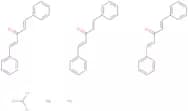
CAS:3-Methyl-6-nitrobenzoic acid is a chemical intermediate in the production of nitrobenzene, which is used as a precursor to other chemicals. It can be used for the synthesis of 3-methyl-6-nitrobenzoic acid (used in the synthesis of pesticides) and 3,5-dimethyl-2,4,6-trinitrobenzoic acid (used in the synthesis of dyes). This chemical has been recrystallized and contains less than 1% impurities such as halogens or methylbenzoic acid.Formula:C8H4F3NO4Purity:Min. 95%Molecular weight:235.12 g/molTris(dibenzylideneacetone)dipalladium (0)-chloroform adduct
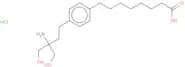
CAS:Controlled ProductTris(dibenzylideneacetone)dipalladium (0)-chloroform adduct is a catalyst that is used in cross-coupling reactions. It is an efficient method for the preparation of β-unsaturated ketones, which are important intermediates in organic synthesis. The catalytic cycle involves hydrolysis and condensation reactions. Tris(dibenzylideneacetone)dipalladium (0)-chloroform adduct can be prepared by reacting chloroform with a palladium compound in the presence of silver trifluoromethanesulfonate and a diphosphine ligand. The product contains a chloroform molecule that can be replaced by other functional groups such as chloride, fatty acid, or imine nitrogen. Tris(dibenzylideneacetone)dipalladium (0)-chloroform adduct has been characterized by x-ray crystal structures to identifyFormula:C51H42O3Pd2·CHCl3Purity:Min. 95%Color and Shape:PowderMolecular weight:1,035.09 g/molFTY720 octanoic acid hydrochloride
CAS:Please enquire for more information about FTY720 octanoic acid hydrochloride including the price, delivery time and more detailed product information at the technical inquiry form on this page
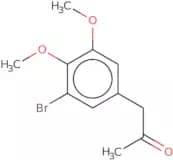
Formula:C19H31NO4•HClPurity:Min. 95%Molecular weight:373.92 g/mol(3-Bromo-4,5-dimethoxyphenyl)acetone
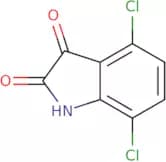
CAS:(3-Bromo-4,5-dimethoxyphenyl)acetone is a reagent that is used as an intermediate in the synthesis of a variety of compounds. It also has potential use as a building block for the synthesis of a wide range of complex compounds. (3-Bromo-4,5-dimethoxyphenyl)acetone can be used as a building block for chemical reactions and research chemicals. This compound has been shown to have versatile applications and is useful in the synthesis of fine chemicals, speciality chemicals, and research chemicals.Formula:C11H13BrO3Purity:Min. 95%Molecular weight:273.12 g/mol4,7-Dichloroisatin
CAS:4,7-Dichloroisatin is an organic compound that is synthesized by ring-opening of oxindole. It is a bifunctional molecule that can be used for the synthesis of other organic compounds. 4,7-Dichloroisatin has been found to be an efficient method for the synthesis of thiazolidinedione derivatives and can be used as a control experiment for this type of reaction. The mechanism for the reaction includes nitroaldol addition to the C=O group, followed by nucleophilic attack on the carbonyl group to form a tetrahedral intermediate. The intermediate then collapses to form a new C=N bond and release acetonitrile.
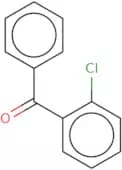
Formula:C8H3Cl2NO2Purity:Min. 95%Color and Shape:SolidMolecular weight:216.02 g/mol2-Chlorobenzophenone
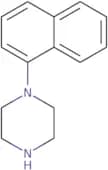
CAS:2-Chlorobenzophenone is a group P2 compound that is synthesized by the thermodynamic approach. It is also produced by the solid-phase synthesis of 2-chlorobenzoyl chloride and phosphorus pentachloride in a nonpolar solvent. This chemical can be purified through chromatographic methods. The chloride ion present in 2-chlorobenzophenone is replaced by an amine to form an amide or ester, which are more soluble in water than the chloride ion. 2-Chlorobenzophenone is used as a precursor for many other organic compounds, including benzodiazepines and organometallic compounds. This chemical has been shown to have sequences that are similar to benzodiazepine receptors and can act as a ligand for these receptors, blocking neurotransmission at synapses.>>END>>Formula:C13H9ClOPurity:Min. 95%Color and Shape:PowderMolecular weight:216.66 g/mol1-(1-Naphthyl)piperazine hydrochloride
CAS:1-(1-Naphthyl)piperazine hydrochloride is a 5-HT3 receptor antagonist that has been shown to act as a potent serotonergic agent in the central nervous system of mammals. It is believed to inhibit the presynaptic serotonin uptake, resulting in an increase of serotonin concentration at the postsynaptic 5-HT1A receptor cells. 1-(1-Naphthyl)piperazine hydrochloride has also been shown to be a potent 5-HT1A receptor agonist and has antinociceptive effects following administration. This drug has been found to be more selective for the peripheral nervous system than other drugs of this type. It does not cross the blood-brain barrier and therefore does not interfere with mental function or behavior.Formula:C14H16N2·HClPurity:Min. 95%Molecular weight:248.75 g/mol2,4-Dichloroquinoline
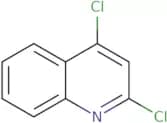
CAS:2,4-Dichloroquinoline is a chlorinated heterocyclic chemical compound. This drug is used as a monosubstituted palladium complex in organic synthesis. It can be obtained by refluxing 2,4-dichloroquinoline with hydrochloric acid, phosphorus oxychloride, and a terminal alkene in the presence of an excess of dichloromethane. The resulting chloroquine can be converted to the corresponding dichloroquinolines by treatment with acetonitrile in the presence of malonic acid. The final step is the demethylation of the quinoline ring using sodium methoxide in methanol. 2,4-Dichloroquinoline has been shown to exhibit antibacterial activity against gram-negative organisms such as Escherichia coli and Pseudomonas aeruginosa. Magnetic resonance analysis (NMR) has also been used to study its properties.Formula:C9H5Cl2NPurity:Min. 95%Color and Shape:SolidMolecular weight:198.05 g/mol2-[(3-Chlorobenzyl)oxy]benzoic acid
CAS:2-[(3-Chlorobenzyl)oxy]benzoic acid is a synthetic compound. The administration of 2-[(3-Chlorobenzyl)oxy]benzoic acid can be either oral or by subcutaneous injection. The elimination of 2-[(3-Chlorobenzyl)oxy]benzoic acid is mainly through the kidney and urine with a half-life of approximately 5 hours. This drug is metabolized by esterases to benzoic acid, which undergoes hydrolysis in the liver. There is also an elimination rate that has been determined for this drug in animal studies.
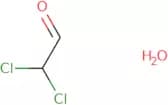
Formula:C14H11ClO3Purity:Min. 95%Color and Shape:PowderMolecular weight:262.69 g/molDichloroacetaldehyde hydrate
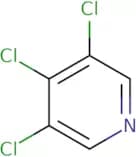
CAS:Dichloroacetaldehyde hydrate is an organic compound that is used in the treatment of skin cancer. It has been shown to have protective effects on cell membranes, which may be due to its ability to inhibit lipid peroxidation. Dichloroacetaldehyde hydrate also has a potential use as a radiation sensitizer and may be able to extend the lifespan of animals.Formula:C2H4Cl2O2Purity:Min. 95%Color and Shape:PowderMolecular weight:130.96 g/mol3,4,5-Trichloropyridine
CAS:3,4,5-Trichloropyridine is a cationic polymerization initiator that is used in coatings and pharmaceuticals. 3,4,5-Trichloropyridine is a prodrug of amines that are active substances. It has been shown to be thermodynamically stable and to have analytical methods that are suitable for industrial use. 3,4,5-Trichloropyridine has been studied in the context of its mechanism of action as a PDE-5 inhibitor. The drug's effects have been compared with those of benazepril hydrochloride and carbonyl group analogues using magnetic resonance spectroscopy. Salvianolic acid A and benazepril hydrochloride inhibited the reaction product formation between 3,4,5-trichloropyridine and 2-aminophenol (2AP) by 50%.Formula:C5H2Cl3NPurity:Min. 95%Color and Shape:White PowderMolecular weight:182.43 g/mol4-Fluoro-L-histidine
CAS:4-Fluoro-L-histidine is a fluorinated analog of L-histidine that functions as an inhibitor of protein synthesis by the virus. 4-Fluoro-L-histidine was found to be more potent than L-histidine in inhibiting murine sarcoma virus (MSV) replication and cytopathogenicity in vitro. This molecule has been shown to be a pentadecapeptide, which is comprised of five amino acids. The conformational properties of 4FLH are similar to those of histidine, and it can act as a substrate for enzymes involved in protein synthesis. 4FLH is also available with a deuterium isotope effect, which may affect its biological activity.Purity:Min. 95%Tetraoctyl ammoniumchloride
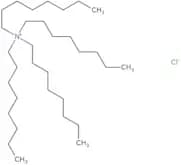
CAS:Tetraoctyl ammoniumchloride is an inexpensive chemical that has a high affinity for membranes. It is a cationic surfactant with a structure of four octyl chains, each containing an amine group. Tetraoctyl ammoniumchloride has been used to study the kinetics of ion transport in membranes and has been shown to be able to inhibit nitrate uptake by plant roots. This chemical also has light resistance properties and can be used to protect gold nanoparticles from degradation by light.
Formula:C32H68ClNPurity:Min. 95%Color and Shape:PowderMolecular weight:502.34 g/mol



![2-[(3-Chlorobenzyl)oxy]benzoic acid](/_next/image/?url=https%3A%2Fstatic.cymitquimica.com%2Fproducts%2F3D%2Fthumb-webp%2FFC119064.webp&w=3840&q=75)