Organic Halides
Subcategories of "Organic Halides"
Found 20442 products of "Organic Halides"
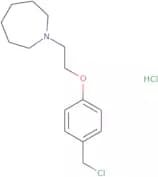
1-(2-(4-(Chloromethyl)phenoxy)ethyl)azepane HCl
CAS:1-(2-(4-(Chloromethyl)phenoxy)ethyl)azepane HCl is a versatile building block that can be used as a reagent, speciality chemical, or intermediate. It is also a useful scaffold for the synthesis of complex compounds. The compound has been shown to be useful in research and industry due to its high quality and versatility. 1-(2-(4-(Chloromethyl)phenoxy)ethyl)azepane HCl has CAS No. 223251-25-0 and can be used as a reaction component in organic synthesis reactions.Formula:C15H23Cl2NOPurity:Min. 95%Color and Shape:Off-White PowderMolecular weight:304.25 g/mol2,6-Dichloro-4-(trifluoromethyl)aniline
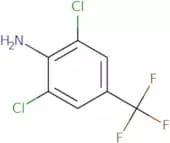
CAS:2,6-Dichloro-4-(trifluoromethyl)aniline is a colorless solid that is soluble in organic solvents. It is used as an absorber of chloride gas and other gases. 2,6-Dichloro-4-(trifluoromethyl)aniline reacts with hydrochloric acid to produce diazonium salt and chloride ions. The diazonium salt reacts with organic solvent and hydrogen gas to form the reaction products. In the presence of carbon dioxide and hydrogen chloride, 2,6-dichloro-4-(trifluoromethyl)aniline undergoes chlorinating reactions to produce hydrogen chloride gas and the chlorinated product.Formula:C7H4Cl2F3NPurity:Min. 95%Color and Shape:PowderMolecular weight:230.01 g/mol2,6-Dimethyl-1,4-diphenylpyridinium tetrafluoroborate
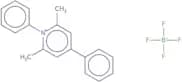
CAS:2,6-Dimethyl-1,4-diphenylpyridinium tetrafluoroborate is a high quality reagent that can be used as a useful intermediate in the synthesis of fine chemicals. It is used as an important building block in the synthesis of many organic compounds and is also an important reaction component. This compound has a wide range of uses and can be used as a versatile building block in organic synthesis or as a speciality chemical for research purposes.Formula:C19H18N·BF4Purity:Min. 95%Molecular weight:347.16 g/mol3',5'-Dichloroacetophenone
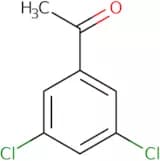
CAS:3',5'-Dichloroacetophenone is a synthetic pyrazoline that is a colorless liquid with an aromatic odor. It is soluble in ethyl acetate, chloroform, benzene, and other organic solvents. 3',5'-Dichloroacetophenone has significant effects on the protonation of amines, which are compounds containing nitrogen and hydrogen. This chemical has been shown to be able to react with anions like chloride or sulfide to form hypophosphorous acid. The symmetric structure of 3',5'-dichloroacetophenone is also susceptible to halide attack and can be synthesized from phenylhydrazine and piperidine.Formula:C8H6Cl2OPurity:Min. 95%Color and Shape:LiquidMolecular weight:189.04 g/mol3-Bromo-6-methylchromone
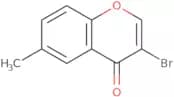
CAS:3-Bromo-6-methylchromone is a versatile building block that can be used in the synthesis of a variety of chemicals. It is an intermediate for the synthesis of 3,4-dimethylbenzaldehyde and is also used as a reagent in research. This chemical has been found to be useful in the synthesis of high-quality compounds with a wide range of applications. The compound is also used as an intermediate for the production of pharmaceuticals and pesticides. 3-Bromo-6-methylchromone can also be used as a scaffold for synthesizing new compounds with interesting properties.Formula:C10H7BrO2Purity:Min. 95%Color and Shape:PowderMolecular weight:239.07 g/mol2,7-Dibromonaphthalene
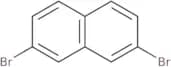
CAS:2,7-Dibromonaphthalene is a chemosensor that is used to sense the presence of halides in water. It reacts with anion radicals in the atmosphere to produce a fluorescent compound with a long wavelength emission. This reaction can be observed using ultraviolet spectroscopy and amination reactions. 2,7-Dibromonaphthalene has been shown to react with copper oxide to form a blue-green compound. This property has been used as an indicator of copper contamination in water and soil samples. 2,7-Dibromonaphthalene also reacts with metal ions to form metal cations, which can be detected using cyclen or other organic compounds.Formula:C10H6Br2Purity:Min. 95%Color and Shape:PowderMolecular weight:285.96 g/mol2-Bromo-4-methylphenol
CAS:2-Bromo-4-methylphenol is an organic compound that has interactive effects with hydrochloric acid, molybdenum, and trifluoromethanesulfonic acid. It is soluble in water vapor, but insoluble in polyvinyl. 2-Bromo-4-methylphenol reacts with sodium hydroxide solution to form a hydroxide solution and sodium carbonate. The reaction product of 2-bromo-4-methylphenol with triterpenoid saponin produces fatty acids. This reaction occurs because the hydroxide ion from the sodium hydroxide solution attacks the ester group of the saponin, forming an alcohol group on one end and a carboxylic acid group on the other end. The benzyl groups are removed by hydrogenation to produce phenol.
Formula:C7H7BrOPurity:Min. 95%Molecular weight:187.03 g/molBis (iodomethyl) ether
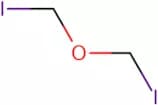
CAS:Bis (iodomethyl) ether is a metabolic disorder that is used as an organic solvent. It is a chemical compound that can be used to form alkylating agents, including tetronic acid and chloromethyl ketone. Bis (iodomethyl) ether can also be used to form anions, such as iodide and acetate. The biosynthesis of bis (iodomethyl) ether in animals involves the conversion of phosphate derivatives into iodides, which are then converted into bis (iodomethyl) ether. Bis (iodomethyl) ether has been shown to have insulin-resistance-modulating effects on type 2 diabetes in mice and guanosine diphosphate levels in perovskite cells. This drug has also been shown to increase hyperglycemia in animal models.
Formula:C2H4I2OPurity:Min. 95%Color and Shape:Light (Or Pale) Yellow To Brown LiquidMolecular weight:297.86 g/mol3-Aminobenzylamine dihydrochloride
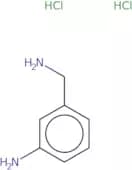
CAS:3-Aminobenzylamine dihydrochloride is a chemical building block that is useful for the synthesis of complex compounds. 3-Aminobenzylamine dihydrochloride is an aminobenzamide and has been used as a reagent or reaction component in laboratory research. This chemical is a versatile building block that can be used to synthesize a variety of compounds. 3-Aminobenzylamine dihydrochloride has been shown to be effective in the synthesis of 1,2,4-triazole derivatives, which are useful as pharmaceuticals or herbicides. 3-Aminobenzylamine dihydrochloride is also useful for the preparation of other fine chemicals and speciality chemicals.
Formula:C7H10N2·2ClHPurity:Min. 95%Color and Shape:SolidMolecular weight:195.09 g/mol2-Bromoquinoline
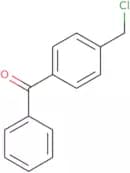
CAS:2-Bromoquinoline is an antimicrobial agent that binds to bacterial receptors. It is a bifunctional molecule with two reactive groups: a hydroxyl group and a nitrogen atom. 2-Bromoquinoline has been shown to inhibit the growth of various bacteria, including Mycobacterium tuberculosis, Staphylococcus epidermidis and Streptococcus pyogenes, by preventing the formation of a proton gradient across the bacterial membrane. 2-Bromoquinoline also inhibits hyperproliferative diseases such as amyloidosis in mice by binding to amyloid fibrils. This drug has been shown to cause DNA damage in mammalian cells, which may be due to its ability to form hydrogen bonds with methyl ethyl groups on DNA bases.Formula:C9H6BrNPurity:Min. 95%Color and Shape:White To Yellow To Pink SolidMolecular weight:208.05 g/mol4-Chloromethylbenzophenone
CAS:4-Chloromethylbenzophenone is a chemical compound that can be used as an efficacious pesticide. It is reactive and photodegrades in the environment. The compound has been shown to have a high toxicity to animals and humans, leading to dermatitis or phoma. 4-Chloromethylbenzophenone is also known as a chlorinated hydrocarbon and has been shown to cause bioaccumulation in the environment.
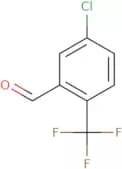
Formula:C14H11ClOPurity:Min. 95%Color and Shape:White to off-white solid.Molecular weight:230.69 g/mol5-Chloro-2-(trifluoromethyl)benzaldehyde
CAS:5-Chloro-2-(trifluoromethyl)benzaldehyde is a fine chemical that can be used as a versatile building block for organic synthesis. It has CAS number 90381-07-0 and is an intermediate in the synthesis of a variety of organic compounds. 5-Chloro-2-(trifluoromethyl)benzaldehyde is also an effective reagent for the preparation of complex compounds. It is soluble in polar solvents, such as chloroform, ethanol, ether, acetone, and benzene.Formula:C8H4ClF3OPurity:Min. 95%Molecular weight:208.56 g/mol2-Fluorobenzophenone
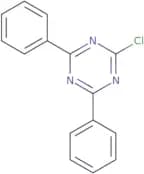
CAS:2-Fluorobenzophenone is a carbonyl group that is used as a sterilant. 2-Fluorobenzophenone is a precursor to 4-fluorobenzophenone, which can be synthesized by reacting with chlorine gas, chloromethyl ether, or polychlorinated biphenyls. 2-Fluorobenzophenone has been shown to be chemically stable and resistant to chemical ionization and thermal decomposition. It has been used as a photoinitiator for the polymerization of oxetane resins. 2-Fluorobenzophenones are also useful for the synthesis of functional groups such as oxetanes, epoxides, and dioxetanes. These compounds are typically found in polymers with an oxetane backbone.Formula:C13H9FOPurity:Min. 95%Molecular weight:200.21 g/mol2-Chloro-4,6-diphenyl-1,3,5-triazine
CAS:2-Chloro-4,6-diphenyl-1,3,5-triazine is a linker that can be activated to accept an electron from a donor molecule. It is often used as a transport material in organic light emitting diodes (OLEDs) and organic photovoltaics (OPVs). 2-Chloro-4,6-diphenyl-1,3,5-triazine has been shown to have high efficiencies when it is thermally activated. This compound also has high efficiency when it is activated by light with a wavelength of 400 nm. The luminescent properties of 2-Chloro-4,6-diphenyl-1,3,5 - triazine are due to its electron deficient nature and the presence of methoxy groups.
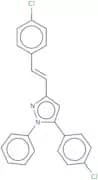
Formula:C15H10ClN3Purity:Min. 95%Color and Shape:White PowderMolecular weight:267.71 g/mol1-Phenyl-3-(4-chlorostyrene)pyrazole
CAS:1-Phenyl-3-(4-chlorostyrene)pyrazole is a high quality reagent that can be used as an intermediate in the production of complex compounds. It is also used as a building block in the synthesis of speciality chemicals, research chemicals, and versatile building blocks. 1-Phenyl-3-(4-chlorostyrene)pyrazole has been shown to be useful as a reaction component in the synthesis of fine chemicals and useful scaffolds.
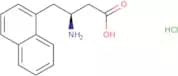
Formula:C23H16Cl2N2Purity:Min. 95%Molecular weight:391.29 g/mol(S)-3-Amino-4-(1-naphthyl)butanoic acid hydrochloride
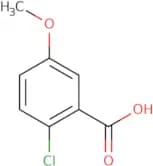
CAS:(S)-3-Amino-4-(1-naphthyl)butanoic acid hydrochloride is a high quality chemical that is used as a reaction component for the synthesis of complex organic compounds. It may also be used to produce fine chemicals, pharmaceuticals, and other useful compounds. This product has a wide variety of uses including as an intermediate in the production of speciality chemicals, as a building block for synthesizing more complex compounds, or as a precursor to producing other useful chemicals.Formula:C14H16ClNO2Purity:Min. 95%Color and Shape:White PowderMolecular weight:265.74 g/mol2-Chloro-5-methoxybenzoic acid
CAS:2-Chloro-5-methoxybenzoic acid (2CMB) is a copper chelator that has been shown to have antagonistic properties against microglia cells. 2CMB is synthesized from 2,5-dichlorobenzoic acid and methoxylamine. It has been shown to inhibit the synthesis of inflammatory mediators in rat spinal cord microglia cells by inhibiting the activity of polyphosphoric acid, anions and additives. 2CMB also has a high affinity for chloride ions and can be used as a tracer to measure chloride profiles. 2CMB reacts with copper ions at a slow rate and can be used as an indicator for the presence of microglia cells.
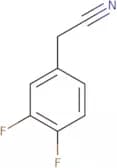
Formula:C8H7ClO3Purity:Min. 95%Molecular weight:186.59 g/mol3,4-Difluorophenylacetonitrile
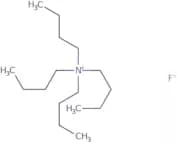
CAS:3,4-Difluorophenylacetonitrile is a fine chemical that is used as a reagent for the synthesis of complex compounds. It can be used as a useful intermediate for the production of fine chemicals and speciality chemicals. 3,4-Difluorophenylacetonitrile has been shown to be useful in the synthesis of versatile building blocks, which are reaction components that can be used in many different reactions. This compound has also been shown to be an excellent scaffold for the development of new drugs that target cancer cells.Formula:C8H5F2NPurity:Min. 95%Color and Shape:Clear LiquidMolecular weight:153.13 g/molTetrabutylammonium fluoride - 75 wt. % in H2O
CAS:Tetrabutylammonium fluoride is a strong base which reacts with the hydroxyl group of a carboxylic acid to form a salt and hydrogen fluoride. The nucleophilic nature of tetrabutylammonium and its high polarity make it an excellent catalyst for this reaction. Tetrabutylammonium fluoride has been shown to react with sodium salts in nonpolar solvents, such as benzene or toluene, to form quinoline derivatives. It also has been used in the synthesis of x-ray crystal structures of organic molecules by reacting with carbonyl groups, such as acetaldehyde. Tetrabutylammonium fluoride can interact chemically with other compounds, such as hydrogen bond formation with amines or reactions with amides.Formula:C16H36FNPurity:Min. 95%Color and Shape:Clear LiquidMolecular weight:261.46 g/mol3-(2,2-Dichlorovinyl)-2,2-dimethylcyclopropanecarboxylic acid
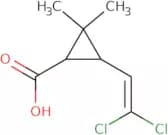
CAS:3-(2,2-Dichlorovinyl)-2,2-dimethylcyclopropanecarboxylic acid is a metabolite of the drug dextran sulfate. It is also an industrial chemical that has been used as a cross-linking agent in the manufacture of polymers and plastics. 3-(2,2-Dichlorovinyl)-2,2-dimethylcyclopropanecarboxylic acid binds to chloride ions in the blood and increases blood pressure by blocking the production of renin. This compound can be found in urine samples as a result of its excretion from the body. 3-(2,2-Dichlorovinyl)-2,2-dimethylcyclopropanecarboxylic acid has been shown to increase the levels of coagulation factors VIII and IX in human serum. It also has been shown to react with other chemicals in order to form ion pairs that can be detected using chemical ionFormula:C8H10Cl2O2Purity:Min. 95%Color and Shape:PowderMolecular weight:209.07 g/mol