Organic Halides
Subcategories of "Organic Halides"
Found 20442 products of "Organic Halides"
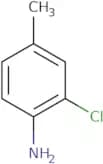
2-Chloro-4-methylaniline
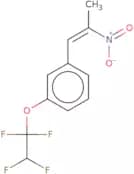
CAS:2-Chloro-4-methylaniline is a molecule that can be classified as an amine. It is a functional theory, which is a chemical ionization technique used to study the structure of molecules. 2-Chloro-4-methylaniline has been shown to have high metabolic profiles and to produce many metabolic products when it reacts with chlorine in the environment. This chemical has been studied extensively for its potential carcinogenic properties. It was found that 2-chloro-4-methylaniline causes DNA damage in human erythrocytes and induces mutations in calf thymus DNA, suggesting that this molecule may be carcinogenic. 2-Chloro-4-methylaniline also binds to hemoglobin, which may lead to the formation of methemoglobin that reduces oxygen transport in red blood cells. The matrix effect of this chemical on clinical pathology is not known.Formula:C7H8ClNPurity:Min. 95%Molecular weight:141.6 g/mol3'-(Tetrafluoroethoxy)-beta-methyl-beta-nitrostyrene
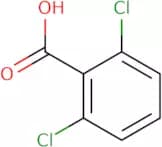
CAS:3'-(Tetrafluoroethoxy)-beta-methyl-beta-nitrostyrene is a versatile building block that can be used as a reaction component for the synthesis of more complex compounds. This compound is also known to have speciality chemical and research chemical properties. 3'-(Tetrafluoroethoxy)-beta-methyl-beta-nitrostyrene has been shown to be an effective reagent for the synthesis of high quality complex compounds.Formula:C11H9F4NO3Purity:Min. 95%Molecular weight:279.19 g/mol2,6-Dichlorobenzoic acid
CAS:2,6-Dichlorobenzoic acid (2,6-DCBA) is a chemical substance that can be found in groundwater. 2,6-DCBA is metabolized by colon cells to produce metabolites, including 2,4-dichlorophenol and 4-chlorophenylacetic acid. The metabolic reaction products have been shown to inhibit the uptake of radioactive iodine by Caco-2 cells. 2,6-DCBA is also a monocarboxylic acid with two nitrogen atoms. It has been shown to have acute toxicities in rats and other animals. This substance can also be used as an analytical reagent for the determination of metals such as iron and copper.Formula:C7H4Cl2O2Purity:Min. 95%Color and Shape:PowderMolecular weight:191.01 g/molCalcium fluoride
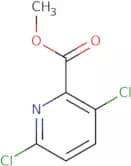
CAS:Calcium fluoride crystals are the mineral form of calcium fluoride, which is a high-resistance ionic conductor. Calcium fluoride has been used for many purposes, such as in the production of semiconductors and lasers. Calcium fluoride is also used as a radiation shield and in the production of hydrogen fluoride, which is an important chemical reagent. The crystal structure of calcium fluoride has been determined using x-ray crystallography and electron diffraction studies. This mineral has a hexagonal crystal system (space group P6 3 /mmc) with lattice constants a = 5.9 Å and c = 6.3 Å, where c equals the length of one side of an equilateral triangle that fits within the unit cell. The space group indicates that each unit cell contains twelve atoms: six Ca2+ and six F-. The unit cell dimensions are given by a = b = 1/2 × 10−8 m and c = 2 × 10⁻⁷ m. TheseFormula:CaF2Purity:Min. 95%Molecular weight:78.07 g/molMethyl 3,6-dichloropyridine-2-carboxylate
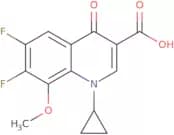
CAS:Methyl 3,6-dichloropyridine-2-carboxylate is a nitro compound that is used as a transport inhibitor. It has been shown to inhibit the transport of some organic compounds in h9c2 cells by binding to the active site of ATP synthase, which is required for energy production. Methyl 3,6-dichloropyridine-2-carboxylate has also been shown to modulate physiological effects in mice, such as modulating the activity of enzymes involved in fatty acid synthesis. This compound is synthetically derived from anthranilic acid and dichlorprop with oxadiazole as a starting material.Formula:C7H5Cl2NO2Purity:Min. 95%Color and Shape:PowderMolecular weight:206.03 g/mol1-Cyclopropyl-6,7-difluoro-1,4-dihydro-8-methoxy-4-oxo-3-quinolinecarboxylic acid
CAS:Moxifloxacin is an analog of the antibiotic quinolone. It is a prodrug that is hydrolyzed in vivo to its active form, moxifloxacin. Moxifloxacin has been shown to be effective against a variety of bacteria, including methicillin-resistant Staphylococcus aureus (MRSA), Mycobacterium tuberculosis and Mycobacterium avium complex. The reaction yield for the synthesis of moxifloxacin is very high, with an industrial production capacity in excess of 500 tons per year. Impurities are not usually found in the final product due to the use of methyl alcohol as a solvent during the reaction process. The drug has discoloring properties and deuterium atoms are often substituted for hydrogen atoms on the molecule to make it more stable. Deuterium atoms can be easily identified by mass spectrometry analysis. MoxifloxacFormula:C14H11F2NO4Purity:Min. 95%Color and Shape:PowderMolecular weight:295.24 g/mol2-Trifluoromethylphenazine
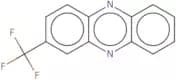
CAS:2-Trifluoromethylphenazine is a fine chemical that can be used as a building block for research chemicals and as a reagent in organic synthesis. 2-Trifluoromethylphenazine has a CAS number of 581-24-8. It is also classified as a speciality chemical and has many uses in the field of chemistry. The compound is versatile, making it an excellent scaffold for complex compounds. 2-Trifluoromethylphenazine is a versatile intermediate that can be used in many reactions, such as cycloadditions, reductive aminations, and reductions.
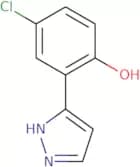
Formula:C13H7F3N2Purity:Min. 95%Molecular weight:248.2 g/mol3-(5-Chloro-2-hydroxyphenyl)pyrazole
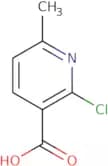
CAS:3-(5-Chloro-2-hydroxyphenyl)pyrazole is a monosubstituted, stepwise, substituted pyrazole. It has been shown to exhibit antibacterial and antifungal properties against phytopathogens. 3-(5-Chloro-2-hydroxyphenyl)pyrazole binds to metal ions in the active site of the enzyme and inhibits its activity. The phenylhydrazine group is reduced by NADH to form a covalent bond with the enzyme's cysteine residue. The binding of this compound prevents the formation of an enzyme-substrate complex that catalyzes an essential reaction, leading to cell death.Formula:C9H7ClN2OPurity:Min. 95%Color and Shape:PowderMolecular weight:194.62 g/mol2-Chloro-6-methylnicotinic acid
CAS:2-Chloro-6-methylnicotinic acid is a protonated nicotinic acid derivative with potent inhibitory activity against hepatitis C virus. It has been shown to inhibit the replication of the virus by competitive inhibition at the 2-chloro-6-methylnicotinic acid site on the viral genome. It also inhibits the synthesis of viral proteins, which are necessary for viral replication. The molecule has been shown to have an inhibitory effect on other RNA viruses such as influenza and HIV, but it is not active against DNA viruses such as herpes simplex or adenovirus. 2-Chloro-6-methylnicotinic acid is absorbed orally and its pharmacokinetic properties are well understood. This compound can be used as a probe in supramolecular chemistry to study hydrogen bonding and biomolecular interactions.Formula:C7H6ClNO2Purity:Min. 95%Color and Shape:Yellow SolidMolecular weight:171.58 g/mol1-Ethynyl-2,3,4,5,6-pentafluorobenzene
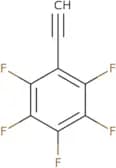
CAS:1-Ethynyl-2,3,4,5,6-pentafluorobenzene is an organofluorine compound that has been the subject of research. The compound has been shown to react with nucleophiles at the 1- and 2-positions in a nucleophilic substitution reaction. It is also used as a solvent for reactions involving amines and alcohols.
Formula:C8HF5Purity:Min. 98 Area-%Color and Shape:PowderMolecular weight:192.09 g/mol2,4,6-Trichlorobenzoic acid
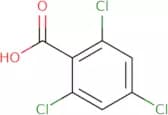
CAS:2,4,6-Trichlorobenzoic acid is a trifluoroacetic acid that has been used as a solvent in vitro assays and as a carbon source for kinetic studies. It has also been shown to be an effective inhibitor of bacterial growth when tested with dextrans. 2,4,6-Trichlorobenzoic acid is toxic to cells in culture and can inhibit fatty acid synthesis by inhibiting the activity of fatty acid synthase.
2,4,6-Trichlorobenzoic acid has also been found to have anti-inflammatory properties and may be useful for the treatment of asthma.Formula:C7H3Cl3O2Purity:Min. 95%Color and Shape:PowderMolecular weight:225.46 g/mol2-Nitro-4-ethylsulfonylchlorobenzene
CAS:2-Nitro-4-ethylsulfonylchlorobenzene is a high quality, versatile and useful chemical. It has been used as an intermediate in the synthesis of other compounds, such as pharmaceuticals. As a reagent, it has been used to form complex compounds and to produce fine chemicals. 2-Nitro-4-ethylsulfonylchlorobenzene is also a useful scaffold for the production of research chemicals. This compound has shown potential for use in the production of speciality chemicals or as a reaction component.
Formula:C8H8ClNO4SPurity:Min. 95%Color and Shape:PowderMolecular weight:249.67 g/mol3-Bromo-5-chlorobenzonitrile
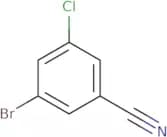
CAS:3-Bromo-5-chlorobenzonitrile is a reactive compound that is used in the preparation of sulfur. It is an electrophile and reacts with thiols to form disulfides. 3-Bromo-5-chlorobenzonitrile can also form a complex with elemental sulfur, which can be used for the preparation of sodium sulfide. Sodium sulfide can be prepared by converting 3-bromo-5-chlorobenzonitrile into a sodium salt with sodium hydroxide, followed by hydrolysis to produce hydrogen sulfide and sodium chloride. The reaction of 3-bromo-5-chlorobenzonitrile with xanthate leads to the formation of carbon disulphide.Formula:C7H3BrClNPurity:Min. 95%Color and Shape:PowderMolecular weight:216.46 g/mol1-(3-Chlorophenyl)-2-hydroxy-1-propanone
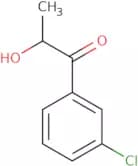
CAS:1-(3-Chlorophenyl)-2-hydroxy-1-propanone is an optically active intermediate that is used in the synthesis of pharmaceuticals. It has been shown to be an enantioselective transesterification agent, and can be used in the preparation of esters such as hexane, butanoate and vinyl. The substrate concentration affects the yield of this compound, which may be due to its chiral nature. 1-(3-Chlorophenyl)-2-hydroxy-1-propanone is soluble in organic solvents such as hexane, dichloromethane, benzene and acetone.Formula:C9H9ClO2Purity:Min. 95%Color and Shape:Slightly Yellow PowderMolecular weight:184.62 g/mol(2-Fluoro-3-methoxyphenyl)boronic acid
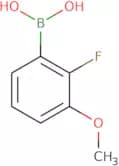
CAS:2-Fluoro-3-methoxyphenylboronic acid is a boronic acid that has been shown to be orally activated. It is a potent inhibitor of the enzyme target, which is involved in the production of estradiol. 2-Fluoro-3-methoxyphenylboronic acid has been found to inhibit cellular growth and induce cancer cell death by targeting estrogen receptor β. This molecule also inhibits the growth factor, leading to inhibition of prostate cancer cells in vitro.
Formula:C7H8BFO3Purity:Min. 95%Color and Shape:White PowderMolecular weight:169.95 g/mol1-Isoquinolin-1-ylmethanamine dihydrochloride
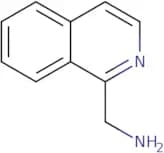
CAS:1-Isoquinolin-1-ylmethanamine dihydrochloride is a versatile building block that can be used for the synthesis of a wide variety of compounds. It is a reagent and speciality chemical, as well as an intermediate or reaction component in the production of pharmaceuticals, agrochemicals, plastics, dyes and other chemicals. 1-Isoquinolin-1-ylmethanamine dihydrochloride has been shown to have high purity and quality.Formula:C10H10N2·2HClPurity:Min. 95%Color and Shape:Light Blue SolidMolecular weight:231.12 g/mol4-Fluorocinnamic acid
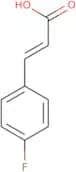
CAS:4-Fluorocinnamic acid is a potent inhibitor of bacterial growth. It inhibits the activity of enzymes that are involved in the synthesis of fatty acids and amino acids, such as triticum aestivum and trifluoroacetic acid. 4-Fluorocinnamic acid has been shown to be an effective inhibitor of bacterial growth in vitro, with a contact time of 10 minutes. The effective dose for this compound was determined to be 1 mg/L. 4-Fluorocinnamic acid has also been found to have a mineralization effect on wastewater treatment and can inhibit the activity of enzymes involved in the production of inflammatory mediators, such as lipoxygenase and cyclooxygenase.Formula:C9H7FO2Purity:Min. 95%Color and Shape:PowderMolecular weight:166.15 g/mol4-Bromo-3,5-bis(trifluoromethyl)aniline
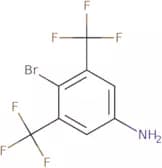
CAS:4-Bromo-3,5-bis(trifluoromethyl)aniline is a chemical compound that belongs to the group of brominated compounds. It has high adsorption capacity for potassium and can be used as an adsorbent for gasification. 4-Bromo-3,5-bis(trifluoromethyl)aniline has been activated by carbons and catalysed with potassium to form an ionic complex with the carboxylic acid site on the surface of activated carbon. This process is used for purifying water or air from pollutants.
Formula:C8H4BrF6NPurity:Min. 95%Color and Shape:PowderMolecular weight:308.02 g/molNesfatin-1 (rat) trifluoroacetate salt
CAS:Please enquire for more information about Nesfatin-1 (rat) trifluoroacetate salt including the price, delivery time and more detailed product information at the technical inquiry form on this pageFormula:C424H684N116O136Purity:Min. 95%Molecular weight:9,582.67 g/mol2,4-Dichlorophenoxyacetic acid
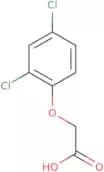
CAS:Controlled Product2,4-Dichlorophenoxyacetic acid is a chemical that is used to kill plants and has been shown to be toxic in humans. It has been used extensively in the past as an herbicide and insecticide. 2,4-Dichlorophenoxyacetic acid can be broken down by bacteria in wastewater treatment systems. This chemical has been shown to cause sublethal effects on cells, including changes in enzyme activities, protein genes, and gene expression levels. These changes are mediated by the production of reactive oxygen species (ROS). The mechanism of action for 2,4-dichlorophenoxyacetic acid involves the reaction with p-nitrophenyl phosphate (PNPP) to produce 2,4-dichlorobenzoic acid and formaldehyde. 2,4-Dichlorophenoxyacetic acid has also been shown to have an effect on human serum proteins.Formula:C8H6Cl2O3Purity:Min. 98%Color and Shape:White PowderMolecular weight:221.04 g/mol