Organic Halides
In this category, you can find organic molecules containing one or more halogen atoms in their structure. These organic halides include brominated, iodinated, chlorinated, and cyclic halide compounds. Organic halides are widely used in organic synthesis, pharmaceuticals, agrochemicals, and materials science due to their reactivity and ability to undergo a variety of chemical transformations. At CymitQuimica, we offer a comprehensive selection of high-quality organic halides to support your research and industrial applications, ensuring reliable and effective performance in your synthetic and analytical projects.
Subcategories of "Organic Halides"
Found 20440 products of "Organic Halides"
Sort by
Purity (%)
0
100
|
0
|
50
|
90
|
95
|
100
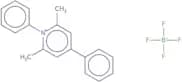
2,6-Dimethyl-1,4-diphenylpyridinium tetrafluoroborate
CAS:<p>2,6-Dimethyl-1,4-diphenylpyridinium tetrafluoroborate is a high quality reagent that can be used as a useful intermediate in the synthesis of fine chemicals. It is used as an important building block in the synthesis of many organic compounds and is also an important reaction component. This compound has a wide range of uses and can be used as a versatile building block in organic synthesis or as a speciality chemical for research purposes.</p>Formula:C19H18N·BF4Purity:Min. 95%Molecular weight:347.16 g/molN-Phenyl-2,4,6-triphenyl pyridinium tetrafluoroborate
CAS:<p>N-Phenyl-2,4,6-triphenyl pyridinium tetrafluoroborate is a crystalline material that is insoluble in water and organic solvents. It can be used as a monomer in the synthesis of polymers and for immobilization of enzymes. N-Phenyl-2,4,6-triphenyl pyridinium tetrafluoroborate can be used to reprocess technetium and has been shown to diffract x-rays with high resolution. This compound is also fluorescent with a long wavelength (620 nm) and can be used as a radioactive tracer.</p>Formula:C29H22N·BF4Purity:Min. 95%Molecular weight:471.3 g/molIodomethylboronic acid, pinacol ester
CAS:<p>Iodomethylboronic acid is a synthetic compound that contains a boron atom. Iodomethylboronic acid can be used to produce other compounds, such as dibutyl iodide and epoxides, by introducing an oxygenated linker. The properties of iodomethylboronic acid have been extensively studied using modelling and assays. It has been shown to form stable complexes with aromatic hydrocarbons and amines. Iodomethylboronic acid can also be used in the synthesis of radionuclides, which are radioactive isotopes of elements that emit radiation spontaneously or when they undergo radioactive decay. Iodomethylboronic acid is often used in chemical reactions as a quaternary ammonium salt, which is a positively charged ion (cation) with four groups attached to it. These groups may be either organic or inorganic in nature.</p>Formula:C7H14BIO2Purity:Min. 95%Color and Shape:PowderMolecular weight:267.9 g/mol1-Acetoxyethyl 2-(2-fluoro-4-biphenylyl)propionate
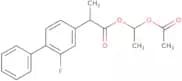
CAS:<p>1-Acetoxyethyl 2-(2-fluoro-4-biphenylyl)propionate is a synthetic analog of flurbiprofen that has potent nonsteroidal anti-inflammatory drug activity. It binds to the same receptor as flurbiprofen, but with a higher affinity. 1-Acetoxyethyl 2-(2-fluoro-4-biphenylyl)propionate is used for the treatment of postoperative pain and inflammation following abdominal surgery. This compound is also used for the prevention of ischemic brain damage after cardiac bypass surgery or other types of vascular surgery, such as carotid endarterectomy. 1-Acetoxyethyl 2-(2-fluoro-4-biphenylyl)propionate can be synthesized by reacting bisphenol A with carbonyldiimidazole and 4-[2-(2,4 -difluorophenyl)-</p>Formula:C19H19FO4Purity:Min. 95%Color and Shape:Orange PowderMolecular weight:330.35 g/mol1-(3-Fluoro-4-methoxyphenyl)-2-nitropropene
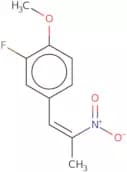
CAS:<p>1-(3-Fluoro-4-methoxyphenyl)-2-nitropropene is a chemical compound with the molecular formula CHNO. It is a high quality reagent that is useful for preparing complex compounds, scaffolds and building blocks for use in research and development. 1-(3-Fluoro-4-methoxyphenyl)-2-nitropropene is a fine chemical that can be used as a versatile building block in reactions.</p>Formula:C10H10FNO3Purity:Min. 95%Molecular weight:211.19 g/mol2-Chloro-4-methylaniline
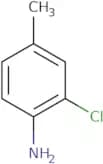
CAS:2-Chloro-4-methylaniline is a molecule that can be classified as an amine. It is a functional theory, which is a chemical ionization technique used to study the structure of molecules. 2-Chloro-4-methylaniline has been shown to have high metabolic profiles and to produce many metabolic products when it reacts with chlorine in the environment. This chemical has been studied extensively for its potential carcinogenic properties. It was found that 2-chloro-4-methylaniline causes DNA damage in human erythrocytes and induces mutations in calf thymus DNA, suggesting that this molecule may be carcinogenic. 2-Chloro-4-methylaniline also binds to hemoglobin, which may lead to the formation of methemoglobin that reduces oxygen transport in red blood cells. The matrix effect of this chemical on clinical pathology is not known.Formula:C7H8ClNPurity:Min. 95%Molecular weight:141.6 g/mol9-Mesityl-10-methylacridinium perchlorate
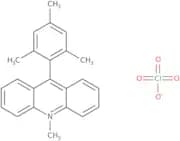
CAS:9-Mesityl-10-methylacridinium perchlorate is a cross-coupling reagent that can be used to form amines from alkenes via bond cleavage. The mechanism of this reaction involves irradiation, which generates radical species, and the use of molecular probes to rationalize the rate of the reaction. 9-Mesityl-10-methylacridinium perchlorate is a highly reactive compound with a short half life, which makes it an ideal candidate for generating radicals in order to study mechanistic studies on acridinium.Formula:C23H22ClNO4Purity:Min. 95%Color and Shape:PowderMolecular weight:411.88 g/mol[(1,2-Dimethyl-1H-benzimidazol-5-yl)methyl]amine dihydrochloride
CAS:<p>[(1,2-Dimethyl-1H-benzimidazol-5-yl)methyl]amine dihydrochloride is a reagent that is used as a reaction component in the synthesis of organic and inorganic compounds. It is used as a high quality research chemical for use in the production of fine chemicals and pharmaceuticals. This compound has many uses as a versatile building block, useful intermediate, or useful building block in the synthesis of complex compounds. It can also be used to make various speciality chemicals. [(1,2-Dimethyl-1H-benzimidazol-5-yl)methyl]amine dihydrochloride is stable at room temperature and can be stored under ambient conditions indefinitely.</p>Formula:C10H13N3·2HClPurity:Min. 95%Color and Shape:White PowderMolecular weight:248.15 g/mol3-(2,2-Dichlorovinyl)-2,2-dimethylcyclopropanecarboxylic acid
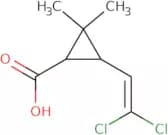
CAS:3-(2,2-Dichlorovinyl)-2,2-dimethylcyclopropanecarboxylic acid is a metabolite of the drug dextran sulfate. It is also an industrial chemical that has been used as a cross-linking agent in the manufacture of polymers and plastics. 3-(2,2-Dichlorovinyl)-2,2-dimethylcyclopropanecarboxylic acid binds to chloride ions in the blood and increases blood pressure by blocking the production of renin. This compound can be found in urine samples as a result of its excretion from the body. 3-(2,2-Dichlorovinyl)-2,2-dimethylcyclopropanecarboxylic acid has been shown to increase the levels of coagulation factors VIII and IX in human serum. It also has been shown to react with other chemicals in order to form ion pairs that can be detected using chemical ionFormula:C8H10Cl2O2Purity:Min. 95%Color and Shape:PowderMolecular weight:209.07 g/mol4-Chloro-2-fluorobenzonitrile
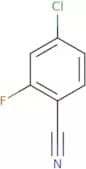
CAS:4-Chloro-2-fluorobenzonitrile is a chemical compound with the molecular formula CHClFNO. It is an organic chemical that belongs to the category of nitrogen-containing compounds. 4-Chloro-2-fluorobenzonitrile is used in the synthesis of ethyl cyanoacetate, which is a chemical intermediate for the production of pharmaceuticals and other organic compounds. This product can be combined with potassium carbonate and ethyl cyanoacetate to create a reagent that can be used as a precursor in organic synthesis.Formula:C7H3ClFNPurity:Min. 95%Color and Shape:PowderMolecular weight:155.56 g/mol2-(4-Bromophenyl)ethanol
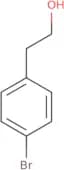
CAS:2-(4-Bromophenyl)ethanol is an analog of histone lysine and histone H3. It is a synthetic substrate for the acylation reaction on the carboxyl group of fatty acids. 2-(4-Bromophenyl)ethanol has been shown to have optical properties similar to those of natural fatty acids and has been used as a polymer film for cell line A549.Formula:C8H9BrOPurity:Min. 95%Color and Shape:Slightly Yellow Clear LiquidMolecular weight:201.06 g/mol2,3-Difluorophenylacetic acid
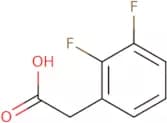
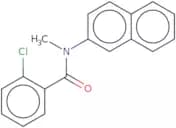
CAS:<p>2,3-Difluorophenylacetic acid is an industrial chemical that has been used as a solvent and an additive in paint, varnish, lacquer, and rubber. It is also used to make other chemicals such as cyclen. 2,3-Difluorophenylacetic acid has been shown to have fluorescence properties that can be detected by chromatography. The use of this compound is not restricted by any major regulations or health concerns. It can be prepared industrially from carbon tetrachloride with the use of modifiers and additives. This chemical can also be localized in the environment by using chloride techniques for detection.</p>Formula:C8H6F2O2Purity:Min. 95%Molecular weight:172.13 g/molN-Methyl-N-(1-naphthyl)-1-chlorobenzamide
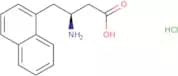
CAS:N-Methyl-N-(1-naphthyl)-1-chlorobenzamide is a versatile and useful chemical that can be used in the preparation of many different compounds. It is a reaction component and reagent, as well as a useful scaffold for the synthesis of many different compounds. It has high quality and is used in research chemicals. N-Methyl-N-(1-naphthyl)-1-chlorobenzamide has CAS No. 74881-60-0 and is a speciality chemical. It can also be used as a versatile building block or intermediates for the synthesis of more complex compounds.Formula:C18H14ClNOPurity:Min. 95%Molecular weight:295.76 g/mol(S)-3-Amino-4-(1-naphthyl)butanoic acid hydrochloride
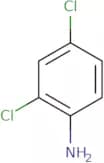
CAS:<p>(S)-3-Amino-4-(1-naphthyl)butanoic acid hydrochloride is a high quality chemical that is used as a reaction component for the synthesis of complex organic compounds. It may also be used to produce fine chemicals, pharmaceuticals, and other useful compounds. This product has a wide variety of uses including as an intermediate in the production of speciality chemicals, as a building block for synthesizing more complex compounds, or as a precursor to producing other useful chemicals.</p>Formula:C14H16ClNO2Purity:Min. 95%Color and Shape:White PowderMolecular weight:265.74 g/mol2,4-Dichloroaniline
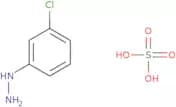
CAS:<p>2,4-Dichloroaniline is an organic compound that is used in analytical chemistry for the preparation of samples. 2,4-Dichloroaniline reacts with p-hydroxybenzoic acid to form a diazonium salt. This reaction takes place at room temperature and produces a deep violet color. The detection sensitivity of this reaction is 0.1 µg/mL. The glucuronide conjugate of 2,4-dichloroaniline has been detected in human urine samples and can be used as a marker for exposure to this chemical. 2,4-Dichloroaniline also inhibits protein synthesis by binding to amines or by affecting the availability of the amino acids required for protein synthesis. The hydrochloric acid present in stomachs converts 2,4-dichloroaniline into phenylglyoxylic acid, which is then excreted in the urine as its glucuronide conjugate</p>Formula:C6H5Cl2NPurity:Min. 95%Color and Shape:White To Beige To Grey To Red To Brown SolidMolecular weight:162.02 g/mol3-Chlorophenylhydrazine sulphate
CAS:<p>3-Chlorophenylhydrazine sulphate is a chemical compound that is made by the reaction of 3-chlorophenol and hydrazine. It has been shown to be stable when mixed with other compounds, such as acetone. 3-Chlorophenylhydrazine sulphate has a reaction time of one hour when it is reacted with sodium hydrogen sulfate and zinc powder in a liquid chromatography column. The final product is detected using chromatography detection, which can detect the presence of sulfates. This chemical compound can be used to make other chemicals, such as thiosulfate or hydrochloric acid.</p>Formula:C12H14Cl2N4•H2O4SPurity:Min. 95%Color and Shape:PowderMolecular weight:383.25 g/molBoc-2-chloro-L-phenylalanine
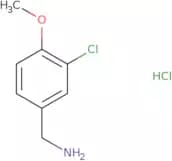
CAS:<p>Boc-2-chloro-L-phenylalanine is a versatile building block that can be used as an intermediate or a reaction component. It has the following properties: CAS No. 114873-02-8, fine chemical, useful scaffold, versatile building block, useful intermediate, research chemicals, reaction component, speciality chemical, complex compound, useful building block. Boc-2-chloro-L-phenylalanine is a high quality reagent that can be used for research purposes.</p>Formula:C14H18ClNO4Purity:Min. 98 Area-%Color and Shape:PowderMolecular weight:299.75 g/mol3-Chloro-4-methoxybenzylamine hydrochloride
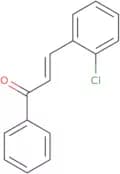
CAS:3-Chloro-4-methoxybenzylamine hydrochloride is a quinoline derivative that inhibits the activity of phosphodiesterase 5, an enzyme that breaks down cGMP in the brain. This drug has been shown to increase levels of cGMP and decrease levels of low energy (i.e., low ATP) in synaptosomes. 3-Chloro-4-methoxybenzylamine hydrochloride may be useful for the treatment of Alzheimer's disease, as it has been shown to improve cognitive function and memory in animal models. The mechanism of action is not fully understood but may involve inhibition of cholinergic neurotransmission or activation of nitric oxide synthase.Formula:C8H10ClNO•HClPurity:Min. 95%Color and Shape:PowderMolecular weight:208.08 g/mol3-(2-Chlorophenyl)-1-phenylpropene-1-one
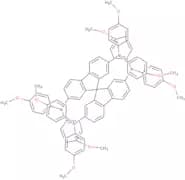
CAS:3-(2-Chlorophenyl)-1-phenylpropene-1-one is an amide that is synthesized by the acylation of 3-phenylpropene-1-one with 2,3,5,6-tetrafluorobenzoyl chloride in the presence of a base. The proton transport mechanism is initiated by the addition of a proton to the carbonyl group and then proceeds through an intermediate called a chalcone. This reaction can be accomplished using biomimetic methods or by using chalcones and halides as intermediates.Formula:C15H11ClOPurity:Min. 95%Molecular weight:242.7 g/mol2,2',7,7'-Tetrakis-(N,N-di-4-methoxyphenylamino)-9,9'-spirobifluorene - Sublimed grade
CAS:<p>2,2',7,7'-Tetrakis-(N,N-di-4-methoxyphenylamino)-9,9'-spirobifluorene (TPB) is a model system for investigating the transport of light signal in polymers. TPB can be used as a component in solar cells to increase their efficiency and improve their resistance to heat. TPB has shown high resistance to hydrochloric acid and other aggressive chemicals. TPB has been shown to be an effective photoelectron donor with a redox potential that is close to the one of copper; this property can be used for electrochemical impedance spectroscopy.</p>Formula:C81H68N4O8Purity:Min. 95%Color and Shape:Off-white to yellow solid.Molecular weight:1,225.43 g/mol


![[(1,2-Dimethyl-1H-benzimidazol-5-yl)methyl]amine dihydrochloride](/_next/image/?url=https%3A%2Fstatic.cymitquimica.com%2Fproducts%2F3D%2Fthumb-webp%2FFD135142.webp&w=3840&q=75)