Organic Halides
In this category, you can find organic molecules containing one or more halogen atoms in their structure. These organic halides include brominated, iodinated, chlorinated, and cyclic halide compounds. Organic halides are widely used in organic synthesis, pharmaceuticals, agrochemicals, and materials science due to their reactivity and ability to undergo a variety of chemical transformations. At CymitQuimica, we offer a comprehensive selection of high-quality organic halides to support your research and industrial applications, ensuring reliable and effective performance in your synthetic and analytical projects.
Subcategories of "Organic Halides"
Found 20440 products of "Organic Halides"
Sort by
Purity (%)
0
100
|
0
|
50
|
90
|
95
|
100
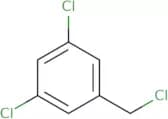
3,5-Dichlorobenzyl chloride
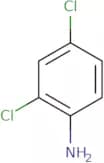
CAS:<p>3,5-Dichlorobenzyl chloride is a colorless crystallizing solid that is insoluble in water and soluble in alcohol. It can be prepared by refluxing 3,5-dichlorobenzyl alcohol with zinc chloride. The compound has been shown to have the ability to disrupt the aromatic system of certain pesticides and is used for pest control. It can also be used as an intermediate for the synthesis of 3,5-dichlorobenzoic acid. 3,5-Dichlorobenzyl chloride has been shown to bind to dna and inhibit the bacterial enzyme topoisomerase II.</p>Formula:C7H5Cl3Purity:Min. 95%Color and Shape:SolidMolecular weight:195.47 g/mol2,4-Dichloroaniline
CAS:<p>2,4-Dichloroaniline is an organic compound that is used in analytical chemistry for the preparation of samples. 2,4-Dichloroaniline reacts with p-hydroxybenzoic acid to form a diazonium salt. This reaction takes place at room temperature and produces a deep violet color. The detection sensitivity of this reaction is 0.1 µg/mL. The glucuronide conjugate of 2,4-dichloroaniline has been detected in human urine samples and can be used as a marker for exposure to this chemical. 2,4-Dichloroaniline also inhibits protein synthesis by binding to amines or by affecting the availability of the amino acids required for protein synthesis. The hydrochloric acid present in stomachs converts 2,4-dichloroaniline into phenylglyoxylic acid, which is then excreted in the urine as its glucuronide conjugate</p>Formula:C6H5Cl2NPurity:Min. 95%Color and Shape:White To Beige To Grey To Red To Brown SolidMolecular weight:162.02 g/mol1-Hexyl-3-methylimidazolium hexafluorophosphate
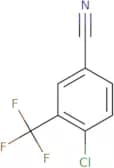
CAS:<p>1-Hexyl-3-methylimidazolium hexafluorophosphate is a cationic surfactant that is soluble in water. It has been shown to be effective for the removal of heavy metals, organic pollutants, and radioactive substances from wastewater by anion exchange resin. This compound also interacts with potassium hexafluorophosphate (KFP) to form a highly efficient ion pair. The transport properties of 1-hexyl-3-methylimidazolium hexafluorophosphate are due to its concentration dependent interactions with water molecules, which are affected by the temperature and pressure. The Langmuir adsorption isotherm has been used to describe the equilibrium between 1-hexyl-3-methylimidazolium hexafluorophosphate and KFP.</p>Formula:C10H19F6N2PPurity:Min. 95%Color and Shape:Colourless To Yellow LiquidMolecular weight:312.24 g/mol4-Chloro-3-(trifluoromethyl)benzonitrile
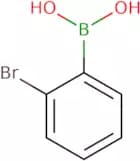
CAS:<p>4-Chloro-3-(trifluoromethyl)benzonitrile is a polyketone that is synthesized from biphenylene and chloroform. It is an isomer of 3-chlorobenzonitrile and can be used as a monomer for the synthesis of polyketones. 4-Chloro-3-(trifluoromethyl)benzonitrile undergoes sequential acylation with acetyl chloride to form 4-chloro-3-(trifluoromethyl)phenol, which undergoes electrophilic polycondensation with ethylene glycol to form the final product. This process can be done in one step by reacting the biphenylene, chloroform, and acetyl chloride together in presence of heat.</p>Formula:C8H3ClF3NPurity:Min. 95%Color and Shape:SolidMolecular weight:205.56 g/mol2-Bromophenylboronic acid
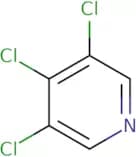
CAS:<p>2-Bromophenylboronic acid is a glucose monitoring agent that has a ruthenium complex with an acidic environment. The nitro group and the amines are in close proximity to the boron center, and this proximity leads to a high nucleophilic character of the molecule. This reactivity allows 2-bromophenylboronic acid to be used as a fluorescence probe for acidic environments. 2-Bromophenylboronic acid also inhibits secretase enzymes, which are involved in Alzheimer’s disease and other neurodegenerative disorders. It is an inhibitor of γ-secretase, which is responsible for cleaving the amyloid precursor protein (APP), and it has shown efficacy against biphenyl, an anticancer drug that binds to benzodiazepine receptors.<br>2-Bromophenylboronic acid is also an enantiopure compound because all four substituents are different from each other.</p>Formula:C6H6BBrO2Purity:Min. 95%Color and Shape:White PowderMolecular weight:200.83 g/mol3,4,5-Trichloropyridine
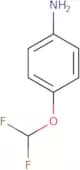
CAS:<p>3,4,5-Trichloropyridine is a cationic polymerization initiator that is used in coatings and pharmaceuticals. 3,4,5-Trichloropyridine is a prodrug of amines that are active substances. It has been shown to be thermodynamically stable and to have analytical methods that are suitable for industrial use. 3,4,5-Trichloropyridine has been studied in the context of its mechanism of action as a PDE-5 inhibitor. The drug's effects have been compared with those of benazepril hydrochloride and carbonyl group analogues using magnetic resonance spectroscopy. Salvianolic acid A and benazepril hydrochloride inhibited the reaction product formation between 3,4,5-trichloropyridine and 2-aminophenol (2AP) by 50%.</p>Formula:C5H2Cl3NPurity:Min. 95%Color and Shape:White PowderMolecular weight:182.43 g/mol4-Difluoromethoxyaniline
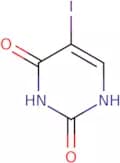
CAS:4-Difluoromethoxyaniline is an allosteric modulator for glutamate receptors. It is a chemical compound that can be used to modify glutamate receptors to act as either metabotropic or ionotropic. 4-Difluoromethoxyaniline is used in the treatment of Parkinson's disease and other movement disorders, such as dyskinesia. It has been shown that 4-difluoromethoxyaniline increases the activity of activated glutamate receptors, which leads to increased levels of the neurotransmitter dopamine in the brain. This drug may also inhibit nitric oxide production and corticotropin-releasing hormone (CRH) synthesis.Formula:C7H7F2NOPurity:Min. 95%Molecular weight:159.13 g/mol5-Iodouracil
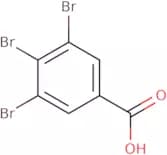
CAS:<p>5-Iodouracil is an irreversible inhibitor of 5-hydroxytryptamine 2B receptor (5-HT2B) that is a group p2 molecule. It has been found to be effective in the treatment of various types of cancer, including colorectal cancer. 5-Iodouracil inhibits cell proliferation by blocking the binding of the growth factor to its receptor on the surface of cells. The drug also inhibits the enzyme activities of human serum albumin and tyrosine phosphatase.</p>Formula:C4H3IN2O2Purity:Min. 97 Area-%Color and Shape:White PowderMolecular weight:237.98 g/mol3,4,5-Tribromobenzoic acid - technical grade
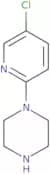
CAS:3,4,5-Tribromobenzoic acid is a benzoic acid with the molecular formula C6H3Br3O2. It is used as a plant growth regulator in agriculture and gardening. 3,4,5-Tribromobenzoic acid may be applied to the surface of plants to stimulate abscission (the natural shedding of leaves) or excision (the removal of flowers). This chemical also has been shown to inhibit physiological activity in plants by inhibiting 2,3,5-triiodobenzoic acid synthesis. This inhibition leads to a reduction in the production of substances that are involved in physiological processes such as photosynthesis and protein synthesis.Formula:C7H3Br3O2Purity:Min. 95%Molecular weight:358.81 g/mol1-(5-Chloropyridin-2-yl)piperazine
CAS:<p>1-(5-Chloropyridin-2-yl)piperazine is a chemical compound that binds to the tropane receptor. It has been shown to have affinity for the ligands of protein kinase C, and as such may be useful in treating tumors. 1-(5-Chloropyridin-2-yl)piperazine is an analog of homopiperazine and piperazine and is related to the oxime class of compounds. It has not been shown to have any affinity for the other types of receptors, including dopamine, serotonin, acetylcholine, or histamine receptors.</p>Formula:C9H12ClN3Purity:Min. 95%Color and Shape:White/Off-White SolidMolecular weight:197.66 g/mol(1R,2S)-2-(3,4-Difluorophenyl)cyclopropanamine hydrochloride
CAS:<p>(1R,2S)-2-(3,4-Difluorophenyl)cyclopropanamine hydrochloride is a fine chemical that has been used as a building block to make other compounds. It is also an intermediate in organic synthesis and research chemicals. (1R,2S)-2-(3,4-Difluorophenyl)cyclopropanamine hydrochloride can be used in the production of complex compounds with high quality.</p>Formula:C9H9F2N·HClPurity:Min. 95%Color and Shape:White PowderMolecular weight:205.63 g/molDichloro[9,9-dimethyl-4,5-bis(diphenylphosphino)xanthene]palladium(II)
CAS:Controlled ProductDichloro[9,9-dimethyl-4,5-bis(diphenylphosphino)xanthene]palladium(II) is a fine chemical that can be used as a building block in the synthesis of compounds with diverse structures. It is a research chemical and reagent that has been found to be useful in the synthesis of complex organic compounds. This compound is also versatile enough to be used as an intermediate or scaffold in the synthesis of many different types of organic compounds.Formula:C39H32Cl2OP2PdPurity:Min. 95%Color and Shape:Yellow PowderMolecular weight:755.94 g/mol2,5-Dibromothiophene
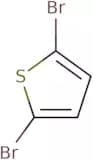
CAS:<p>2,5-Dibromothiophene is a reactive intermediate that has been used in the synthesis of ondansetron hydrochloride. 2,5-Dibromothiophene can be prepared by the reaction of triethyl orthoformate and thiophene. The compound spontaneously undergoes bond cleavage to give the dibromo derivative followed by oxidation with aqueous hydrogen peroxide. 2,5-Dibromothiophene has been shown to have photocatalytic activity under visible light irradiation. This compound functions as a monomer in the polymerization of polythiophenes. 2,5-Dibromothiophene can also be used in palladium-catalyzed cross-coupling reactions with azasetron hydrochloride to form x-ray crystal structures and nmr spectra.</p>Formula:C4H2Br2SPurity:Min. 95%Color and Shape:Colourless To Yellow LiquidMolecular weight:241.93 g/mol4-(3-Chloropropyl)morpholine
CAS:<p>4-(3-Chloropropyl)morpholine is a hydrochloride salt of the potent inhibitor 4-(3-chloropropyl)morpholine. It has an inhibitory effect on cancer, and is used in chromatographic science to separate amines from aliphatic hydrocarbons. 4-(3-Chloropropyl)morpholine inhibits epidermal growth factor (EGF) and has been shown to have a potent inhibitory effect on EGF receptor tyrosine kinase activity. It also inhibits the proliferation of cells by inhibiting DNA synthesis. This compound causes cell death through the inhibition of protein synthesis, which may be due to its ability to inhibit nucleophilic reactions that are involved in protein synthesis. 4-(3-Chloropropyl)morpholine can also fluoresce under UV light, which makes it useful for research purposes.</p>Formula:C7H14ClNOPurity:Min. 95%Color and Shape:Clear LiquidMolecular weight:163.64 g/mol2-(2,4-Dichlorophenyl)ethanol
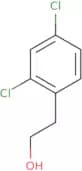
CAS:2-(2,4-Dichlorophenyl)ethanol is an organic compound that can be synthesized by reacting 2,4-dichlorobenzoic acid with trifluoroacetic acid in the presence of a base. The reaction scheme is:Formula:C8H8Cl2OPurity:Min. 95%Molecular weight:191.05 g/molDichloroacetaldehyde hydrate
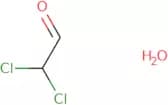
CAS:<p>Dichloroacetaldehyde hydrate is an organic compound that is used in the treatment of skin cancer. It has been shown to have protective effects on cell membranes, which may be due to its ability to inhibit lipid peroxidation. Dichloroacetaldehyde hydrate also has a potential use as a radiation sensitizer and may be able to extend the lifespan of animals.</p>Formula:C2H4Cl2O2Purity:Min. 95%Color and Shape:PowderMolecular weight:130.96 g/mol4-Chloro-1H-pyrazole-3-carboxaldehyde
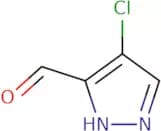
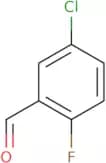
CAS:4-Chloro-1H-pyrazole-3-carboxaldehyde is a fine chemical that is used as a building block in research and development. The CAS number is 623570-54-7. This compound has been found to be useful in the synthesis of complex compounds and versatile scaffolds.Formula:C4H3ClN2OPurity:Min. 95%Color and Shape:SolidMolecular weight:130.53 g/mol5-Chloro-2-fluorobenzaldehyde
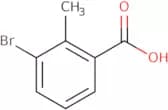
CAS:<p>5-Chloro-2-fluorobenzaldehyde is an efficient method for synthesizing substituted benzoic acid derivatives. It is a useful reagent in the acylation reaction. 5-Chloro-2-fluorobenzaldehyde also has high yields and can be used as a substitute for other more toxic or expensive compounds.</p>Formula:C7H4ClFOPurity:Min. 95%Molecular weight:158.56 g/mol3-Bromo-2-methylbenzoic acid
CAS:<p>3-Bromo-2-methylbenzoic acid is a hydrogen bond donor. Hydrogen bonding may provide an explanation for the functional theory of 3-bromo-2-methylbenzoic acid, which has been shown to have anticancer properties in vitro and in vivo. This compound has been shown to be effective against cancer cells that express PDL1 (programmed cell death protein 1) and is being studied as a potential therapeutic agent for cancers that are resistant to conventional anticancer drugs. 3-Bromo-2-methylbenzoic acid has low solubility in water and is poorly absorbed from the gastrointestinal tract. It also does not bind to plasma proteins, which makes it pharmacologically active even at low doses. 3BBMBA inhibits viral replication by binding to the viral RNA polymerase enzyme, thereby inhibiting transcription and replication of the virus genome. In addition, it inhibits the proliferation of human cancer cells through inhibition of protein synthesis and DNA synthesis</p>Formula:C8H7BrO2Purity:Min. 95%Color and Shape:PowderMolecular weight:215.04 g/mol2-Bromoquinoline
CAS:<p>2-Bromoquinoline is an antimicrobial agent that binds to bacterial receptors. It is a bifunctional molecule with two reactive groups: a hydroxyl group and a nitrogen atom. 2-Bromoquinoline has been shown to inhibit the growth of various bacteria, including Mycobacterium tuberculosis, Staphylococcus epidermidis and Streptococcus pyogenes, by preventing the formation of a proton gradient across the bacterial membrane. 2-Bromoquinoline also inhibits hyperproliferative diseases such as amyloidosis in mice by binding to amyloid fibrils. This drug has been shown to cause DNA damage in mammalian cells, which may be due to its ability to form hydrogen bonds with methyl ethyl groups on DNA bases.</p>Formula:C9H6BrNPurity:Min. 95%Color and Shape:White To Yellow To Pink SolidMolecular weight:208.05 g/mol



![Dichloro[9,9-dimethyl-4,5-bis(diphenylphosphino)xanthene]palladium(II)](/_next/image/?url=https%3A%2Fstatic.cymitquimica.com%2Fproducts%2F3D%2Fthumb-webp%2FFD60980.webp&w=3840&q=75)