Organic Halides
In this category, you can find organic molecules containing one or more halogen atoms in their structure. These organic halides include brominated, iodinated, chlorinated, and cyclic halide compounds. Organic halides are widely used in organic synthesis, pharmaceuticals, agrochemicals, and materials science due to their reactivity and ability to undergo a variety of chemical transformations. At CymitQuimica, we offer a comprehensive selection of high-quality organic halides to support your research and industrial applications, ensuring reliable and effective performance in your synthetic and analytical projects.
Subcategories of "Organic Halides"
Found 20440 products of "Organic Halides"
Sort by
Purity (%)
0
100
|
0
|
50
|
90
|
95
|
100
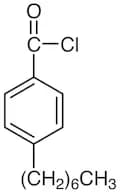
4-Heptylbenzoyl Chloride
CAS:Formula:C14H19ClOPurity:>98.0%(T)Color and Shape:Colorless to Yellow clear liquidMolecular weight:238.761,4-Bis(bromomethyl)benzene
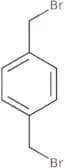
CAS:<p>1,4-Bis(bromomethyl)benzene is a molecule that has a variety of uses. It is used as an adsorbent for the purification of aromatic hydrocarbons and can also be used in synthesizing coumarin derivatives. It is also a component in x-ray crystal structures, ether linkages, chemical structures, and other organic compounds. 1,4-Bis(bromomethyl)benzene reacts with nucleophiles such as chloride to form diphenyl ethers. The synthesis of 1,4-bis(bromomethyl)benzene begins with the reaction of pyridinedicarboxylic acid and bromine in the presence of an organic solvent. This process creates a mixture containing diphenyl ethers and other halogenated aromatic compounds that can then be purified by crystallization or distillation.</p>Formula:C8H8Br2Purity:Min. 95%Color and Shape:White Clear LiquidMolecular weight:263.96 g/mol4-Aminobenzyl alcohol hydrochloride
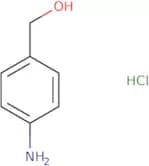
CAS:<p>4-Aminobenzyl alcohol hydrochloride is a fine chemical that is used as a building block for research chemicals, reagents, and specialty chemicals. It can be used as a versatile building block in the synthesis of many complex compounds. 4-Aminobenzyl alcohol hydrochloride is also an intermediate for the synthesis of pharmaceuticals and other useful compounds. CAS No. 170926-25-7</p>Formula:C7H10ClNOPurity:Min. 95%Color and Shape:PowderMolecular weight:159.61 g/mol3-Bromo-2-nitroanisole
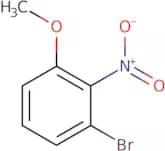
CAS:<p>3-Bromo-2-nitroanisole is a potassium channel blocker that has neuroprotective effects. It can be used for the treatment of glaucoma and hypertension. 3-Bromo-2-nitroanisole can inhibit the activity of potassium channels and act as a neuroprotective agent. The drug has been shown to have neuroprotective effects in animal models, with evidence of efficacy in humans. The drug also inhibits the production of nitric oxide, which may contribute to its neuroprotective effect.</p>Formula:C7H6BrNO3Purity:Min. 95%Color and Shape:Off-White PowderMolecular weight:232.03 g/mol2,6-Dichlorobenzoic acid
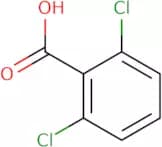
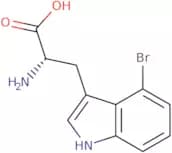
CAS:2,6-Dichlorobenzoic acid (2,6-DCBA) is a chemical substance that can be found in groundwater. 2,6-DCBA is metabolized by colon cells to produce metabolites, including 2,4-dichlorophenol and 4-chlorophenylacetic acid. The metabolic reaction products have been shown to inhibit the uptake of radioactive iodine by Caco-2 cells. 2,6-DCBA is also a monocarboxylic acid with two nitrogen atoms. It has been shown to have acute toxicities in rats and other animals. This substance can also be used as an analytical reagent for the determination of metals such as iron and copper.Formula:C7H4Cl2O2Purity:Min. 95%Color and Shape:PowderMolecular weight:191.01 g/mol4-Bromo-L-tryptophan
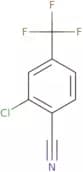
CAS:4-Bromo-L-tryptophan is an amino acid that is used in the synthesis of biomimetic molecules. It is synthesized by allylation with bromine and then chromatographically purified. 4-Bromo-L-tryptophan can also be used to study the biosynthesis of tryptophan. 4-Bromo-L-tryptophan has a molecular weight of 204.2 daltons and a pKa of 5.72, which makes it acidic at physiological pH values. The compound spontaneously forms anhydride with hydroxytryptophan, which stabilizes it and prevents hydrolysis reactions. The optimum temperature for enzymatic activity is 160 degrees Celsius, and kinetic constants have been determined at this temperature as well as at 100 degrees Celsius. Catalytic asymmetric synthesis has also been accomplished using 4-bromo L tryptophan as a substrate.Formula:C11H11BrN2O2Purity:Min. 95%Color and Shape:Slightly Yellow PowderMolecular weight:283.12 g/mol2-Chloro-4-trifluoromethylbenzonitrile
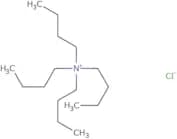
CAS:2-Chloro-4-trifluoromethylbenzonitrile is a fine chemical that belongs to the category of research chemicals, reagents and speciality chemicals. It is a versatile building block which can be used as a reaction component or useful intermediate in the synthesis of complex compounds. This compound also has many different uses, including as a useful scaffold for organic molecules.Formula:C8H3ClF3NPurity:Min. 95%Color and Shape:LiquidMolecular weight:205.57 g/molTetra-n-butylammonium chloride anhydrous
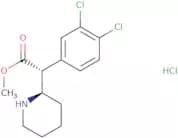
CAS:Tetra-n-butylammonium chloride anhydrous (TBACl) is an inorganic acid that is a colorless solid. It is soluble in water and soluble in organic solvents. TBACl reacts with hydrogen fluoride to form a colorless solution of tetrabutylammonium hydrogen fluoride (TBHF). The reaction proceeds by the following equation:Formula:C16H36NClPurity:Min. 95%Color and Shape:White PowderMolecular weight:277.92 g/mol3,4-Dichloromethylphenidate HCl
CAS:Controlled Product<p>3,4-Dichloromethylphenidate HCl is a versatile building block that can be used in the synthesis of many complex compounds. It has been shown to be useful as a reagent and as an intermediate in the synthesis of pharmaceuticals. This compound may also have potential for use as a reaction component and scaffold in organic chemistry. 3,4-Dichloromethylphenidate HCl is available at high quality and is a useful building block for research purposes.</p>Formula:C14H17Cl2NO2·HClPurity:Min. 95%Color and Shape:PowderMolecular weight:338.66 g/mol[3-Methyl-4-(2,2,2-trifluoro-ethoxy)-pyridin-2-yl]-methanol
CAS:[3-Methyl-4-(2,2,2-trifluoro-ethoxy)-pyridin-2-yl]-methanol is a synthetic organic compound that is used in the synthesis of other organic compounds. It can be purified by filtration or gasification and recrystallization.Purity:Min. 95%Color and Shape:Powder2-Fluoro-5-methylpyridine-3-boronic acid
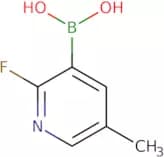
CAS:<p>2-Fluoro-5-methylpyridine-3-boronic acid is a high quality chemical with CAS No. 1072952-45-4 that is a useful building block for the synthesis of complex compounds and speciality chemicals. 2-Fluoro-5-methylpyridine-3-boronic acid is also a versatile building block that can be used in organic reactions as a reaction component for the synthesis of speciality chemicals and other reagents. It can also be used to make fluoroquinolones and related pharmaceuticals, which are used to treat bacterial infections. This compound has many uses in research, including being a valuable scaffold for the synthesis of new drugs.</p>Formula:C6H7BFNO2Purity:Min. 95%Color and Shape:White PowderMolecular weight:154.93 g/mol3-(2-Chlorophenyl)-2-phenyl-3H-indole
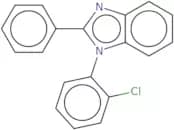
CAS:3-(2-Chlorophenyl)-2-phenyl-3H-indole is a versatile building block that can be used as a precursor in the synthesis of a wide range of complex compounds. 3-(2-Chlorophenyl)-2-phenyl-3H-indole has been shown to be an effective reagent for the synthesis of heterocycles and useful for the preparation of diverse speciality chemicals. 3-(2-Chlorophenyl)-2-phenyl-3H-indole is also an important intermediate in the synthesis of pharmaceuticals, agrochemicals, dyes, and perfumes. It is also a useful scaffold for organic chemistry reactions and can serve as a reaction component because it contains two reactive groups.Formula:C19H13ClN2Purity:Min. 95%Molecular weight:304.77 g/mol2-Chloro-6-methylaniline
CAS:2-Chloro-6-methylaniline is a molecule that has been used for wastewater treatment and process optimization. It is synthesized from the reaction of amines with trifluoroacetic acid. 2-Chloro-6-methylaniline was found to stimulate the growth of human population in a study conducted at the University of Texas. This molecule has been shown to inhibit the proliferation of t-cells by binding to their surface receptors. 2-Chloro-6-methylaniline has also been shown to be effective in inhibiting dasatinib, which is an anti-cancer drug. 2CMA binds to dasatinib and inhibits its activity by competing with it for binding sites on the protein target. The structure of 2CMA is characterized by proton NMR spectroscopic data and liquid chromatography methods.Formula:C7H8ClNPurity:Min. 95%Color and Shape:Colourless To Purple To Brown LiquidMolecular weight:141.6 g/mol(S)-3-Amino-4-(1-naphthyl)butanoic acid hydrochloride
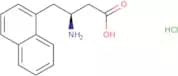
CAS:<p>(S)-3-Amino-4-(1-naphthyl)butanoic acid hydrochloride is a high quality chemical that is used as a reaction component for the synthesis of complex organic compounds. It may also be used to produce fine chemicals, pharmaceuticals, and other useful compounds. This product has a wide variety of uses including as an intermediate in the production of speciality chemicals, as a building block for synthesizing more complex compounds, or as a precursor to producing other useful chemicals.</p>Formula:C14H16ClNO2Purity:Min. 95%Color and Shape:White PowderMolecular weight:265.74 g/mol(R)-(+)-1-(4-Bromophenyl)ethylamine
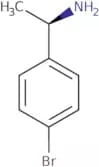
CAS:<p>(R)-(+)-1-(4-Bromophenyl)ethylamine is a chiral anion that can be used as a ligand for supramolecular chemistry. It reacts with primary amines to form a diazenyl (an anion with two nitrogen atoms and one carbon atom). The diazenyl molecule has been shown to have chemotactic activity and to stimulate the immune system. The (R)-(+)-1-(4-bromophenyl)ethylamine is generally stable when it is in contact with water, but is unstable when heated due to decomposition by light or oxygen.</p>Formula:C8H10BrNPurity:Min. 95%Color and Shape:Clear LiquidMolecular weight:200.08 g/mol4-Chloro-2-fluorobenzaldehyde
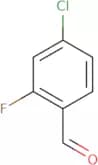
CAS:4-Chloro-2-fluorobenzaldehyde is an aryl aldehyde that belongs to the class of chemical compounds known as chloroaldehydes. It can be synthesized from 4-chlorophenylacetic acid and 2,3-dichloroacetone. The compound is chiral and has two enantiomers. One enantiomer is less reactive than the other, which is more reactive. 4-Chloro-2-fluorobenzaldehyde can be used in the synthesis of a variety of organic compounds, such as pharmaceuticals, herbicides, pesticides, and dyes. This compound can also be used for microbial strain identification by liquid chromatography (LC) with ultraviolet (UV) detection. The yields are typically high (>90%), and the process can be performed at room temperature without any need for vacuum or pressure conditions.Formula:C7H4ClFOPurity:Min. 95%Color and Shape:PowderMolecular weight:158.56 g/mol2-[(3-Chlorobenzyl)oxy]benzoic acid
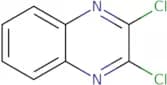
CAS:<p>2-[(3-Chlorobenzyl)oxy]benzoic acid is a synthetic compound. The administration of 2-[(3-Chlorobenzyl)oxy]benzoic acid can be either oral or by subcutaneous injection. The elimination of 2-[(3-Chlorobenzyl)oxy]benzoic acid is mainly through the kidney and urine with a half-life of approximately 5 hours. This drug is metabolized by esterases to benzoic acid, which undergoes hydrolysis in the liver. There is also an elimination rate that has been determined for this drug in animal studies.</p>Formula:C14H11ClO3Purity:Min. 95%Color and Shape:PowderMolecular weight:262.69 g/mol2,3-Dichloroquinoxaline
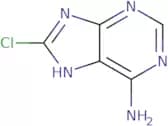
CAS:<p>2,3-Dichloroquinoxaline is a chemical compound that has inhibitory properties against the growth of bacteria. It is reactive and can be used as a disinfectant and antimicrobial agent. 2,3-Dichloroquinoxaline has been shown to have a bactericidal effect against P. aeruginosa in the presence of hydrochloric acid. This chemical also binds to human immunoglobulin (Ig)G molecules and has transport properties. Quinoxalines are an important class of quinoline derivatives that include 2,4-dichlorobenzoic acid, which inhibits bacterial growth by binding to DNA gyrase. The fluorescence property of 2,3-Dichloroquinoxaline is due to its nitrogen nucleophile and chloride ion content. In addition, this chemical's protein–protein interaction activity leads it to bind with other proteins in the cell membrane or cytoplasmic membrane.</p>Formula:C8H4Cl2N2Purity:Min. 95%Color and Shape:Off-White PowderMolecular weight:199.04 g/mol8-Chloroadenine
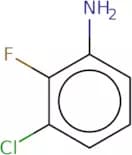
CAS:8-Chloroadenine is an antimicrobial agent that inhibits the DNA replication of bacteria by binding to the dna template. It is a potent inhibitor of oxidative DNA damage and has been shown to be effective against various bacteria, including Staphylococcus aureus. 8-Chloroadenine also has reactive properties and can react with chloride in the environment to form hypochlorous acid (HOCl) and 8-chloroguanine. This compound may also act as an enzyme catalyst for the enzymatic reaction between hypochlorous acid and chloride ions.Formula:C5H4ClN5Purity:Min. 95%Color and Shape:PowderMolecular weight:169.57 g/mol3-Chloro-2-fluoroaniline
CAS:<p>3-Chloro-2-fluoroaniline is an industrial chemical, which is used to manufacture a variety of other chemicals. 3-Chloro-2-fluoroaniline is the product of the chlorinating reaction between 2-fluoroaniline and hydrochloric acid. It has been used in the synthesis of drugs such as probenecid and sulfinpyrazone, which are used for the treatment of cardiac disease. 3-Chloro-2-fluoroaniline also has chloride ion activity and can be used as a synthetic intermediate for other organic acids.</p>Formula:C6H5ClFNColor and Shape:Clear LiquidMolecular weight:145.56 g/mol


![[3-Methyl-4-(2,2,2-trifluoro-ethoxy)-pyridin-2-yl]-methanol](/_next/image/?url=https%3A%2Fstatic.cymitquimica.com%2Fproducts%2F3D%2Fthumb-webp%2FFM38829.webp&w=3840&q=75)

![2-[(3-Chlorobenzyl)oxy]benzoic acid](/_next/image/?url=https%3A%2Fstatic.cymitquimica.com%2Fproducts%2F3D%2Fthumb-webp%2FFC119064.webp&w=3840&q=75)