Organic Halides
In this category, you can find organic molecules containing one or more halogen atoms in their structure. These organic halides include brominated, iodinated, chlorinated, and cyclic halide compounds. Organic halides are widely used in organic synthesis, pharmaceuticals, agrochemicals, and materials science due to their reactivity and ability to undergo a variety of chemical transformations. At CymitQuimica, we offer a comprehensive selection of high-quality organic halides to support your research and industrial applications, ensuring reliable and effective performance in your synthetic and analytical projects.
Subcategories of "Organic Halides"
Found 20440 products of "Organic Halides"
Sort by
Purity (%)
0
100
|
0
|
50
|
90
|
95
|
100
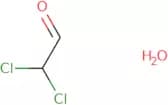
Dichloroacetaldehyde hydrate
CAS:<p>Dichloroacetaldehyde hydrate is an organic compound that is used in the treatment of skin cancer. It has been shown to have protective effects on cell membranes, which may be due to its ability to inhibit lipid peroxidation. Dichloroacetaldehyde hydrate also has a potential use as a radiation sensitizer and may be able to extend the lifespan of animals.</p>Formula:C2H4Cl2O2Purity:Min. 95%Color and Shape:PowderMolecular weight:130.96 g/mol(R)-Benzyl-2-[4-(trifluoromethyl)phenyl]-6,7-dihydro-5H-pyrrolo[2,1-c][1,2,4]triazolium Tetrafluoroborate
CAS:<p>(R)-Benzyl-2-[4-(trifluoromethyl)phenyl]-6,7-dihydro-5H-pyrrolo[2,1-c][1,2,4]triazolium Tetrafluoroborate is a bactericide that inhibits the production of proteins necessary for cellular growth. It has been shown to inhibit the growth of bacteria such as E. coli in vitro and in animal models. The effective dose for this drug is not known at this time.</p>Formula:C19H17BF7N3Purity:Min. 95%Color and Shape:White PowderMolecular weight:431.16 g/mol5-Iodouracil
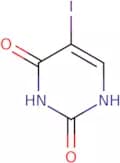
CAS:<p>5-Iodouracil is an irreversible inhibitor of 5-hydroxytryptamine 2B receptor (5-HT2B) that is a group p2 molecule. It has been found to be effective in the treatment of various types of cancer, including colorectal cancer. 5-Iodouracil inhibits cell proliferation by blocking the binding of the growth factor to its receptor on the surface of cells. The drug also inhibits the enzyme activities of human serum albumin and tyrosine phosphatase.</p>Formula:C4H3IN2O2Purity:Min. 97 Area-%Color and Shape:White PowderMolecular weight:237.98 g/mol6-Iodoisatin
CAS:<p>6-Iodoisatin is a potential anticancer agent that has been shown to inhibit the growth of murine melanoma cells in vitro. The mechanism of action is not yet fully understood, but it seems that 6-iodoisatin may inhibit the synthesis of melanin and its cross-coupling reaction. This compound also exhibits affinity for tumour cells and can be radiolabeled with a radionuclide such as iodine-131 (I) or iodine-123 (I). 6-Iodoisatin has been shown to have a high biodistribution profile in mice. It accumulates in melanoma tumours at an amount that is ten times higher than that observed in other tissues.</p>Formula:C8H4INO2Purity:Min. 95%Color and Shape:Orange PowderMolecular weight:273.03 g/mol3,4,5-Trichloropyridine
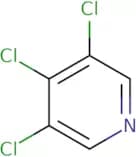
CAS:<p>3,4,5-Trichloropyridine is a cationic polymerization initiator that is used in coatings and pharmaceuticals. 3,4,5-Trichloropyridine is a prodrug of amines that are active substances. It has been shown to be thermodynamically stable and to have analytical methods that are suitable for industrial use. 3,4,5-Trichloropyridine has been studied in the context of its mechanism of action as a PDE-5 inhibitor. The drug's effects have been compared with those of benazepril hydrochloride and carbonyl group analogues using magnetic resonance spectroscopy. Salvianolic acid A and benazepril hydrochloride inhibited the reaction product formation between 3,4,5-trichloropyridine and 2-aminophenol (2AP) by 50%.</p>Formula:C5H2Cl3NPurity:Min. 95%Color and Shape:White PowderMolecular weight:182.43 g/mol4-Chloro-3-(trifluoromethyl)benzonitrile
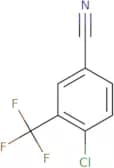
CAS:<p>4-Chloro-3-(trifluoromethyl)benzonitrile is a polyketone that is synthesized from biphenylene and chloroform. It is an isomer of 3-chlorobenzonitrile and can be used as a monomer for the synthesis of polyketones. 4-Chloro-3-(trifluoromethyl)benzonitrile undergoes sequential acylation with acetyl chloride to form 4-chloro-3-(trifluoromethyl)phenol, which undergoes electrophilic polycondensation with ethylene glycol to form the final product. This process can be done in one step by reacting the biphenylene, chloroform, and acetyl chloride together in presence of heat.</p>Formula:C8H3ClF3NPurity:Min. 95%Color and Shape:SolidMolecular weight:205.56 g/mol1-Hexyl-3-methylimidazolium hexafluorophosphate
CAS:<p>1-Hexyl-3-methylimidazolium hexafluorophosphate is a cationic surfactant that is soluble in water. It has been shown to be effective for the removal of heavy metals, organic pollutants, and radioactive substances from wastewater by anion exchange resin. This compound also interacts with potassium hexafluorophosphate (KFP) to form a highly efficient ion pair. The transport properties of 1-hexyl-3-methylimidazolium hexafluorophosphate are due to its concentration dependent interactions with water molecules, which are affected by the temperature and pressure. The Langmuir adsorption isotherm has been used to describe the equilibrium between 1-hexyl-3-methylimidazolium hexafluorophosphate and KFP.</p>Formula:C10H19F6N2PPurity:Min. 95%Color and Shape:Colourless To Yellow LiquidMolecular weight:312.24 g/mol4-Iodo-L-phenylalanine
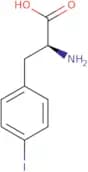
CAS:<p>4-Iodo-L-phenylalanine is an unlabeled amino acid that has been shown to inhibit the protein synthesis of cancer cells. It binds to the thrombin receptor and inhibits the activation of proteases, thereby inhibiting cancer cell growth. 4-Iodo-L-phenylalanine also inhibits translation by binding to the ribosome during the translation process and binding to the hydroxyl group on a mRNA molecule during transcription. This inhibition leads to a decrease in protein synthesis and cell proliferation.</p>Formula:C9H10INO2Purity:Min. 95%Color and Shape:White Off-White PowderMolecular weight:291.09 g/mol3-Aminobenzylamine dihydrochloride
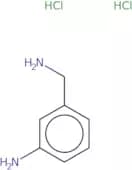
CAS:<p>3-Aminobenzylamine dihydrochloride is a chemical building block that is useful for the synthesis of complex compounds. 3-Aminobenzylamine dihydrochloride is an aminobenzamide and has been used as a reagent or reaction component in laboratory research. This chemical is a versatile building block that can be used to synthesize a variety of compounds. 3-Aminobenzylamine dihydrochloride has been shown to be effective in the synthesis of 1,2,4-triazole derivatives, which are useful as pharmaceuticals or herbicides. 3-Aminobenzylamine dihydrochloride is also useful for the preparation of other fine chemicals and speciality chemicals.</p>Formula:C7H10N2·2ClHPurity:Min. 95%Color and Shape:SolidMolecular weight:195.09 g/mol8-Chloroadenine
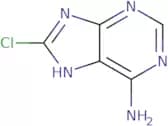
CAS:8-Chloroadenine is an antimicrobial agent that inhibits the DNA replication of bacteria by binding to the dna template. It is a potent inhibitor of oxidative DNA damage and has been shown to be effective against various bacteria, including Staphylococcus aureus. 8-Chloroadenine also has reactive properties and can react with chloride in the environment to form hypochlorous acid (HOCl) and 8-chloroguanine. This compound may also act as an enzyme catalyst for the enzymatic reaction between hypochlorous acid and chloride ions.Formula:C5H4ClN5Purity:Min. 95%Color and Shape:PowderMolecular weight:169.57 g/mol4-Difluoromethoxyaniline
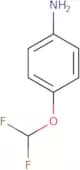
CAS:4-Difluoromethoxyaniline is an allosteric modulator for glutamate receptors. It is a chemical compound that can be used to modify glutamate receptors to act as either metabotropic or ionotropic. 4-Difluoromethoxyaniline is used in the treatment of Parkinson's disease and other movement disorders, such as dyskinesia. It has been shown that 4-difluoromethoxyaniline increases the activity of activated glutamate receptors, which leads to increased levels of the neurotransmitter dopamine in the brain. This drug may also inhibit nitric oxide production and corticotropin-releasing hormone (CRH) synthesis.Formula:C7H7F2NOPurity:Min. 95%Molecular weight:159.13 g/mol3,5-Dichlorobenzyl chloride
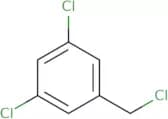
CAS:<p>3,5-Dichlorobenzyl chloride is a colorless crystallizing solid that is insoluble in water and soluble in alcohol. It can be prepared by refluxing 3,5-dichlorobenzyl alcohol with zinc chloride. The compound has been shown to have the ability to disrupt the aromatic system of certain pesticides and is used for pest control. It can also be used as an intermediate for the synthesis of 3,5-dichlorobenzoic acid. 3,5-Dichlorobenzyl chloride has been shown to bind to dna and inhibit the bacterial enzyme topoisomerase II.</p>Formula:C7H5Cl3Purity:Min. 95%Color and Shape:SolidMolecular weight:195.47 g/mol6-Fluoroindole-3-acetic acid
CAS:<p>6-Fluoroindole-3-acetic acid is a molecule that has been synthesized by the reaction of 6-fluoroindole with acetic anhydride. When mixed with acetonitrile, the fluorescence of 6-fluoroindole-3-acetic acid can be seen in the solution. The fluorescence intensity is proportional to the concentration of this molecule. 6-Fluoroindole-3-acetic acid is used as a template molecule for fluorescence labeling experiments. It interacts with hormones and can be used to identify their conformations and interactions. This compound has been shown to have anticancer properties in mice, and it may also be effective against cancer cells in humans. It has also been shown to inhibit the growth of pisum sativum (pea).</p>Formula:C10H8FNO2Purity:Min. 95%Color and Shape:PowderMolecular weight:193.17 g/molL-Valinamide hydrochloride
CAS:L-Valinamide hydrochloride is an amide with a reactive group. It binds to the CB2 receptor and the CB1 receptor, which are found in the brain and immune system. L-Valinamide hydrochloride has been shown to have anti-inflammatory effects in animal models of inflammatory diseases, such as rheumatoid arthritis. L-Valinamide hydrochloride has also been shown to be a synthetic cannabinoid that inhibits pain transmission by binding to the same receptors as delta-9 tetrahydrocannabinol (THC), one of the active components of cannabis.Formula:C5H12N2O·HClColor and Shape:White Off-White PowderMolecular weight:152.62 g/mol9-Hydroxyfluorene
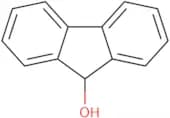
CAS:Controlled Product9-Hydroxyfluorene is a chiral compound that exhibits antimicrobial activity. It has been shown to inhibit the growth of bacteria by interacting with bacterial DNA and preventing RNA synthesis. 9-Hydroxyfluorene binds to bacterial DNA, specifically the nitrogen atoms, which are not present in mammalian DNA. This binding causes the formation of intramolecular hydrogen bonds that inhibits bacterial DNA replication. 9-Hydroxyfluorene also interacts with cellular membranes, inhibiting protein synthesis and cell division. The antimicrobial properties of 9-hydroxyfluorene are due to its ability to bind to bacterial membranes and form hydrogen bonds at specific sites on the membrane surface. This binding alters the membrane's physical properties, leading to cell death.Formula:C13H10OPurity:Min. 95%Molecular weight:182.22 g/molα-Methyl 2,4-dichlorochalcone
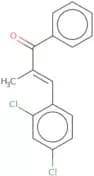
CAS:α-Methyl 2,4-dichlorochalcone is a useful scaffold for the synthesis of complex compounds. It can be used as a reaction component in research chemicals, speciality chemicals, and fine chemicals. This compound has a CAS No. 199788-52-8 and can be used as an intermediate in the synthesis of many other compounds with varying structures. It is also a versatile building block that can be used to synthesize various useful building blocks. α-Methyl 2,4-dichlorochalcone also has high quality and purity and can be used as a reagent for chemical reactions.Formula:C16H12Cl2OPurity:Min. 95%Color and Shape:PowderMolecular weight:291.17 g/mol(S)-3-Amino-4-(1-naphthyl)butanoic acid hydrochloride
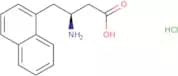
CAS:<p>(S)-3-Amino-4-(1-naphthyl)butanoic acid hydrochloride is a high quality chemical that is used as a reaction component for the synthesis of complex organic compounds. It may also be used to produce fine chemicals, pharmaceuticals, and other useful compounds. This product has a wide variety of uses including as an intermediate in the production of speciality chemicals, as a building block for synthesizing more complex compounds, or as a precursor to producing other useful chemicals.</p>Formula:C14H16ClNO2Purity:Min. 95%Color and Shape:White PowderMolecular weight:265.74 g/mol4-(Bromomethyl)benzenesulfonyl Chloride
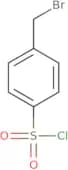
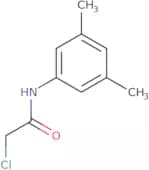
CAS:<p>4-(Bromomethyl)benzenesulfonyl Chloride is a molecule that inhibits the activity of HDACs, which are involved in tumor cell proliferation and cancer. This drug has been shown to inhibit the growth of P. aeruginosa and other bacteria in vitro, as well as having an inhibitory effect on CXCR4-dependent inflammatory cells activated by IL-1β. 4-(Bromomethyl)benzenesulfonyl Chloride also exhibits anticancer activity against various tumors in vivo and has been shown to be tolerated by mice at high doses without any observed side effects.</p>Formula:C7H6BrClO2SPurity:Min. 95%Molecular weight:269.54 g/mol2-Chloro-N-(3,5-dimethylphenyl)acetamide
CAS:<p>2-Chloro-N-(3,5-dimethylphenyl)acetamide is a chiral molecule with an asymmetric carbon atom. The conformation of the molecule is determined by the orientation of the hydrogen bonds. The molecule has two chains that are linked by a single bond in the middle. The first chain has two methyl groups and the second chain has one methyl group and one chlorine atom.</p>Formula:C10H12ClNOPurity:Min. 95%Color and Shape:PowderMolecular weight:197.66 g/molCopeptin (human) trifluoroacetate salt
CAS:Copeptin is a human protein that is found in the blood and urine. It functions as a competitive inhibitor of lysine-specific proteases, such as cathepsin D, elastase, and trypsin. Copeptin binds to the active site of these enzymes and prevents them from cleaving their substrates. Copeptin is also an antigen used in immunohistochemistry with an antibody against it for use in detection of various cancers. The biotinylated form of copeptin can be used for binding to avidin or streptavidin coated plates or antibodies (e.g., peroxidase-conjugated antibody) for use in enzyme-linked immunosorbent assays (ELISA). Copeptin binds to primary antibodies raised against it by the immune system, which are then detected using fluorescent secondary antibodies or peroxidase-conjugated antibodies.Formula:C177H279N49O58•xC2HO2F3Purity:Min. 95%Molecular weight:4,021.4 g/mol

![(R)-Benzyl-2-[4-(trifluoromethyl)phenyl]-6,7-dihydro-5H-pyrrolo[2,1-c][1,2,4]triazolium Tetrafluor…](/_next/image/?url=https%3A%2Fstatic.cymitquimica.com%2Fproducts%2F3D%2Fthumb-webp%2FFB59921.webp&w=3840&q=75)