Organic Halides
Subcategories of "Organic Halides"
Found 20442 products of "Organic Halides"
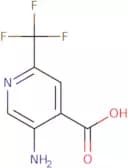
5-Amino-2-(trifluoromethyl)isonicotinic acid
CAS:Please enquire for more information about 5-Amino-2-(trifluoromethyl)isonicotinic acid including the price, delivery time and more detailed product information at the technical inquiry form on this pageFormula:C7H5F3N2O2Purity:Min. 95%Molecular weight:206.12 g/molSodium tetrachloropalladate(II)
CAS:Sodium tetrachloropalladate(II) is a photoelectron acceptor that absorbs x-rays in the wavelength range of 0.2-1.5 Å. It is used as a nanomaterial for the preparation of microspheres and optical devices. Sodium tetrachloropalladate(II) has been shown to have a chloride ion content of 36%. The chemical composition of this element can be determined by using preparative methods such as suzuki coupling reaction, phase chromatography, or elemental analysis. The isolated yield of sodium tetrachloropalladate(II) can be determined by immobilizing it on an ion exchange resin and eluting with 0.1 M HCl.Formula:Cl4Na2PdPurity:Min. 95%Molecular weight:294.21 g/molDichloro[1,3-Bis(2,6-diisopropylphenyl)imidazolyl-2-idene](3-chloropyridyl)palladium(IV)
CAS:Controlled ProductDichloro[1,3-Bis(2,6-diisopropylphenyl)imidazolyl-2-idene](3-chloropyridyl)palladium(IV) is an insoluble molecule with a beige color. The molecule belongs to the class of palladium catalyzed cross coupling reactions. It can react with various halides and has been shown to have functionalities, skeleton and reactive groups. This compound is used in synthetic organic chemistry in order to generate sequences with chloride and pentane.Formula:C32H40Cl3N3PdPurity:Min. 95%Color and Shape:PowderMolecular weight:679.46 g/molTetrachlorophthalic anhydride
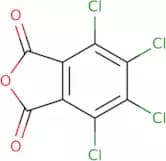
CAS:Controlled ProductTetrachlorophthalic anhydride (TCPA) is a reactive chemical that has been shown to have anti-inflammatory activity. TCPA has been found to inhibit the release of histamine from mast cells in humans, and it inhibits the production of pro-inflammatory cytokines such as tumor necrosis factor alpha (TNF-α). TCPA has also been shown to have a toxic effect on human lymphocyte transformation, which may be due to its ability to induce apoptosis. The toxicity of TCPA was studied in rats and mice, where it was found that TCPA did not cause any significant changes in clinical pathology or hydroxyl group levels.Formula:C8Cl4O3Purity:Min. 97.5 Area-%Color and Shape:White/Off-White SolidMolecular weight:285.89 g/mol(3-Chloropropyl)diphenylsulfonium tetrafluoroborate
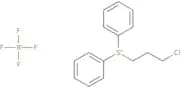
CAS:Please enquire for more information about (3-Chloropropyl)diphenylsulfonium tetrafluoroborate including the price, delivery time and more detailed product information at the technical inquiry form on this pageFormula:C15H16ClS•BF4Purity:Min. 95%Molecular weight:350.61 g/mol2-Bromo-5-methyl-1,3-thiazole
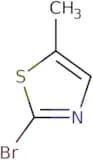
CAS:2-Bromo-5-methyl-1,3-thiazole (2BMT) is a heterocyclic compound that is used as a chemical intermediate for the synthesis of drugs and other organic compounds. 2BMT is synthesized by a two step process from 2-methylbenzothiazole. This compound has been shown to inhibit the enzyme acetylcholinesterase, which produces acetylcholine at nerve endings and in the brain. The monoclonal antibody binding affinity of 2BMT has also been shown to be greater than that of neonicotinoid pesticides.Formula:C4H4BrNSPurity:Min. 95%Molecular weight:178.05 g/molPyridine-3-sulfonyl chloride
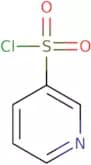
CAS:Pyridine-3-sulfonyl chloride is a chemical compound that binds to the active site of cytochrome P450 enzymes. It can be used to study the effects of matrix effect on reaction solution. Pyridine-3-sulfonyl chloride has been shown to have an UV absorption spectrum with a maximum at 280 nm and a p450 activity that is proportional to the concentration of human serum. This compound has been shown to inhibit kinase domain in vitro assays, which may have clinical relevance in the treatment of obesity.Formula:C5H4ClNO2SPurity:Min. 95%Color and Shape:PowderMolecular weight:177.61 g/mol4-Chlorobutanal dimethyl acetal
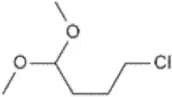
CAS:4-Chlorobutanal dimethyl acetal is a compound that can be used as a reagent for the synthesis of enantiopure, functionalized pyridinium salts. The compound can be synthesized in a one-step process by the ring-opening of 4-chlorobutyraldehyde with dimethoxyethane in the presence of an acidic catalyst, such as hydrochloric acid. The reaction proceeds via an intramolecular hydrogen bond between the carbonyl group and the hydroxyl group on the ether oxygen atom. This process provides an isolated yield of 75%. The conjugates are obtained by reacting 4-chlorobutanal dimethyl acetal with different chlorides or other functional groups.Formula:C6H13ClO2Purity:Min. 95%Molecular weight:152.62 g/mol4-Bromoaniline
CAS:4-Bromoaniline is a chemical compound that contains two nitrogen atoms, four carbon atoms, and one bromine atom. 4-Bromoaniline is used in the preparation of pharmaceuticals and has been shown to inhibit the activities of enzymes such as urease and aminopeptidase. The compound has also been shown to be effective against cervical cancer cells. 4-Bromoaniline can be synthesized by reacting anhydrous sodium with diazonium salt in the presence of hydrogen gas, followed by hydrolysis with hydrochloric acid. This process yields isolated yields of 4-bromoaniline.
Formula:C6H6BrNPurity:Min. 95%Molecular weight:172.02 g/mol2-(4-Bromophenyl)succinic acid
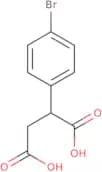
CAS:Please enquire for more information about 2-(4-Bromophenyl)succinic acid including the price, delivery time and more detailed product information at the technical inquiry form on this pageFormula:C10H9BrO4Purity:Min. 95%Molecular weight:273.08 g/mol1-(4-Chlorophenyl)-1,5-dihydro-4-(4-morpholinyl)-2H-imidazol-2-one
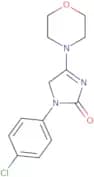
CAS:1-(4-Chlorophenyl)-1,5-dihydro-4-(4-morpholinyl)-2H-imidazol-2-one is a fatty acid. It has been shown to have clinical relevance in the treatment of epilepsy. The effective dose for this drug is unknown, but it is believed to be between 100 and 200mg per day. Benzalkonium chloride, which is used as a preservative in food products, may interfere with the absorption of 1-(4-chlorophenyl)-1,5-dihydro-4-(4-morpholinyl)-2H-imidazol-2-one. This drug should not be used by pregnant women or children. Long term efficacy studies are unavailable for this drug. Controlled release preparations are available for this medication that can help improve compliance with dosing requirements. Benzodiazepine binding sites are found in the central nervous system and benzodiazepines may bind toFormula:C13H14ClN3O2Purity:Min. 95%Molecular weight:279.72 g/mol5-Bromo-2-thiophenesulfonyl chloride
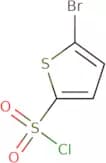
CAS:5-Bromo-2-thiophenesulfonyl chloride (5BrTSCl) is a chemical compound that belongs to the class of matrix metalloproteinase inhibitors. This drug inhibits the activity of MMPs and has anticancer activity. 5BrTSCl blocks the activation of MMPs by binding to their active site, which prevents the cleavage of collagen and other proteins. It also inhibits cell proliferation in a number of cancer cell lines, including human breast cancer cells. 5BrTSCl has been shown to be effective in inhibiting angiogenesis and tumor growth in animal models.Formula:C4H2BrClO2S2Purity:Min. 95%Color and Shape:PowderMolecular weight:261.55 g/mol4-(Trifluoromethoxy)phenylboronic Acid (contains varying amounts of Anhydride)
CAS:4-(Trifluoromethoxy)phenylboronic acid is a boron-containing compound that has been shown to be a potent inhibitor of the histone deacetylase (HDAC) enzyme. It also has surfactant properties and can be used as a photochemical reagent. 4-(Trifluoromethoxy)phenylboronic acid is orally bioavailable and may have therapeutic potential for neurodegenerative diseases, such as Alzheimer's disease, Parkinson's disease, and Huntington's disease. It also has the ability to inhibit cancer cell growth by inhibiting HDAC activity. This drug has been found to cross-couple with organosilicon compounds in order to form new compounds with potent inhibitory activity against HDAC enzymes.
Formula:C7H6BF3O3Purity:Min. 95%Molecular weight:205.93 g/mol4,4'-Oxybis(benzenesulfonyl chloride)
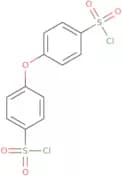
CAS:4,4'-Oxybis(benzenesulfonyl Chloride) is a synthetic compound that is used as a stabilizer in the preparation of polymers. It is an effective nucleophile and reacts with amines to form sulfonic acid esters. 4,4'-Oxybis(benzenesulfonyl Chloride) has been shown to be highly reactive and can be used for the synthesis of n-propyl chloride. The reaction time for this chemical is also short, which leads to high yields.Formula:C12H8Cl2O5S2Purity:Min. 95%Color and Shape:PowderMolecular weight:367.23 g/mol4-Chlorobenzylamine
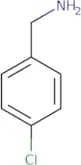
CAS:4-Chlorobenzylamine is a chemical that is used as an intermediate in the synthesis of other compounds. It has low bioavailability, which may be due to its reactive site. The chemical can be characterized using nmr spectra and potent inhibitory activity. 4-Chlorobenzylamine has been found to react with nitrogen atoms, and this reaction is highly acidic. FT-IR spectroscopy can also be used to characterize this compound. Intermolecular hydrogen bonding and hydroxyl group are two of the major interactions of 4-chlorobenzylamine with other molecules. This chemical reacts with serine protease, glyoxal, and other substances in a manner that depends on the molecule's structure.Formula:C7H8ClNPurity:Min. 95%Molecular weight:141.6 g/mol2-Amino-3',4'-dimethoxypropiophenone hydrochloride
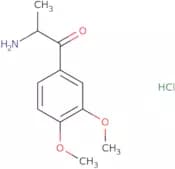
CAS:Controlled ProductPlease enquire for more information about 2-Amino-3',4'-dimethoxypropiophenone hydrochloride including the price, delivery time and more detailed product information at the technical inquiry form on this pageFormula:C11H16ClNO3Purity:Min. 95%Molecular weight:245.7 g/mol2-Bromo-3-nitrobenzoic acid
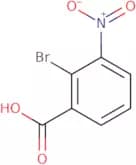
CAS:2-Bromo-3-nitrobenzoic acid is a reactive chemical used as an antibacterial agent. It inhibits the growth of staphylococcus by inhibiting the synthesis of DNA and protein, which are required for cell division. 2-Bromo-3-nitrobenzoic acid is also effective against mammalian cells, but not against bacteria that grow in a thionyl environment. The chemical reacts with chloride to form 2-bromo-3-chlorobenzoic acid, which can be converted to mercaptoacetic acid by means of reduction with sodium dithionite. Mercaptoacetic acid inhibits bacterial growth by blocking the synthesis of proteins necessary for cell division. 2-Bromo-3-nitrobenzoic acid is synthesized from bromine and nitric acid, while mercaptoacetic acid is synthesized from bromine and acetic anhydride.
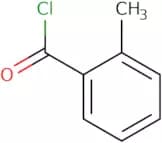
Formula:C7H4BrNO4Purity:Min. 95%Color and Shape:PowderMolecular weight:246.02 g/molo-Toluoyl chloride
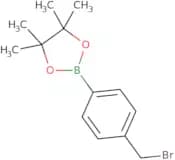
CAS:o-Toluoyl chloride is an antidiabetic agent that inhibits the production of glucose by inhibiting the enzyme glucosidase. It also prevents the absorption of glucose in the small intestine and blocks pancreatic alpha-amylase, which is an enzyme that breaks down starch into maltose. The chemical reaction mechanism for o-toluoyl chloride is a substitution reaction with a hydroxyl group and a benzoate, forming a cation channel. This leads to an increase in the intracellular concentration of cations, which can contribute to inflammatory bowel disease. The biological studies have shown that light emission is generated when o-toluoyl chloride reacts with 2-methyl-4-nitrobenzoic acid. This process has been used as a method for detecting this compound.Formula:C8H7ClOPurity:Min. 95%Color and Shape:Clear LiquidMolecular weight:154.59 g/mol4-(Bromomethyl)benzeneboronic acid pinacol ester
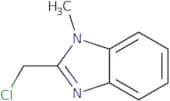
CAS:4-(Bromomethyl)benzeneboronic acid pinacol ester (BBBA) is a hypochlorous acid derivative with a structural formula of C6H5BrOCH2. It is used as a fluorophore and has been shown to have anticancer activity. 4-Bromomethylbenzeneboronic acid pinacol ester reacts with hydrophobic molecules in the cell membrane, leading to disruption of the membrane and ultimately cell death. This compound can be used as an active oxygen source in biological assays, such as functional assays, because it generates reactive oxygen species and can act as a fluorescence probe for detection of biological samples.Formula:C13H18BBrO2Purity:Min. 95 Area-%Color and Shape:White PowderMolecular weight:297 g/mol2-(Chloromethyl)-1-methyl-1H-benzimidazole hydrochloride
CAS:Controlled Product2-(Chloromethyl)-1-methyl-1H-benzimidazole hydrochloride (CMMB) is a synthetic compound that inhibits the enzyme tyrosinase, which is responsible for catalyzing the production of melanin. The tetradentate ligand in CMMB binds to the active site of tyrosinase and prevents it from catalyzing reactions. The redox potentials of CMMB make it possible to oxidize and reduce the compound, which allows for an easy synthesis. The dihedral angle between the amine and pyrimidine rings in CMMB provides a biomimetic structure that can be used to synthesize other aromatic compounds.Formula:C9H9ClN2Purity:Min. 95%Molecular weight:180.63 g/mol


palladium(IV)](/_next/image/?url=https%3A%2Fstatic.cymitquimica.com%2Fproducts%2F3D%2Fthumb-webp%2FFB157435.webp&w=3840&q=75)