Organic Halides
Subcategories of "Organic Halides"
Found 20442 products of "Organic Halides"
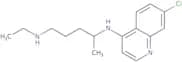
Desethyl chloroquine
CAS:Desethyl chloroquine is a drug that is used to treat malaria and other infectious diseases. It is an antimalarial drug that has been shown to be effective in the treatment of malaria and related diseases such as toxoplasmosis, amebiasis, trypanosomiasis, and leishmaniasis. Methods for the preparation of desethyl chloroquine are described in the analytical section. To measure the concentration of desethyl chloroquine in blood, it is recommended to collect a sample of blood by venipuncture or fingerstick. The concentration-time curve in blood can be analyzed using a fluorescence detector and LC-MS/MS method. When analyzing pharmacokinetic properties, it is important to take into account the matrix effect due to human serum proteins. Desethyl chloroquine has potent inducers that affect its pharmacokinetics and metabolism, including CYP3A4 enzymes and glutathione reductase.Formula:C16H22ClN3Purity:Min. 95%Color and Shape:Slightly Yellow PowderMolecular weight:291.82 g/mol1-Trifluoromethylcyclopropane-1-carboxylic acid
CAS:1-Trifluoromethylcyclopropane-1-carboxylic acid is a ketone that is used in research in organic chemistry for the preparation of imidazole. It can be prepared by the transformation of ethyl 2-(trifluoromethyl)acrylate, and is also obtained from 1,4-dichloroacetone. 1-Trifluoromethylcyclopropane carboxylic acid has been shown to have some medicinal properties. It has been used in research on cancer cells and as an anti-inflammatory agent. The compound has a steric effect on the body and can be used as a weight loss drug, with one kilogram of 1-Trifluoromethylcyclopropane carboxylic acid being equivalent to 3 kilograms of weight loss.Formula:C5H5F3O2Purity:Min. 95%Color and Shape:PowderMolecular weight:154.09 g/molMethyl thiazolidine-2-carboxylate hydrochloride
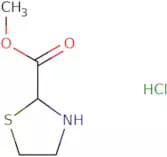
CAS:Please enquire for more information about Methyl thiazolidine-2-carboxylate hydrochloride including the price, delivery time and more detailed product information at the technical inquiry form on this pageFormula:C5H9NO2S•HClPurity:Min. 95%Color and Shape:PowderMolecular weight:183.66 g/mol1-[4-(4-bromophenyl)piperazin-1-yl]ethanone
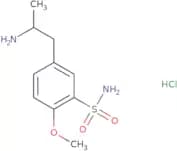
CAS:Controlled ProductPlease enquire for more information about 1-[4-(4-bromophenyl)piperazin-1-yl]ethanone including the price, delivery time and more detailed product information at the technical inquiry form on this pageFormula:C12H15BrN2OPurity:Min. 95%Molecular weight:283.16 g/mol3-(4'-Methoxy-3'-sulfonamidophenyl)-2-propylamine, hydrochloride
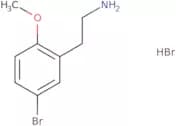
CAS:Controlled ProductPlease enquire for more information about 3-(4'-Methoxy-3'-sulfonamidophenyl)-2-propylamine, hydrochloride including the price, delivery time and more detailed product information at the technical inquiry form on this pageFormula:C10H16N2O3S•HClPurity:Min. 95%Color and Shape:PowderMolecular weight:280.77 g/mol5-Bromo-2-methoxyphenethylamine hydrobromide
CAS:Controlled ProductPlease enquire for more information about 5-Bromo-2-methoxyphenethylamine hydrobromide including the price, delivery time and more detailed product information at the technical inquiry form on this page
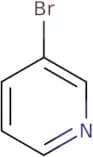
Formula:C9H13Br2NOPurity:Min. 95%Molecular weight:311.01 g/mol3-Bromopyridine
CAS:3-Bromopyridine is a colorless liquid that is soluble in water and methanol. It has a chemical ionization mass spectrum with hydrogen bonding interactions, which are shown by the nitrogen atoms. 3-Bromopyridine reacts with amines to form nitroso compounds and has transport properties that are dependent on pH. 3-Bromopyridine has been shown to be a metastable substance, which means it can be isolated in a yield of greater than 50%. 3-Bromopyridine is soluble in alkaline solutions, but decomposes at high temperatures. The solution turns red when phosphotungstic acid is added and it gives an orange precipitate when hydrochloric acid is added. The solution turns yellow when sodium hydroxide is added. 3-Bromopyridine can be detected by its nmr spectra and kinetic energy measurements.Formula:C5H4NBrPurity:Min. 95%Molecular weight:158 g/mol4-[4-(3-Chlorophenyl)piperazin-1-yl]-4-oxobutanoic acid
CAS:Controlled ProductPlease enquire for more information about 4-[4-(3-Chlorophenyl)piperazin-1-yl]-4-oxobutanoic acid including the price, delivery time and more detailed product information at the technical inquiry form on this page
Formula:C14H17ClN2O3Purity:Min. 95%Molecular weight:296.75 g/molDesmethyl chlorpheniramine maleate salt
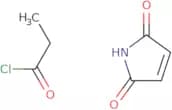
CAS:Please enquire for more information about Desmethyl chlorpheniramine maleate salt including the price, delivery time and more detailed product information at the technical inquiry form on this pageFormula:C19H21ClN2O4Purity:Min. 95%Molecular weight:376.83 g/mol3-Maleimidopropionyl chloride
CAS:Controlled Product3-Maleimidopropionyl chloride is a hydrophobic chemical that is often used in the synthesis of other compounds. 3-Maleimidopropionyl chloride advances transport of nutrients through cells and membranes, and also interacts with cellular parameters. It is reactive to cell membranes, and can be activated by coatings or nature techniques. 3-Maleimidopropionyl chloride is a synthetic compound that has been shown to react with cell membrane phospholipids, leading to changes in the properties of the lipid bilayer.Formula:C7H6ClNO3Purity:Min. 95%Color and Shape:PowderMolecular weight:187.58 g/mol2,5-Dichloro-4-methoxybenzoic acid
CAS:2,5-Dichloro-4-methoxybenzoic acid is a synthetic herbicide that inhibits the enzyme 5-enolpyruvylshikimate-3-phosphate synthase (EPSPS). This enzyme is necessary for the synthesis of aromatic amino acids. 2,5-Dichloro-4-methoxybenzoic acid is used as a selective herbicide in plants grown in vitro to eliminate weeds. It is also used to control populations of wild plants and grasses. 2,5-Dichloro-4-methoxybenzoic acid has been shown to inhibit the growth of glyphosate resistant weed species by inhibiting EPSPS activity.Purity:Min. 95%3-Methyl-2-phenylmorpholine hydrochloride
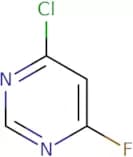
CAS:Controlled Product3-Methyl-2-phenylmorpholine hydrochloride (3MPH) is a phenmetrazine derivative that has been used in animal studies to study the effects of plant metabolism on sensor and analytical methods. 3MPH has shown toxicity in rats, as well as some physiological effects such as increased heart rate, ataxia, and sedation. This compound is also a pharmacological agent that can be used for chromatographic analysis. 3MPH is metabolized by the liver into dopamine which can cause renal cell cancer in mice. A biological sample is required for this compound.Formula:C11H15NOPurity:Min. 95%Molecular weight:177.24 g/mol4-Chloro-6-Fluoro-Pyrimidine
CAS:Please enquire for more information about 4-Chloro-6-Fluoro-Pyrimidine including the price, delivery time and more detailed product information at the technical inquiry form on this page
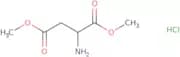
Formula:C4H2ClFN2Purity:Min. 95%Molecular weight:132.52 g/molDL-Aspartic acid dimethyl ester hydrochloride
CAS:Please enquire for more information about DL-Aspartic acid dimethyl ester hydrochloride including the price, delivery time and more detailed product information at the technical inquiry form on this pageFormula:C6H11NO4·HClPurity:Min. 95%Color and Shape:White PowderMolecular weight:197.62 g/mol3-Bromo-2-(bromomethyl)pyridine
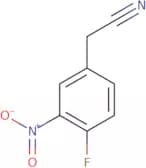
CAS:Please enquire for more information about 3-Bromo-2-(bromomethyl)pyridine including the price, delivery time and more detailed product information at the technical inquiry form on this pageFormula:C6H5Br2NPurity:Min. 95%Molecular weight:250.92 g/mol(4-Fluoro-3-Nitrophenyl)Acetonitrile
CAS:4-Fluoro-3-nitrophenylacetonitrile is a monomer that can be synthesised from the reaction of carbamic acid and diphenyl ether. It is chiral, stereoselective and nucleophilic. 4-Fluoro-3-nitrophenylacetonitrile can also be synthesised by reacting fluoroacetamide with sodium cyanide in water, forming the corresponding amide, which reacts with acetonitrile to form the nitro compound. The anti-cancer properties of 4-fluoro-3 nitrophenylacetonitrile have been studied in vitro and in vivo. This substance has been shown to inhibit growth of cancer cells and induce apoptosis. In addition, this substance has been used as a synthetic strategy for dihydroisoquinolines, which are important for their anti-cancer properties.
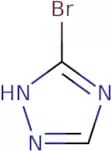
Formula:C8H5FN2O2Purity:Min. 95%Molecular weight:180.14 g/mol5-Bromo-1H-1,2,4-triazole
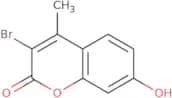
CAS:3-Bromo-1H-1,2,4-triazole belongs to the group of annular azoles. It has been found in the form of two tautomers: 1H-1,2,4-triazole and 2H-1,2,4-triazole. 3-Bromo-1H-1,2,4-triazole has been synthesized at low temperatures (below -30°C) as a result of coordination with bromine atoms. This triazole has also been analysed using x ray diffraction and vibrational spectroscopy. The chemical analyses have shown that 3-bromo 1H-1,2,4 triazole is not stable at high temperatures and decomposes into a mixture of the two tautomers. Tautomeric analysis showed that the 1H form is more stable than the 2H form.Formula:C2H2BrN3Purity:95%NmrColor and Shape:PowderMolecular weight:147.96 g/mol3-Bromo-7-hydroxy-4-methylchromen-2-one
CAS:3-Bromo-7-hydroxy-4-methylchromen-2-one is an organic compound with the molecular formula CHBrNO. It is a colorless solid that is soluble in organic solvents. 3-Bromo-7-hydroxy-4-methylchromen-2-one has shown antiviral activity against the pandemic Covid 19 virus, as well as activity against influenza A and B viruses. This compound also has been shown to be active against methicillin resistant Staphylococcus aureus (MRSA) and Clostridium perfringens. 3BRMCHM2O binds to DNA by covalent binding and inhibits the synthesis of RNA, causing cell death in bacteria. The compound can be accessed through two routes: one involving phenylhydrazine and hydrazines, and another involving ionic liquids and ionic reagents. The reaction time for this reaction is very short (10 minutes
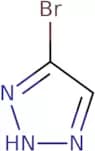
Formula:C10H7BrO3Purity:Min. 95%Molecular weight:255.06 g/mol4-Bromo-1,2,3-triazole
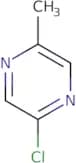
CAS:4-Bromo-1,2,3-triazole is an organic solvent that belongs to the group of phenyl groups. 4-Bromo-1,2,3-triazole has been found to have antibacterial and antifungal properties. It has also been shown to inhibit protease activity in mollusca, as well as insulin resistance in mammals. This compound is used as a structural formula for the synthesis of replication inhibitors and is a serine protease inhibitor. The structure of this compound was determined using X-ray crystallography on 5-membered heteroaryl rings. 4-Bromo-1,2,3-triazole inhibits serine proteases by binding to their active site and blocking access to the catalytic triad consisting of Ser195 (aspartate), His57 (histidine), and Glu194 (glutamic acid). Structural analysis revealed that 4-bromoFormula:C2H2BrN3Purity:Min. 95%Molecular weight:147.96 g/mol2-Chloro-5-methylpyrazine
CAS:Please enquire for more information about 2-Chloro-5-methylpyrazine including the price, delivery time and more detailed product information at the technical inquiry form on this pageFormula:C5H5ClN2Purity:Min. 95%Molecular weight:128.56 g/mol


![1-[4-(4-bromophenyl)piperazin-1-yl]ethanone](/_next/image/?url=https%3A%2Fstatic.cymitquimica.com%2Fproducts%2F3D%2Fthumb-webp%2FFB137350.webp&w=3840&q=75)
![4-[4-(3-Chlorophenyl)piperazin-1-yl]-4-oxobutanoic acid](/_next/image/?url=https%3A%2Fstatic.cymitquimica.com%2Fproducts%2F3D%2Fthumb-webp%2FFC124815.webp&w=3840&q=75)