Organic Halides
Subcategories of "Organic Halides"
Found 20443 products of "Organic Halides"
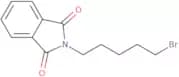
N-(5-Bromopentyl)phthalimide
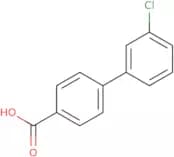
CAS:N-(5-Bromopentyl)phthalimide is an antibacterial agent that inhibits the growth of gram-negative bacteria. It binds to the cell wall and prevents the formation of peptidoglycan, which is a major component of bacterial cell walls. N-(5-Bromopentyl)phthalimide also has anti-inflammatory properties and may be used as an anti-infective agent for topical preparations.Formula:C13H14BrNO2Purity:Min. 95%Color and Shape:PowderMolecular weight:296.16 g/mol3'-Chloro-biphenyl-4-carboxylic acid
CAS:Please enquire for more information about 3'-Chloro-biphenyl-4-carboxylic acid including the price, delivery time and more detailed product information at the technical inquiry form on this pagePurity:Min. 95%Zipeprol dihydrochloride
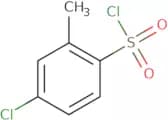
CAS:Controlled ProductZipeproldihydrochloride is a drug that belongs to the class of quinolones. It has been shown to have a high bioavailability in vivo, and it is rapidly absorbed through the gastrointestinal tract. Zipeproldihydrochloride has been shown to have antiviral and antibacterial properties in vitro. In vivo studies have shown that Zipeproldihydrochloride can be used for the treatment of autoimmune diseases and infectious diseases. The drug inhibits the activity of fatty acid synthase, which is an enzyme involved in synthesizing fatty acids from acetyl-CoA.Formula:C23H34Cl2N2O3Purity:Min. 95%Molecular weight:457.43 g/mol4-Chloro-2-methylbenzenesulfonyl chloride
CAS:Please enquire for more information about 4-Chloro-2-methylbenzenesulfonyl chloride including the price, delivery time and more detailed product information at the technical inquiry form on this page
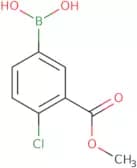
Formula:C7H6Cl2O2SPurity:Min. 95%Molecular weight:225.09 g/mol(4-Chloro-3-(methoxycarbonyl)phenyl)boronic acid
CAS:Please enquire for more information about (4-Chloro-3-(methoxycarbonyl)phenyl)boronic acid including the price, delivery time and more detailed product information at the technical inquiry form on this page
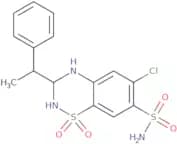
Formula:C8H8BClO4Purity:Min. 95%Molecular weight:214.41 g/mol6-Chloro-3,4-dihydro-3-(a-methylbenzyl)-2H-1,2,4-benzothiadiazine-7-sulfonamide 1,1-dioxide
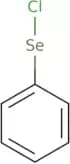
CAS:6-Chloro-3,4-dihydro-3-(a-methylbenzyl)-2H-1,2,4-benzothiadiazine-7-sulfonamide 1,1-dioxide is an active metabolite of the drug benzbromarone. It is primarily administered as a diuretic to treat high blood pressure and congestive heart failure. The pharmacodynamics of this drug are related to its ability to inhibit the activity of sodium channels in vascular smooth muscle cells and thereby reduce the force of contraction and relax the vessel wall. 6CBDMTD has shown an increase in glomerular filtration rate in patients with congestive heart failure. This drug also decreases the plasma concentration of fatty acids by inhibiting the formation of lipoprotein particles. 6CBDMTD has been shown to be effective at lowering diastolic and systolic blood pressure levels in patients with hypertension.Formula:C15H16ClN3O4S2Purity:Min. 95%Molecular weight:401.89 g/molPhenylselenenyl chloride
CAS:Phenylselenenyl chloride is an organoselenium compound with the chemical formula CHSeCl. It has been shown to have a low redox potential, which makes it a good candidate for use in organic synthesis. Phenylselenenyl chloride is used as a catalyst in palladium-catalyzed coupling reactions and has been shown to be effective in the synthesis of epoxy hydroxy compounds. The x-ray crystal structures of phenylselenenyl chloride have been determined, revealing that the molecule contains steric interactions between the chloride and hydroxyl groups. This discovery explains why phenylselenenyl chloride is so selective for these two groups and may lead to improved synthetic methods for this molecule.
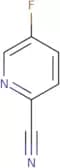
Formula:C6H5ClSePurity:Min. 95%Color and Shape:PowderMolecular weight:191.52 g/mol2-Cyano-5-fluoropyridine
CAS:2-Cyano-5-fluoropyridine is a potential antitubercular agent that has shown penetrability in the central nervous system and activity against Mycobacterium tuberculosis. It is orally active at low doses, and has been shown to be an effective inhibitor of mycobacterial growth and lipid synthesis. In addition, this compound also has antimycobacterial activity against M. avium complex and M. ulcerans, and is a potent inhibitor of β-amyloid aggregation.
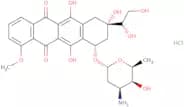
Formula:C6H3FN2Purity:Min. 95%Molecular weight:122.1 g/molDoxorubicinol hydrochloride - Mixture of Diasteromers
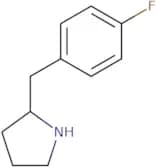
CAS:Please enquire for more information about Doxorubicinol hydrochloride - Mixture of Diasteromers including the price, delivery time and more detailed product information at the technical inquiry form on this pageFormula:C27H32ClNO11Purity:Min. 95%Molecular weight:582 g/mol2-(4-Fluoro-benzyl)pyrrolidine
CAS:Controlled ProductPlease enquire for more information about 2-(4-Fluoro-benzyl)pyrrolidine including the price, delivery time and more detailed product information at the technical inquiry form on this page
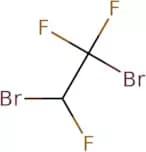
Formula:C11H14FNPurity:Min. 95%Molecular weight:179.23 g/mol1,2-Dibromo-1,1,2-trifluoroethane
CAS:Controlled Product1,2-Dibromo-1,1,2-trifluoroethane (DBTF) is a catalyst that is used to transfer ethane to hydrogen fluoride. It is activated by hydrogen fluoride and reacts with ethane in the presence of a liquid phase. It can also be used for hydrogenation reactions. 1,2-Dibromo-1,1,2-trifluoroethane has been shown to be an effective catalyst for the transfer reaction between ethane and hydrogen fluoride. The rate of this reaction is dependent on the population of DBTF and the amount of n-dimethyl formamide (DMF). This catalyst does not require high energy input or zinc powder for activation.
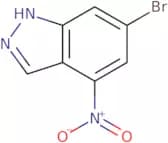
Formula:C2HBr2F3Purity:Min. 95%Color and Shape:Clear LiquidMolecular weight:241.83 g/mol6-Bromo-4-nitro-1H-indazole
CAS:Please enquire for more information about 6-Bromo-4-nitro-1H-indazole including the price, delivery time and more detailed product information at the technical inquiry form on this page
Formula:C7H4BrN3O2Purity:Min. 95%Molecular weight:242.03 g/mol3-Bromo-2-(bromomethyl)pyridine
CAS:Please enquire for more information about 3-Bromo-2-(bromomethyl)pyridine including the price, delivery time and more detailed product information at the technical inquiry form on this pageFormula:C6H5Br2NPurity:Min. 95%Molecular weight:250.92 g/mol5-Iodo-2,3-dihydro-1H-inden-2-amine hydrochloride hydrate
Controlled ProductPlease enquire for more information about 5-Iodo-2,3-dihydro-1H-inden-2-amine hydrochloride hydrate including the price, delivery time and more detailed product information at the technical inquiry form on this page
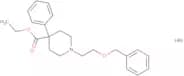
Formula:C9H13ClINOPurity:Min. 95%Molecular weight:313.56 g/molBenzethidine hydrobromide
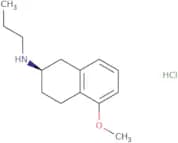
CAS:Controlled ProductPlease enquire for more information about Benzethidine hydrobromide including the price, delivery time and more detailed product information at the technical inquiry form on this pageFormula:C23H30BrNO3Purity:Min. 95%Molecular weight:448.39 g/mol(R)-1,2,3,4-Tetrahydro-5-methoxy-N-propyl-2-naphthalenamine hydrochloride
CAS:Controlled ProductPlease enquire for more information about (R)-1,2,3,4-Tetrahydro-5-methoxy-N-propyl-2-naphthalenamine hydrochloride including the price, delivery time and more detailed product information at the technical inquiry form on this pageFormula:C14H22ClNOPurity:Min. 95%Molecular weight:255.78 g/mol(-)-Ecgonine hydrochloride
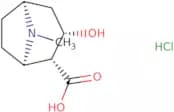
CAS:Controlled Product(-)-Ecgonine hydrochloride is a benzoyl ester that is used as an analytical reagent. It is a precursor in the synthesis of cocaine and other drugs. Ecgonine hydrochloride can be extracted from plant sources, such as coca leaves or khat leaves, by acid-base extraction. It has been shown to have toxic effects on human serum and the liver, which may be due to its structural similarity to cocaine.Formula:C9H16ClNO3Purity:Min. 95%Molecular weight:221.68 g/mol(S)-N-Ethyl amphetamine hydrochloride
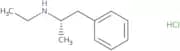
CAS:Controlled ProductPlease enquire for more information about (S)-N-Ethyl amphetamine hydrochloride including the price, delivery time and more detailed product information at the technical inquiry form on this pageFormula:C11H18ClNPurity:Min. 95%Molecular weight:199.72 g/molDiethyl Chlorothiophosphate
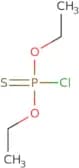
CAS:Diethyl chlorothiophosphate is a chlorinating agent that reacts with sodium carbonate to form diethyl phosphorochloridate. It is used as an analytical reagent and in the production of monoclonal antibodies. It has been shown to effectively inhibit protein synthesis in bacteria by reacting with amino groups, which are essential for protein formation. Diethyl chlorothiophosphate is also able to induce antibody responses in mice. This drug may be toxic if inhaled or ingested and may cause skin irritation.Formula:C4H10ClO2PSPurity:Min. 95%Molecular weight:188.61 g/molMethyl 3-(2,2-dichlorovinyl)-2,2-dimethylcyclopropanecarboxylate
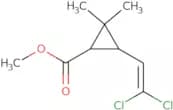
CAS:Methyl 3-(2,2-dichlorovinyl)-2,2-dimethylcyclopropanecarboxylate is a pyrethroid insecticide. It is formulated as an emulsifiable concentrate and applied to the soil surface or injected into the root zone of plants. This insecticide is also used in combination with other pesticides to provide broad spectrum control of insect pests. Methyl 3-(2,2-dichlorovinyl)-2,2-dimethylcyclopropanecarboxylate is chemically synthesized from 2,3-dihydro-1,3-benzodioxole and chloroacetic acid. The mechanism of action for this pesticide is not well understood but may be due to its ability to inhibit hydrolase enzymes. This product also has a low toxicity on mammals and birds that are exposed orally or through inhalation at high concentrations.
Formula:C9H12Cl2O2Purity:Min. 95%Color and Shape:LiquidMolecular weight:223.1 g/mol