


Organic Halides
Subcategories of "Organic Halides"
Found 20443 products of "Organic Halides"
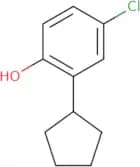
2-Cyclopentyl-4-chlorophenol
CAS:2-Cyclopentyl-4-chlorophenol is a synthetic fatty acid that is used as an antiviral agent. It inhibits the synthesis of fatty acids by inhibiting the conversion of 2,4-dienoyl CoA to 3-hydroxyacyl CoA. 2-Cyclopentyl-4-chlorophenol has been shown to be effective against a number of test organisms, including bacteria such as staphylococcus and virus such as herpes simplex virus. 2-Cyclopentyl-4-chlorophenol inhibits viral protein synthesis by blocking the action of host enzymes required for this process. The target cell for this drug is the host cell infected with a virus. This drug also has antihelminthic properties and can be used to treat parasitic infections caused by schistosoma haematobium and clonorchis sinensis worms. 2CPCP's structural formula is shown below:Formula:C11H13ClOPurity:Min. 95%Molecular weight:196.67 g/molN-Methyl-5H-dibenzo[a,d]cycloheptene-5-propylamine hydrochloride
CAS:Controlled ProductN-Methyl-5H-dibenzo[a,d]cycloheptene-5-propylamine hydrochloride (NMBPD) is a drug with anti-inflammatory properties that belongs to the class of tricyclic antidepressants. It has been shown to have synergistic effects with synthetic matrix in vitro. This drug also has receptor activity and can be used to treat infectious diseases such as HIV and tuberculosis. NMBPD is excreted in the urine, which can lead to kidney fibrosis. The drug is metabolized by α1-acid glycoprotein, which may be related to its potential adverse effects on the liver and kidneys. The analytical method for quantification of NMBPD includes gas chromatography with mass spectrometry detection (GC/MS).
Formula:C19H22ClNPurity:Min. 95%Color and Shape:PowderMolecular weight:299.84 g/mol7-[(3R)-3-[(N-Acetyl)amino]-1-oxo-4-(2,4,5-trifluorophenyl)butyl]-5,6,7,8-tetrahydro-3-(trifluoromethyl)-1,2,4-triazolo[4,3-a]pyrazi ne
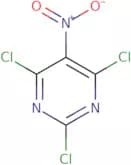
CAS:Please enquire for more information about 7-[(3R)-3-[(N-Acetyl)amino]-1-oxo-4-(2,4,5-trifluorophenyl)butyl]-5,6,7,8-tetrahydro-3-(trifluoromethyl)-1,2,4-triazolo[4,3-a]pyrazi ne including the price, delivery time and more detailed product information at the technical inquiry form on this pageFormula:C18H17F6N5O2Purity:Min. 95%Molecular weight:449.35 g/mol2,4,6-Trichloro-5-nitropyrimidine
CAS:2,4,6-Trichloro-5-nitropyrimidine is a purine derivative that inhibits the cell proliferation of cancer cells. It has been shown to inhibit the activity of kinases and to induce apoptosis in human cancer cells in vitro. This drug also has antiproliferative potential against erythrocytes and is being investigated as a treatment for renal disease. 2,4,6-Trichloro-5-nitropyrimidine shows inhibitory effects on the phosphorylation of roscovitine by ATP and may be used to treat patients with glomerulonephritis. 2,4,6-Trichloro-5-nitropyrimidine can be synthesized from 2,4,6-trichloropyrimidinethiol and nitric acid according to the following equation: CClNO + HNO → CClNOH + NO 2 Cl + 3 HNO
Formula:C4Cl3N3O2Purity:Min. 97 Area-%Molecular weight:228.42 g/mol2,5-Diaminopyridine dihydrochloride
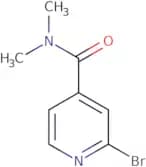
CAS:2,5-Diaminopyridine dihydrochloride is a compound that belongs to the class of hydroxamic acids. It is an intermediate in the synthesis of the anti-cancer drug, hydroxyurea (hydroxylamine). 2,5-Diaminopyridine dihydrochloride can be used as a cross-coupling reagent for coupling reactions with chlorinated and tritiated organic compounds. The efficiency of this reaction is dependent on the coulombic and mutagenic properties of 2,5-diaminopyridine dihydrochloride. 2,5-Diaminopyridine dihydrochloride has been shown to cause cancer in animal studies.Formula:C5H7N3•(HCl)2Purity:Min. 95%Molecular weight:182.05 g/mol2-Bromo-N,N-dimethylisonicotinamide
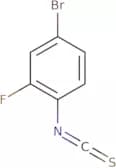
CAS:Please enquire for more information about 2-Bromo-N,N-dimethylisonicotinamide including the price, delivery time and more detailed product information at the technical inquiry form on this pageFormula:C8H9BrN2OPurity:Min. 95%Molecular weight:229.07 g/mol4-Bromo-2-fluorophenylisothiocyanate
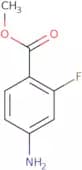
CAS:Please enquire for more information about 4-Bromo-2-fluorophenylisothiocyanate including the price, delivery time and more detailed product information at the technical inquiry form on this pageFormula:C7H3BrFNSPurity:Min. 95%Color and Shape:PowderMolecular weight:232.07 g/molMethyl 4-amino-2-fluorobenzoate
CAS:Please enquire for more information about Methyl 4-amino-2-fluorobenzoate including the price, delivery time and more detailed product information at the technical inquiry form on this page
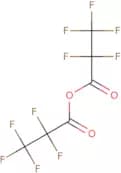
Formula:C8H8FNO2Purity:Min. 95%Molecular weight:169.15 g/molPentafluoropropionic anhydride
CAS:Pentafluoropropionic anhydride is a chemical compound that reacts with fatty acids to form trifluoroacetic acid. In analytical chemistry, it is used to determine the amount of fatty acids in biological samples. Pentafluoropropionic anhydride has been shown to react with human serum and rat striatal tissue to form carbon disulphide and hydrochloric acid. It reacts with amines in the sample preparation phase, forming receptor molecules that can be analyzed by gas chromatography-mass spectrometry.
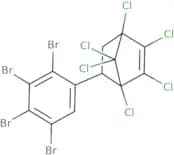
Formula:C6F10O3Purity:Min. 95%Molecular weight:310.05 g/molDechlorane 604 component A
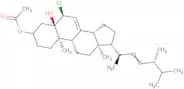
CAS:Dechlorane 604 is a chemical that is used as an additive in some plastics. It has been detected in the environment and human populations, but the low detection limits make it difficult to determine if Dechlorane 604 is endocrine disruptor. Animal experiments have shown that Dechlorane 604 can bind to hormone receptors, but there are no studies on its effects on humans. There are database records for Dechlorane 604 and its metabolites, but these do not provide information on their toxicity. The analytical method for detecting Dechlorane 604 has been developed and validated by GC/MS-ECD analysis of ethane extracts from soil samples. This method is based on dispersive microextraction (SPME) with gas chromatography/mass spectrometry (GC/MS). In vitro studies have examined the effects of Dechlorane 604 on the elongatus nematode and dry weight measurements show that this chemical alters metabolism by altering fatty acid composition.Formula:C13H4Br4Cl6Purity:Min. 95%Color and Shape:PowderMolecular weight:692.5 g/mol3b-Acetoxy-6a-chloroergosta-7,22-dien-5a-ol
CAS:Controlled ProductPlease enquire for more information about 3b-Acetoxy-6a-chloroergosta-7,22-dien-5a-ol including the price, delivery time and more detailed product information at the technical inquiry form on this pageFormula:C30H47ClO3Purity:Min. 95%Molecular weight:491.15 g/molCaramiphen hydrochloride
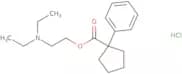
CAS:Controlled ProductCaramiphen hydrochloride is a cholinergic drug that binds to acetylcholine receptors. It is used as an anti-inflammatory agent and for the treatment of ulcerative colitis, Crohn's disease, and postoperative ileus. Caramiphen hydrochloride can be administered orally or intravenously, with a maximum dose of 2 g per day. The most common side effect is diarrhea. Caramiphen hydrochloride has an inhibitory effect on voltage-gated sodium channels and stabilizes neuronal membranes by inhibiting the depolarization process. This drug also has a chloride channel blocking effect.
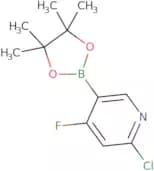
Formula:C18H27NO2·HClPurity:Min. 95%2-Chloro-4-fluoropyridine-5-boronic acid, pinacol ester
CAS:Please enquire for more information about 2-Chloro-4-fluoropyridine-5-boronic acid, pinacol ester including the price, delivery time and more detailed product information at the technical inquiry form on this pageFormula:C11H14BClFNO2Purity:Min. 95%Molecular weight:257.5 g/mol5-Bromo-2-chloro-3-fluoropyridine
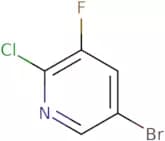
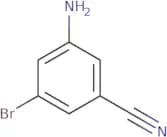
CAS:5-Bromo-2-chloro-3-fluoropyridine is a catalytic reagent for the amination of anilines. It is extracted from coal tar, and is used in the manufacture of pesticides and pharmaceuticals. 5-Bromo-2-chloro-3-fluoropyridine has been shown to be an effective catalyst for the synthesis of functionalized adducts. This compound can also be used as a chemoselective agent in palladium catalysis, where it selectively adds hydrogen bromide to form aryl halides.Formula:C5H2BrCIFNPurity:Min. 95%Molecular weight:210.43 g/mol3-Amino-5-bromobenzonitrile
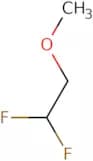
CAS:Please enquire for more information about 3-Amino-5-bromobenzonitrile including the price, delivery time and more detailed product information at the technical inquiry form on this pageFormula:C7H5BrN2Purity:Min. 95%Molecular weight:197.03 g/mol2,2-Difluoroethyl methyl ether
CAS:2,2-Difluoroethyl methyl ether (DEFME) is a nonpolar, hydrophobic compound that can be used as an alternative to isopentane. Radiative data show that DEFME has a higher thermal stability than isopentane, which makes it more suitable for use in high-temperature applications. DEFME has been shown to have synergistic effects with chlorine and amines in the presence of radiation. Furthermore, DEFME can be used to remove chlorinated organic compounds from contaminated water and soil. The chemical properties of DEFME are also ideal for use in polyolefin production and other polymerization processes. The chemical structure of DEFME is similar to that of methylamine and amines, which make it useful as an actuation gas in aerosol cans and other pressurized containers. The atmospheric lifetime of DEFME is long enough that it does not accumulate in the environment or cause environmental pollution when released into the atmosphere.Formula:C3H6F2OPurity:Min. 95%Molecular weight:96.08 g/mol4-Fluoro(pentafluorosulfanyl)benzene
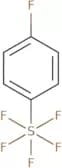
CAS:4-Fluoro(pentafluorosulfanyl)benzene is a fluorinating agent that can be used to produce fluorides, including the trifluoroacetic acid. The cost-effective nature of this compound makes it an attractive alternative to hydrogen fluoride and other fluorinating agents.
Formula:C6H4F6SPurity:Min. 95%Molecular weight:222.15 g/molO-tert-Butyl-D-serine methyl ester hydrochloride
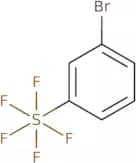
CAS:Please enquire for more information about O-tert-Butyl-D-serine methyl ester hydrochloride including the price, delivery time and more detailed product information at the technical inquiry form on this pageFormula:C8H17NO3·HClPurity:Min. 95%Molecular weight:211.69 g/mol1-Bromo-3-(Pentafluorosulfanyl)Benzene
CAS:1-Bromo-3-(pentafluorosulfanyl)benzene is a molecule that can be used in the synthesis of biologically active compounds. It has been shown to have anti-inflammatory properties, which may be due to its ability to modulate the activity of 5-hydroxytryptamine (5-HT). The functionalities of 1-bromo-3-(pentafluorosulfanyl)benzene include cross-coupling (i.e., chemical reactions that join two or more substances together), protonation, and ligand binding. This molecule has been synthesized from 2,4,6-trifluorobenzonitrile and bromine. The isomers for this molecule are cis and trans, with the cis isomer being more active than the trans isomer. Techniques such as molecular modeling have also been used to study 1-bromo-3-(pentafluorosulfanyl)benFormula:C6H4BrF5SPurity:Min. 95%Molecular weight:283.06 g/molN-Ethyl-N-[(heptadecafluorooctyl)sulphonyl]glycine
CAS:Controlled ProductN-Ethyl-N-[(Heptadecafluorooctyl)sulphonyl]glycine is a high-concentration environmental pollutant that has been detected in the environment and human blood plasma. This chemical is a member of the class of polyfluoroalkyl substances (PFASs), which are used as surfactants in many industrial processes, including the manufacture of paper, textiles, and paints. PFASs are also present in foods such as meat, butter, and eggs. N-Ethyl-N-[(Heptadecafluorooctyl)sulphonyl]glycine has been shown to have trophic effects on invertebrates and can be measured using a triple-quadrupole mass spectrometer with reaction monitoring. This chemical is not suspected to be carcinogenic or toxic to humans because it does not react with DNA or proteins. The health effects of this substance are stillFormula:C12H8F17NO4SPurity:Min. 95%Color and Shape:PowderMolecular weight:585.24 g/mol

![N-Methyl-5H-dibenzo[a,d]cycloheptene-5-propylamine hydrochloride](/_next/image/?url=https%3A%2Fstatic.cymitquimica.com%2Fproducts%2F3D%2Fthumb-webp%2FFN76683.webp&w=3840&q=75)
![7-[(3R)-3-[(N-Acetyl)amino]-1-oxo-4-(2,4,5-trifluorophenyl)butyl]-5,6,7,8-tetrahydro-3-(trifluorom…](/_next/image/?url=https%3A%2Fstatic.cymitquimica.com%2Fproducts%2F3D%2Fthumb-webp%2FFA104169.webp&w=3840&q=75)


![N-Ethyl-N-[(heptadecafluorooctyl)sulphonyl]glycine](/_next/image/?url=https%3A%2Fstatic.cymitquimica.com%2Fproducts%2F3D%2Fthumb-webp%2FFE91897.webp&w=3840&q=75)