Organic Halides
Subcategories of "Organic Halides"
Found 20442 products of "Organic Halides"
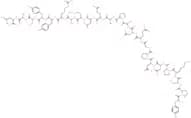
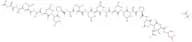
Amyloid b-Protein (1-40) amide trifluoroacetate salt
CAS:Please enquire for more information about Amyloid b-Protein (1-40) amide trifluoroacetate salt including the price, delivery time and more detailed product information at the technical inquiry form on this pageFormula:C194H296N54O57SPurity:Min. 95%Molecular weight:4,328.82 g/mol2-(Chloromethyl)-4-methoxy-3,5-dimethylpyridine hydrochloride
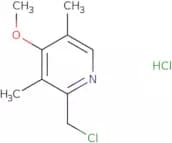
CAS:2-(Chloromethyl)-4-methoxy-3,5-dimethylpyridine hydrochloride is a benzimidazole derivative. It has a chemical stability and can be used for wastewater treatment. It is also a pump inhibitor and can be used for anhydrous sodium magnesium salts. This product is synthesized from the reaction of protonated 2-bromo-4-methoxyphenol with 2,6-dimethylpyridine in the presence of hydrochloric acid. The reaction was carried out in an asymmetric synthesis using a proton transport system. 2-(Chloromethyl)-4-methoxy-3,5-dimethylpyridine hydrochloride is soluble in water and has a pH of 1 to 3. It has been shown that this product can be used as an antioxidant and as a metal chelation agent.
Formula:C9H13Cl2NOPurity:Min. 95%Color and Shape:PowderMolecular weight:222.11 g/molAmyloid beta/A4 Protein Precursor770 (740-770) trifluoroacetate salt
CAS:Please enquire for more information about Amyloid beta/A4 Protein Precursor770 (740-770) trifluoroacetate salt including the price, delivery time and more detailed product information at the technical inquiry form on this page
Formula:C162H243N45O52S2Purity:Min. 95%Molecular weight:3,717.07 g/molFibronectin CS-1 Fragment (1978-1985) trifluoroacetate salt
CAS:Fibronectin CS-1 Fragment (1978-1985) trifluoroacetate salt H-Glu-Ile-Leu-Asp-Val-Pro-Ser-Thr-OH trifluoroacetate salt is a peptidomimetic with peroxidase activity. It has the ability to bind to red blood cells and monoclonal antibodies, which are used in spatially specific immunoassays. Fibronectin CS-1 Fragment (1978-1985) trifluoroacetate salt H-Glu-Ile-Leu-Asp-Val-Pro-Ser-Thr-OH trifluoroacetate salt also has an effect on hyperresponsiveness and can be used as a costimulatory antigen for cancer immunotherapy.Formula:C38H64N8O15Purity:Min. 95%Molecular weight:872.96 g/molCell-permeable Caspase-3 Inhibitor I trifluoroacetate salt
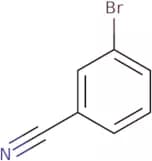
CAS:Please enquire for more information about Cell-permeable Caspase-3 Inhibitor I trifluoroacetate salt including the price, delivery time and more detailed product information at the technical inquiry form on this pageFormula:C94H158N20O27Purity:Min. 95%Molecular weight:2,000.38 g/mol3-Bromobenzonitrile
CAS:3-Bromobenzonitrile is an organic compound that has a hydroxyl group and a bromine atom. It is an organic chemical compound that can be synthesized by the reaction of benzene with nitric acid and azide. 3-Bromobenzonitrile has been studied for its biological properties. It also reacts with amines, quinoline derivatives, and other reactive molecules to form new compounds. 3-Bromobenzonitrile has been shown to have transport properties, which can be determined using FT-IR spectroscopy techniques.Formula:C7H4BrNPurity:Min. 95%Color and Shape:PowderMolecular weight:182.02 g/molSorbin (147-153) amide (porcine) trifluoroacetate salt
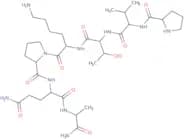
CAS:Please enquire for more information about Sorbin (147-153) amide (porcine) trifluoroacetate salt including the price, delivery time and more detailed product information at the technical inquiry form on this pageFormula:C33H58N10O9Purity:Min. 95%Molecular weight:738.88 g/mol4,6-Dichloro-1H-pyrazolo[4,3-c]pyridine
CAS:4,6-Dichloro-1H-pyrazolo[4,3-c]pyridine is a reagent that has been used as a building block for the synthesis of other compounds. It is also used in the preparation of a variety of organic compounds. 4,6-Dichloro-1H-pyrazolo[4,3-c]pyridine is soluble in organic solvents such as chloroform and ethanol, and can be stored at room temperature. This compound reacts with acids to produce an acid chloride that are useful for the formation of amides and esters. This product has been shown to have a high quality and is suitable for use in research or development.Formula:C6H3Cl2N3Purity:Min. 95%Color and Shape:Yellow to beige solid.Molecular weight:188.01 g/molTris(1-chloro-2-propyl) phosphate - mixture of isomers
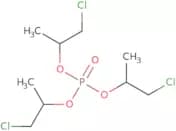
CAS:Tris(1-chloro-2-propyl) phosphate is a synthetic compound that belongs to the class of diphenyl ethers. It is used as an intermediate in the production of other chemicals, such as plastics and pesticides. Tris(1-chloro-2-propyl) phosphate has been shown to be toxic to cells by inhibiting mitochondrial membrane potential and interfering with cellular metabolism. This chemical can cause severe health effects, such as liver damage and death, at high doses. Tris(1-chloro-2-propyl) phosphate can also be detected in human serum and urine samples with high sensitivity.Formula:C9H18Cl3O4PPurity:Min. 95%Molecular weight:327.57 g/mol5-Chlorovanillin
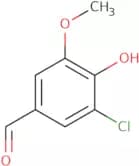
CAS:5-Chlorovanillin is a polymerase chain inhibitor that inhibits the activity of the enzyme ribonucleotide reductase. This inhibition leads to a decrease in the production of RNA and DNA, which in turn affects the transcription and replication of the bacterial DNA. 5-Chlorovanillin has been shown to have inhibitory effects on protein synthesis and cell division, as well as antimicrobial properties. It has a redox potential of -0.2 V at pH 7, making it an ideal candidate for electrochemical impedance spectroscopy (EIS).Formula:C8H7ClO3Purity:Min. 95%Color and Shape:White PowderMolecular weight:186.59 g/molCyclobutanesulfonyl chloride
CAS:Cyclobutanesulfonyl chloride is a reagent that is used for the synthesis of 1-6-alkylcyclobutanes. It can be used to synthesize heterocyclic compounds, including those with high optical purity. Cyclobutanesulfonyl chloride has been shown to have antiviral and antiproliferative properties. It has also been shown to exhibit anticancer activity in vitro and in vivo. The mechanism of action for this compound is unclear, but it may inhibit protein synthesis by attacking the amino acid methionine in proteins or by inhibiting DNA replication.Formula:C4H7ClO2SPurity:Min. 95%Color and Shape:Clear LiquidMolecular weight:154.62 g/mol4,5-Dibromobenzene-1,2-diamine
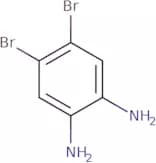
CAS:Dibromobenzene-1,2-diamine (DBD) is a chemical compound that belongs to the group of diamines. It is used in cancer research as an anticancer drug, inhibiting the growth of cancer cells by blocking intracellular calcium levels. DBD has been shown to be effective against pancreatic cancer cells and human cancer cells. The photophysical properties of DBD are determined by its neutral structure and electron deficiency, which makes it a suitable candidate for use in radiation treatment.Formula:C6H6Br2N2Purity:Min. 95%Color and Shape:PowderMolecular weight:265.93 g/molDABCYL-TNF-alpha-EDANS (-4 to +6) (human) trifluoroacetate salt
CAS:DABCYL-TNF-alpha-EDANS (-4 to +6) (human) trifluoroacetate salt is a fine chemical that has been shown to be useful in research. It is a versatile building block for the synthesis of complex compounds and can be used as a reaction component for the synthesis of speciality chemicals. The compound is a high quality reagent, which can be used as an intermediate for the synthesis of other chemical compounds.Formula:C70H104N22O18S·C2HF3O2Purity:Min. 95%Color and Shape:Red SolidMolecular weight:1,687.8 g/molBis(4-chlorophenyl)sulfone
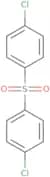
CAS:Bis(4-chlorophenyl)sulfone is a chemical compound that has been shown to have high water permeability. It is a white solid at room temperature and can be dissolved in trifluoroacetic acid, hydrochloric acid, and sodium carbonate. Bis(4-chlorophenyl)sulfone has been shown to react with diphenyl sulfoxide, giving the corresponding sulfoxide. Bis(4-chlorophenyl)sulfone can undergo chemical reactions with other compounds to form new chemical compounds. This property makes it an excellent starting material for synthesizing new drugs. Bis(4-chlorophenyl)sulfone does not cause carcinogenesis in mice when administered orally for up to 12 months at concentrations of 1 ppm or higher.Formula:C12H8Cl2O2SPurity:Min. 95%Color and Shape:SolidMolecular weight:287.16 g/molPACAP-38 (human, mouse, ovine, porcine, rat) trifluoroacetate salt
CAS:PACAP-38 is a peptide that has been shown to have a variety of physiological effects, including the regulation of brain functions and immunological responses. PACAP-38 has been found to bind to toll-like receptor 4 (TLR4) in macrophages and neutrophils, which stimulates the production of proinflammatory cytokines. It also interacts with adenylate cyclase, which leads to an increase in cAMP levels. This may be the mechanism by which PACAP-38 regulates brain functions. The biological function of PACAP-38 is not yet clear but it may act as a signal peptide, regulating protein synthesis and gene expression.Formula:C203H331N63O53SPurity:Min. 95%Molecular weight:4,534.26 g/mol2-Chloro-5-iodopyridine
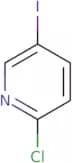
CAS:2-Chloro-5-iodopyridine is a synthetic compound that binds to nicotinic acetylcholine receptors, and is an agonist of these receptors. It has been shown to bind selectively to the alpha4beta2 subtype of these receptors. 2-Chloro-5-iodopyridine binds to the receptor by means of hydrogen bonding and chelation, which results in the activation of the receptor. This process leads to increased levels of catecholamines and other neurotransmitters, which causes changes in the heart rate and blood pressure. 2-Chloro-5-iodopyridine is a halogenated organic molecule that can be synthesized from sodium trifluoroacetate in two steps: first with chlorination followed by iodination. The synthesis can be carried out using copper (II) chloride as a catalyst or copper (I) iodide as an oxidant, followed by reduction with sodium borohydride.Formula:C5H3ClINPurity:Min. 95%Color and Shape:White PowderMolecular weight:239.44 g/mol3,4-Dichlorothiophenol
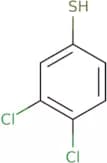
CAS:3,4-Dichlorothiophenol is a chemical compound that belongs to the group of reactive compounds. It can be used as a chemical intermediate for the synthesis of other organic compounds. 3,4-Dichlorothiophenol is an inhibitor of methylating enzymes such as glyoxalase I and II and glyceraldehyde-3-phosphate dehydrogenase. This inhibition leads to the accumulation of methylglyoxal and 3-deoxyglucosone in cells, which are potent inhibitors of protein glycosylation. 3,4-Dichlorothiophenol also inhibits nucleophilic attack on DNA by epoxide hydrolases such as epoxide hydrolase 1 and 2. This inhibition results in the accumulation of reactive metabolites that are covalently adducted with DNA bases.Formula:C6H4Cl2SPurity:Min. 95%Molecular weight:179.07 g/molNeuropeptide Y (1-24) amide (human, rat) trifluoroacetate salt
CAS:Please enquire for more information about Neuropeptide Y (1-24) amide (human, rat) trifluoroacetate salt including the price, delivery time and more detailed product information at the technical inquiry form on this pageFormula:C116H170N30O40SPurity:Min. 95%Molecular weight:2,656.84 g/molH-D-Cys(4-methoxytrityl)-2-chlorotrityl resin (200-400 mesh)
Please enquire for more information about H-D-Cys(4-methoxytrityl)-2-chlorotrityl resin (200-400 mesh) including the price, delivery time and more detailed product information at the technical inquiry form on this pagePurity:Min. 95%Homo-L-tyrosine hydrobromide
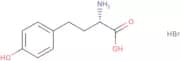
CAS:Homo-L-tyrosine hydrobromide (HLTB) is a prodrug that is converted to L-3,4-dihydroxyphenylalanine (L-dopa) in vivo. It is used as an immunomodulator by stimulating the immune system and reducing inflammation. HLTB has been shown to have anti-inflammatory effects on the production of cytokines and chemokines, which are important for tumor growth and metastasis. HLTB is also known to inhibit tyrosine kinase, which plays a role in the development of some cancers.Formula:C10H14BrNO3Purity:Min. 95%Molecular weight:276.13 g/mol




![4,6-Dichloro-1H-pyrazolo[4,3-c]pyridine](/_next/image/?url=https%3A%2Fstatic.cymitquimica.com%2Fproducts%2F3D%2Fthumb-webp%2FFD35292.webp&w=3840&q=75)